
Floating plants sit slightly outside the usual planted-tank conversation. They don’t root in substrate, don’t need tying to hardscape, and are often bought on impulse rather than planned into a setup. That’s a missed opportunity — a well-managed patch of floaters solves more problems in a planted tank than almost anything else you can add, and creates a couple of new ones the moment you stop paying attention to it.
Quick answer: Floating plants earn their place through nutrient export: with leaves in open air and unlimited CO2, they grow fast and strip nitrate and phosphate before algae can use them, while shading light-sensitive plants and sheltering fry and shrimp. The downsides: they steal light from plants below and a sealed surface cuts gas exchange, so thin them weekly.
Best floating aquarium plants
The best floating aquarium plants for most tanks are Amazon frogbit, water lettuce and duckweed. Frogbit suits shrimp tanks with calm water, water lettuce needs an open top, and duckweed takes up nutrients fastest but is hard to remove. Water hyacinth belongs in ponds and tubs, and Brazilian pennywort can float or be planted.
- Amazon Frogbit (Limnobium laevigatum) — round leaves and long roots for shrimp and fry; keep it away from filter outflow
- Water Lettuce (Pistia stratiotes) — large rosettes with hanging roots; needs an open top
- Duckweed (Lemna minor) — tiny and the fastest nutrient sponge, but hard to remove once established
- Water Hyacinth (Eichhornia crassipes) — for ponds and tubs rather than tanks (imported to order)
- Brazilian Pennywort (Hydrocotyle leucocephala) — floats or can be planted
Browse all our floating aquarium plants, or read Amazon frogbit vs water lettuce vs duckweed before you choose.
Why Floating Plants Earn Their Space
Natural shade for light-sensitive plants
Floating leaves intercept and diffuse light before it reaches the water column, softening intensity for whatever’s growing underneath. This matters a great deal for shade-adapted epiphytes like Anubias and Bucephalandra, both of which naturally grow in the dappled understory of streams and rivers, tucked under rocks and roots below a forest canopy rather than out in open sun. Unbroken, high-intensity light on Anubias in a bare tank is a common contributor to algae-crusted leaves and stalled growth. A floating cover recreates something closer to the light gradient these plants actually evolved under, and lets you run a brighter fixture for other plants without punishing the shade-lovers underneath.
Nutrient export that’s hard to match
Floating plants have one structural advantage nothing rooted or fully submerged has: their leaves sit in open air with direct, unlimited access to atmospheric CO2. That removes the carbon bottleneck that caps growth rate in every submerged low-tech plant, so floaters can grow explosively fast on ambient CO2 alone, pulling nitrate, phosphate and micronutrients out of the water column as fast as they can absorb them. That speed makes them some of the most effective nutrient exporters you can put in a tank, provided you actually remove the excess growth rather than letting it pile up and decompose back in.
A nursery for fry and shrimp
The trailing root systems of frogbit and water lettuce especially form a dense tangle that fry and shrimp use as cover from predation and as a grazing ground — biofilm, infusoria and microorganisms colonize the roots and become a first food source for shrimplets. Dwarf shrimp breeders lean on floating roots for exactly this reason.
Starving out algae
Between shading the water column and out-competing algae for the same dissolved nutrients, a healthy floating mass is one of the more effective low-tech tools against green water and glass algae. It isn’t that floating plants attack algae directly — they simply win the competition for light and nutrients that algae needs just as much as they do.
The Downsides No One Mentions
Stealing light from what’s below
The same shading effect that protects an Anubias leaf will just as happily stunt a carpet or a high-light stem plant growing beneath an unmanaged floating mat. If your layout depends on strong light reaching the substrate — dwarf hairgrass, Monte Carlo, red stems chasing colour — floating plants need active thinning, or they’ll quietly starve everything beneath them of light while looking lush themselves.
The surface-takeover problem
Left alone in a nutrient-rich tank, most floating plants can double their coverage within days rather than weeks. Duckweed is the textbook case: genuinely excellent as a nutrient sponge, genuinely miserable to remove completely once established, since a single missed frond repopulates the surface within a week and fragments hitch a ride on nets, plants and hands into other tanks. Budget for weekly thinning, not a one-time planting.
Oxygen and gas exchange
A fully sealed surface reduces gas exchange at the water-air interface — less atmospheric oxygen dissolving in, less CO2 and other gases escaping out. In a heavily stocked tank, this can tip fish into low-oxygen stress overnight, once plants stop photosynthesizing and both plants and fish are drawing on the same dissolved oxygen pool. Leaving some open water, or thinning back to roughly half-coverage, keeps this risk manageable.
The Common Species, and How They Differ
- Frogbit (Limnobium laevigatum): round, lily-pad-like leaves, moderate light needs, substantial trailing roots that shrimp keepers specifically favour. It doesn’t handle strong surface agitation from filter outflow well, so give it a calmer corner.
- Duckweed (Lemna minor): tiny, the fastest nutrient uptake of the common floaters, but genuinely difficult to eradicate once established, which is why most aquascapers treat it as a nuisance rather than a decoration. It suits a dedicated nutrient-export or quarantine tank better than a display tank.
- Salvinia: fuzzy, water-repellent leaf hairs, solid nutrient uptake, but that same water-repellent surface means it doesn’t like being splashed under or pushed beneath the surface by strong flow — keep it away from filter outflow.
- Water lettuce (Pistia stratiotes): large rosettes with substantial hanging roots and a heavy nutrient appetite, but it needs real vertical clearance and an open top; it isn’t a fit for a tank with a tight-fitting glass lid.
Floating Plants and Indian Tank Conditions
Most of these species are warm-water tropicals, so India’s climate mostly works in their favour. Monsoon humidity across much of the country from June to September keeps aerial leaf tissue from drying out, and ambient room temperatures rarely drop low enough to slow them down the way a cold winter would elsewhere. Many hobbyists here also run tanks without a full glass lid for ventilation in the heat, which suits floaters better than a sealed hood — floaters enjoy the humidity a closed hood traps, but condensation dripping back down onto the leaves can encourage rot over time, so a lid propped slightly open is a reasonable middle ground.
One genuine caution is worth repeating clearly: water lettuce and water hyacinth both spread aggressively in warm climates and are already serious invasive weeds choking ponds, canals and lakes in parts of India. Never empty tank water or discarded floating plants into a drain that leads to a natural water body — compost them or bin them instead.
It’s also worth noting that floaters don’t need CO2 injection or particularly strong light to thrive, which makes them one of the more power-cut-resilient plants available to Indian hobbyists. A few hours without filtration or lighting during an outage barely registers with a floating plant the way it might stress a CO2-dependent carpet chasing a tight growth window.
Keeping Floaters in Check
Thin weekly rather than occasionally, aim to keep at least half the surface open at any given time, and lift excess out with a net rather than letting it accumulate. Treat floating plants as a crop you harvest on a schedule, not a one-time decoration you plant and forget.
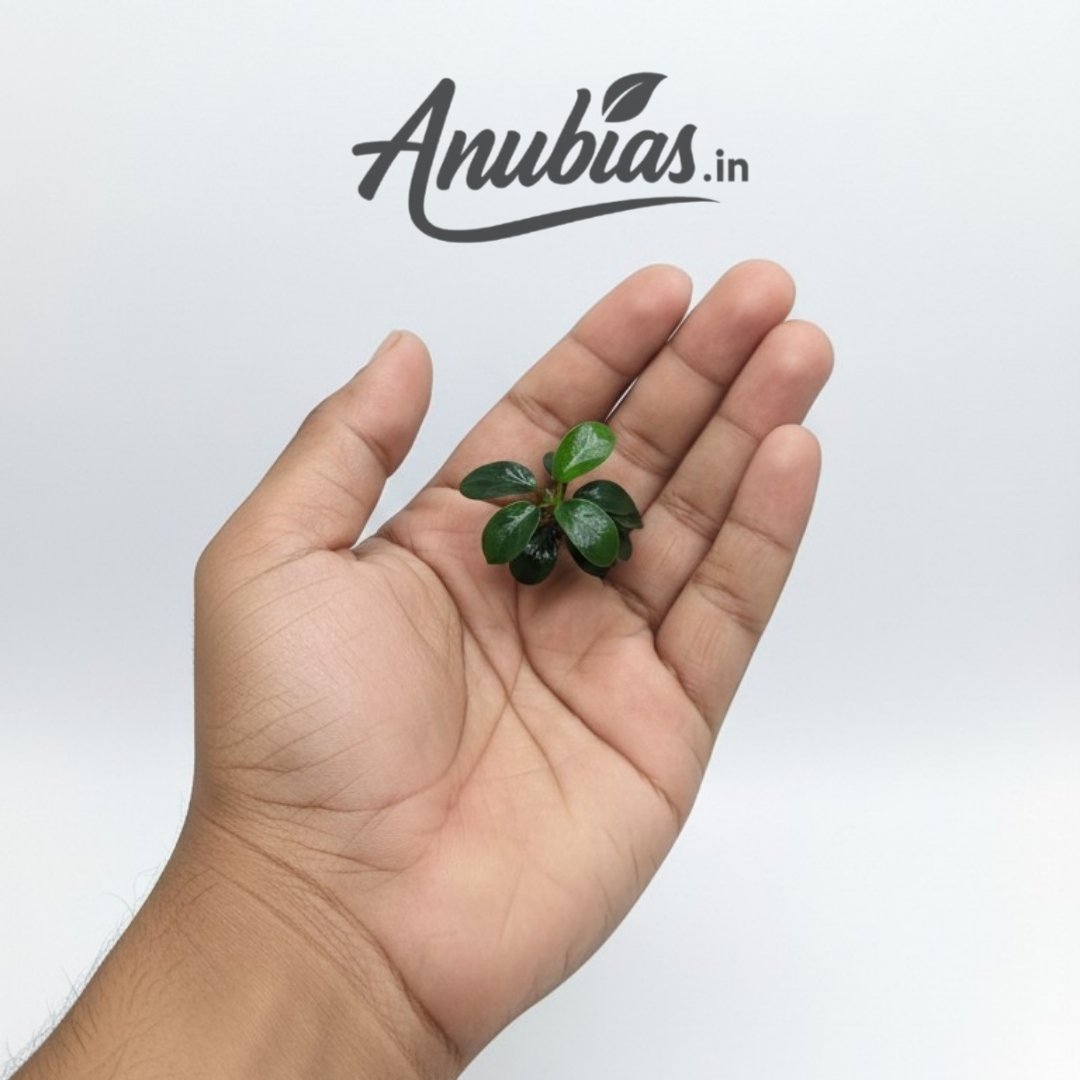
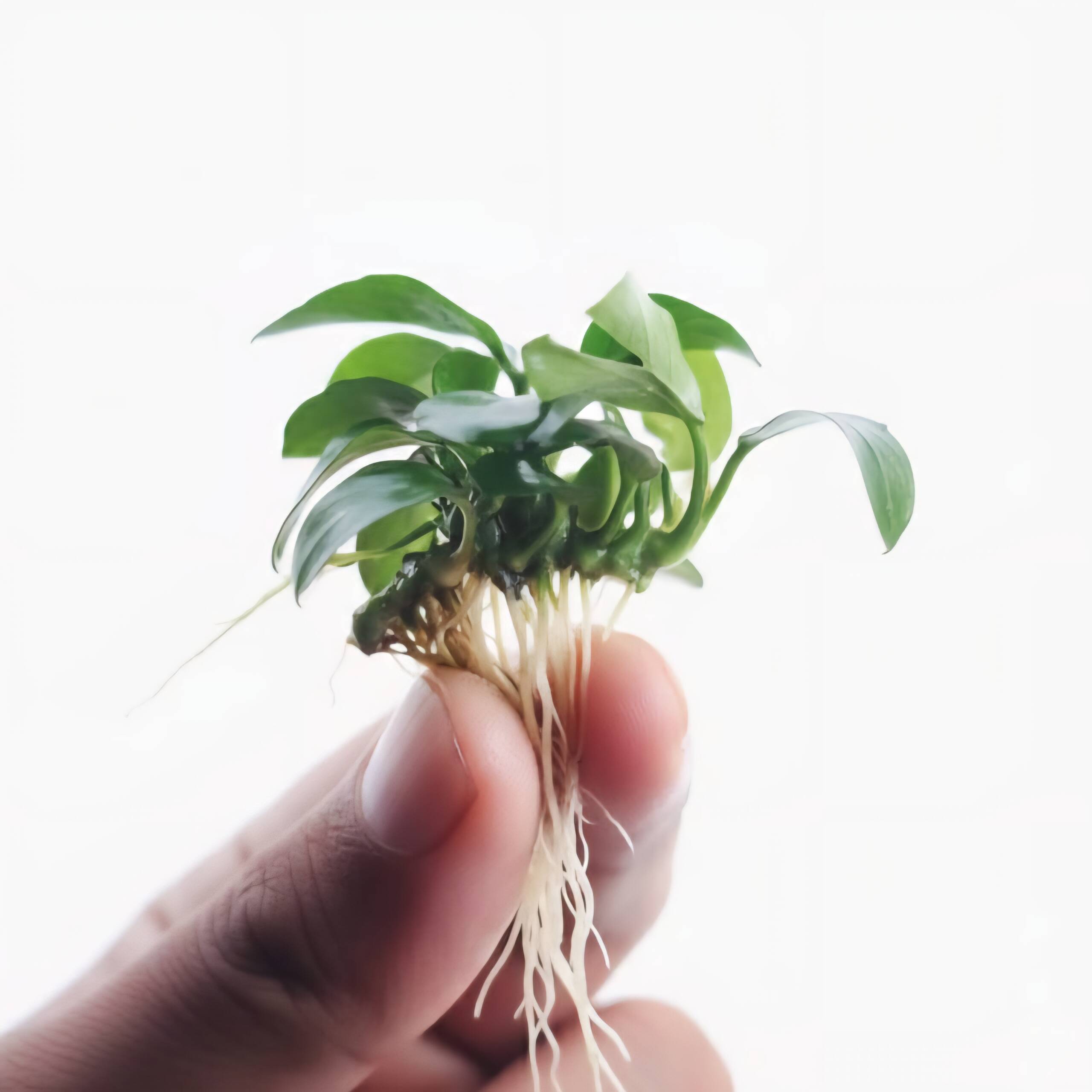
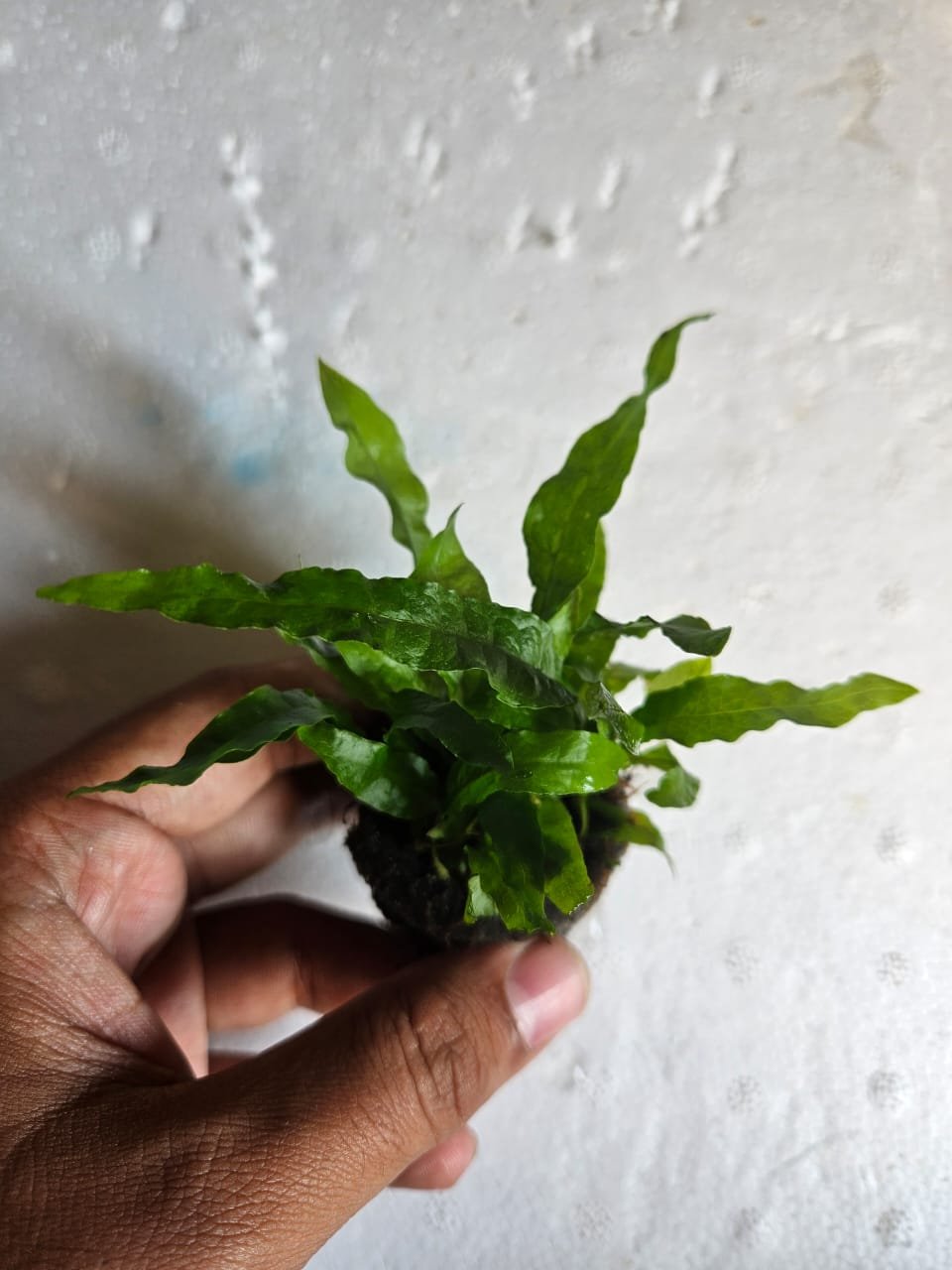
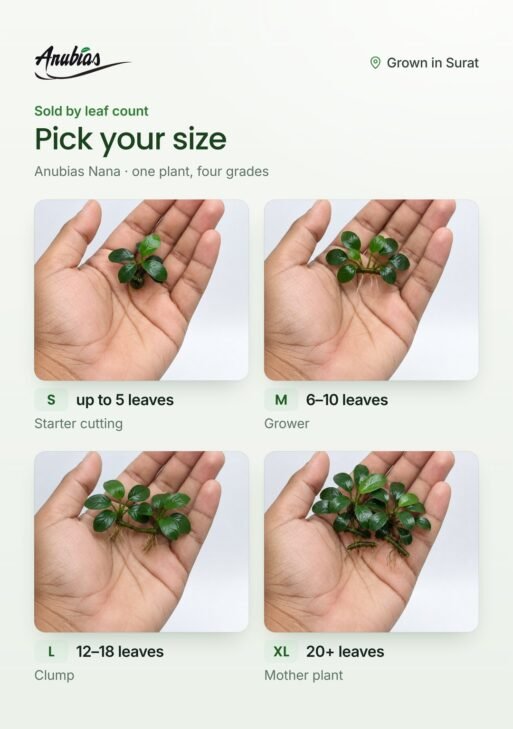
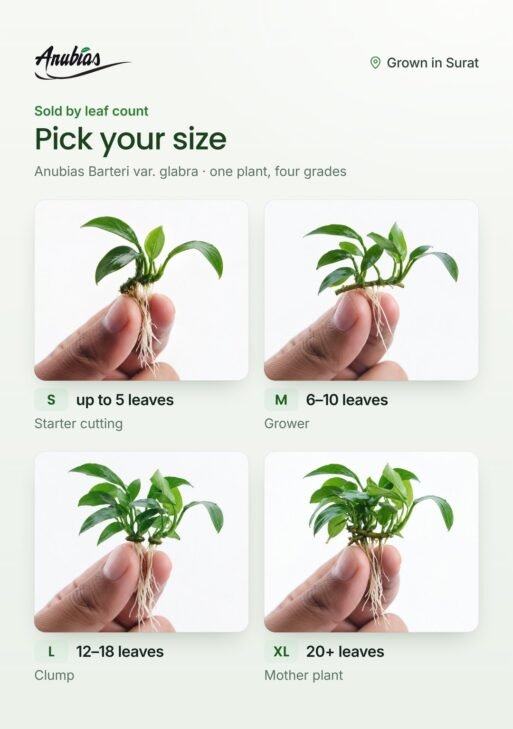
Shop the plants in this guide: Anubias, Bucephalandra and Java Fern all benefit from the diffused light floating plants create, and pair naturally with them in a layered, shade-and-canopy style tank. Browse our full range, along with Cryptocoryne for a shaded foreground.
Frequently asked questions
How do floating plants help reduce algae?
Floating plants have leaves in open air with unlimited access to atmospheric CO2, so they grow explosively fast and pull nitrate, phosphate and micronutrients from the water. By shading the water column and out-competing algae for nutrients, they help against green water and glass algae, provided you remove the excess growth.
Can floating plants harm fish or other plants?
Yes, if unmanaged. A floating mat can stunt carpets and high-light stem plants beneath it, and a fully sealed surface reduces gas exchange, which can tip fish in a heavily stocked tank into low-oxygen stress overnight. Leaving some open water or thinning to roughly half coverage keeps this manageable.
Which floating plant is best for a shrimp tank?
Frogbit has substantial trailing roots that shrimp keepers specifically favour, as biofilm and infusoria colonise them and feed shrimplets. It needs moderate light and does not handle strong surface agitation well, so give it a calmer corner away from filter outflow.
Fighting nitrate? See which aquarium plants actually lower ammonia and nitrate.
Keeping a turtle? See which plants actually survive a turtle tank.
Grown in Surat (pre-order plants imported to order) · live-arrival guarantee with a 4-hour unboxing video · ₹99 shipping, free from ₹999