
Fast-growing plants are a new tank’s best friend. They use up nitrates and nutrients quickly, which leaves less for algae, and they make a tank look established in weeks instead of months.
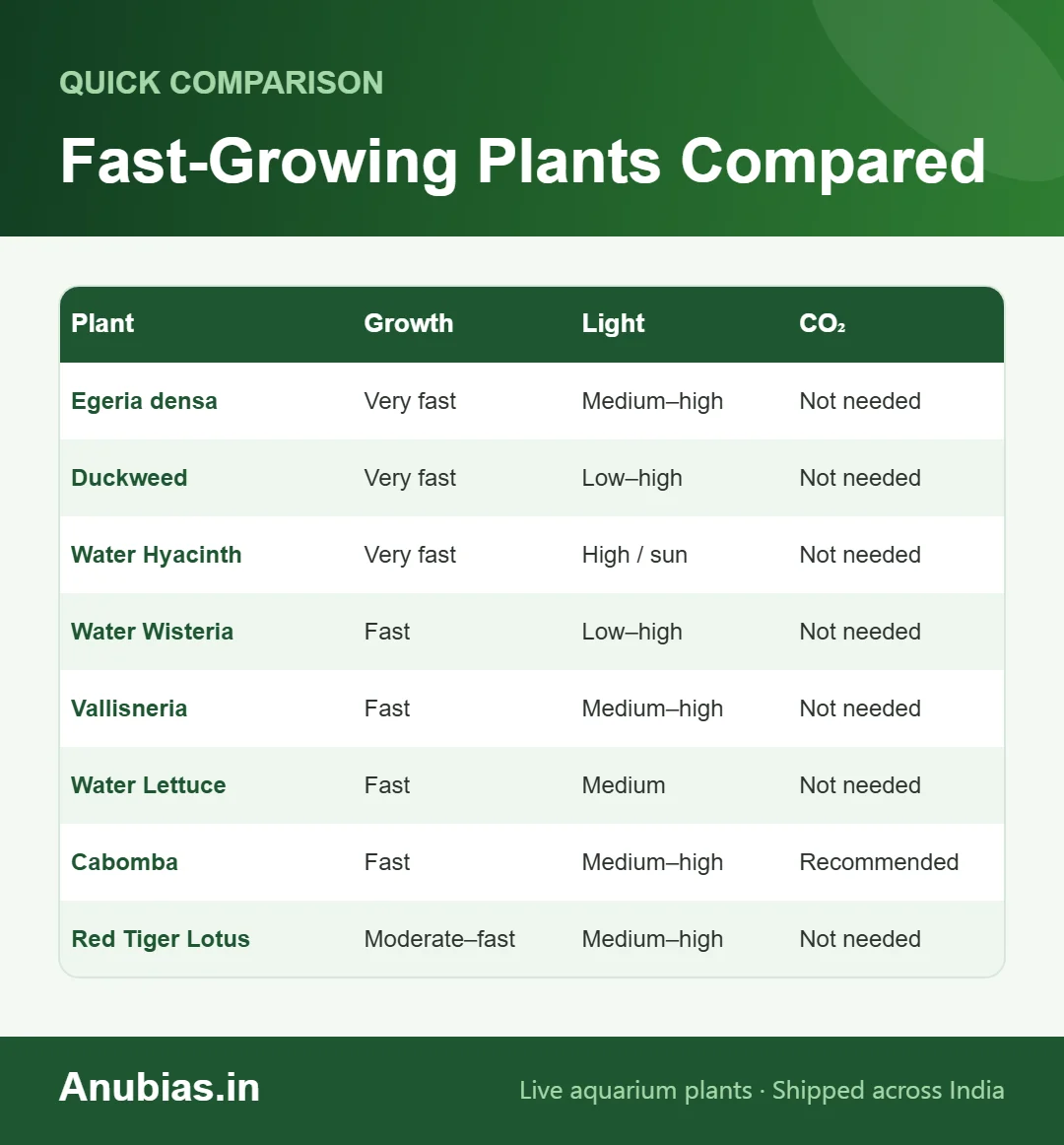
Quick answer: The fastest-growing aquarium plants are Egeria densa, Duckweed and Water hyacinth (very fast), followed by Water wisteria, Vallisneria, Water lettuce and Cabomba. Most of these need no CO2; Cabomba does best with medium to high light and CO2. Fast growers absorb nutrients and help outcompete algae, but they need regular trimming or thinning so they do not shade slower plants.
Rooted and stem plants
Egeria densa
Very fast, grows planted or floating, and handles cooler water, making it a favourite for goldfish tanks. Egeria densa care guide.
Water Wisteria
Fast, tolerates low to high light, and its leaf shape changes with light. Replant cut tops to thicken the background. Water wisteria care guide.
Vallisneria
Fast background grass that spreads by runners in moderate to high light. Vallisneria care guide.
Cabomba
Fast and feathery, but needs medium to high light and does best with CO2; it sheds leaves in low light. Cabomba care guide.
Red Tiger Lotus
Moderate to fast growth from a bulb, with red leaves in good light; feed with root tabs. Red tiger lotus care guide.
Floating plants
Duckweed
Very fast and excellent at soaking up nutrients; net out extra weekly. Duckweed care guide.
Water Lettuce
Fast, best for larger tanks, tubs and ponds; keep leaves dry and the lid ventilated. Water lettuce care guide.
Water Hyacinth
Very fast in full sun, suited to ponds and tubs rather than indoor tanks. Water hyacinth care guide.
Keeping fast growers under control
- Trim stem plants every 1–2 weeks and replant healthy tops: how to trim aquarium plants.
- Thin floating plants so they cover no more than part of the surface and slower plants below still get light.
- Never release fast-growing aquarium or pond plants into natural waterways.
Using fast growers as a temporary tool
Most people plant fast growers permanently, but their best use is as a short-term measure while a tank finds its balance.
In a new setup, a heavy planting of fast growers soaks up the ammonia and nitrate spikes of the first two months, giving algae less to work with while your slower plants establish. Once the tank matures, you can pull most of them out and let the scape you actually wanted take over.
They are equally useful after a problem. Following a medication course, a filter failure or a heavy fish loss, nutrient levels swing and algae usually follows. Dropping a handful of fast-growing stems in for six weeks is a cheaper and gentler correction than chemical treatments.
The catch is that they must be trimmed and thinned to keep working. A fast grower that has stalled is no longer removing much from the water, and a dense floating mat that shades your other plants trades one problem for another.
Which fast growers suit Indian conditions
Heat tolerance is the deciding factor for much of the year. Water sitting at 30°C or above changes which of these plants actually perform.
- Best through summer: hardy stems and floating plants that sit near the surface, where oxygen exchange is best and they can push growth into the air if submerged conditions get difficult.
- Struggles in sustained heat: the more delicate feathery stems, which thin out and drop lower leaves when warm water reduces oxygen availability.
- Cold-tolerant picks: useful in northern winters and in unheated tanks, where many tropical stems slow to a crawl.
Two practical habits help all of them. Keep the surface agitated so gas exchange stays strong in warm water, and trim before the hottest weeks rather than during them, because a thinned plant handles heat far better than a dense, self-shading mass.
Finally, never release surplus fast-growing plants into local ponds, canals or lakes. Several of them establish aggressively in Indian waterways.
Plants in this guide

Frequently asked questions
What is the fastest-growing aquarium plant?
Among common plants, Duckweed and Egeria densa are the fastest, often visibly growing within days.
Do fast-growing plants reduce algae?
Yes. They absorb nutrients that algae would otherwise use, which is why they are recommended for new tanks.
Do fast-growing plants need CO2?
Most do not. Egeria densa, Water wisteria, Vallisneria and floating plants grow quickly without CO2; Cabomba benefits from it.
Shop the plants in this guide: Egeria Densa, Water Hyacinth, Red Tiger Lotus / Red Water Lily, Duckweed, Water Lettuce, Water Wisteria.
How many fast-growing plants do I need to make a real difference?
Enough to cover a noticeable share of the tank, roughly a third of the planted volume, before you will see algae respond. A few token stems will not compete with algae for nutrients. Start heavier than you think you need and thin out later once the tank is stable.
Will fast growers starve my slower plants of nutrients?
They can, and this is why heavily planted fast-grower tanks often need regular dosing. The bigger practical risk is shading rather than starvation, particularly from floating plants that block light to Anubias, crypts and carpets below. Thin them on a schedule and dose a complete liquid fertiliser if slow plants start to pale.
Can I stop dosing fertiliser once the tank is full of fast growers?
No, usually the opposite. Fast growers consume nutrients quickly, so a tank packed with them typically needs more dosing, not less, especially for nitrogen, potassium and iron. Pale new growth and holes in older leaves are the signs you have cut back too far.