
DIY CO2 is a cheap way to add carbon dioxide to a planted tank using sugar and yeast instead of a pressurised cylinder. Here is what it costs, how long a bottle lasts, and when it is worth it in Indian conditions.
Quick answer: DIY yeast CO2 costs about ₹100–150 to set up plus ₹20–40 per refill batch, and a 2-litre bottle gives usable output for two to three weeks — workable for tanks up to roughly 60–80 litres. It is worth it only if you grow carpeting or fast stem plants under moderate to high light. Low-tech Anubias, Java fern, Bucephalandra and Cryptocoryne tanks need no CO2 at all, and a pressurized system (₹6,000–20,000+ upfront) is the better route for serious high-tech setups.
What DIY CO2 Actually Is
DIY CO2 is exactly what it sounds like: fermenting sugar with yeast in a sealed bottle and piping the CO2 gas it produces into your aquarium, instead of buying a pressurized cylinder. The classic setup uses a reused 2-litre soft drink bottle, roughly one to two cups of sugar, a quarter to half a teaspoon of active dry yeast (the same baking yeast sold at any bakery supply counter or general store for under ₹40 a packet, enough for several batches), and lukewarm water topped up to leave an air gap for fermentation to happen. Some hobbyists add a pinch of baking soda to buffer the mixture and slow the reaction down for steadier output over a longer period. An airline tube runs from the cap — through a grommet or a hole sealed with hot glue or silicone — to a diffuser, a powerhead intake, or straight into the filter, and a one-way check valve sits in that line without exception, because without it tank water can siphon backward into the sugar mix and ruin both the reaction and, eventually, your tank.
It’s genuinely the cheapest way to add supplemental CO2 to a planted tank, and it’s been a rite of passage for aquascapers everywhere long before pressurized systems became affordable. The question worth asking, especially if you keep the kind of low-light Anubias, Java fern, or Cryptocoryne tank most Indian hobbyists start with, is whether you need it at all.
Setting One Up: The Practical Bits
A single 2-litre bottle produces usable CO2 for roughly two to three weeks before fermentation slows to the point of being pointless, which means ongoing maintenance is part of the deal — cleaning the bottle, mixing a fresh batch, and swapping it out on a rotation. Many hobbyists run two bottles staggered a week or so apart so there’s rarely a gap in output. Since there’s no regulator or bubble-rate dial, a drop checker filled with a 4dKH indicator solution is the only real way to monitor what’s happening: green means you’re in the healthy 25–35 ppm CO2 range, blue means you’re not getting enough to matter, and yellow means you’re overdoing it and should ease off the diffusion rate or check for a leak feeding gas too fast.
Where DIY CO2 Genuinely Falls Short
The biggest limitation is the production curve. A freshly mixed bottle produces the most CO2 in its first few days, then tapers off steadily until it’s essentially spent by week two or three — the opposite of the steady, adjustable output a pressurized regulator gives you. There’s also no way to shut it off at night the way a solenoid on a timer does; fermentation runs continuously regardless of whether your lights are on, though in practice a bottle or two rarely produces enough volume to meaningfully crash your tank’s pH overnight. And it simply doesn’t scale — one or two bottles can support a tank up to around 60–80 litres reasonably well, but anything larger needs enough bottles that the whole system turns into more maintenance than it’s worth.
How India’s climate affects fermentation
India’s climate cuts both ways here. Warm indoor temperatures across most of the country keep the yeast reliably active through the year, which is actually an advantage over cooler climates where DIY CO2 sputters in winter. But during peak summer heat or a muggy monsoon spell, fermentation can run hot and fast, exhausting a bottle in under two weeks or occasionally producing a rapid CO2 surge that pushes sugar water further up the tubing than usual — one more reason the check valve and diffuser placement deserve real attention rather than an afterthought.
DIY vs Pressurized vs Liquid Carbon, in Real Rupees
| Method | Typical cost in India | What you get |
|---|---|---|
| DIY yeast | ₹100–150 one-time (tubing, check valve, diffuser), then ₹20–40 per refill batch | Cheapest option, but inconsistent output and a refill chore every 2–3 weeks |
| Pressurized cylinder | ₹6,000–20,000+ upfront (regulator, cylinder, solenoid, bubble counter, diffuser); refills roughly ₹150–350 every 2–4 months | Precise and stable, essential for high-light carpet or stem-heavy tanks |
| Liquid carbon | ₹350–700 per bottle, lasting a month or so at recommended dosing | No equipment needed, easiest to start, but an ongoing cost, and a few plants (vallisneria, some mosses, riccia) are sensitive to it at full dose |
Many Indian hobbyists get pressurized cylinders refilled at local fire-extinguisher or fire-safety shops rather than dedicated aquarium stores, since CO2 refill points built specifically for the hobby are rare outside a handful of metro aquascaping circles. It works, and it’s the standard jugaad route, but it’s worth asking the shop about gas purity if you’re running a sensitive high-tech setup.
What happens during a power cut
Pressurized systems depend on electricity for the solenoid timer that turns injection on and off. Most solenoids fail closed by default, so a load-shedding outage simply pauses CO2 injection rather than dumping gas into the tank — though you’ll likely need to reset the bubble rate manually once power returns. DIY yeast setups don’t need electricity at all and keep fermenting straight through any outage, which is a genuine point in their favour in areas with frequent power cuts.
Do You Even Need It?
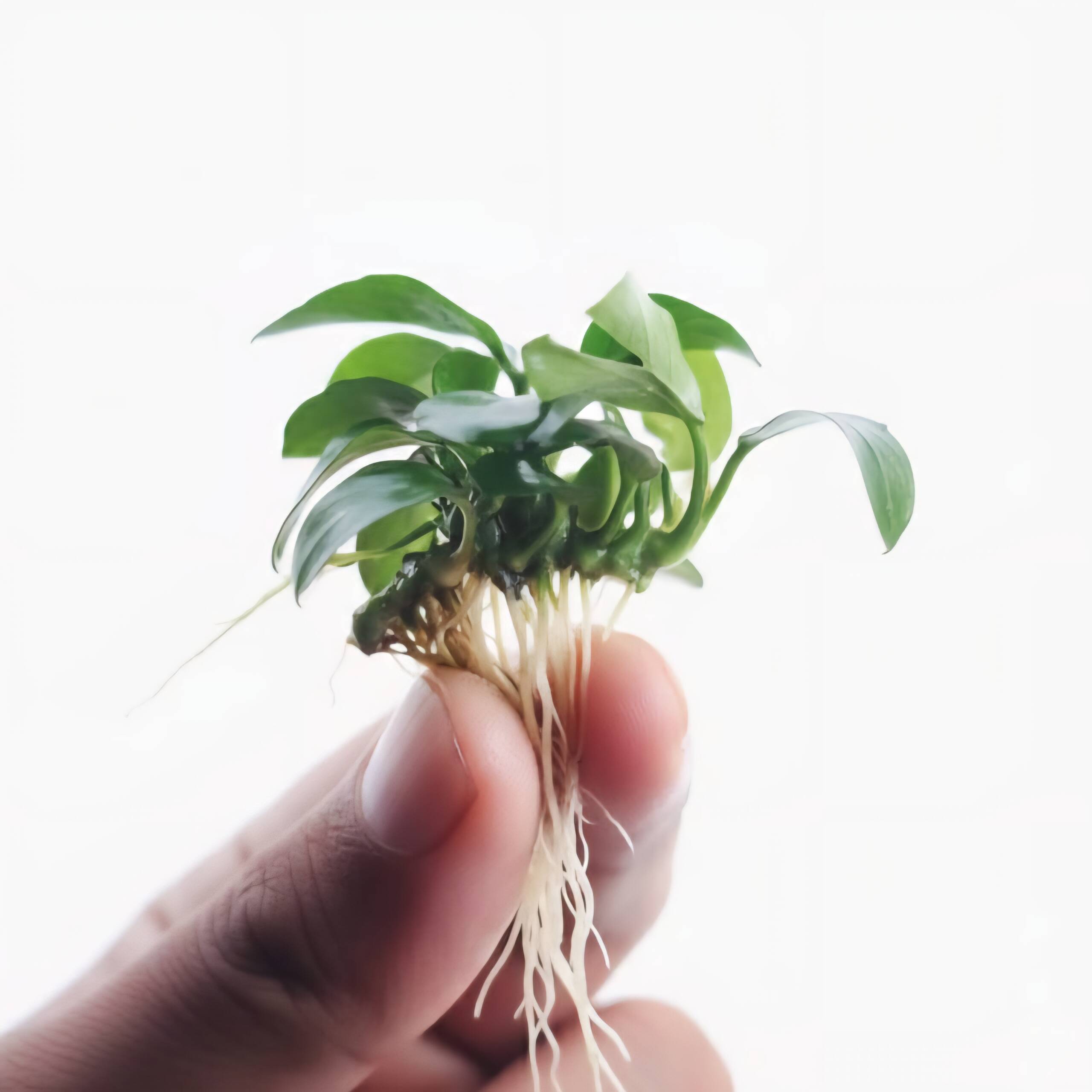
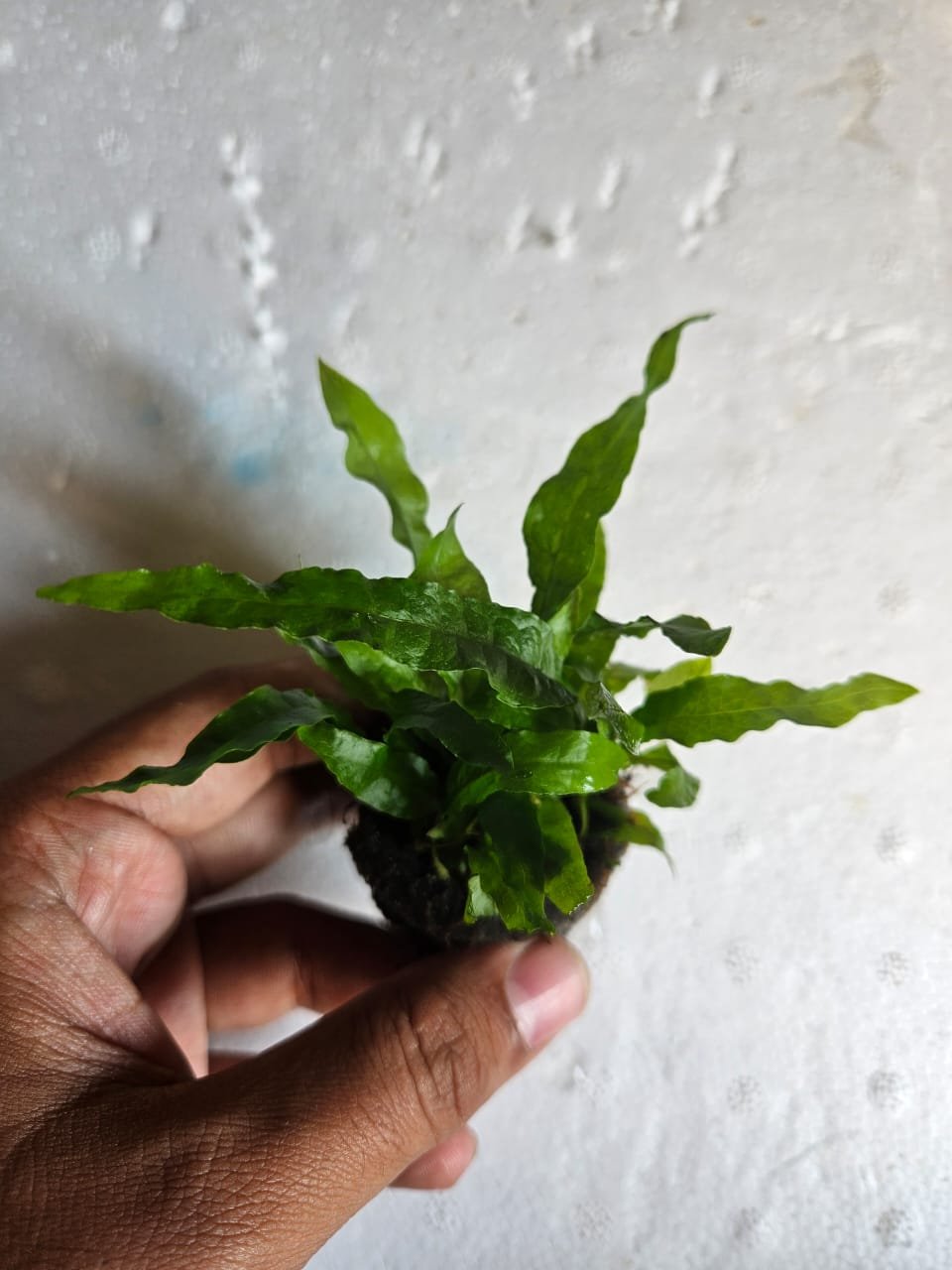
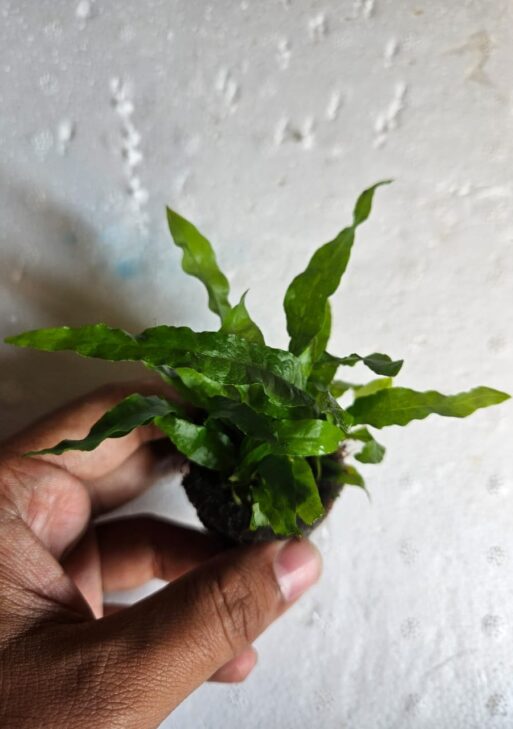
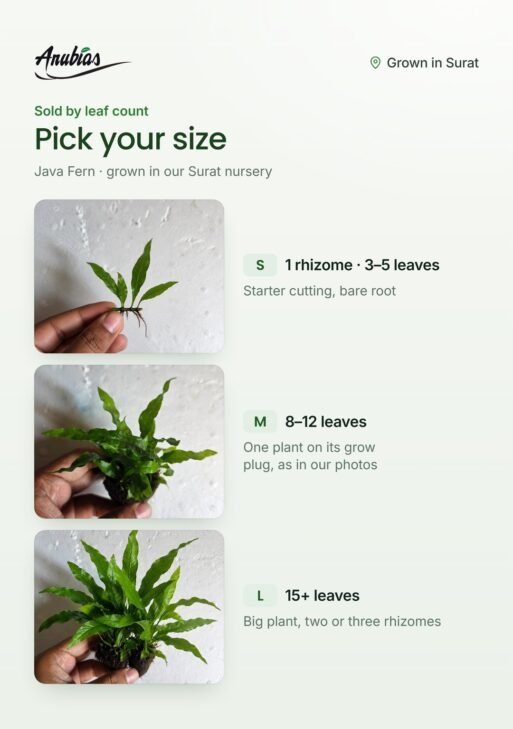
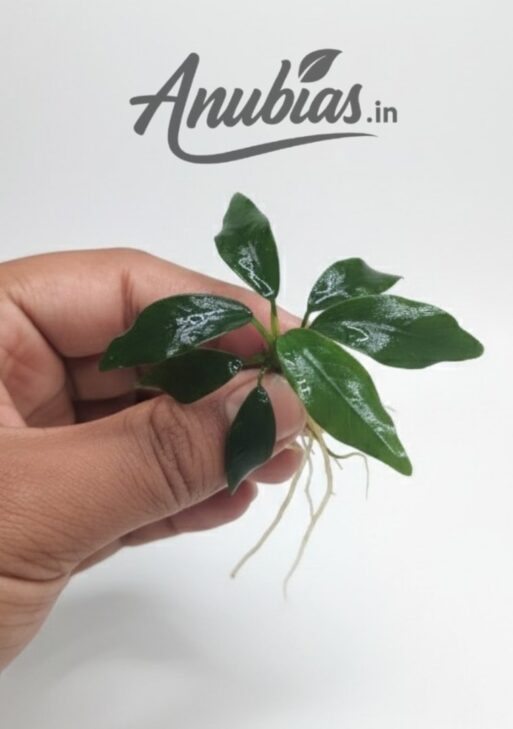
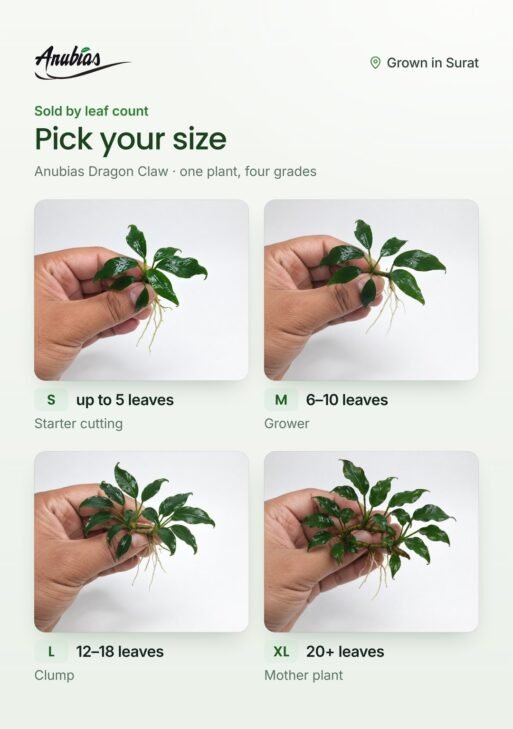
Here’s the part worth sitting with before buying anything: Anubias, Java fern, Bucephalandra, Cryptocoryne and Java moss — the plants this store specialises in — evolved in low-light, nutrient-poor stream conditions in Southeast Asian jungles, clinging to wood and rock rather than rooting in rich substrate. They’re slow, efficient growers by nature, which is exactly why they’re recommended for no-CO2, low-tech tanks in the first place. Adding CO2 to a low-light Anubias or crypt tank without also raising the light won’t meaningfully speed growth, and it adds a maintenance burden and a stability risk for no real payoff. In fact, CO2 injected into a tank without matching light and nutrients is a common, if counterintuitive, cause of algae outbreaks — the opposite of what most beginners expect it to do.
DIY CO2 earns its keep specifically when you’re growing carpeting plants like dwarf hairgrass, Monte Carlo or HC Cuba, or fast stem plants like rotala and ludwigia, under moderate to high light and want denser, redder, faster growth. In that context, it’s a genuinely useful, nearly free way to test whether high-tech growing is worth committing to before spending on a pressurized system. For a dedicated low-tech Anubias or Java fern tank, though, save yourself the fortnightly bottle-swapping and skip it entirely.
Shop the plants in this guide
If you’re building a low-tech, no-CO2 tank, browse anubias.in’s Anubias, Java Fern, Bucephalandra and Cryptocoryne ranges — all genuinely happy without supplemental CO2. If you’re leaning toward a higher-light, CO2-boosted setup instead, the stem and carpet plant range is built for exactly that.
Not sure you need injection at all? Plenty of species thrive with zero added carbon — start with our list of aquarium plants that don’t need CO2 and upgrade later only if your plant choices demand it.
Budgeting your tank? See the planted aquarium setup cost in India.
Frequently asked questions
How long does a DIY CO2 bottle last?
A single 2-litre bottle produces usable CO2 for roughly two to three weeks before fermentation slows too much. In peak summer heat or a muggy monsoon spell it can exhaust in under two weeks, so many hobbyists run two bottles staggered a week or so apart.
How much does DIY CO2 cost compared with pressurised CO2 in India?
DIY yeast CO2 costs about ₹100–150 one-time for tubing, check valve and diffuser, then ₹20–40 per refill batch. A pressurised system costs ₹6,000–20,000+ upfront, with refills of roughly ₹150–350 every 2–4 months. Liquid carbon runs ₹350–700 per bottle, lasting a month or so.
Does a low-tech Anubias tank need CO2?
No. Anubias, Java fern, Bucephalandra, Cryptocoryne and Java moss are slow, efficient growers suited to no-CO2 tanks. Adding CO2 without raising the light won’t meaningfully speed their growth, and CO2 without matching light and nutrients is a common cause of algae outbreaks.
How big a tank can DIY CO2 support?
One or two bottles can support a tank up to around 60–80 litres reasonably well. Anything larger needs so many bottles that the system becomes more maintenance than it is worth, and a pressurised system is the better route for serious high-tech setups.
Grown in Surat (pre-order plants imported to order) · live-arrival guarantee with a 4-hour unboxing video · ₹99 shipping, free from ₹999