
You don’t need a pressurised CO2 system to grow a genuinely lush planted tank. A large share of the plants sold for Indian aquariums evolved in slow, nutrient-rich water where dissolved carbon was never abundant, and they cope by growing slowly and efficiently rather than depending on a rich carbon supply the way a Dutch-style carpet does. The trick is picking from that group instead of fighting a demanding species with nothing but a basic LED and a bottle of liquid fertiliser. Here is what separates a true low-tech plant from one that only looks fine in a shop tank, plus ten species from our own catalogue that are built for a CO2-free setup.
Building your first tank? Follow our step-by-step guide on how to set up a planted aquarium.
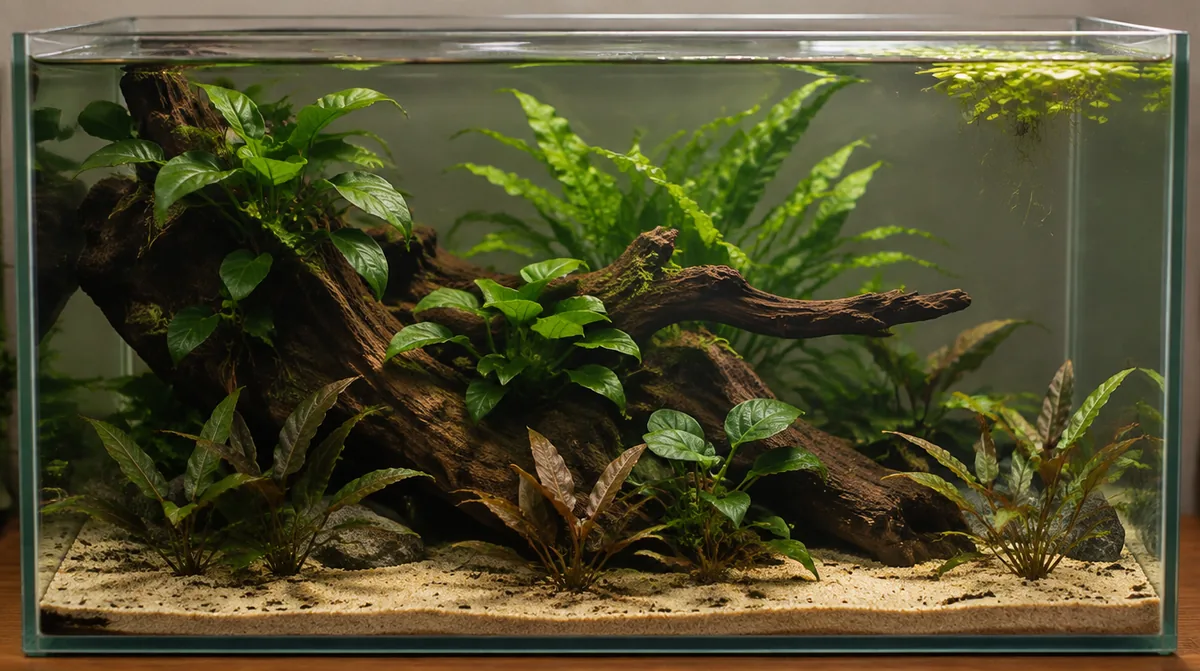
Quick answer: The ten best no-CO2 aquarium plants are Anubias Nana, Anubias Barteri var. glabra, Java fern, Vallisneria Nana, Water Wisteria, Brazilian Pennywort, Amazon Frogbit, Water Lettuce, Cryptocoryne Wendtii and Java Moss. They live on the 2–4 ppm of CO2 that fish and filters supply. Keep lighting moderate at 6–8 hours a day and dose a liquid all-in-one fertiliser weekly.
Aquarium plants that don’t need CO2: quick list
All ten plants below grow on the 2–4 ppm of dissolved CO2 that fish and filter bacteria already supply, so you need no cylinder or kit. Give them a basic LED for 6–8 hours a day and a weekly liquid fertiliser. Anubias, Java fern, Crypts and moss grow slowly; the stem plants, Vallisneria and floaters grow fast.
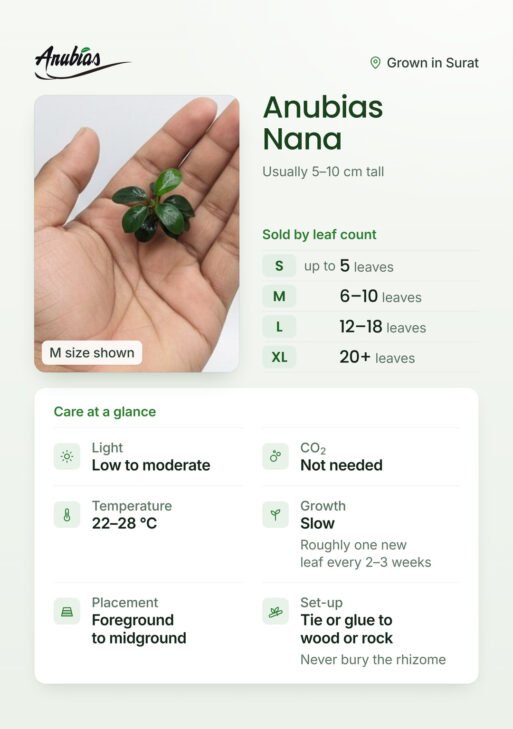
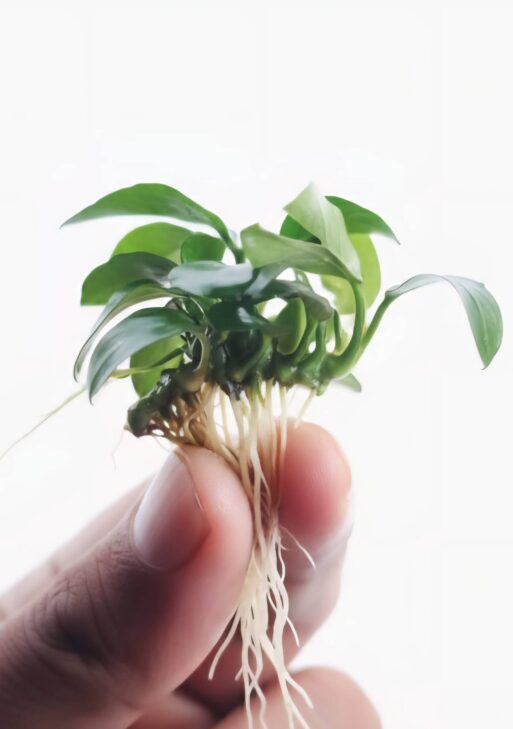
- Anubias Nana — low light, tie to wood or rock
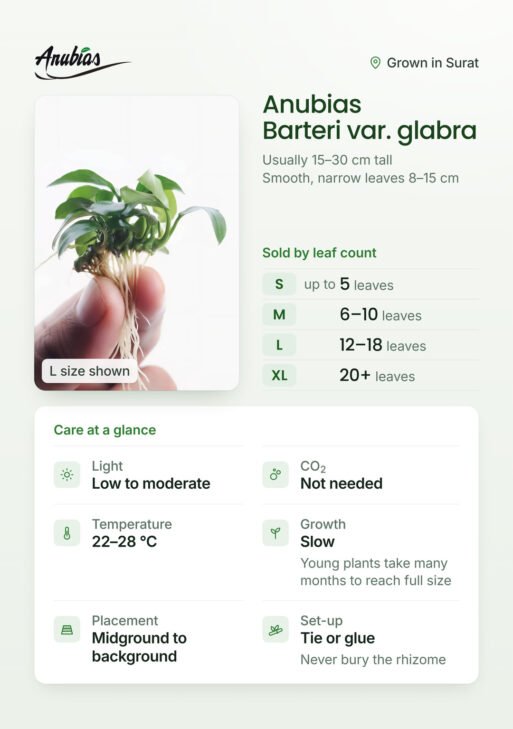
- Anubias Barteri var. glabra — larger leaves for the midground
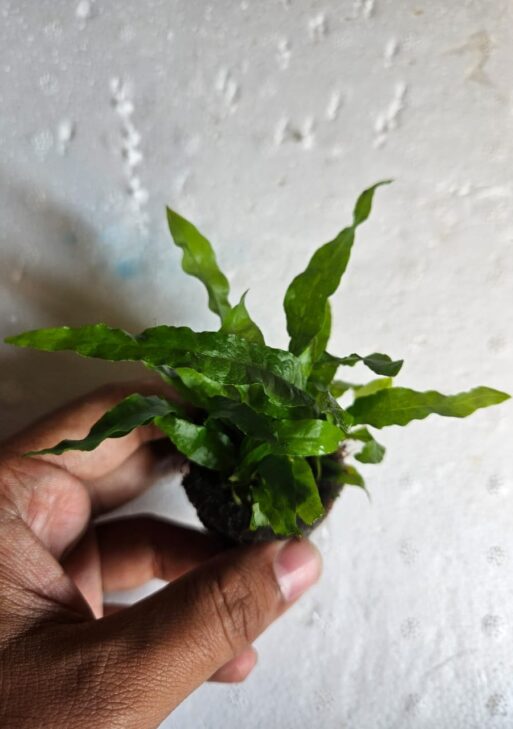
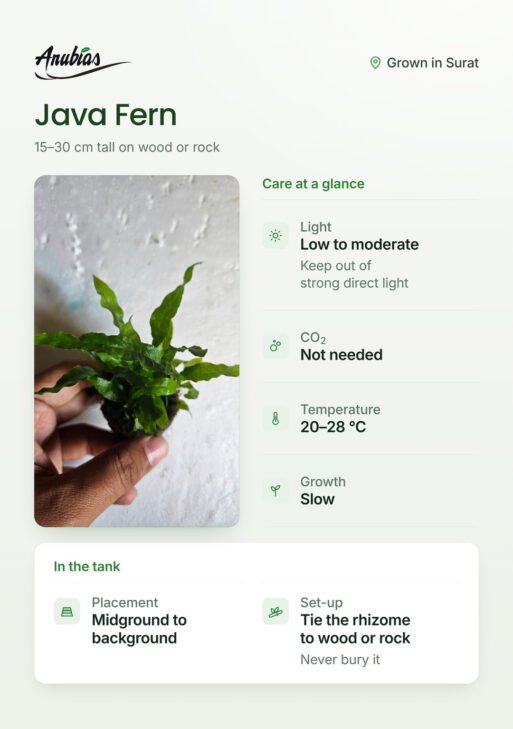
- Java Fern Philippine — low to moderate light, tie to hardscape
- Vallisneria Nana (Jungle Val) — background grass that spreads by runners
- Water Wisteria — fast stem plant, plant or float (imported to order)
- Brazilian Pennywort — fast, plant or float
- Amazon Frogbit — floater that takes CO2 from the air
- Water Lettuce — floater that shades the tank
- Cryptocoryne Wendtii — midground rosette, feed the roots (imported to order)
- Java Moss — any light, tie to wood or rock (imported to order)
Is your tank dim as well? See our low light aquarium plants list. Keeping a betta? Here are the best live plants for betta fish and shrimp.
What Makes a Plant Suited to a CO2-Free Tank
Four traits matter. Naturally slow metabolism — rhizome plants like Anubias and Java fern grow slowly whether or not carbon is abundant, so a low-tech tank doesn’t starve them the way it starves a fast carpet plant bred for high-CO2 conditions. Access to atmospheric CO2 — floating plants and emergent leaves pull carbon directly from the air, where it is far more concentrated than it ever is dissolved in water, which is why floaters thrive with zero injected gas. Wide light tolerance — a plant that grows fine under a basic 6–8 hour photoperiod avoids the classic low-tech mistake of high light with no CO2 to match it, which is the single fastest route to an algae outbreak. And efficient nutrient uptake from the water column rather than heavy carbon fixation, which is exactly what fast stem plants and floaters are good at, soaking up the nitrate and phosphate that would otherwise feed algae.
The Best Aquarium Plants for CO2-Free Tanks
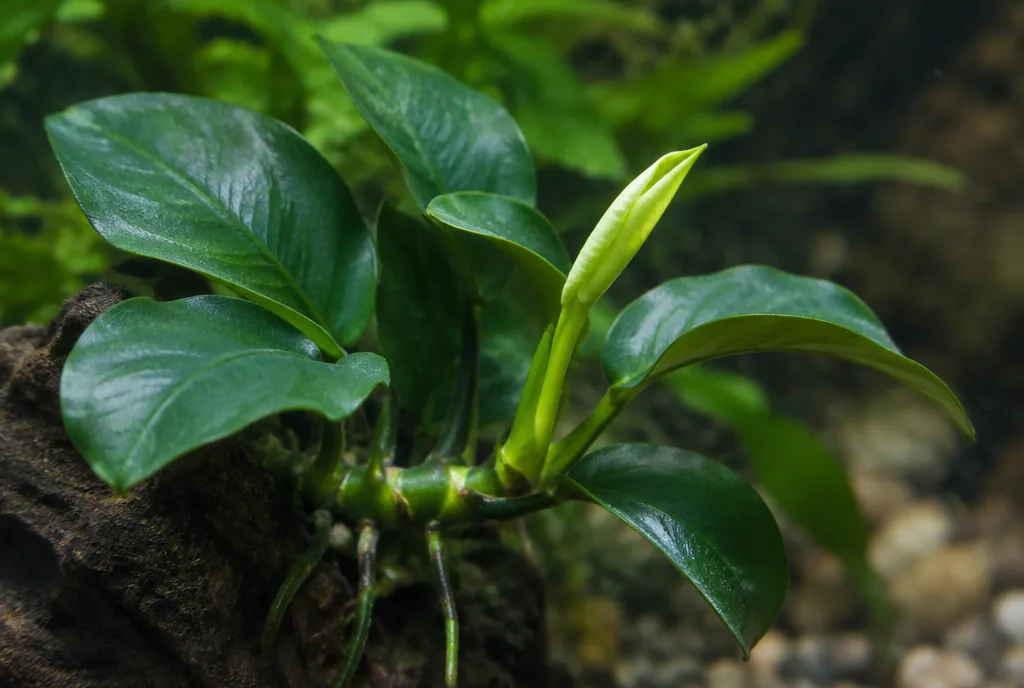
1. Anubias Nana
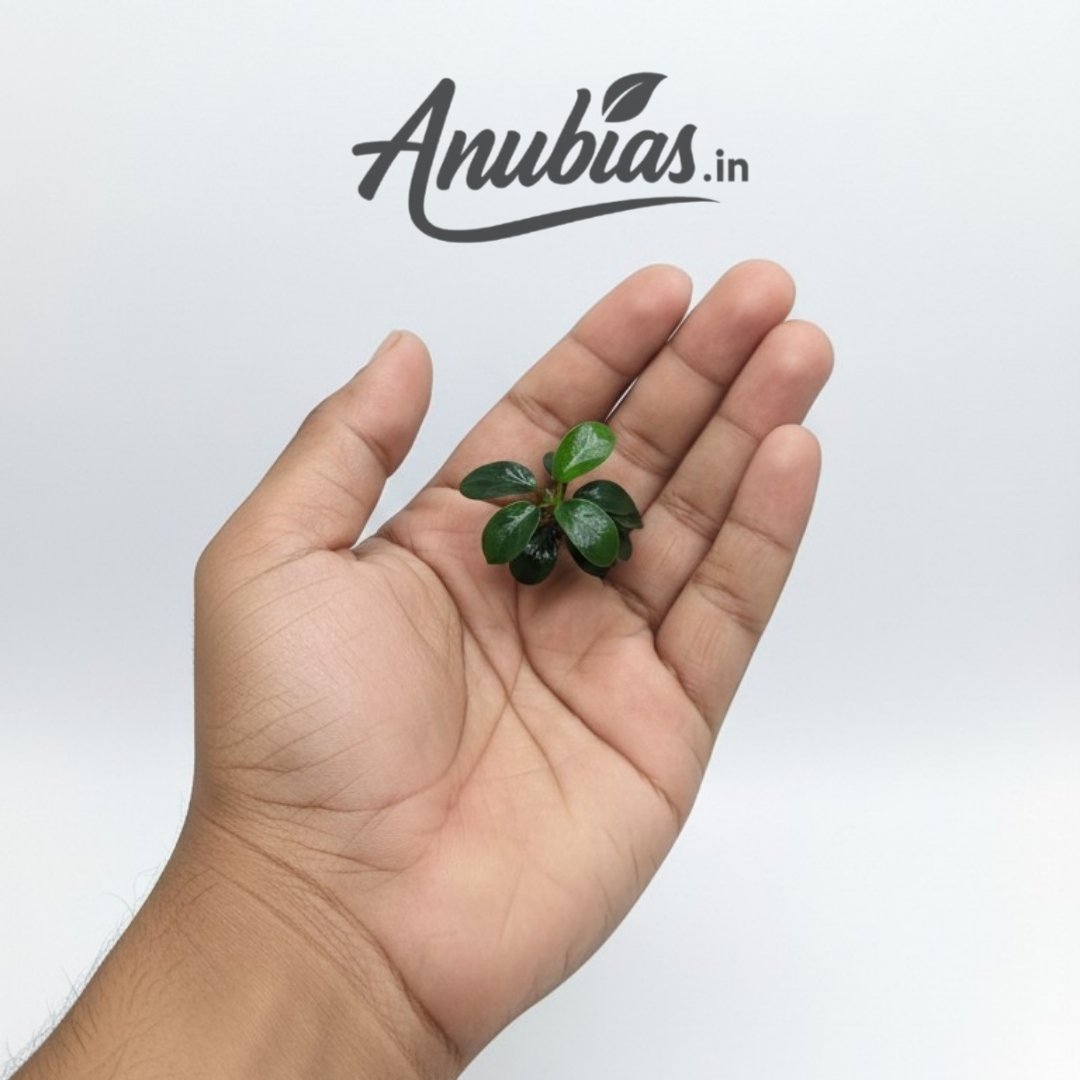
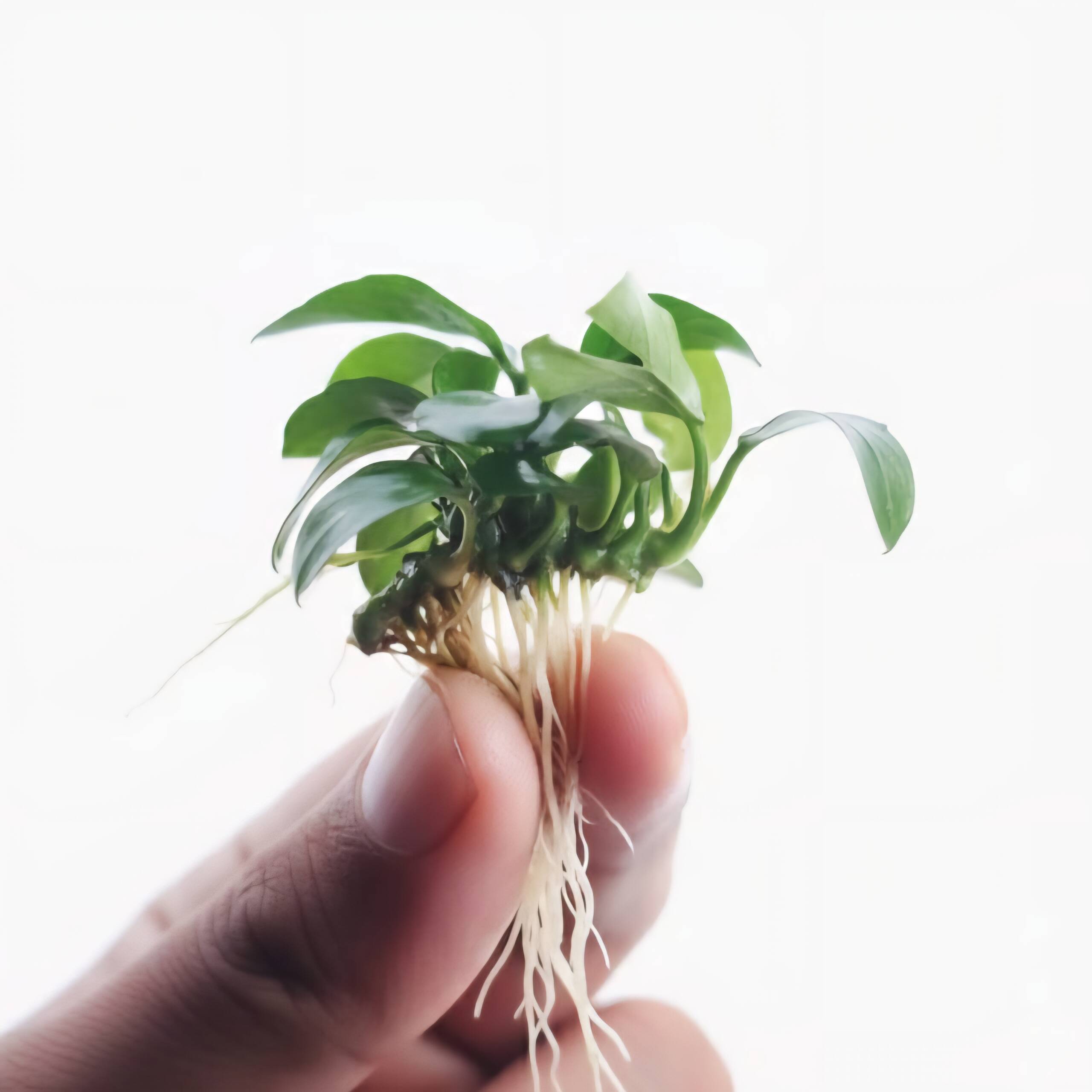
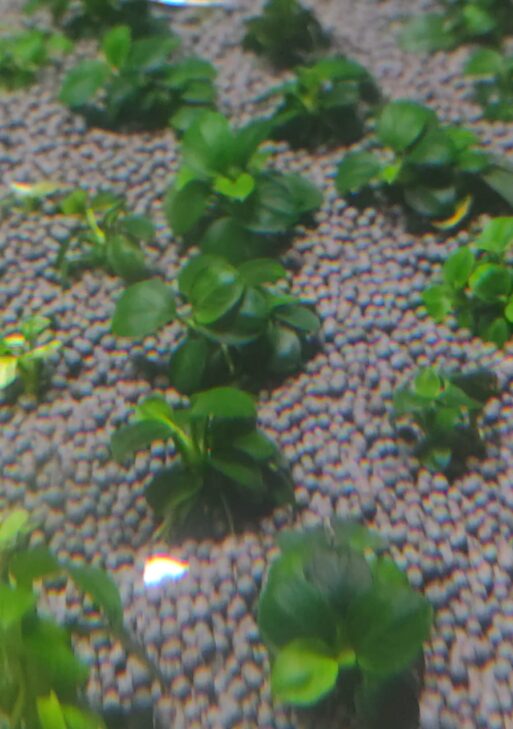
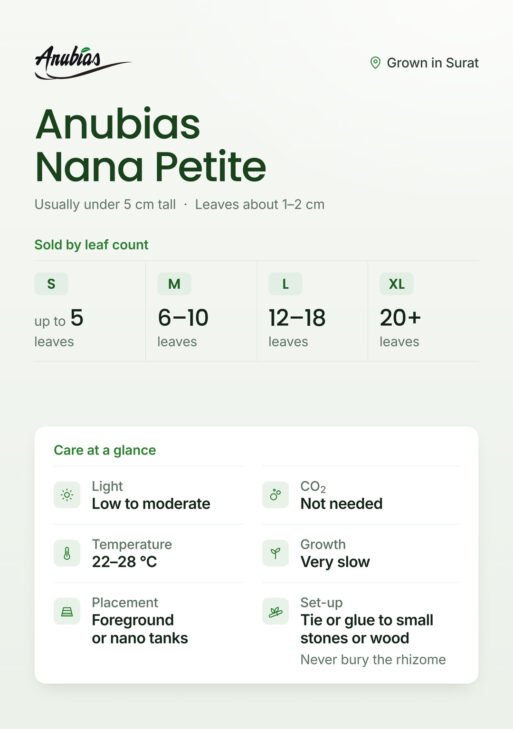
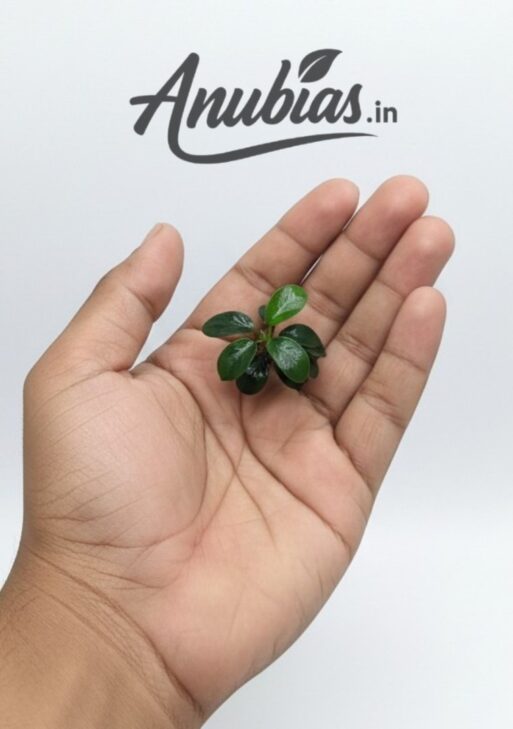
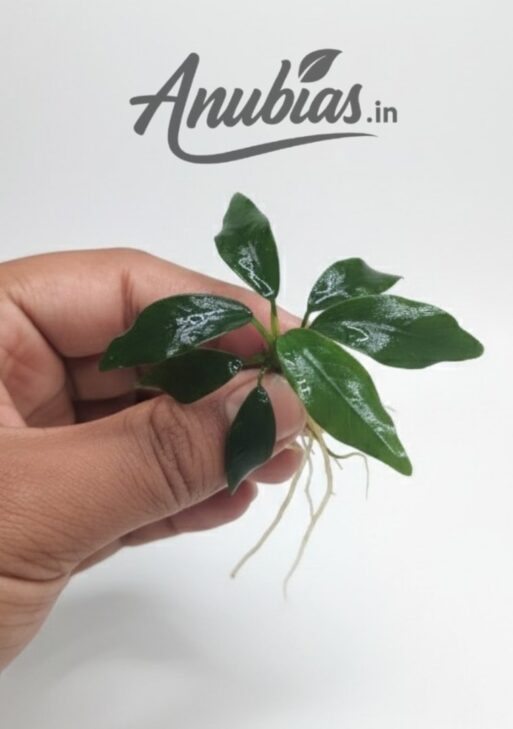
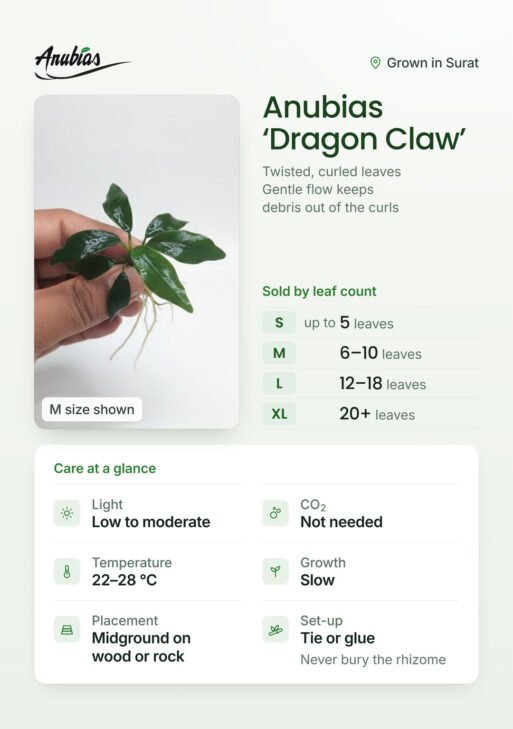
The definitive low-tech plant. Anubias grows at the same unhurried pace with or without CO2, tolerates low light without stress, and attaches to driftwood or rock instead of needing a substrate. It is the plant we’d point a first-time low-tech keeper to before anything else.
Care: low light · 22–28°C · attach to hardscape, don’t bury the rhizome. Shop Anubias Nana.
2. Anubias Barteri var. glabra
A larger-leafed Anubias for the midground or background of a low-tech tank, with the same CO2-free tolerance as Nana. Its bigger leaf surface also makes it a good spot for beneficial biofilm and algae grazing by shrimp.
Care: low light · 22–28°C · attach to hardscape. Shop Anubias Barteri var. glabra.
3. Java Fern (Philippine)
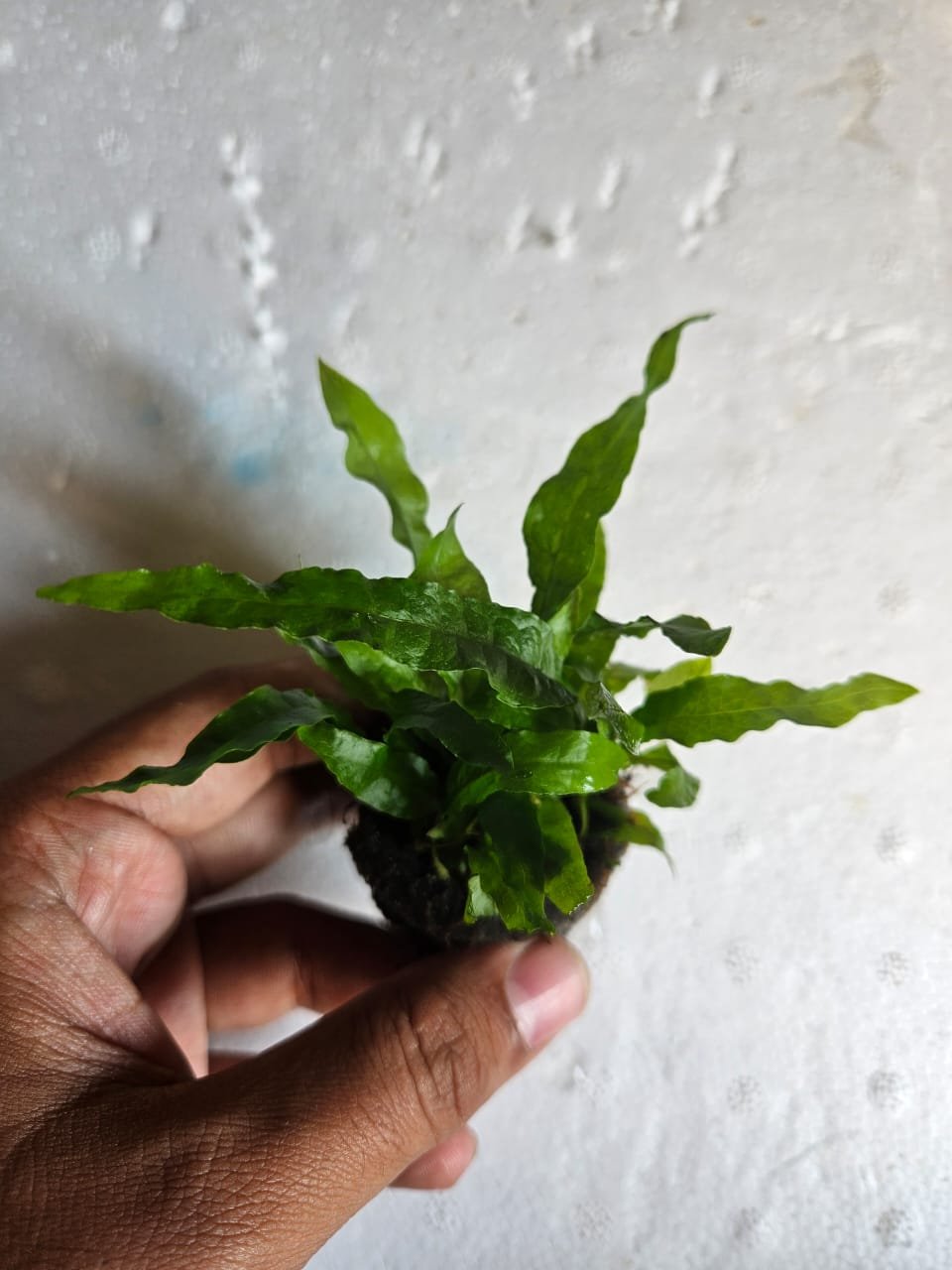
An epiphyte that has been kept in low-tech tanks for decades because it simply doesn’t need what a CO2 system provides. It attaches to hardscape, tolerates a wide range of Indian tap water, and keeps growing new fronds slowly regardless of carbon availability.
Care: low–moderate light · 20–28°C · attach to hardscape. Shop Java Fern Philippine.
4. Vallisneria Nana (Jungle Val)
A fast background grass that is proof low-tech doesn’t mean slow-growing across the board — Vallisneria spreads via runners into a swaying curtain using nothing but root-zone nutrients and ambient CO2. It is one of the best options when you want real growth and height without injected gas.
Care: moderate light · 20–28°C · plant in substrate. Shop Vallisneria Nana.
5. Water Wisteria (Hygrophila difformis)
A quick-growing stem plant that thrives whether planted or left floating, and one of the most effective low-tech plants for outcompeting algae because it takes up excess nitrate and phosphate so efficiently. A good first stem plant for a no-CO2 tank.
Care: low–high light · 22–28°C · plant or float. Shop Water Wisteria.
6. Brazilian Pennywort (Hydrocotyle leucocephala)
An undemanding trailing plant that grows just as well floating as it does planted and rooted, making it flexible for a low-tech layout. Its round leaves and fast growth make it another strong nutrient sponge for a CO2-free tank prone to algae.
Care: low–moderate light · 20–28°C · plant or float. Shop Brazilian Pennywort.
7. Amazon Frogbit
A floating plant with leaves sitting right on the surface, pulling CO2 directly from the air rather than the water column — which is exactly why floaters need no injected gas to grow quickly. Its trailing roots double as cover for fry and shrimp.
Care: bright surface light · 20–28°C · float, thin regularly. Shop Amazon Frogbit.
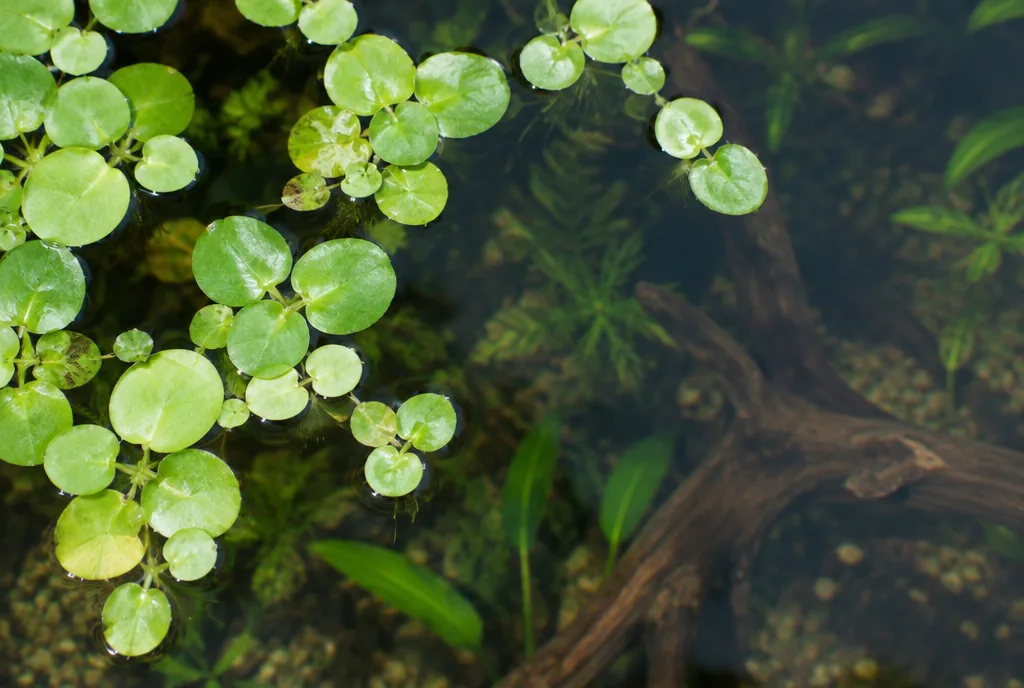
8. Water Lettuce (Pistia stratiotes)
Similar to frogbit in how it feeds — its rosette of leaves sits above the surface, giving it essentially unlimited atmospheric CO2. It also casts useful shade that helps keep a low-tech tank from overheating or growing excess algae under strong light.
Care: bright surface light · 22–28°C · float, thin regularly. Shop Water Lettuce.
9. Cryptocoryne Wendtii
The classic low-tech rosette plant. Wendtii feeds mainly through its roots and adapts its leaf shape and colour to whatever conditions you give it, slowly forming dense bronze-green clumps in the midground with nothing more than a root tab every few months. Expect some “crypt melt” in the first weeks after planting — the plant is swapping its nursery-grown leaves for submerged ones and regrows from the roots if you leave it alone.
Care: low to moderate light · 22–30°C · plant in substrate, feed the roots. Shop Cryptocoryne Wendtii.
10. Java Moss
The most forgiving plant in the hobby, full stop. Java Moss has no roots to feed and takes its carbon and nutrients straight from the water column, so it grows in practically any tank that has light — tied to driftwood, tucked between rocks, or left as a loose clump for shrimp and fry to graze. Trim every few weeks to keep the shape tight and let light reach the inner layers.
Care: any light · 20–30°C · attach with thread, trim regularly. Shop Java Moss.
Tie, plant or float: quick steps
- Tie: Anubias, Java fern and Java moss grow on wood or rock. Tie the rhizome down with cotton thread or fishing line, or glue it with a small dab of gel superglue on a dry surface. Never bury the rhizome, and spread moss thinly before you tie it.
- Plant: Vallisneria and Cryptocoryne go into the substrate with the roots buried and the crown just above it. Push stems of Water Wisteria and Brazilian Pennywort a few centimetres into the substrate, or let them float.
- Float: Amazon frogbit and water lettuce sit on the surface. Keep their leaf tops dry and leave part of the surface open so light reaches the plants below.
Where each plant goes
In a typical 60 cm low-tech tank, plant Vallisneria along the back glass, with Water Wisteria or Brazilian Pennywort beside it to soak up spare nutrients. Tie Java fern to the upper branches of the driftwood in the middle and plant Cryptocoryne in front of the wood. Anubias Nana goes low on the wood and on stones towards the front, Barteri var. glabra higher on the wood in the midground, and Java moss covers the joins between wood and rock. Float frogbit or water lettuce over one side only, so the slow growers underneath get shade but not darkness.
Care at a glance
| Factor | Anubias | Java fern | Java moss | Vallisneria | Amazon frogbit |
|---|---|---|---|---|---|
| Light | Low to moderate | Low to moderate | Low to high | Low to high (best moderate to high) | Medium |
| CO2 | Not required | Not required | Not required | Not needed | Not needed |
| Temperature | 22–28 °C | 20–28 °C | 20–30 °C | 20–28 °C | 20–28 °C |
| pH | 6.0–7.5 | 6.0–7.5 | About 5.5–8.0 | 6.5–8.5 | — |
| Growth | Slow, roughly one new leaf every 2–3 weeks | Slow to moderate | Moderate | Fast; spreads by runners | Fast |
| Placement | Front and midground, on wood or stones | Midground and background, on wood or rock | Over wood and rock; cover for shrimp | Background | Water surface; leave part of it open |
| How to attach | Tie or glue the rhizome; never bury it | Tie or glue the rhizome; never bury it; remove the grow plug first | Spread thin, then tie with thread or glue | Plant it: roots in the substrate, crown above it | Float it; keep the leaf tops dry |
Making a No-CO2 Tank Work
Start with rhizome plants — Anubias and Java fern are the most forgiving in the list above and need no substrate at all, so they’re the lowest-risk way to begin. Keep lighting moderate, around 6–8 hours a day; a low-tech tank running a high-output light with no CO2 to match is the single most common cause of an algae outbreak, since the plants can’t use the light energy fast enough to outcompete algae for nutrients. Dose a liquid all-in-one fertiliser weekly rather than skipping it — carbon is only one input, and these plants still need nitrogen, potassium and micronutrients to grow well. Do regular partial water changes to keep nutrients from building up unused. And don’t chase dense carpets in a no-CO2 tank; carpeting species like dwarf hairgrass or Monte Carlo generally want strong light and injected CO2 to fill in tightly, and will simply grow tall and thin without it — if you want a lawn effect low-tech, a slow-spreading rhizome mat is a more realistic target than a true carpet.
How Plants Get Carbon Without CO2 Injection
A no-CO2 tank is not a no-carbon tank. Fish, shrimp and the bacteria in your filter respire around the clock, releasing a steady trickle of CO2 into the water, and surface gas exchange keeps the tank drifting toward equilibrium with the air — roughly 2–4 ppm of dissolved CO2, versus the 25–35 ppm of an injected tank. The plants in this list are built to live on that trickle. Slow metabolisms mean their carbon budget balances at low concentrations, and several species have a second trick: Vallisneria and other hard-water specialists can pull carbon from the bicarbonates dissolved in the water itself, one reason Jungle Val thrives in the hard tap water of most Indian cities. Floating plants cheat entirely — their leaves sit in open air at 400+ ppm CO2, which is why frogbit and water lettuce grow quickly even in a tank where everything else moves slowly. Keep gentle surface movement (it replenishes both oxygen at night and CO2 by day) and the supply looks after itself. Bottled liquid carbon is often sold as a shortcut, but it adds little visible growth to slow plants like these and can melt Vallisneria and finer mosses, so check which plants tolerate liquid carbon before you buy a bottle.
A Simple Weekly Routine for a No-CO2 Tank
A low-tech tank rewards consistency more than effort. The whole routine takes about twenty minutes a week:
- Weekly: change 25–30% of the water with dechlorinated water close to tank temperature, then dose a liquid all-in-one fertiliser into the fresh water.
- While the water is low: wipe the front glass, pinch off yellowing leaves, and gently rub any algae film off Anubias and Java fern leaves.
- Daily, thirty seconds: confirm the light is running its 6–8 hour window, top up evaporation (it is fastest in summer), and glance at fish behaviour.
- Monthly: rinse filter media in the water you removed during a change — never under the tap, which kills the bacteria doing half your work.
That is the entire maintenance load. If a week gets missed, a tank stocked from the list above shrugs it off — which is exactly why these species are worth choosing in the first place.
Troubleshooting Yellowing Leaves in a Low-Tech Tank
Yellowing in a no-CO2 tank is almost never about carbon, so resist the urge to buy an injection kit at the first pale leaf. Work through the likely causes in order. New plants melting in their first two or three weeks — especially Cryptocoryne and Water Wisteria — are usually just swapping emersed leaves for submerged ones; leave the roots in place and they regrow. If older leaves yellow first while new growth looks fine, the plant is relocating mobile nutrients and you have a nitrogen or potassium shortfall: start (or double) the weekly all-in-one dose. Pinholes that spread through older leaves point specifically to potassium. Pale new growth with darker veins suggests iron or micronutrients. And if it is an Anubias yellowing, check the rhizome first — a buried rhizome or too-strong light explains most cases, covered in detail in our guide to why Anubias melts or turns yellow. Only when everything declines at once should you suspect the basics: test the water, and check the light timer hasn’t crept longer.
What to expect: a 90-day low-tech timeline
| Timeframe | What usually happens | What to do |
|---|---|---|
| Weeks 1–4 | Some leaf melt; Crypts may lose leaves; slow growers pause | Remove dead leaves, keep conditions stable |
| Weeks 5–8 | New leaves on Anubias and Java fern; Vallisneria sends runners | Start weekly liquid fertiliser; add root tabs for rooted plants |
| Weeks 9–12 | Tank looks fuller; floaters need regular thinning | Trim fast growers, keep light at 6–8 hours |
A simple lighting schedule for no-CO2 tanks
- Run a basic LED for 6–8 hours a day on a timer.
- Start at about 6 hours in the first month to limit algae while plants settle.
- Increase gradually only if plants look pale or leggy and there is no algae.
- Avoid direct sunlight on the tank, which causes algae and heat.
Feeding tips: how often to fertilise and root tabs vs liquid fertiliser.
Start with the Anubias Five
One of each of our five Surat-grown Anubias, sized by leaf count.
Build your setFrequently Asked Questions
Can aquarium plants really grow without CO2? Yes — many species evolved in slow water with naturally low dissolved carbon and rely on ambient CO2 from the water column and fish respiration; Anubias, Java fern, Vallisneria and most floaters all grow well without injection, just more slowly than in a high-tech tank.
Do no-CO2 tanks still need fertiliser? Yes, usually a liquid all-in-one dosed weekly, since plants still need nitrogen, potassium and micronutrients even when carbon is limited.
Will low-tech plants ever carpet as densely as a CO2 tank? Not usually to the same density — true carpeting species like dwarf hairgrass or Monte Carlo generally need CO2 and strong light to fill in tightly; without it, rhizome plants and slow groundcover give better results than fighting a carpet species.
Which fast-growing aquarium plants don’t need CO2? Water Wisteria, Brazilian Pennywort, Amazon Frogbit and Water Lettuce are the fastest growers on this list, and none needs injected CO2. The two floaters take CO2 straight from the air, while Wisteria and Pennywort soak up nitrate and phosphate quickly. Vallisneria Nana also spreads fast by runners. Thin the floaters regularly.
Start your low-tech tank with healthy, hand-picked stock — browse our full aquarium plant collection, delivered across India with a live-arrival guarantee.
Grown in Surat (pre-order plants imported to order) · live-arrival guarantee with a 4-hour unboxing video · ₹99 shipping, free from ₹999