
The best aquarium plants for low light are the ones that evolved in the shaded understory of slow rivers and streams — Anubias, Java fern, Bucephalandra, Cryptocoryne and a handful of others that never needed strong sun to survive. If your tank runs a basic stock LED, sits away from a window, or you simply don’t want to upgrade lighting and add CO2 to match it, these are the aquarium plants without CO2 to build around. Here is why they tolerate shade so well, and eight options from our catalogue ranked roughly by how little light they need.
Quick answer: The eight best low-light aquarium plants are Anubias Nana, Anubias Nana Gold, Java fern, dwarf Java fern, Bucephalandra, Cryptocoryne, Java moss and Vallisneria Nana — all fine at 20–28°C under a basic stock LED with no CO2. Run the light about 8 hours a day at low intensity and dose a weekly liquid fertiliser to hold colour.
Why Some Plants Tolerate Low Light
Shade-tolerant aquarium plants share a few traits. They grow slowly by nature, so they don’t need a large light energy budget to sustain that growth — unlike fast carpeting or stem plants bred to pack on tissue quickly under bright light. Many are epiphytes that evolved attached to submerged wood and rock in the shaded margins of rivers, well below where full sun reaches. And most have broad, efficient leaves suited to capturing whatever light is available rather than needing it in abundance. That combination makes them ideal for beginners, offices, and any low-tech tank where a bright fixture and CO2 injection aren’t part of the plan.
Best low light aquarium plants
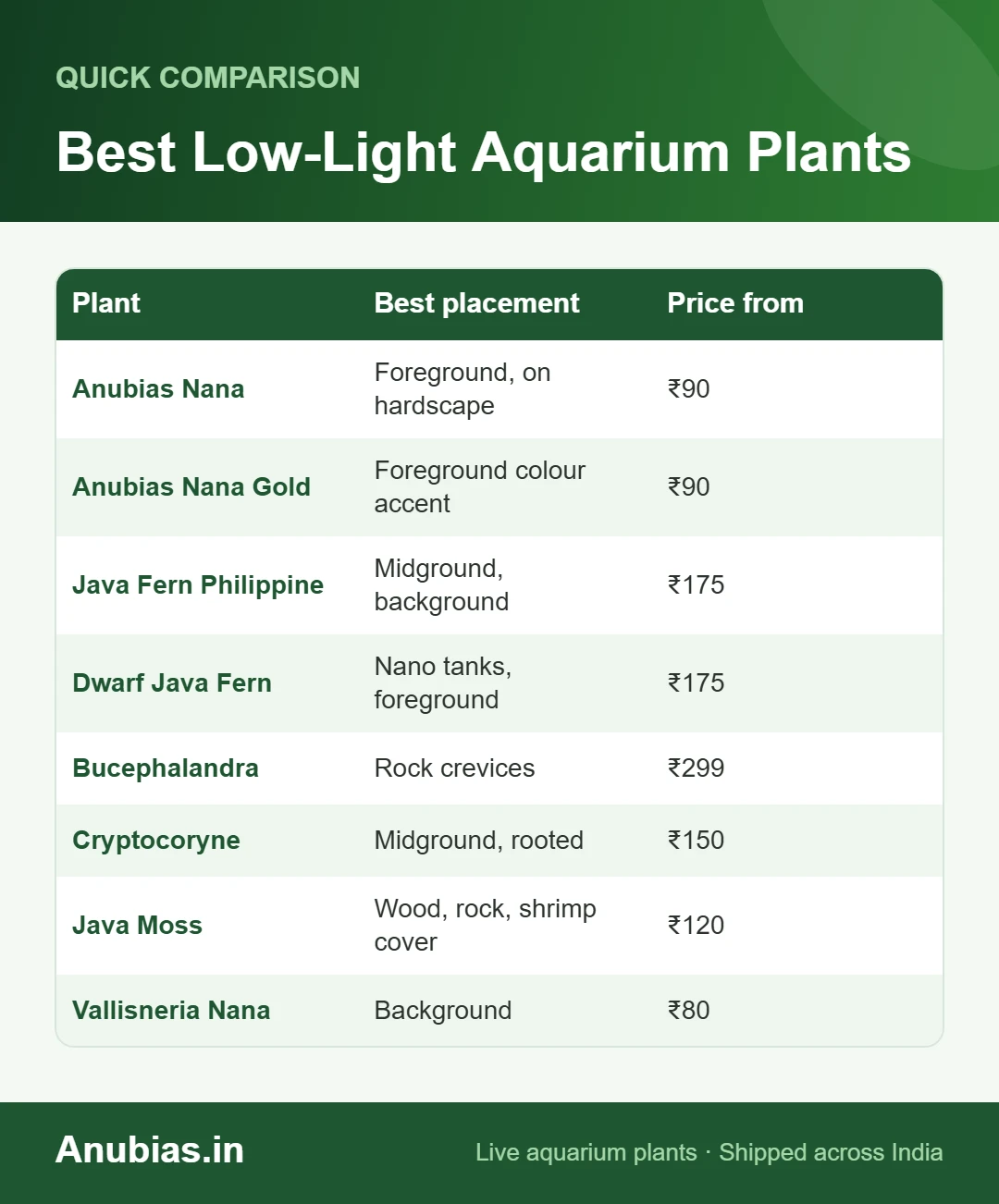
The best low light aquarium plants are Anubias Nana and Nana Gold, Java fern and dwarf Java fern, Bucephalandra, Java moss, Cryptocoryne and Vallisneria Nana. Anubias Nana is the most shade-tolerant of them and needs no CO2 or substrate. Crypts and Vallisneria root in the substrate, and Vallisneria wants a little more light than the rest.
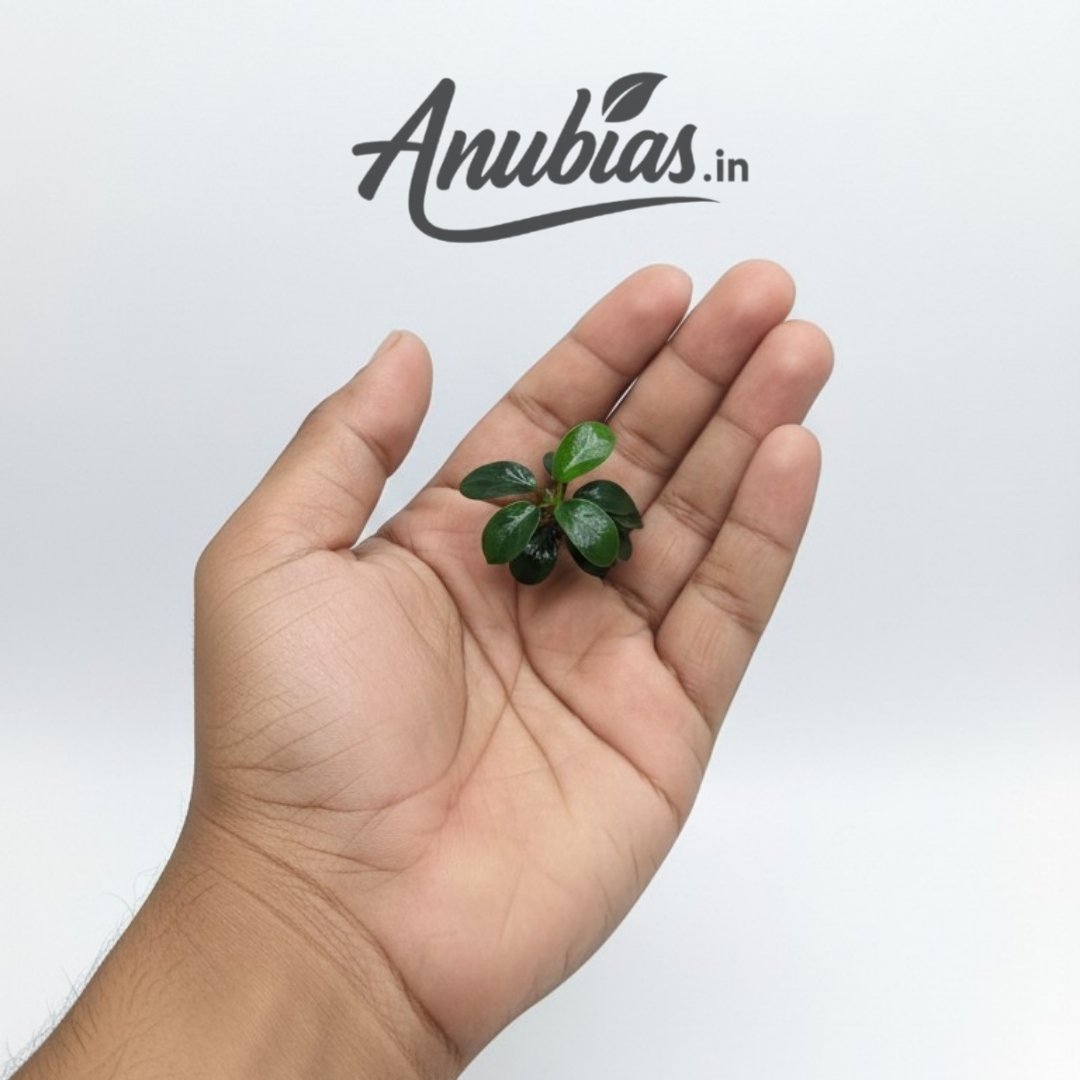
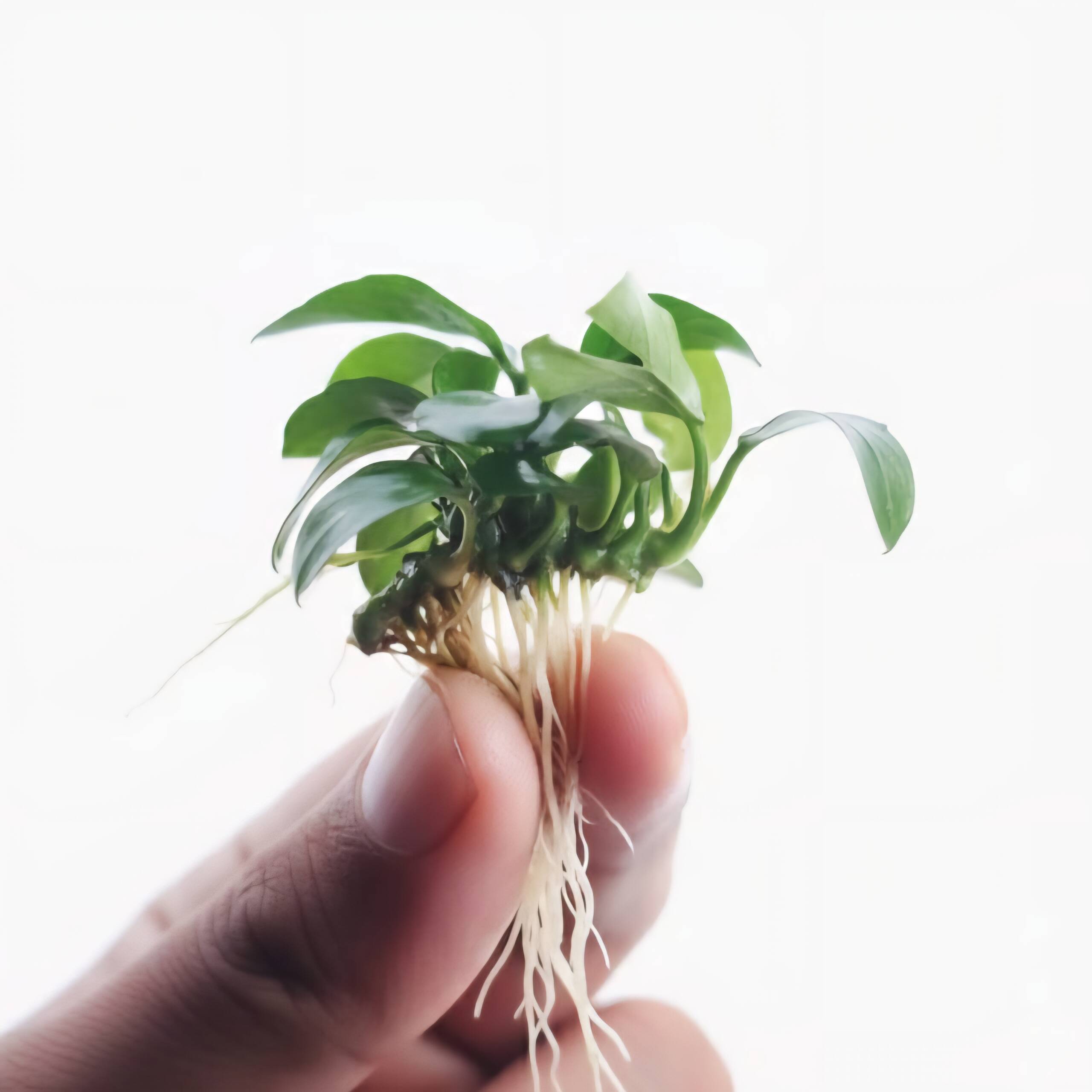
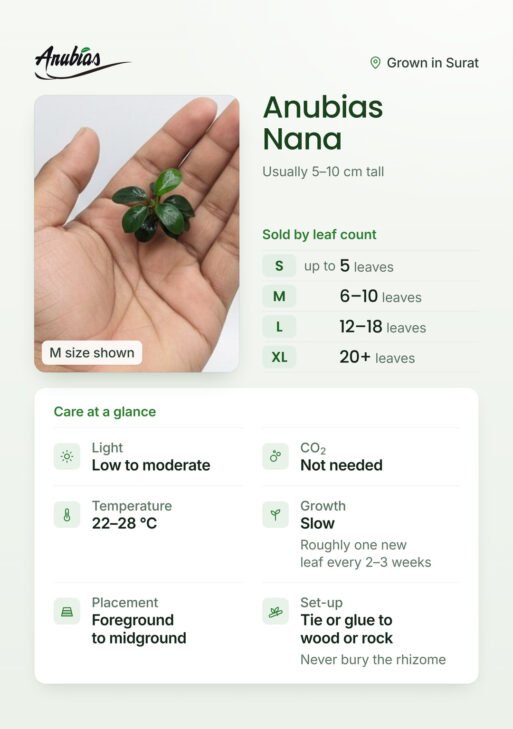
1. Anubias Nana
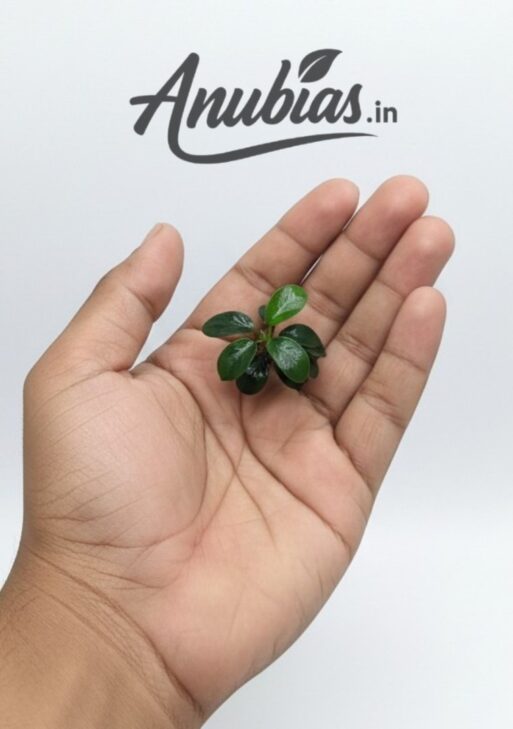
The single most shade-tolerant true aquatic plant sold in India. It grows under almost any light level that supports photosynthesis at all, needs no CO2, and attaches to hardscape instead of substrate.
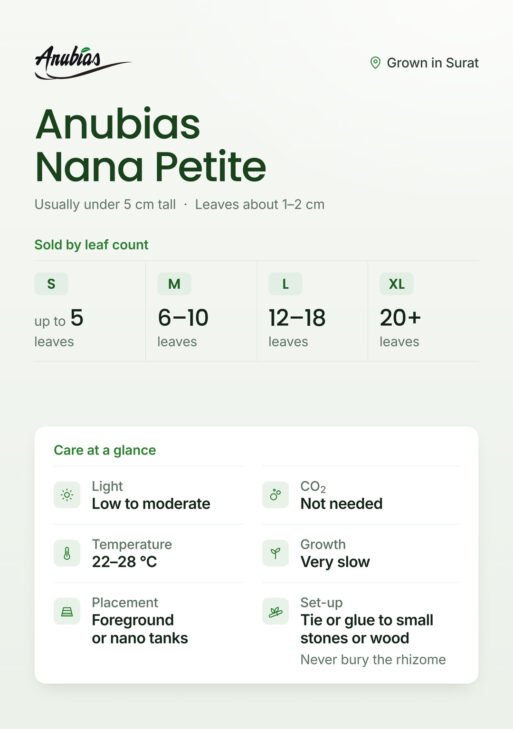
Care: low light · 22–28°C · attach to hardscape. Shop Anubias Nana.
2. Anubias Nana Gold
Identical shade tolerance to standard Nana, with golden-green colouring that reads well even under a dim fixture where darker greens can look flat.
Care: low light · 22–28°C · attach to hardscape. Shop Anubias Nana Gold.
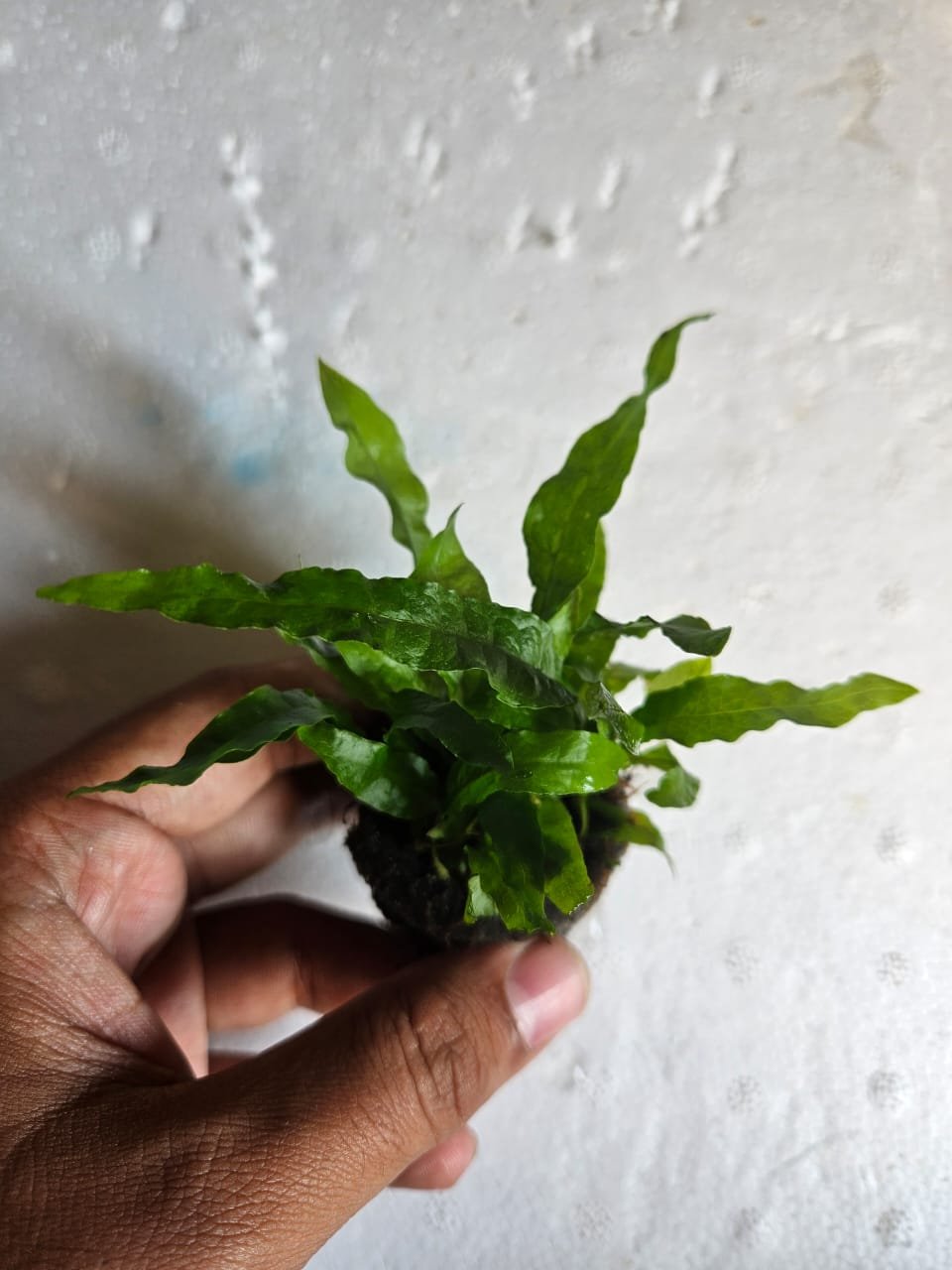
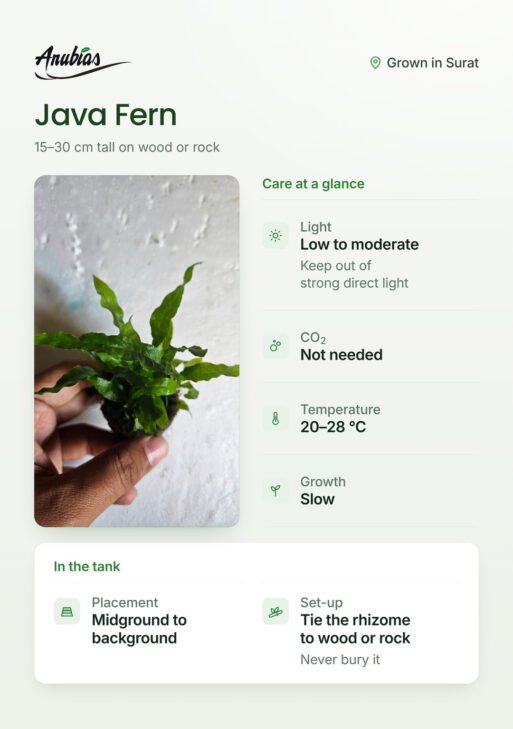
3. Java Fern (Philippine)
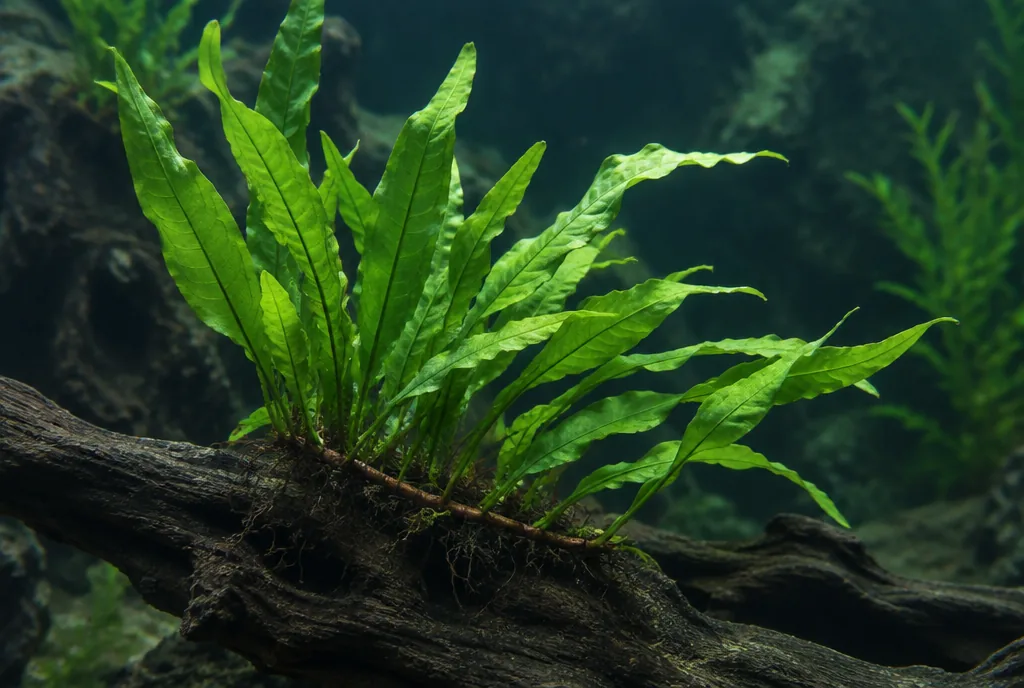
Extremely forgiving in dim tanks and one of the most widely kept low-light epiphytes anywhere. It attaches to driftwood or rock, tolerates a wide range of Indian tap water, and rarely shows stress from too little light.
Care: low–moderate light · 20–28°C · attach to hardscape. Shop Java Fern Philippine.
4. Dwarf Java Fern (Green Gnome / Mini)
The same low-light tolerance as standard Java fern in a more compact form, useful when you want shade-tolerant cover without it eventually crowding a smaller tank.
Care: low–moderate light · 20–28°C · attach to hardscape. Shop Dwarf Java Fern.
5. Bucephalandra
As shade-tolerant as Anubias, with a premium bronze-green, blue-sheened look that has made it popular in low-light nano tanks. Stock moves quickly given demand, so check availability — it’s worth watching if you want a standout low-light centrepiece. Browse Bucephalandra.
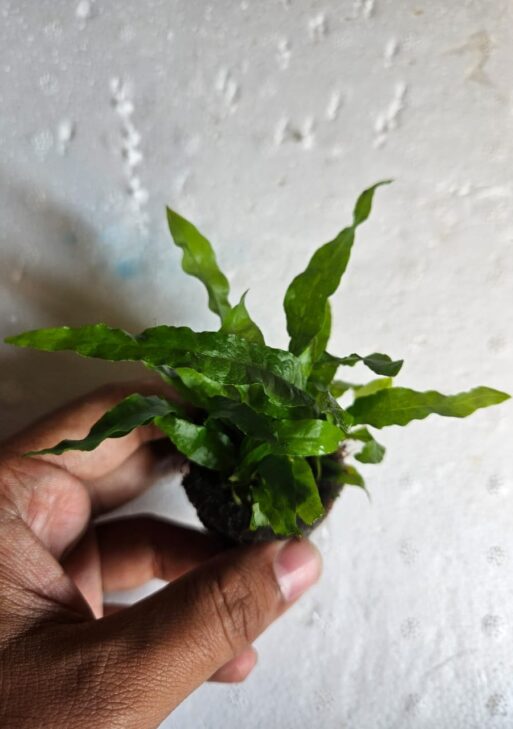
6. Cryptocoryne
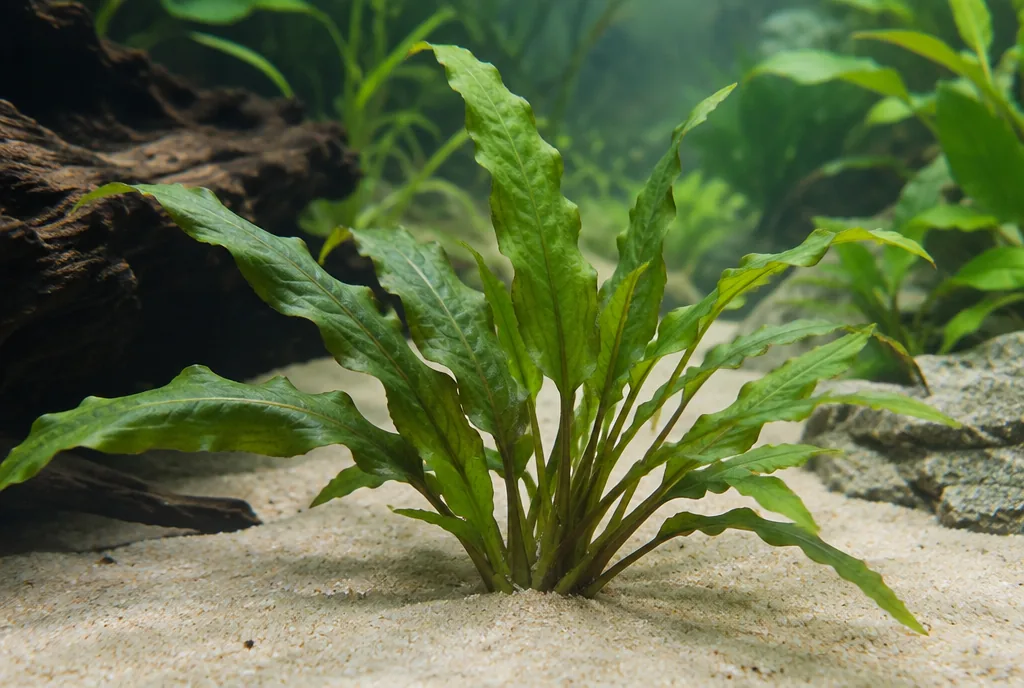
A hardy rooted plant that forms lush rosettes in low-to-moderate light without any CO2. New imports commonly show “crypt melt” — leaves dying back after the change in water — but new growth reliably follows once it settles in. Browse Cryptocoryne.
7. Java Moss
Grows in some of the lowest light levels of any plant on this list, which is exactly why it’s a staple in shrimp and betta tanks running minimal lighting. Drape it over hardscape rather than planting it for the fastest results. Browse Ferns & Mosses.
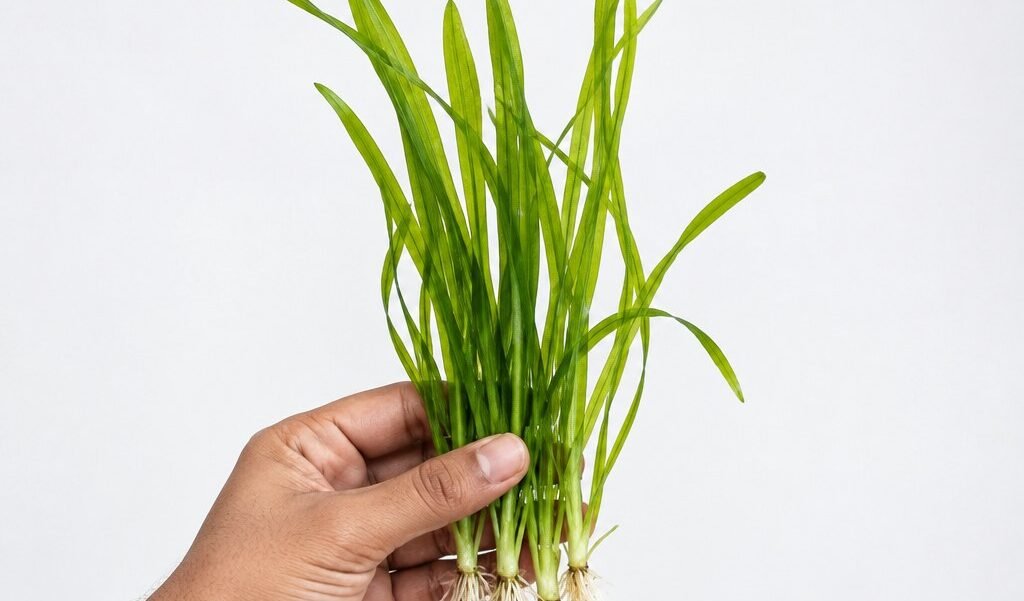
8. Vallisneria Nana (Jungle Val)
More light-hungry than the epiphytes above but still reasonably tolerant of a moderate, non-intense fixture. A fast background grass that fills the back of a tank with height without demanding a high-output light.
Care: moderate light · 20–28°C · plant in substrate. Shop Vallisneria Nana.
Tie these, plant those
Low-light plants fall into two groups, and each group goes into the tank a different way.
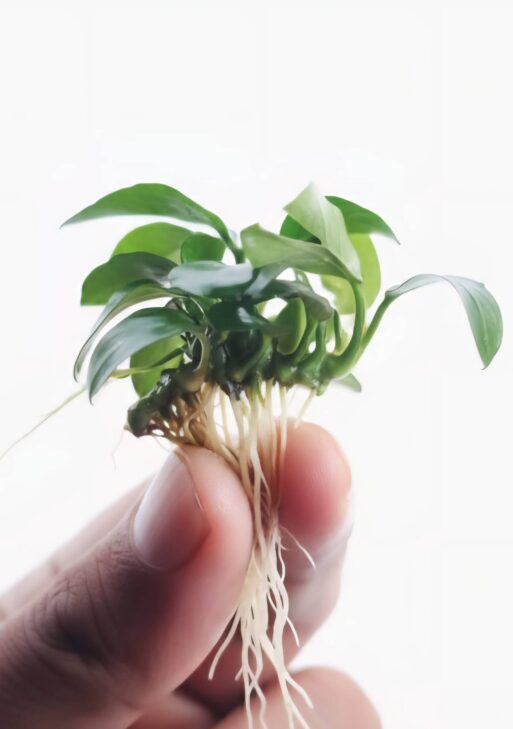
Tie these: Anubias, Java fern, Bucephalandra and moss
These are epiphytes. They grow on a rhizome (moss on thin stems) and take their food from the water, so they belong on wood or rock. Tie the rhizome down with cotton thread or fishing line, or glue it with a small dab of gel superglue on a dry surface, and keep it uncovered. Their roots may reach into the substrate, but a buried rhizome rots. Spread moss thinly and tie it in place.
Plant these: Cryptocoryne and Vallisneria
These are rooted plants that feed mainly through their roots. Push the roots into the substrate and leave the crown, where the leaves meet the roots, just above it. A root tab near them every few months helps in plain sand or gravel. Expect Cryptocoryne to lose some leaves after planting before it regrows, and Vallisneria to spread by runners once it settles.
Where to place them in a low-light tank
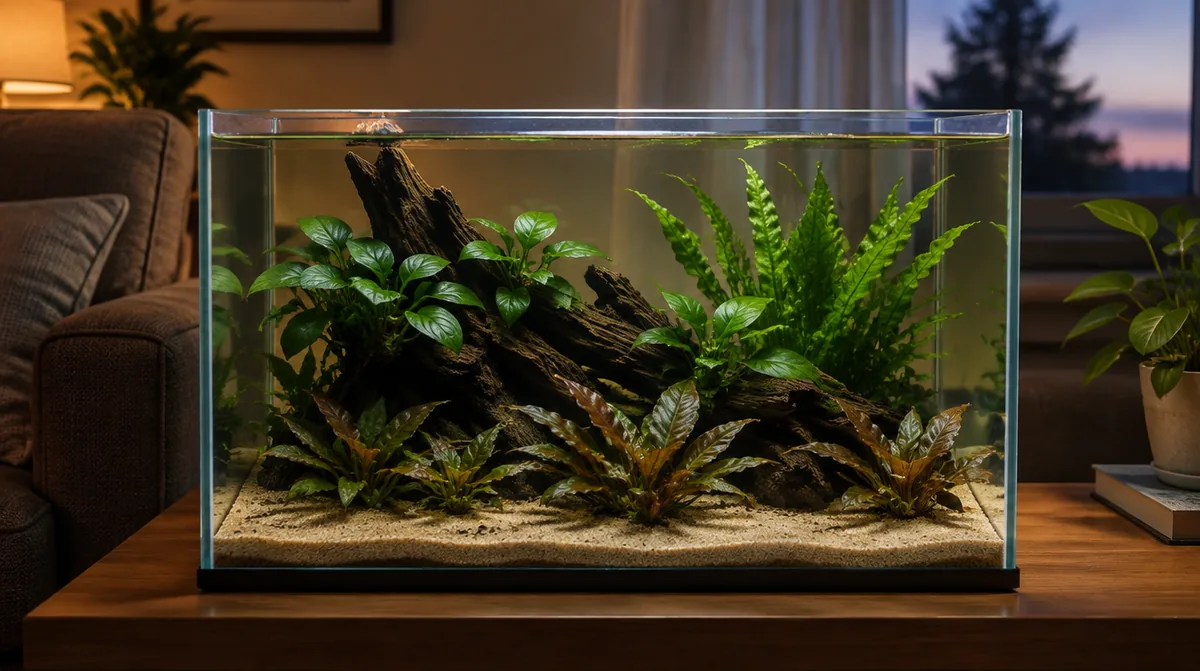
Put the tallest, fastest plant at the back: Vallisneria makes a green curtain there and still grows under a moderate light. Java fern suits the midground, tied to wood where its taller leaves hide the heater and filter, with Cryptocoryne planted in front of the wood. Keep the front for the slow, compact plants: Anubias Nana and Nana Gold on small stones or the base of the wood, and Bucephalandra on rocks. Moss can cover wood and rock anywhere. Leave the slowest growers slightly shaded under the wood so algae does not settle on their leaves.
Care at a glance
| Factor | Anubias | Java fern | Bucephalandra | Java moss | Vallisneria |
|---|---|---|---|---|---|
| Light | Low to moderate | Low to moderate | Low to moderate | Low to high | Low to high (best moderate to high) |
| CO2 | Not required | Not required | Not required | Not required | Not needed |
| Temperature | 22–28 °C | 20–28 °C | 22–28 °C | 20–30 °C | 20–28 °C |
| pH | 6.0–7.5 | 6.0–7.5 | 6.0–7.5 | About 5.5–8.0 | 6.5–8.5 |
| Growth | Slow, roughly one new leaf every 2–3 weeks | Slow to moderate | Very slow | Moderate | Fast; spreads by runners |
| Placement | Front, on wood or stones | Midground, on wood | Front, on stones and wood | Over wood and rock; cover for shrimp | Background |
| How to attach | Tie or glue the rhizome; never bury it | Tie or glue the rhizome; never bury it | Tie or glue the rhizome; never bury it | Spread thin, then tie with thread or glue | Plant it: roots in the substrate, crown above it |
Problems you may see in low light
- Algae spots on Anubias and Bucephalandra: their slow leaves stay in the tank for months. Shorten the light period, shade them under wood and add grazers such as nerite snails.
- Cryptocoryne melting after planting: normal while it replaces its leaves. Leave the roots in place and it regrows.
- Vallisneria thinning out: it wants more light than the epiphytes. Move it to where the light is strongest.
- Pale leaves on everything: low light does not remove the need for food. Dose a weekly liquid fertiliser.
Getting the Best Out of a Low-Light Tank
Run your light around 8 hours a day and keep the intensity low rather than trying to compensate with a longer photoperiod — more hours at low intensity doesn’t help shade-tolerant plants and simply gives algae more time to establish. Dose a weekly liquid fertiliser regardless of how little light you’re running, since these plants still need nitrogen, potassium and micronutrients to hold their colour. Avoid demanding carpet plants until you upgrade lighting — species like dwarf hairgrass or Monte Carlo generally stall and thin out under a genuinely low-light setup. And be patient: shade-tolerant plants are shade-tolerant precisely because they grow slowly, so weeks between visible new leaves is normal, not a sign something is wrong. Want to skip CO2 for good as well? Our list of aquarium plants that don’t need CO2 covers ten easy options.
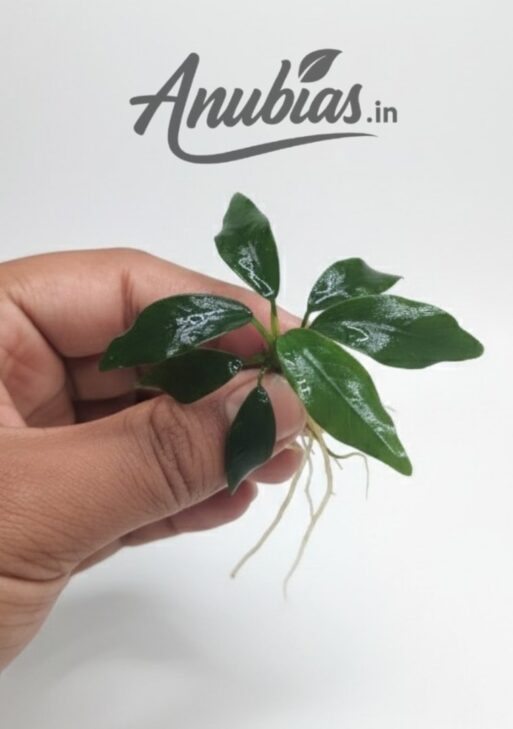
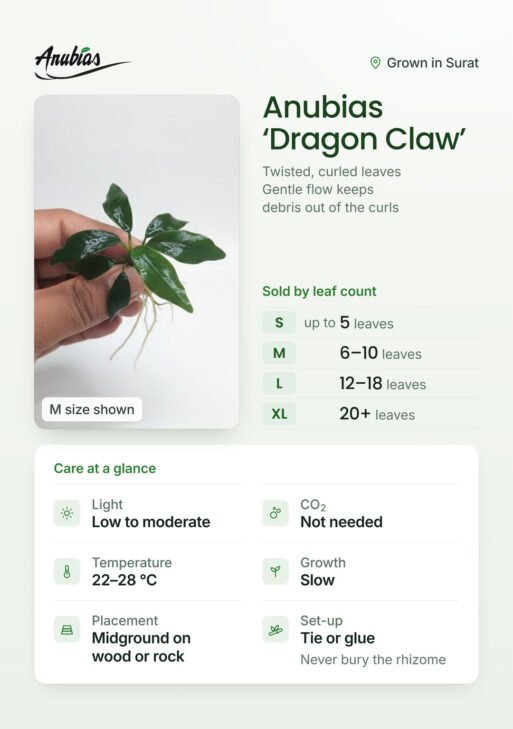
Start with the Anubias Five
One of each of our five Surat-grown Anubias, sized by leaf count.
Build your setFrequently Asked Questions
What counts as “low light” for an aquarium? Generally a basic single-strip LED with no added CO2, or a tank that sits away from direct sun — enough to support slow-growing shade plants but not enough to drive a demanding carpet or high-light stem plant.
Will low-light plants grow more slowly? Yes, noticeably — that’s expected and generally healthier than pushing more light without matching nutrients or CO2, which mainly benefits algae rather than the plants.
Can I add CO2 to a low-light tank later? Yes, but increase light and CO2 together rather than one at a time; adding CO2 alone to a low-light tank does little, and adding strong light without CO2 to match is the most common cause of an algae outbreak.
Can aquarium plants grow with no light? No. Every aquarium plant needs some light to photosynthesise, so none survives for long in a tank that stays dark. The most shade-tolerant ones, such as Anubias Nana and Java moss, manage under a basic stock LED. Our guide to aquarium plants without light explains which plants cope best in dim tanks.
Build your low-light tank with hand-picked, healthy stock — browse our full aquarium plant collection, delivered across India with a live-arrival guarantee.
Grown in Surat (pre-order plants imported to order) · live-arrival guarantee with a 4-hour unboxing video · ₹99 shipping, free from ₹999