
If you want an aquarium plant that is almost impossible to kill, looks great, and needs no CO2 or fancy lighting, Anubias is where you start. This guide covers light, water, the one rule you must never break, how to attach it, how to multiply it, and how to fix common problems.
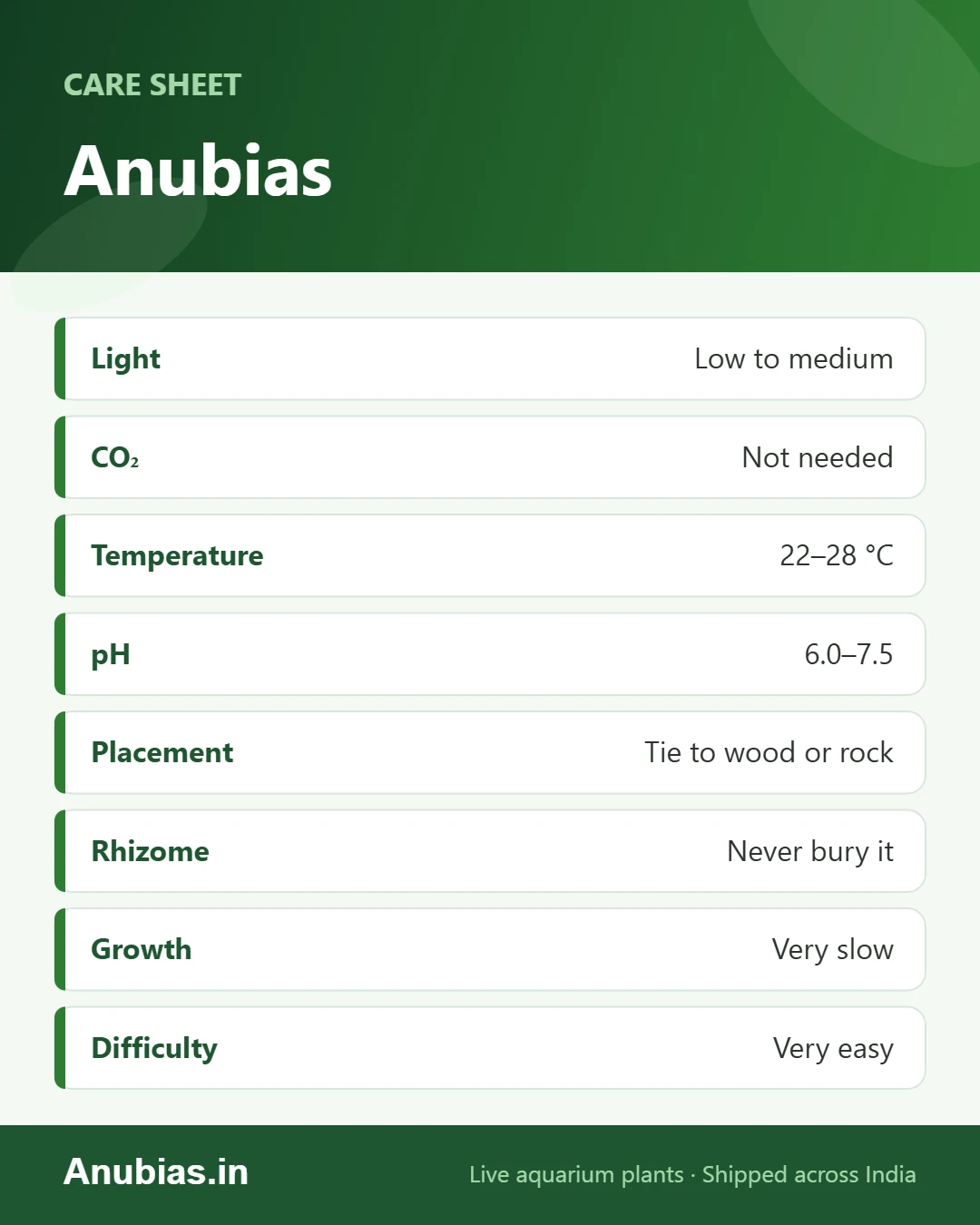
Quick answer: Anubias needs only low light and no CO2, grows happily at 22–28°C and pH 6.0–7.5, and should be attached to driftwood or rock rather than buried in substrate. It’s one of the slowest-growing, hardest-to-kill aquarium plants, making it ideal for complete beginners.
What makes Anubias beginner-friendly
The Anubias plant is a slow-growing rhizome species from West and Central Africa. In nature it clings to rocks and wood rather than rooting in soil, which is why it is so easy: it thrives in low light with no special lamps, it needs no CO2 or special substrate because it feeds from the water column, its thick leathery leaves are left alone by most fish, and it grows so slowly it needs almost no maintenance.
What Anubias does in your tank
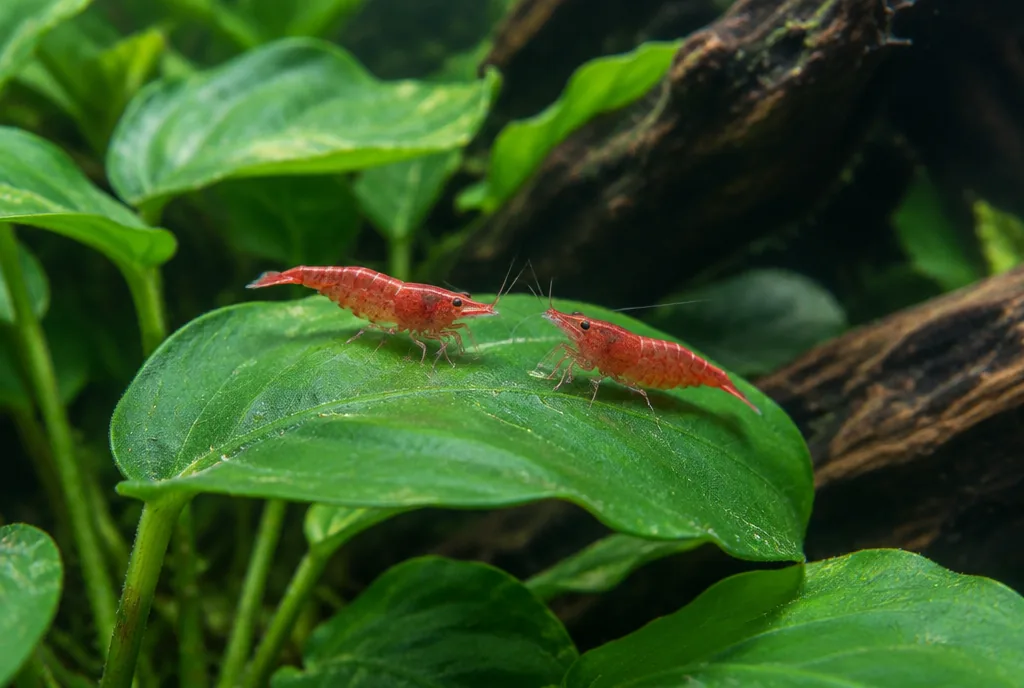
Anubias is more than a decoration. Its broad, leathery leaves give shrimp and baby fish cover and shade, and bettas and gouramis like to rest on the flat leaves near the surface. A thin film of biofilm grows on the leaves, and shrimp and snails graze it all day. Because the leaves are tough and taste bitter, most fish leave them alone, so Anubias lasts in tanks where softer plants get eaten.
One honest limit: Anubias grows too slowly to take up much of the nitrate and phosphate that algae feed on, so it will not beat algae on its own. If algae is a problem, grow a fast plant or a floating plant such as Amazon frogbit alongside it.
The one golden rule: never bury the rhizome
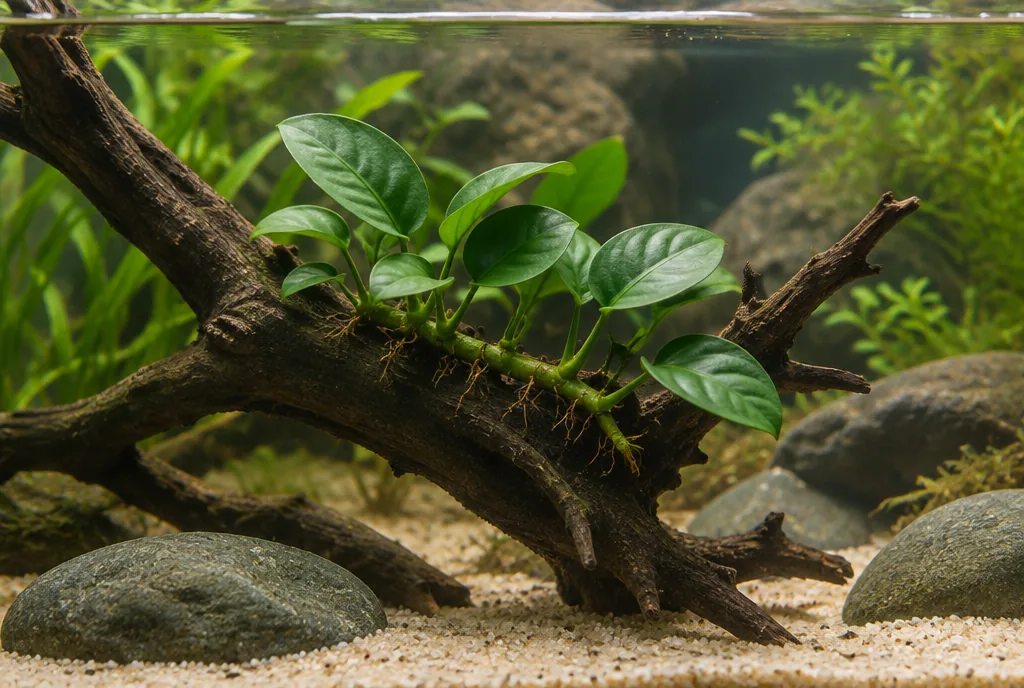
The rhizome is the thick horizontal stem that the leaves and roots grow from. If you bury it in substrate it will rot and the plant will die. Attach it on top of wood or rock instead and let the roots grip on. The roots can go into substrate, but the rhizome must stay exposed to the water.
How to plant Anubias
To plant Anubias, tie or glue its rhizome to driftwood or rock, or wedge it firmly between stones, and let the roots grip over a few weeks. If you plant it in substrate, bury only the roots and keep the rhizome, the thick horizontal stem, above the gravel, because a buried rhizome rots.
Details for each method: how to attach Anubias to driftwood or rock. Planting in gravel or aqua soil? See can you bury the Anubias rhizome.
How to attach Anubias
You have three easy options: wrap the rhizome to wood or rock with cotton thread, dab aquarium-safe super glue gel on the underside of the rhizome and press it to dry hardscape, or wedge it into a crevice. Within a few weeks the roots anchor themselves and you can remove any thread.
Find the rhizome first
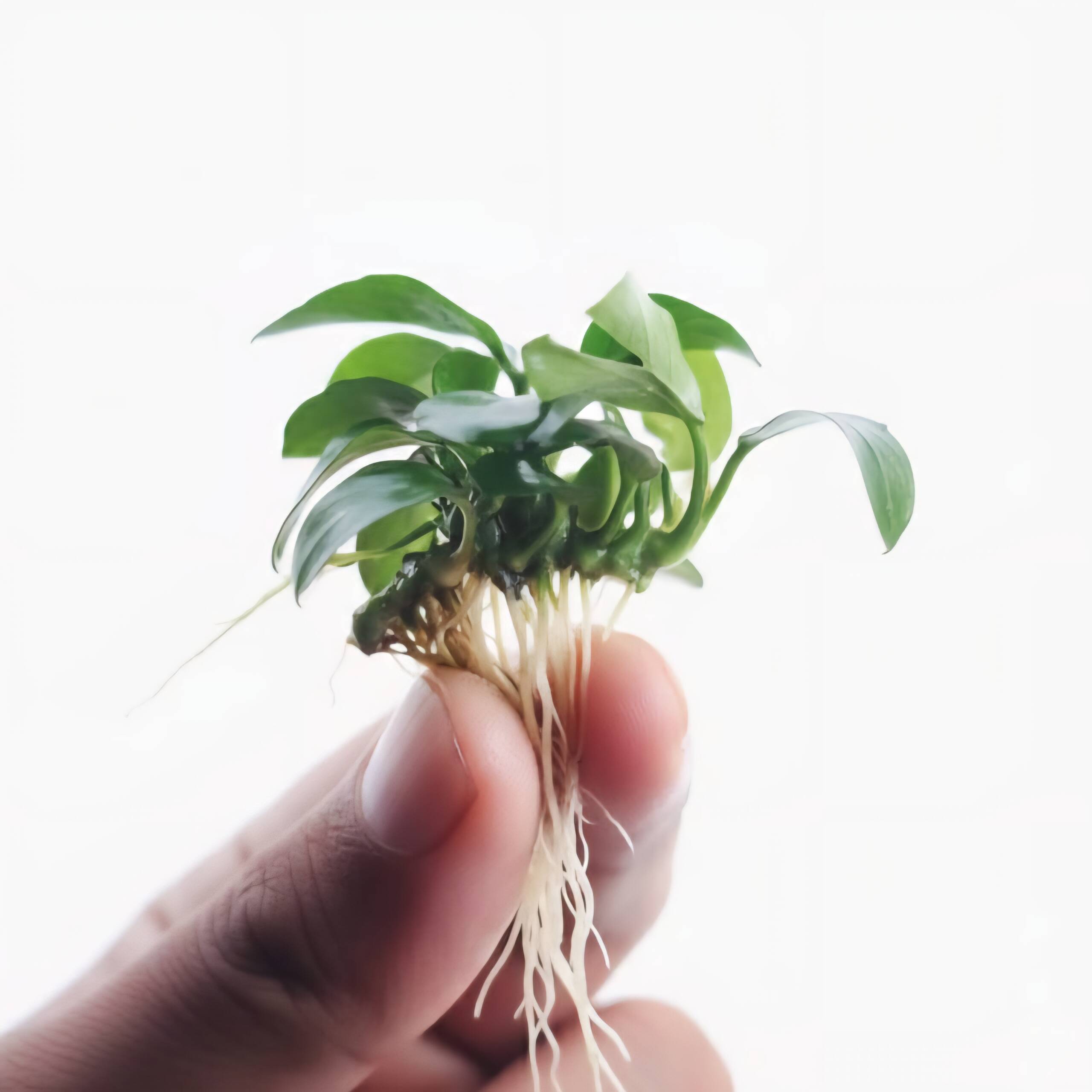
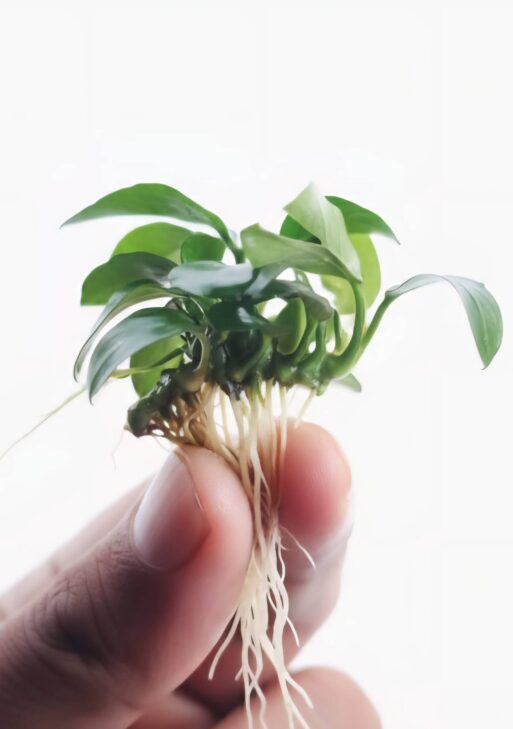
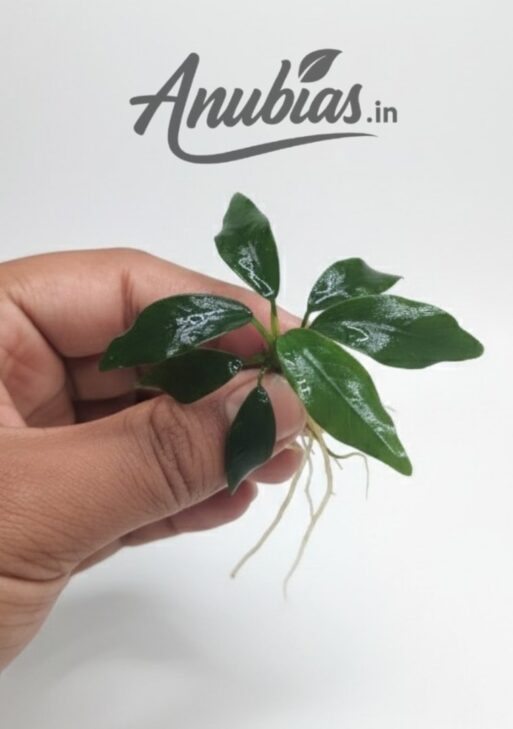
Before you attach anything, find the three parts of the plant. The rhizome is the firm green stem that runs sideways, usually about as thick as a pencil. Leaves rise on short stalks from its top, and wiry roots grow from its underside. New leaves appear at one end, the growing tip, so leave that end free and point it where you want the plant to spread. Thread or glue always goes on the rhizome, between the leaves, never over the tip.
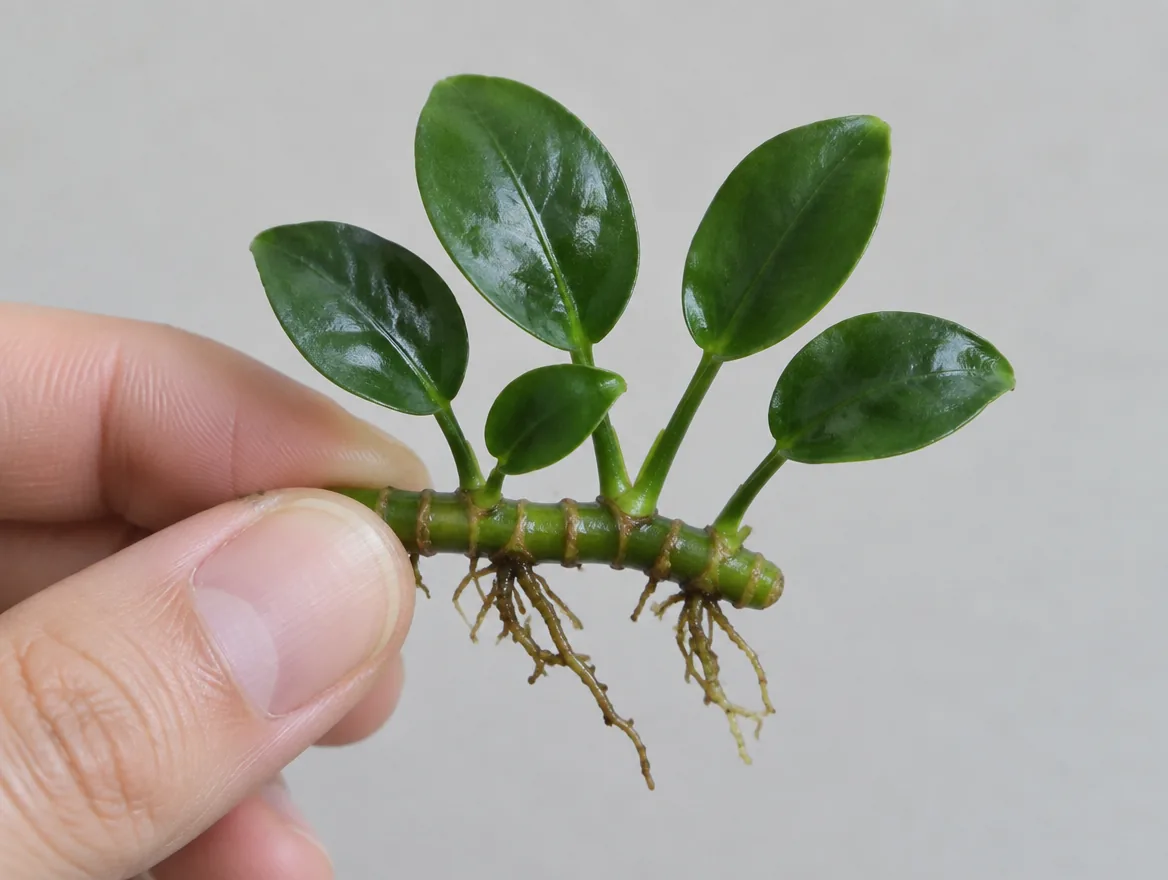
How to tie Anubias to wood
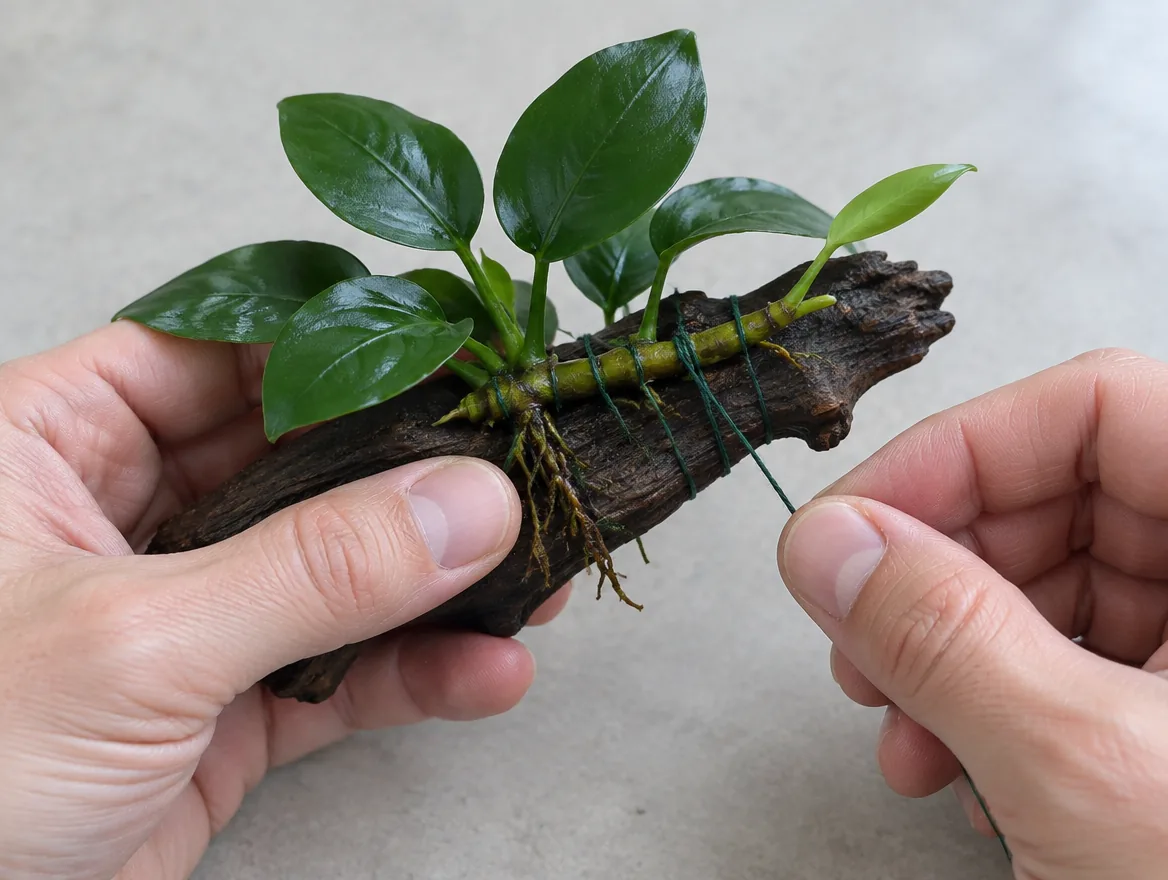
- Hold the rhizome flat against the wood or rock, with the growing tip free and the roots touching the surface.
- Wrap cotton thread or fishing line around the rhizome and the wood three or four times, passing between the leaves. Keep it snug, not tight enough to cut into the rhizome.
- Knot the thread on the underside, where it will not show, and trim the ends.
- Put it back in the tank. The roots usually grip within a few weeks. Cotton thread breaks down on its own later; cut fishing line off once the plant is firm.
Or glue it in three steps
- Pat the spot on the wood or rock dry, and blot the underside of the rhizome with a tissue.
- Put a small dab of gel superglue (cyanoacrylate gel) on the dry spot, not on the roots or leaves.
- Press the rhizome onto the glue for 20 to 30 seconds, then put it back in the water. The glue may turn white underwater; that is normal.
No thread or glue? Wedge the rhizome firmly into a gap between two stones so it cannot float away. Whichever method you use, never bury the rhizome; the roots may go into the substrate.
Light, water and feeding
Quick care reference. Anubias grows best at a water temperature of 22–28°C and a pH of 6.0–7.5. Lighting: low to moderate, because strong light causes algae on the slow-growing leaves. CO2: optional. Fertiliser: a weekly liquid dose is plenty.
How to propagate Anubias
To propagate Anubias, wait until the rhizome is at least 6–8 cm long with 6 or more leaves. Cut it with clean, sharp scissors into sections that each keep 3–4 leaves and some roots, then tie or glue each piece to wood or rock without burying the rhizome. New leaves follow in 3–8 weeks.
Full walkthrough with timings by variety: how to propagate Anubias step by step.
Common problems and fixes
Melting or rhizome rot is usually caused by a buried or damaged rhizome; cut away the soft dark tissue and re-attach above the substrate. Yellowing leaves usually mean a nutrient gap, so add a weekly liquid fertiliser. Algae on leaves is the classic sign of too much light; reduce lighting, increase flow, and add algae-eating shrimp. No new growth is normal for the first few weeks because Anubias is slow.
Popular Anubias varieties
Want the full picture before you choose? Our guide to the types of Anubias compares all 16 varieties we stock, from Petite to Stardust.
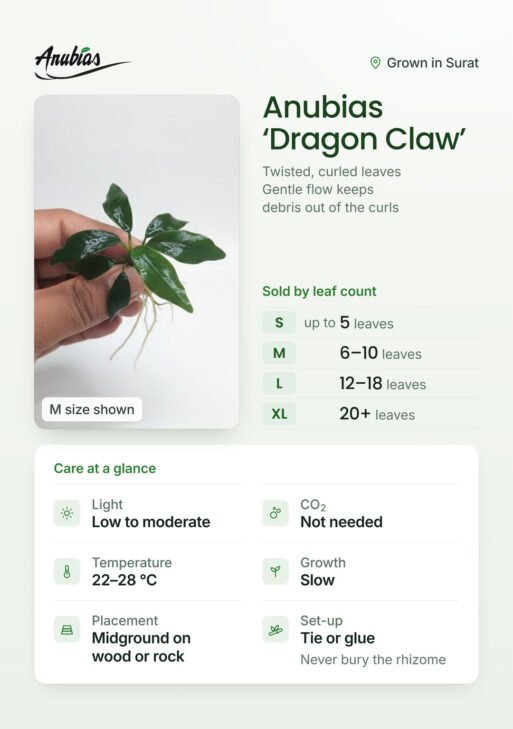
Anubias Nana and Nana Petite are the compact classics, Barteri has larger leaves for the midground, Coffeefolia has textured bronze-tinged foliage, and Dragon Claw has rare dramatic leaves. Not sure which size to pick? See our Anubias Nana vs Nana Petite vs Nana Gold comparison.
Anubias care sheet
| Factor | What Anubias needs |
|---|---|
| Light | Low to moderate; strong light mainly grows algae on the leaves |
| CO₂ | Not required |
| Temperature | 22–28°C |
| Placement | Rhizome tied or glued to wood or rock, never buried |
| Fertiliser | Light weekly liquid fertiliser; no root tabs needed |
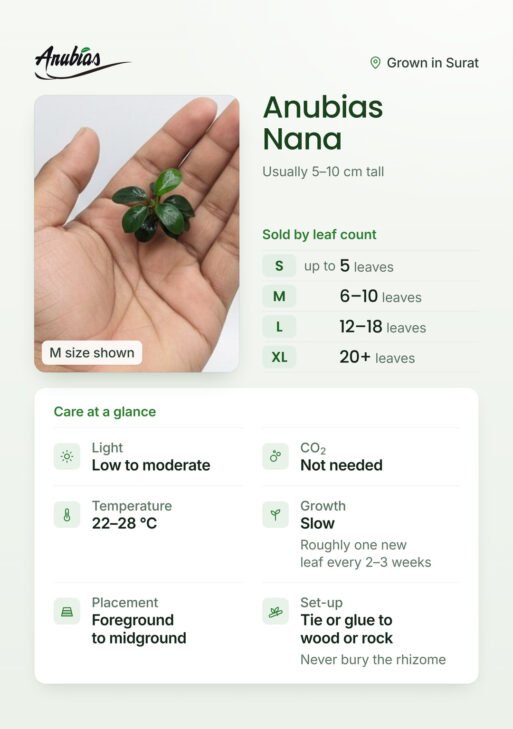
| Growth | Slow: about one new leaf every 2–3 weeks in low-tech tanks |
| Difficulty | Very easy |
How fast does Anubias grow?
Anubias grows slowly: expect about one new leaf every 2–3 weeks in a low-tech tank without CO₂. With good light, a weekly liquid fertiliser and CO₂ it can speed up to about one leaf a week. Miniature and variegated types grow slowest, and new plants often pause for 2–4 weeks after shipping.
See how fast Anubias grows by variety · Anubias not growing?
Where to place Anubias by variety
| Variety | Typical size | Best spot |
|---|---|---|
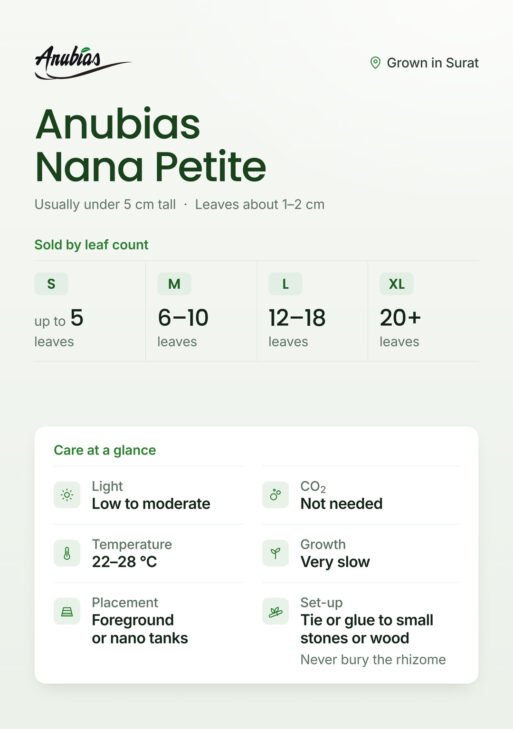
| Anubias Nana Petite | 1–2 cm leaves, 3–6 cm tall | Foreground, rock crevices, nano tanks |
| Anubias Nana | 3–5 cm leaves, 5–10 cm tall | Foreground and hardscape |
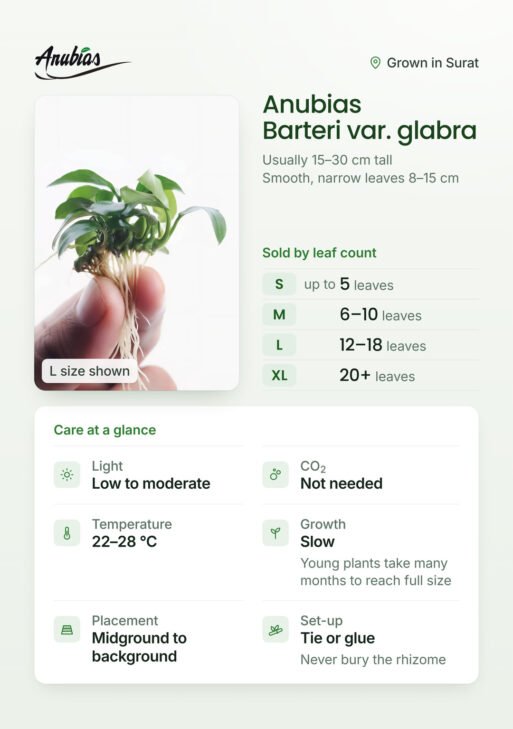
| Barteri var. glabra | 8–15 cm leaves, 15–30 cm tall | Midground and background of larger tanks |
| Anubias King | Large, broad leaves | Centrepiece in big tanks |
Compare sizes: Nana vs Barteri · all Anubias types.
Best tank mates for Anubias
Bettas, gouramis, tetras, rasboras, danios, corydoras, livebearers, cherry and Amano shrimp and nerite snails all leave Anubias alone, and shrimp even clean its leaves. Large cichlids, silver dollars, crayfish and mature common plecos can damage it, and goldfish may nibble, so tie it firmly to hardscape. Anubias tank mates
Feeding Anubias
Because Anubias grows on hardscape, it feeds mainly from the water. In tanks with few fish, dose a complete liquid fertiliser once a week after the water change, starting at the low end of the bottle’s rate. Pinholes in old leaves usually mean potassium shortage; pale new leaves point to iron. Fertiliser schedule for Anubias
Anubias in Indian conditions
- Summer heat: keep water below about 28°C with ventilation and surface movement. Summer tips
- Tap and borewell water: Anubias tolerates a wide range; dechlorinate and keep water changes regular. Indian tap water guide
- Power cuts: Anubias copes well with a day of darkness; protect fish oxygen first.
Can Anubias grow out of water or flower?
Yes, Anubias can grow out of water. It grows emersed, leaves in the air, as long as the air stays humid (ideally 70% or more) and the roots and rhizome stay moist. In dry room air the leaves dry out and brown, so use a paludarium or lidded jar. Full guide: can Anubias grow out of water.
It can also flower underwater, a harmless, positive sign of a mature, settled plant; see Anubias flowering underwater.
Buying Anubias in India
Look for a firm, green rhizome with several healthy leaves and no mushy sections. Larger L and XL plants have multiple growth points you can split into several plants. Anubias.in sells common Anubias from ₹90 by size, with a live-arrival guarantee. Anubias Nana price and sizes · rare Anubias prices
Anubias sizes by leaf count
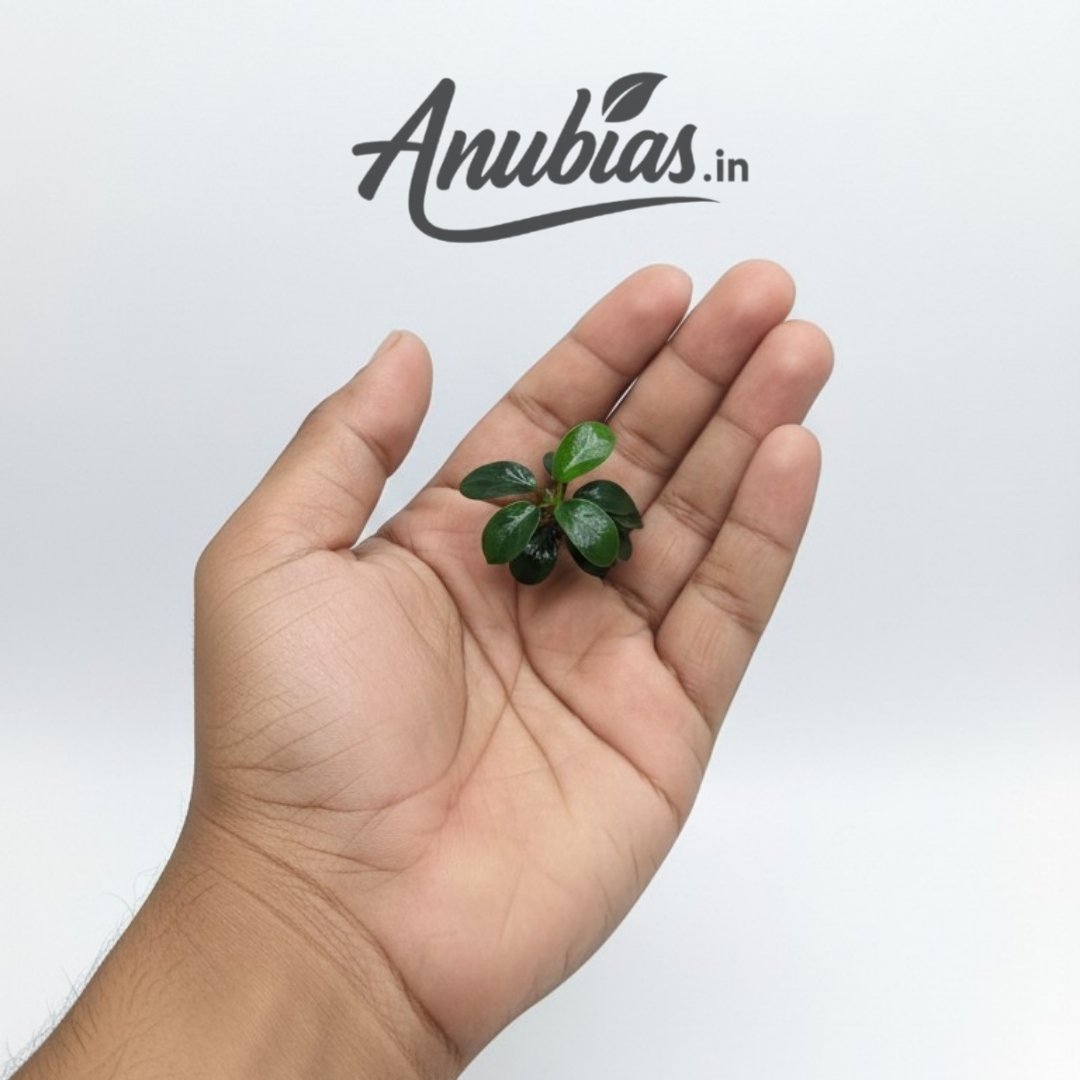
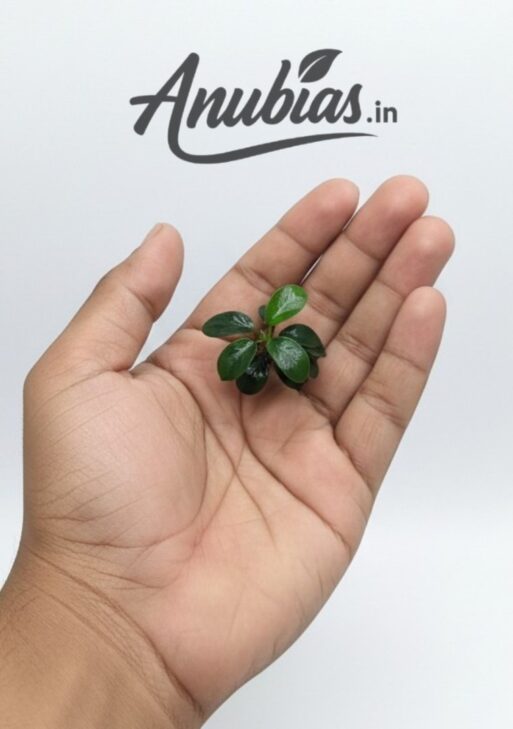
Five of our Anubias are sold in four sizes, graded by counting the leaves, so you know roughly what you will get: S has up to 5 leaves, M has 6 to 10, L has 12 to 18 and XL has 20 or more. The graded plants are Anubias Nana, Nana Petite, Nana Gold, Dragon Claw and Barteri var. glabra. The plant you receive looks roughly like the one in the product photo for that size.
Every plant we have in stock is grown in Surat; plants sold on backorder are imported to order. A small S suits a single spot on a stone, while an L or XL has a longer rhizome that you can divide into several plants once it has settled. Compare them in the size guide.
Start with the Anubias Five
One of each of our five Surat-grown Anubias, sized by leaf count.
Build your setFrequently asked questions
Does Anubias need soil?
No. Anubias attaches to wood or rock and its rhizome must stay above the substrate; only the roots may touch the gravel.
Does Anubias need CO2?
No. Anubias grows in low to moderate light without CO2. A light weekly liquid fertiliser helps in tanks with few fish.
How fast does Anubias grow?
Slowly: about one new leaf every 2–3 weeks in a low-tech tank, a little faster with good light, fertiliser and CO2.
Is Anubias safe for shrimp and bettas?
Yes. It is one of the best plants for both; bettas rest on its broad leaves and shrimp graze biofilm from them.
What temperature does Anubias need?
Keep Anubias at about 22–28°C. In Indian summers, improve ventilation and surface movement to keep the tank from overheating.
Ready to start? Browse our hand-picked Anubias collection, shipped across India with a live-arrival guarantee.
Once your Anubias is settled, you may want to compare varieties in our Nana vs Nana Petite guide, or plan your stocking with tank mates that won’t destroy Anubias.
हिंदी में पढ़ें: एनुबियास पौधे की देखभाल
Grown in Surat (pre-order plants imported to order) · live-arrival guarantee with a 4-hour unboxing video · ₹99 shipping, free from ₹999