


Your cart is empty
Return to Shop
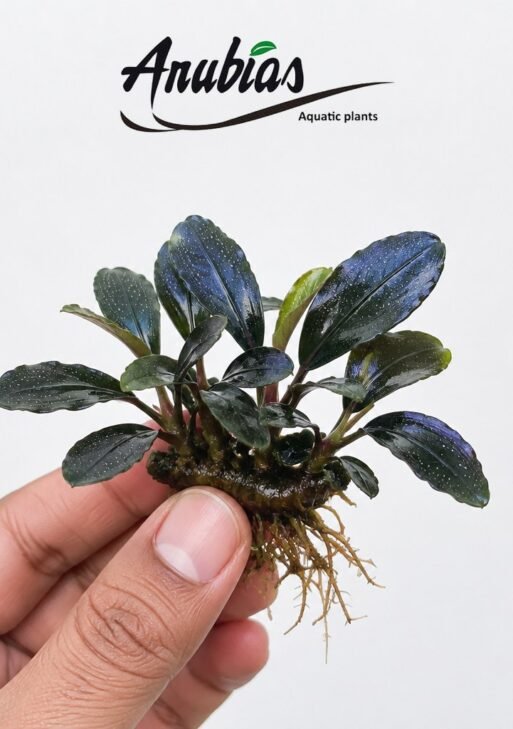
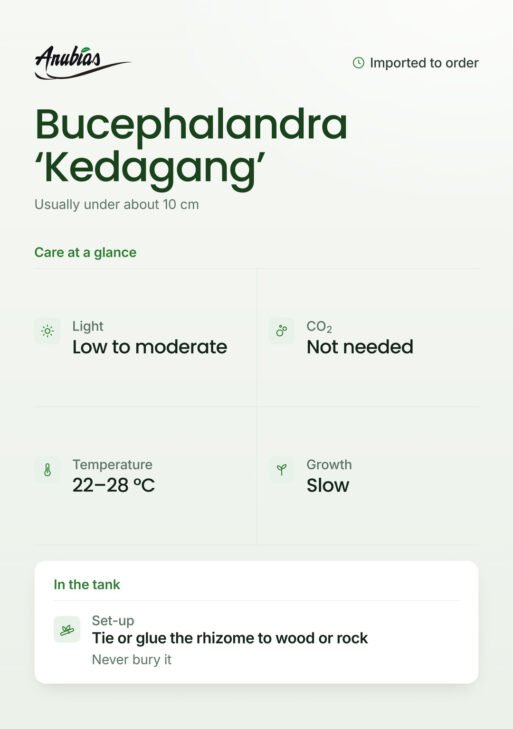
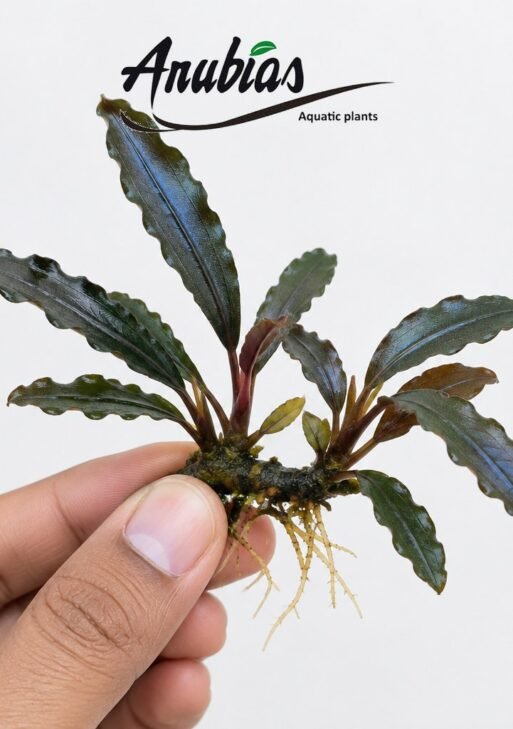
Bucephalandra 'Kedagang'
Price range: ₹300 through ₹399
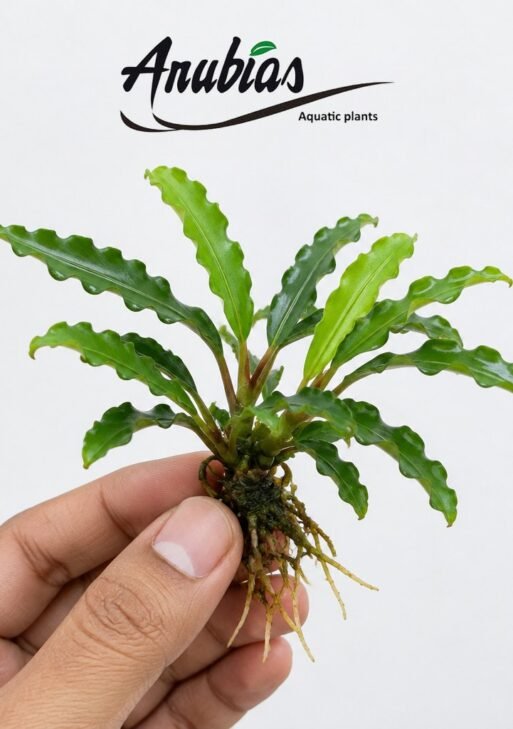
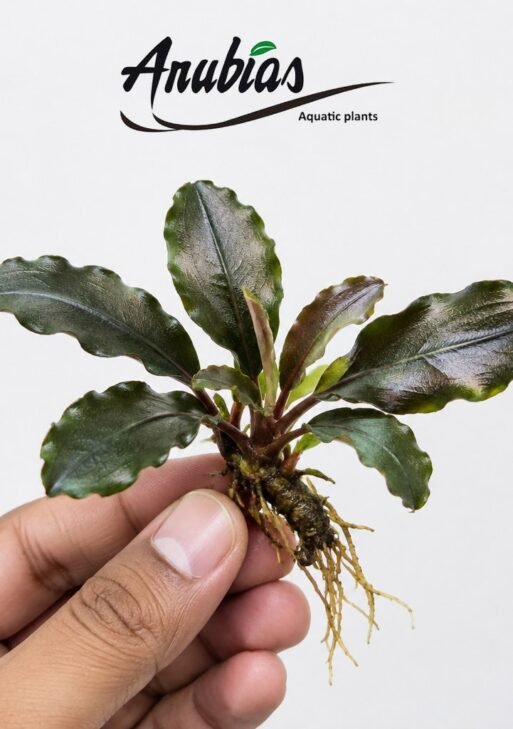
Bucephalandra 'Wavy Green'
Price range: ₹225 through ₹299
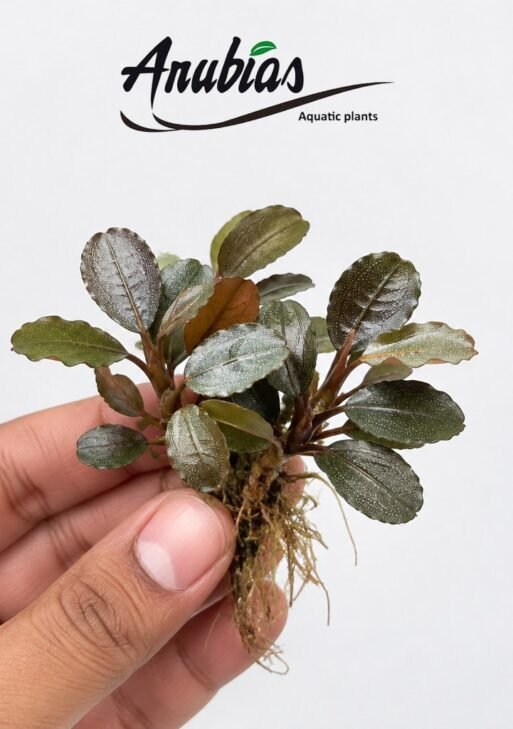
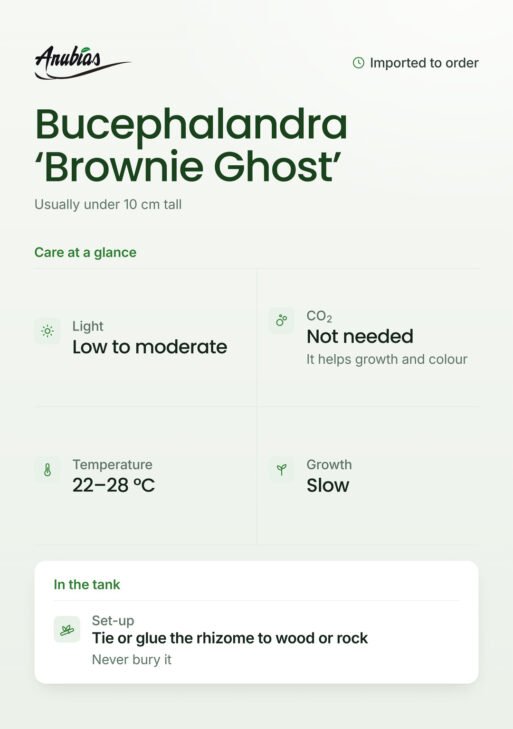
Bucephalandra 'Brownie Ghost'
Price range: ₹265 through ₹350
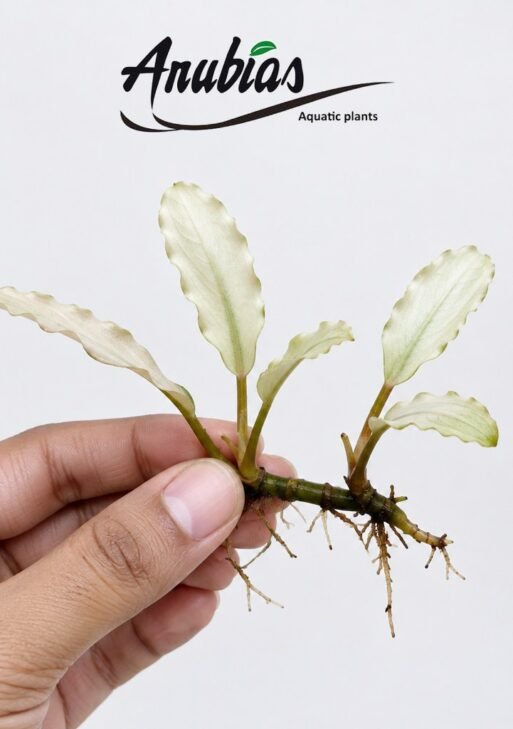
Bucephalandra sp. 'White'
₹450 ₹585
Bucephalandra 'Skeleton King'
Price range: ₹485 through ₹649
Bucephalandra 'Godzilla'
Price range: ₹410 through ₹549
Bucephalandra 'Catherinae'
Price range: ₹335 through ₹449
How to choose Bucephalandra for your tank
Bucephalandra is the plant people move on to after Anubias: same easy rhizome habit, same no-CO2 care, but with smaller, tighter leaves and colours that run from deep green to brown, blue-black and near-white. Every Bucephalandra plant we list is a named trade cultivar, so the choice comes down to two things: leaf size and colour; every variety listed here is kept in stock at our Surat farm.
- Easiest start: Bucephalandra sp. 'White' is the one variety usually listed in stock. New leaves open pale and the plant stays compact, which makes it a striking contrast against dark wood.
- Dark, moody leaves: Bucephalandra 'Brownie Ghost' and Bucephalandra 'Kedagang' both carry brown-to-purple tones with a blue sheen under good light. Kedagang is the smaller, tighter grower of the two.
- Classic green with texture: Bucephalandra 'Wavy Green' has rippled leaf edges; Bucephalandra 'Catherinae' is a compact green that bushes out well on rock.
- Bigger leaves for midground: Bucephalandra 'Skeleton King' and Bucephalandra 'Godzilla' are the larger forms in the range, with heavily textured leaves that read well from across the room.
The whole range is in stock; the product page shows the current status and size before you buy.
Bucephalandra varieties compared
| Variety | Light | CO2 | Growth | Placement | Difficulty |
|---|---|---|---|---|---|
| Bucephalandra sp. 'White' | Low–medium | Not needed | Very slow | Foreground rock or wood | Easy–moderate (pale leaves are slower to recover) |
| Bucephalandra 'Brownie Ghost' | Low–medium | Not needed | Slow | Fore/midground wood | Easy |
| Bucephalandra 'Kedagang' | Low–medium | Not needed | Slow | Foreground, nano tanks | Easy |
| Bucephalandra 'Wavy Green' | Low–medium | Not needed | Slow | Fore/midground | Easy |
| Bucephalandra 'Skeleton King' | Low–medium | Not needed | Slow | Midground wood or rock | Easy |
| Bucephalandra 'Godzilla' | Low–medium | Not needed | Slow | Midground focal point | Easy |
| Bucephalandra 'Catherinae' | Low–medium | Not needed | Slow | Foreground rock | Easy |
CO2 and liquid fertiliser are optional for all of them. They speed growth a little and bring out colour, but a Bucephalandra plant will live for years without either.
How to plant and care for Bucephalandra in Indian conditions
Mounting
- Never bury the rhizome. Tie it to driftwood or rock with cotton thread or fishing line, or use a dab of cyanoacrylate (super) glue on a dry spot of the hardscape.
- Choose a spot with gentle flow. In Borneo these plants grow on rocks in moving stream water, and in a tank, flow keeps debris off the leaves and reduces algae.
- Leave it alone. Bucephalandra sulks when moved; pick the position once and let it settle.
Water and temperature
Hard Indian tap water is fine. Bucephalandra tolerates a wide pH range and does not need soft water. What it dislikes is instability, so stick to small, regular water changes rather than occasional big ones. The comfortable range is roughly 22–28 °C. In a 30–32 °C summer tank, keep the lid open, run an airstone or a small fan over the surface, and shorten the light period to 6 hours so algae does not get ahead of a plant that is barely growing.
Light
Low to medium light is enough. Under strong light the leaves can colour up beautifully, but they also collect black beard algae faster, and the plant cannot outgrow it. If you have a high-light tank, tuck Buce into the shade of wood or taller plants.
Monsoon power cuts
A few hours without filter or light does no harm to Bucephalandra. During a long outage, float a sealed bottle of cool water in the tank if the temperature climbs, and do a partial water change once power returns.
Best Bucephalandra for beginners, nano tanks and shrimp tanks
- Beginners: Wavy Green or Catherinae. The green varieties are the most forgiving and the cheapest way to learn how Buce behaves.
- Nano and shrimp tanks (under 30 litres): Kedagang. Small leaves, slow growth, and the textured surface is a grazing ground for shrimp.
- Betta tanks: any variety. The leaves are smooth and will not tear fins; a Godzilla on a piece of wood gives a betta a resting ledge.
- Low-tech showpiece: sp. 'White' in the front, with dark wood behind it.
- Collectors: Brownie Ghost and Skeleton King for leaf colour and texture you will not find in standard Anubias.
Common mistakes with Bucephalandra
- Burying the rhizome. It rots within weeks. Mount it on hardscape, always.
- Panicking at melt. Bucephalandra often drops its emersed-grown leaves after a move and regrows smaller submerged ones. Keep the rhizome firm and green and wait; new leaves follow in a few weeks.
- Too much light, too early. A freshly mounted plant under 8–10 hours of strong light grows algae, not leaves. Start at 6 hours.
- Big, irregular water changes. Bucephalandra likes boring water. Change 20–30 percent weekly and keep the temperature steady.
- Moving it around. Each move costs a month of settling in.
- Expecting fast cover. Buce grows a leaf or two a month. Buy for the spot you want to fill, not for spread.
How we pack and ship Bucephalandra
Each plant is checked before packing, packed moist, and shipped across India from Surat. Shipping is ₹99, free on orders of ₹999 or more. Every order carries our live-arrival guarantee: record one continuous unboxing video within 4 hours of delivery and, if a plant has arrived damaged, we refund or replace it.
Frequently Asked Questions
Is Bucephalandra hard to keep?
No. Despite the premium look, Bucephalandra care is nearly identical to Anubias: low to medium light, no CO2 required, and it grows attached to hardscape rather than planted in substrate. Hard Indian tap water is not a problem; sudden changes are.Does Bucephalandra need CO2?
No. CO2 and liquid fertiliser are optional. They make growth a little faster and colours a little stronger, but every variety we list grows well in a plain low-tech tank with fish waste as its only feed.Does Bucephalandra need to be glued or tied to hardscape?
Yes. Like Anubias, the rhizome should never be buried. Mount it to wood or rock with thread or aquarium-safe super glue, and leave the roots free to grip the surface.Why is my new Bucephalandra melting?
Most Bucephalandra is grown emersed before it reaches you, and those leaves often melt as the plant switches to underwater growth. As long as the rhizome stays firm, the plant is fine and will push out new submerged leaves within a few weeks.Can Bucephalandra grow emersed, out of water?
Yes. In the wild it grows on rocks along forest streams in Borneo, both underwater and above the waterline, so it does well fully submerged in an aquarium or emersed in a humid paludarium.Why do Bucephalandra varieties cost so differently?
Price mostly reflects the rarity of the trade cultivar and its leaf colour or pattern, not a difference in care difficulty. Green forms like Wavy Green and Catherinae are the most affordable; pale and dark-coloured forms cost more because they are slower to multiply.Is Bucephalandra in stock?
Every variety on this page is kept in stock at our Surat farm and ships with your order; the product page shows the current status before you buy. The product page shows the current status and expected timeline before you place the order.Is Bucephalandra safe with shrimp and betta?
Yes. The leaves are smooth, the plant is not toxic, and shrimp graze the textured leaf surfaces for biofilm. It is one of the best plants for a nano shrimp tank.Not sure what fits your tank? Plan it with our free AI tank planner.









