
Substrate is the one setup decision you can’t easily undo once a tank is running, so it’s worth getting right before you add water. Here’s how to choose between sand, gravel, and nutrient soil depending on what you’re actually planting.
Quick answer: Not every planted tank needs aquasoil: inert sand or gravel plus root tabs pushed near the root zones every 1–2 months gets root feeders like Cryptocoryne most of the way to dedicated nutrient soil. If you do use nutrient substrate, lay it 4–6 cm deep with an optional thin cap of fine sand — root feeders need at least 4–5 cm of depth to establish. And substrate is not a substitute for dosing.
Does every planted tank need special substrate?
No. It depends entirely on what you’re growing.
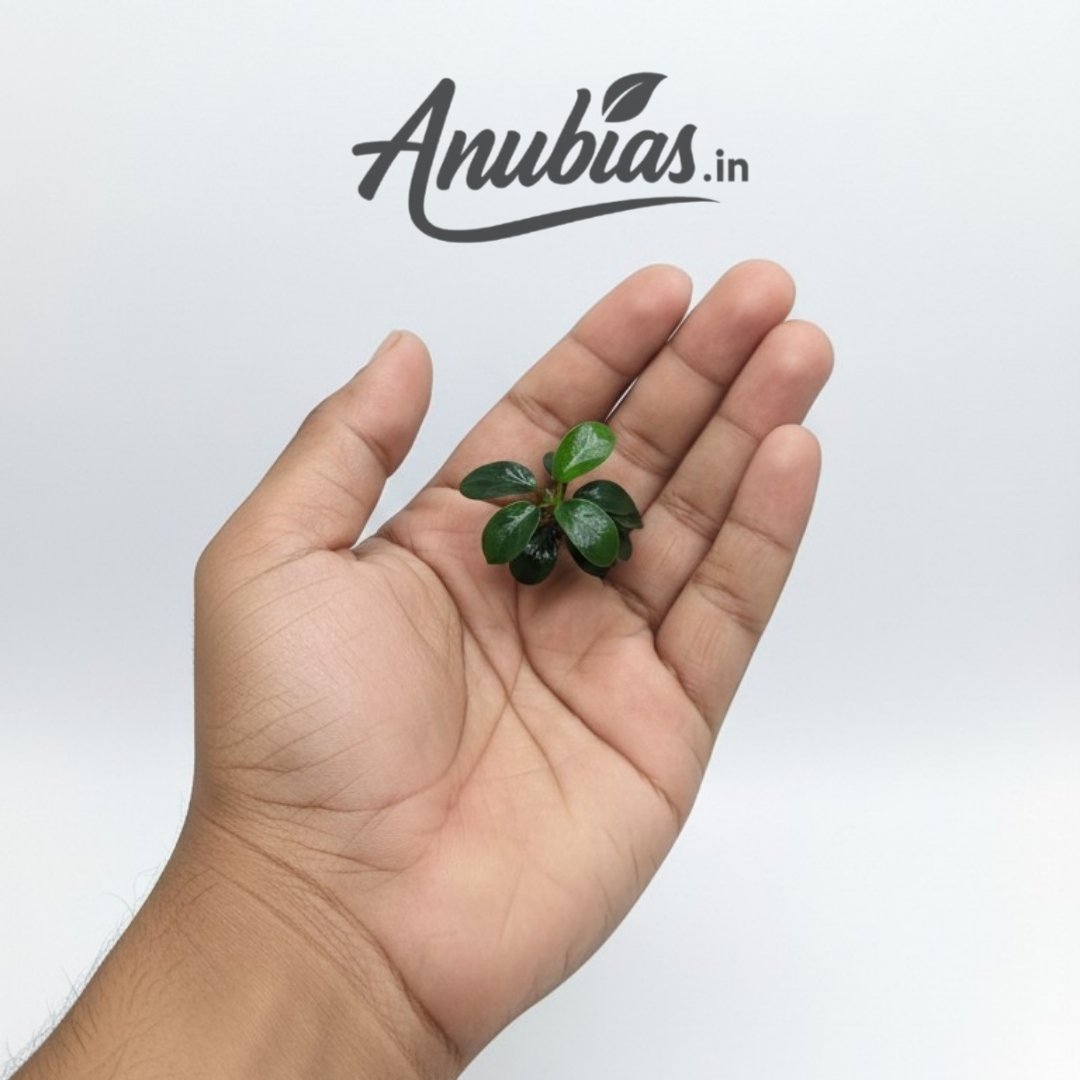
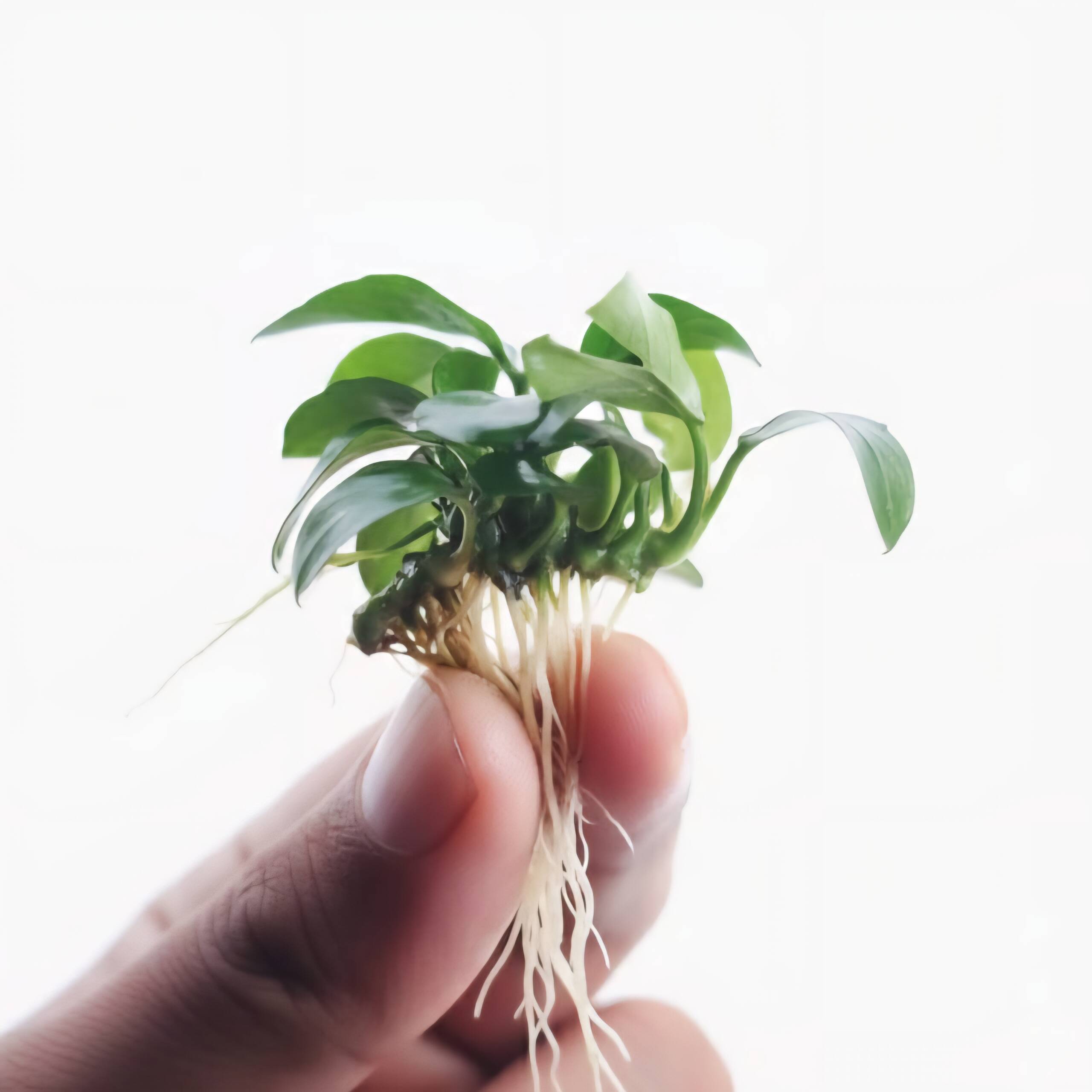
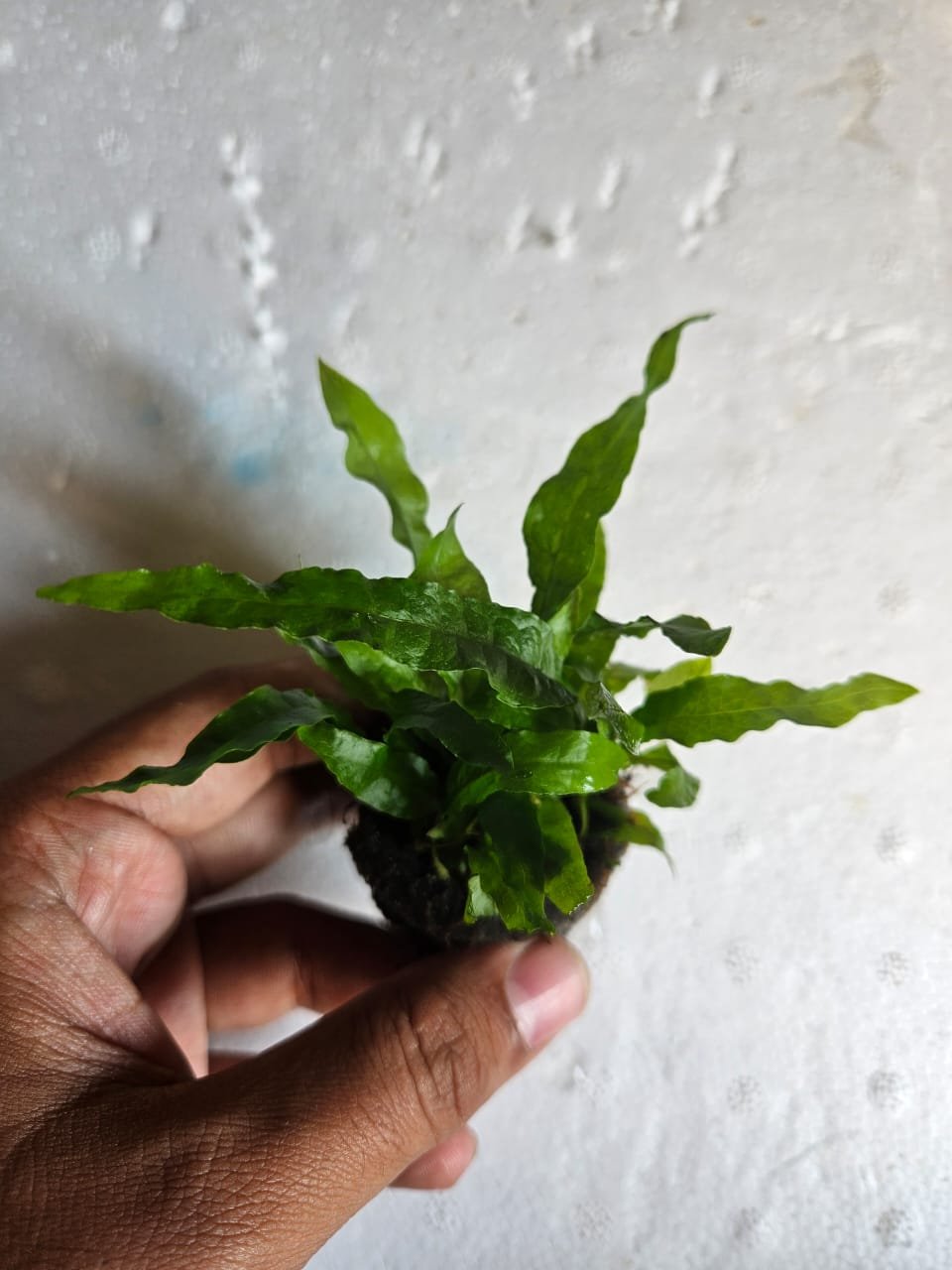
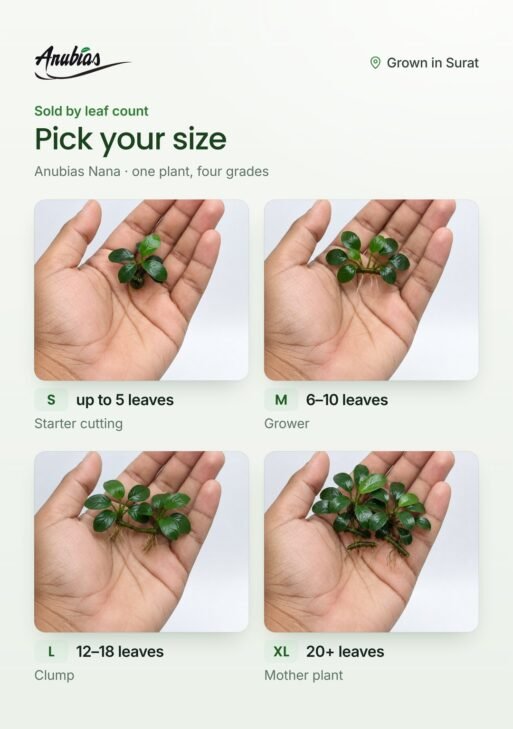
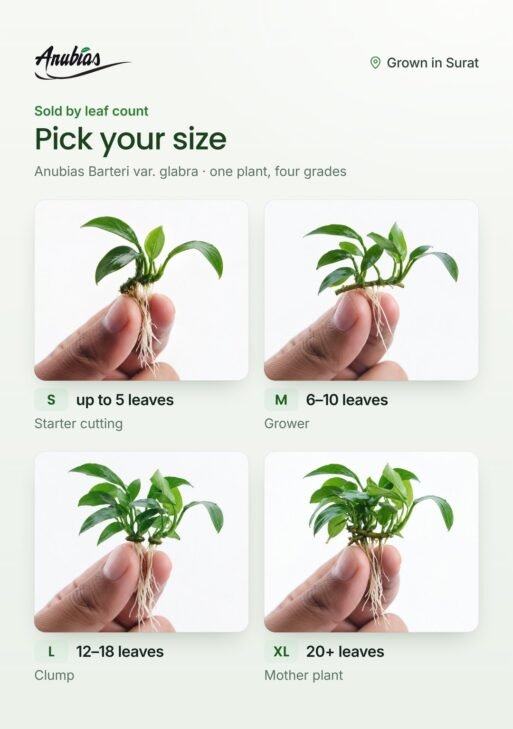
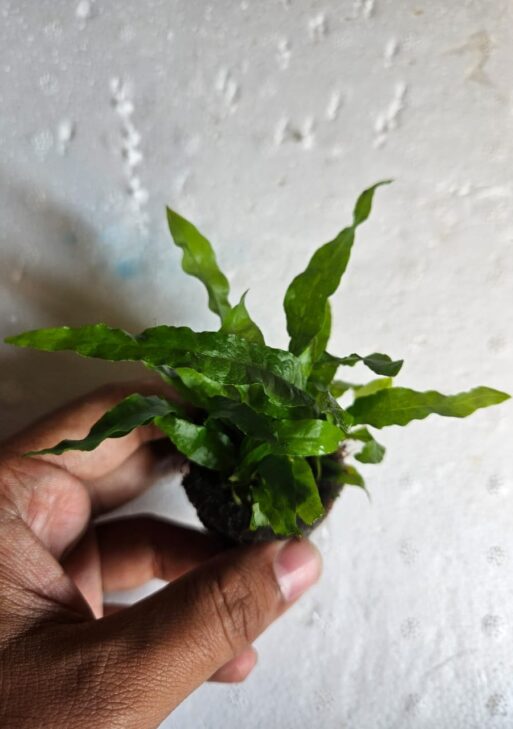
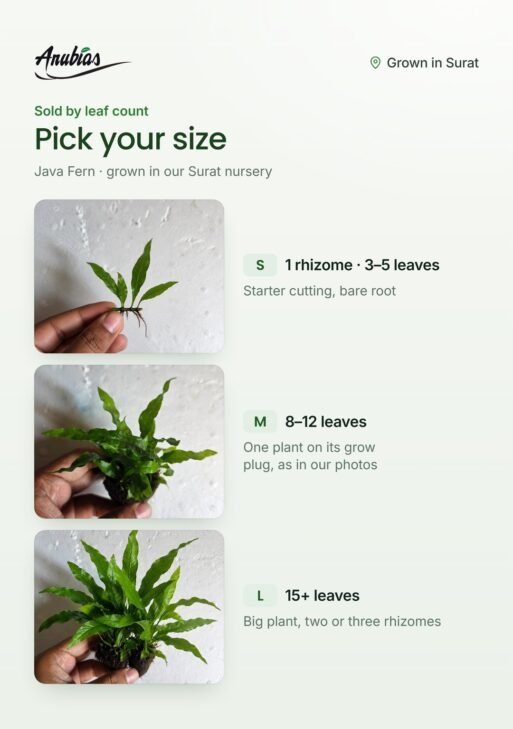
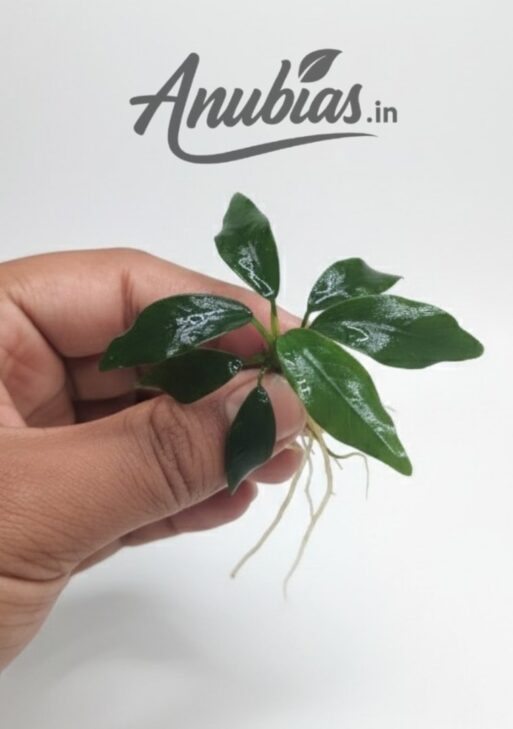
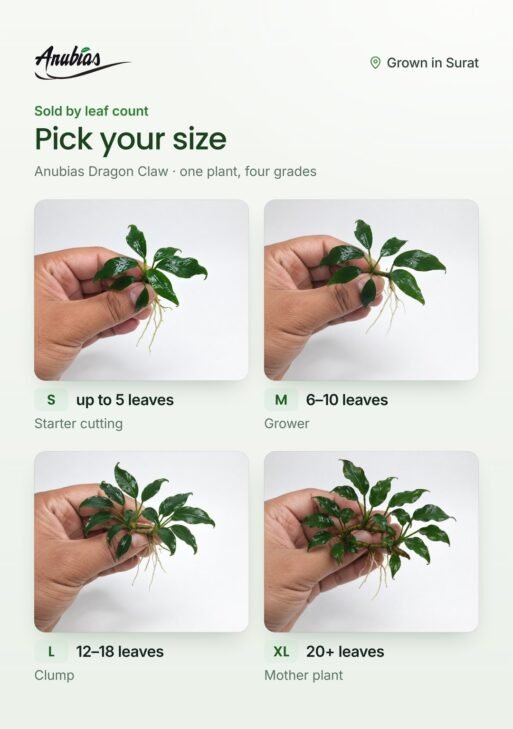
Rhizome and epiphyte plants — Anubias, Bucephalandra, Java Fern, most mosses — don’t root in substrate at all. They attach to wood or rock with their rhizome exposed, so for a tank built entirely around these, plain sand or gravel over an inert base is enough. Substrate here is mostly aesthetic.
Root feeders are a different story. Cryptocoryne, stem plants (Rotala, Hygrophila, Bacopa, Ludwigia), and carpeting plants (dwarf hairgrass, Staurogyne repens, Hydrocotyle) pull a meaningful share of their nutrition through their roots. These plants grow noticeably better in a nutrient-rich substrate, and carpeting species in particular struggle to root into coarse gravel at all.
The three substrate categories
Inert substrate (sand, gravel, quartz) Doesn’t feed plants on its own. Cheap, easy to clean, and forgiving for beginners. Works fine for hardscape-only layouts (Anubias/Buce/moss tied to wood) or for anyone planning to feed the tank entirely through liquid ferts and root tabs pushed into the substrate near root feeders. The tradeoff: carpeting plants and heavy root feeders will grow slower and need more supplementation to keep pace.
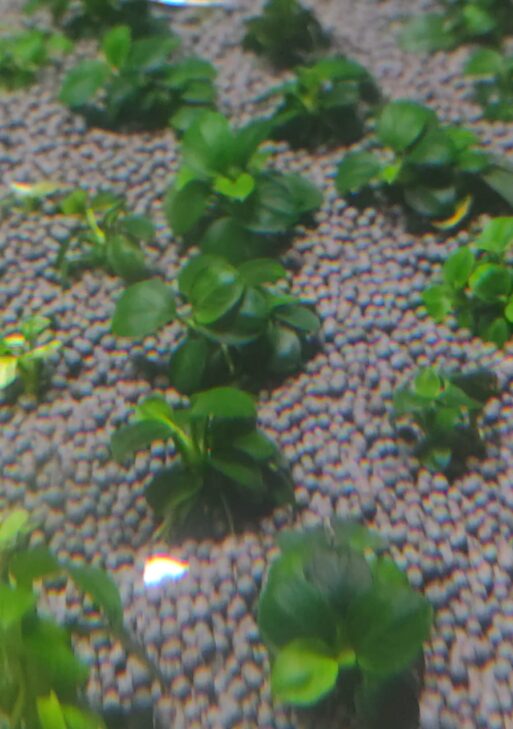
Nutrient-rich aqua soil Purpose-built for planted tanks — porous, slightly acidic, and pre-loaded with nutrients that leach out over the first several months. This is what most serious aquascapers in India are running under carpets and root-feeding layouts, since it also tends to buffer pH downward, which most stem and carpet plants prefer. The tradeoff: it breaks down over 1–3 years and needs eventual replacing, it’s messier to work with during setup (clouds the water more than inert substrate), and it costs more upfront. Our planted tank setup budget for India shows how the choice of substrate moves the total.
Clay-based substrate A middle ground — provides some nutrient content and good root anchoring without the cost or fragility of full aqua soil. Reasonable choice if you want better-than-inert performance without committing to a full soil-based setup, though it doesn’t match dedicated aqua soil for heavy carpets.
Matching substrate to your plant list
If your tank is Anubias, Bucephalandra, Java Fern, and moss on hardscape: inert sand or gravel is genuinely fine. Don’t overspend on aqua soil for a layout that isn’t rooting into it anyway — put that budget toward better light or CO2 instead. See our Anubias care guide and attachment guide for how these plants actually take hold without substrate.
If you’re planning a carpet — dwarf hairgrass, Staurogyne, Hydrocotyle — invest in nutrient substrate or at minimum a fine-grain inert substrate with root tabs. Coarse gravel makes it hard for these plants to establish a root mat at all. Our carpeting plants guide covers which species suit which substrate depth.
If you’re growing Cryptocoryne or stem plants as the centerpiece, nutrient substrate gives you a real head start, though both groups will still grow on inert substrate with consistent root tabs and liquid dosing. See our Cryptocoryne care guide and best stem plants for beginners.
Layering and depth
A typical planted-tank layer order: inert base layer (optional, for height/economy) → nutrient substrate 4–6 cm deep → a thin cap of fine sand or inert substrate if you want a cleaner look and less cloudiness when plants are disturbed. Slope it higher at the back for depth. Root feeders want at least 4–5 cm of substrate to establish properly — anything shallower limits root spread regardless of how nutrient-rich it is.
Substrate isn’t a substitute for dosing
Even the best aqua soil depletes over months. Once the initial nutrient charge is gone, water-column dosing takes over as the main nutrient source for most tanks. Our NPK and micronutrients dosing guide covers how to keep feeding plants once substrate alone isn’t enough, and our fertilizing frequency guide covers timing.
Frequently Asked Questions
Do Anubias and Bucephalandra need special substrate?
No — both attach to wood or rock rather than rooting in substrate, so plain sand or gravel is enough. Save the aqua-soil budget for tanks with carpeting or heavy root-feeding plants.
Can I mix inert substrate with root tabs instead of buying aqua soil?
Yes, this is a common and budget-friendly approach. Push root tabs near the root zones of Cryptocoryne, stem plants, or carpet plants about every 1–2 months, and it will substantially close the gap with dedicated nutrient soil.
How deep should substrate be for a carpet plant?
Aim for at least 4–5 cm. Shallower substrate limits root spread and makes it harder for carpeting species like dwarf hairgrass or Staurogyne repens to establish a dense mat.
Does substrate affect water pH and hardness?
Nutrient aqua soils typically buffer pH slightly acidic and can soften water, which suits most stem and carpet plants. Inert substrates like sand and gravel don’t affect water chemistry.
Building a low-budget tank? See the Walstad dirted tank guide for India.
Grown in Surat (pre-order plants imported to order) · live-arrival guarantee with a 4-hour unboxing video · ₹99 shipping, free from ₹999