
Anubias isn’t planted in substrate like most aquarium plants — it’s an epiphyte, meaning it grows attached to surfaces. Bury its rhizome (the thick horizontal stem) and it rots; attach it to wood or rock instead and it thrives for years. Here are the three easiest ways to attach Anubias, plus what to do afterward.
Quick answer: There are three easy methods: tie the rhizome to driftwood or rock with cotton thread, dab cyanoacrylate super glue gel on its underside and press for 20–30 seconds, or wedge it into a rock crevice. Roots grip within a few weeks. Never bury the rhizome: only the roots may enter the substrate.
First: find the rhizome
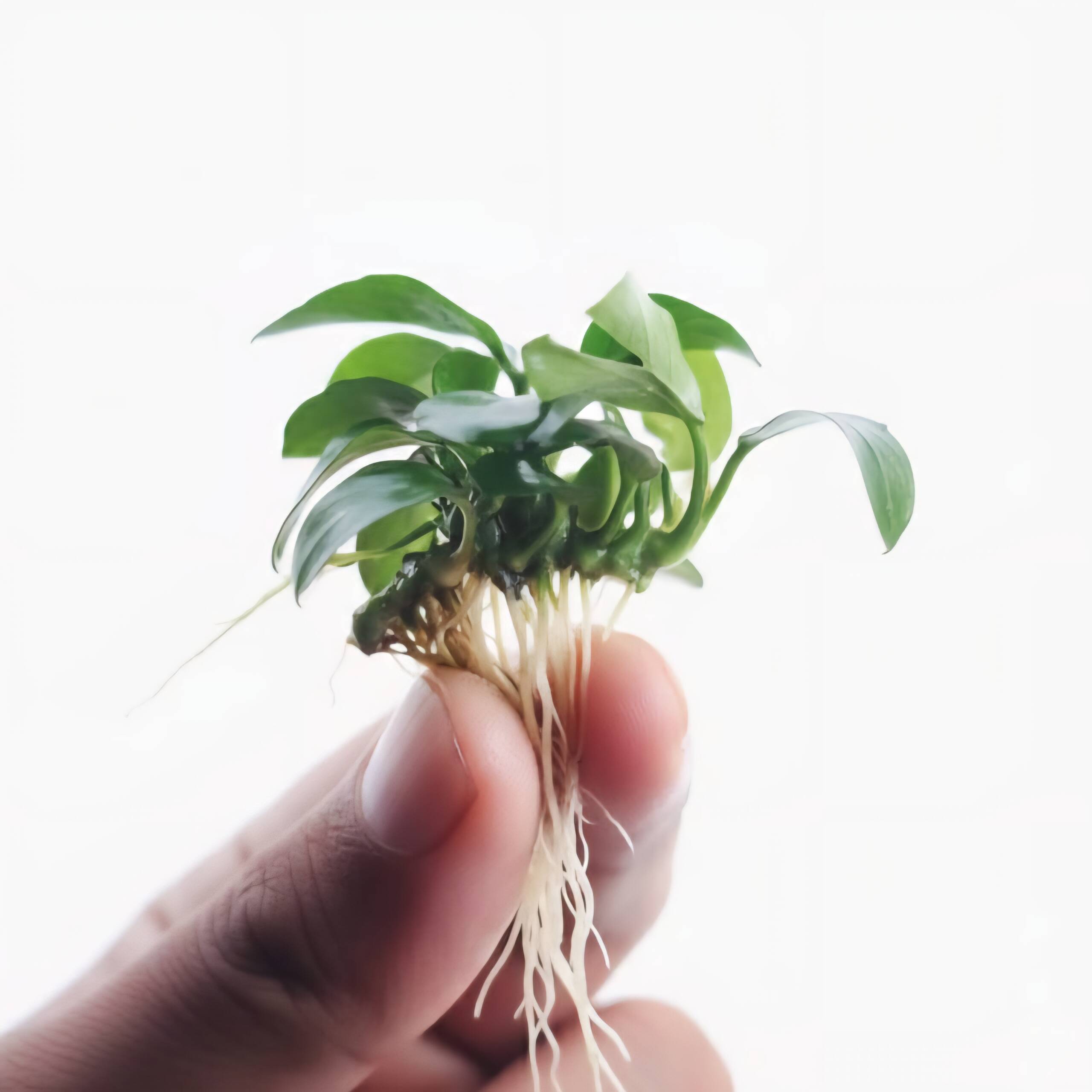
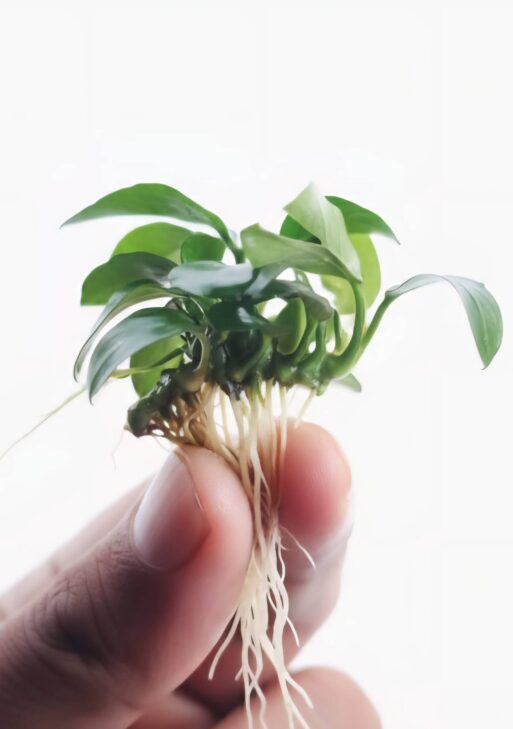
The rhizome is the firm, horizontal stem that the leaves and roots grow from. Your one rule: the rhizome must always stay above the substrate, exposed to the water. Only the roots may touch or enter the substrate.
How to attach Anubias to driftwood
To attach Anubias to driftwood, tie the rhizome to the wood with cotton thread or fishing line, wrapped snug but not tight, or dab cyanoacrylate super glue gel on its underside and press it onto a dry spot for 20–30 seconds. You can also wedge it into a fork in the wood. Roots grip within a few weeks.
How to attach Anubias to rock
To attach Anubias to rock, dab cyanoacrylate super glue gel on the underside of the rhizome and press it onto a dry patch of stone for 20–30 seconds. With no glue, wedge the rhizome firmly into a crevice between rocks, or tie it on with cotton thread. The roots grow out and lock it in place over time.
Would rather plant it in gravel? Read can you bury Anubias rhizome first. Adding moss to the same hardscape? See how to attach moss to rock and wood. Each method is explained step by step below.
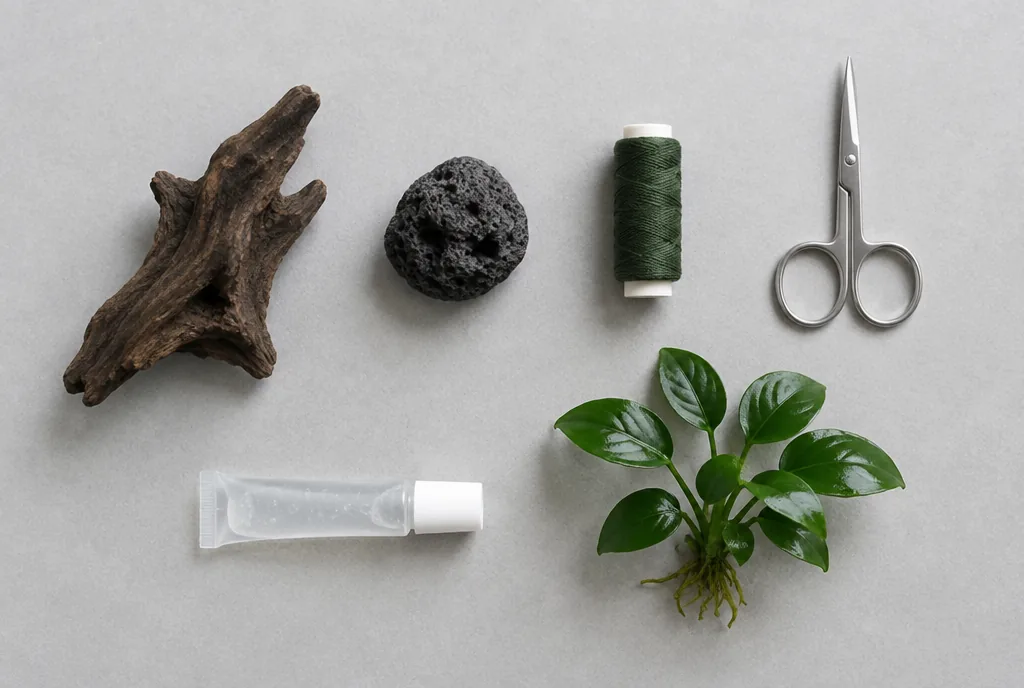
What you need
- The plant, with its rhizome and roots rinsed clean
- A piece of driftwood or a rock; porous lava stone gives roots an easy grip
- Cotton thread or fishing line; dark green or black thread hides best
- Gel superglue (cyanoacrylate gel), if you prefer to glue
- Small scissors, and a tissue to dry the spot
Each method takes about five minutes per plant. Work on a damp towel so the leaves and roots do not dry out while you work.
Method 1 — Cotton thread (best for beginners)
- Hold the rhizome against your driftwood or rock.
- Wrap cotton thread loosely around the rhizome and the surface, criss-crossing to hold it snug (not tight enough to cut in).
- Tie it off.
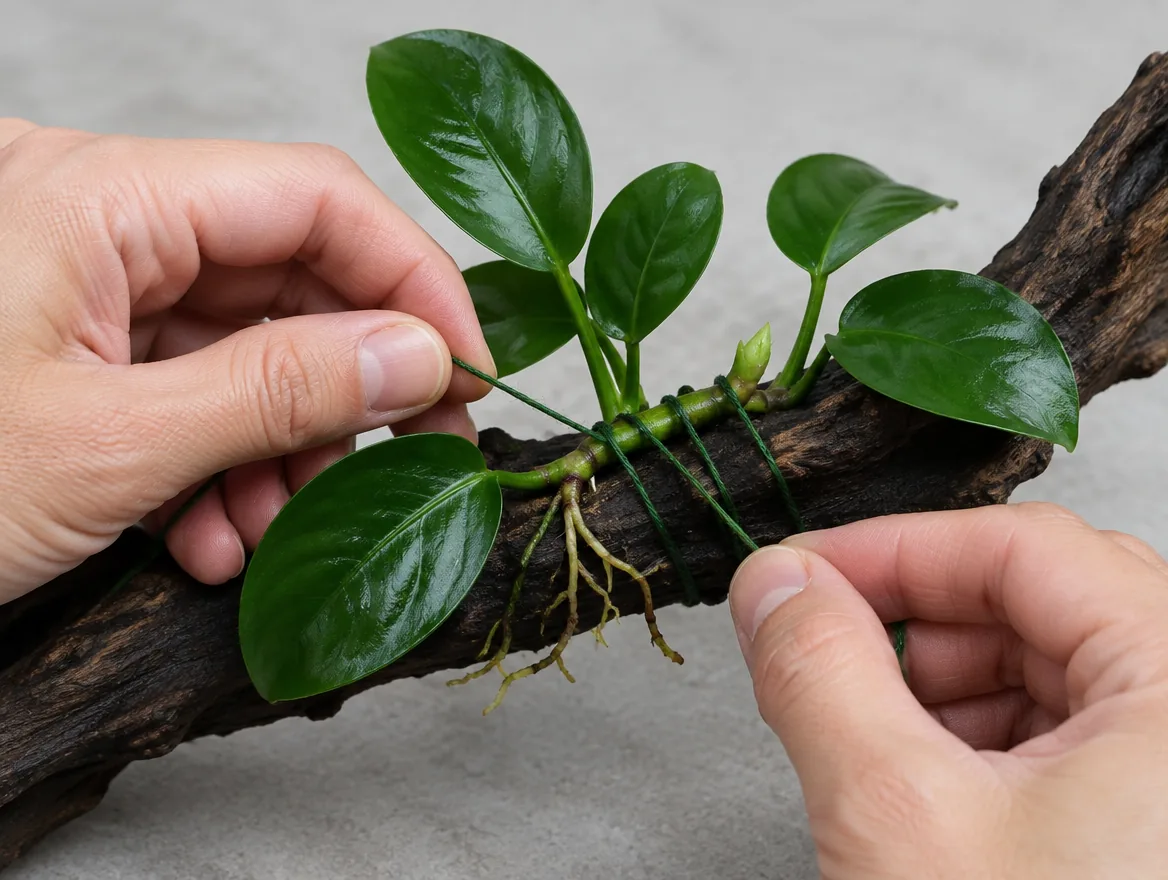
Within a few weeks the roots grip the surface on their own, and the cotton thread harmlessly breaks down. Fishing line or plant-safe twist ties work too — just remove them once the plant has anchored.
Method 2 — Super glue gel (fastest)
- Make sure the spot on the wood or rock is dry.
- Dab a small amount of cyanoacrylate super glue gel on the underside of the rhizome (avoid the roots and leaves).
- Press it onto the surface and hold for about 20–30 seconds.
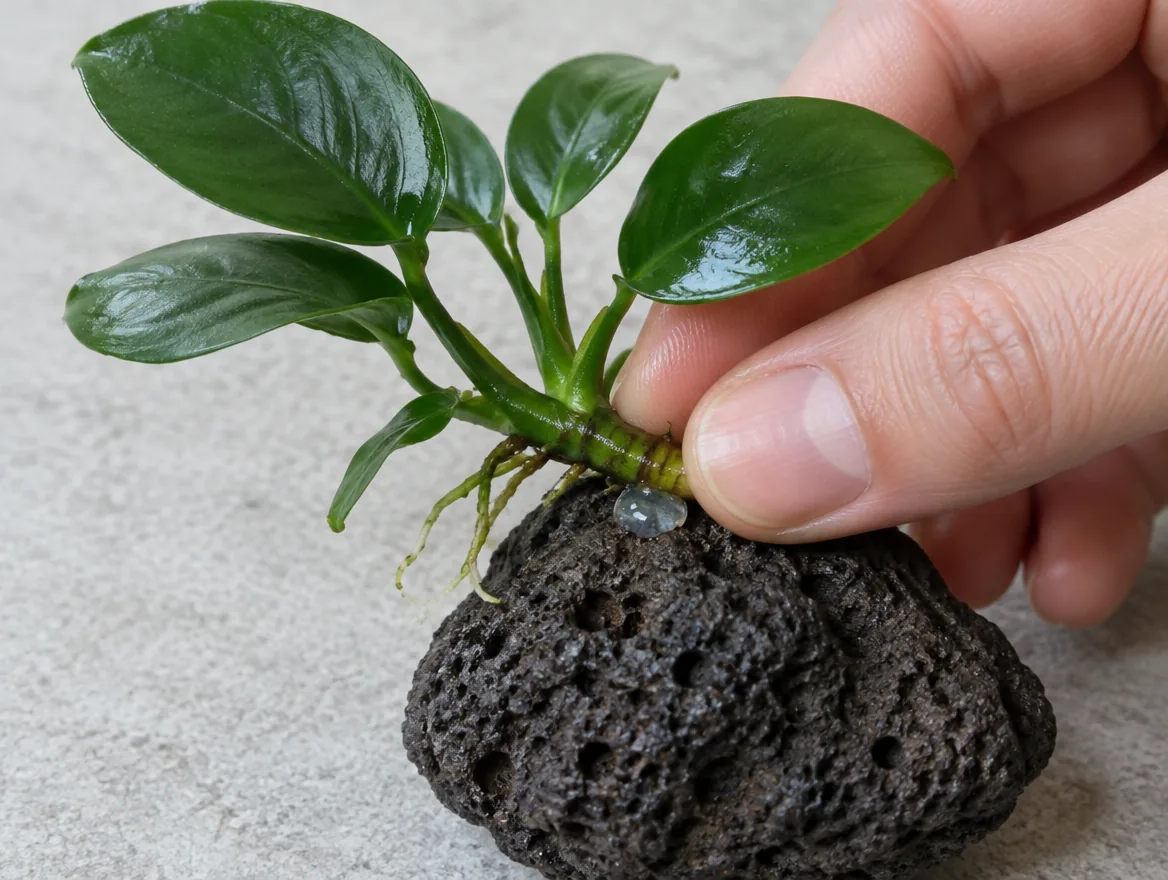
Cyanoacrylate is aquarium-safe once cured and bonds instantly, so you can place the plant back in the tank right away. This is the go-to method for precise aquascaping.
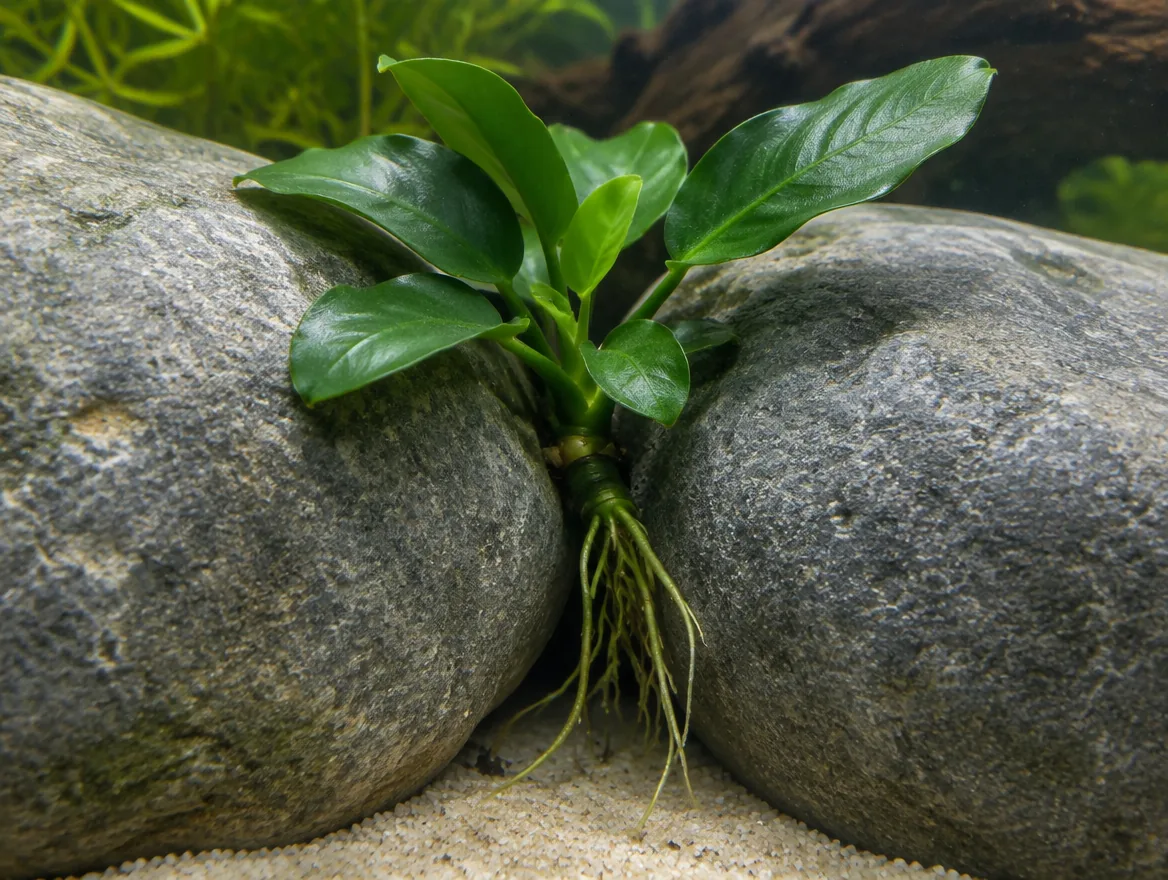
Method 3 — Wedging (no tools)
For rockwork with cracks and crevices, simply tuck the rhizome firmly into a gap so it stays put. The roots will grow out and lock it in place over time. Quick, reversible, and great for nano tanks.
After you attach it
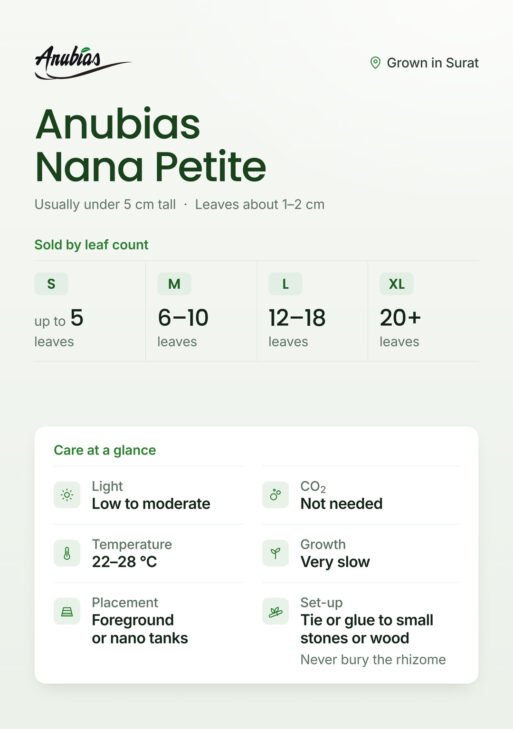
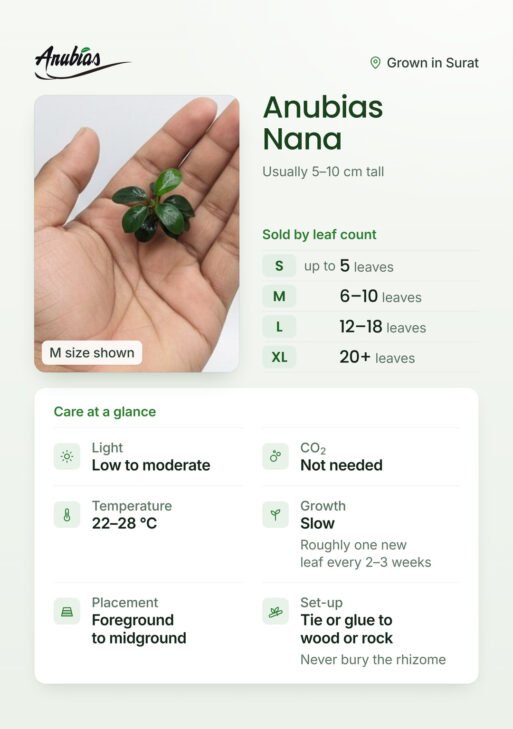
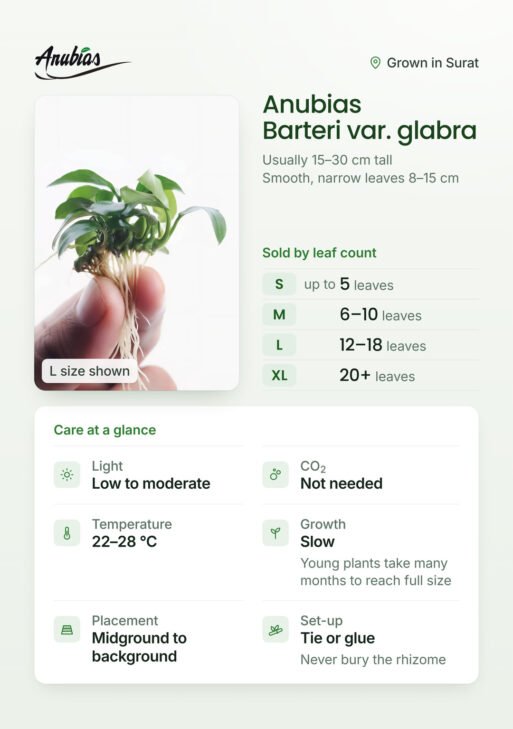
- Placement: keep Anubias plants in low-to-moderate light — strong light invites algae on its slow-growing leaves.
- Patience: new roots and leaves take a few weeks. Don’t be alarmed by slow growth; that’s normal for Anubias.
- Don’t bury it later: when you rescape, keep that rhizome above the substrate.
Where to place it on your hardscape
Choose the spot before you tie or glue, because moving an attached plant later tears the roots. Anubias does best out of strong direct light: the lower side of a branch, the shaded face of a rock or under an overhang. Put compact types such as Nana and Nana Petite low and near the front, and larger ones such as Barteri var. glabra higher up or towards the back. Gentle water flow over the leaves keeps debris and algae off them. Point the growing tip in the direction you want the plant to spread, and keep the rhizome clear of the substrate.
How long until it holds
New roots usually start to grip the wood or rock within a few weeks. Until then the thread or glue does the work, so handle the piece gently. Cotton thread breaks down on its own later, by which time the roots hold the plant; fishing line does not rot, so cut it off once the plant stays put when you lift the wood. Growth above the rhizome is slow, roughly one new leaf every 2 to 3 weeks, so a quiet first month is normal.
Troubleshooting
- The plant floats off: the knot slipped or the glue met a wet surface. Dry the spot and glue again, or add another wrap of thread.
- The thread is cutting into the rhizome: it was tied too tight. Cut it and re-tie with looser wraps between the leaves.
- The glue turned white: this is normal for cured gel superglue underwater and does not harm the plant.
- A leaf yellows after attaching: usually the plant adjusting to its new spot; see why Anubias turns yellow.
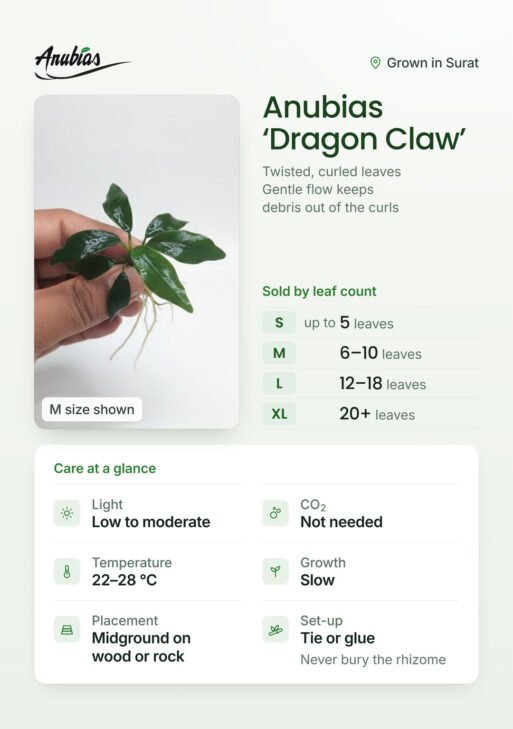
Care at a glance
| Factor | Anubias |
|---|---|
| Light | Low to moderate |
| CO2 | Not required |
| Temperature | 22–28 °C |
| pH | 6.0–7.5 |
| Growth | Slow, roughly one new leaf every 2–3 weeks |
| Placement | On wood or rock, out of strong direct light |
| How to attach | Tie or glue the rhizome to wood or rock; never bury it (roots may go into the substrate) |
Bonus: free plants
Once your Anubias grows, cut a rhizome section with 3–4 leaves and some roots, attach it to a new piece of hardscape, and you’ve propagated a whole new plant.
Want a healthy plant to attach? Browse our hand-picked Anubias collection and Bucephalandra (which attaches exactly the same way) — shipped across India with a live-arrival guarantee.
For everything else on keeping Anubias healthy long-term, see our full Anubias care guide.
Start with the Anubias Five
One of each of our five Surat-grown Anubias, sized by leaf count.
Build your setFrequently asked questions
How do I tie Anubias to driftwood?
Hold the rhizome against the driftwood and wrap cotton thread loosely around both, criss-crossing to hold it snug without cutting in, then tie off. Within a few weeks the roots grip the surface on their own and the cotton thread breaks down harmlessly.
Is super glue safe for attaching Anubias?
Yes, cyanoacrylate super glue gel is aquarium-safe once cured. Dab a small amount on the underside of the rhizome, avoiding the roots and leaves, press it onto a dry spot on wood or rock for about 20–30 seconds, and place it straight back in the tank.
Can Anubias be planted in the substrate?
Only the roots may touch or enter the substrate. The rhizome, the firm horizontal stem the leaves and roots grow from, must always stay above the substrate and exposed to the water, because a buried rhizome rots. Keep it above the substrate when you rescape, too.
Can you glue Anubias to driftwood?
Yes. Dab a small amount of cyanoacrylate super glue gel on the underside of the rhizome, press it onto a dry spot on the driftwood for about 20–30 seconds and put it straight back in the tank. Cyanoacrylate is aquarium-safe once cured.
Grown in Surat (pre-order plants imported to order) · live-arrival guarantee with a 4-hour unboxing video · ₹99 shipping, free from ₹999