

Quick answer: the best low-tech aquarium plants — plants that grow without CO₂, fertiliser injection or strong light — are Anubias, Java fern, Java and Christmas moss, Cryptocoryne parva, Vallisneria, floating Salvinia and hardy stems like Hygrophila polysperma. Epiphytes (Anubias, ferns, moss, Bucephalandra) are the easiest of all because they grow on wood or rock and never need planting in soil.
Short on time? Start with our 10 best aquarium plants without CO2, the easiest picks for Indian tap water.
What makes a plant “low tech”?
A low-tech plant grows well under an ordinary aquarium LED, in normal tap water, without pressurised CO₂. It grows slowly, so it rarely needs trimming and does not crash when you miss a water change. That makes low-tech plants the right choice for beginners, betta tanks, office tanks and anyone who wants a green tank without daily work.
Best low-tech aquarium plants in India (2026)
| Plant | Type | Where it goes | Why it is easy | Price on Anubias.in |
|---|---|---|---|---|
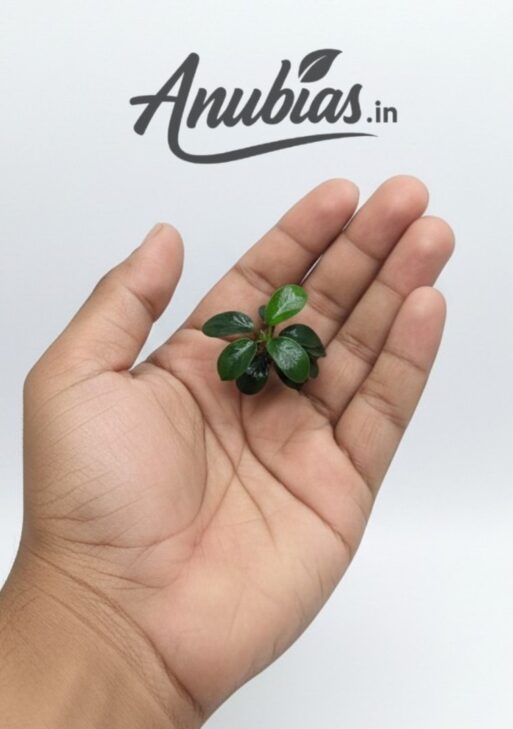
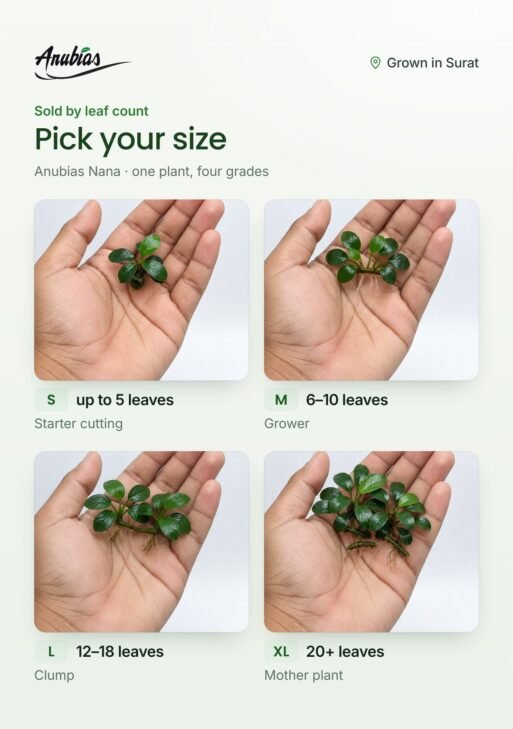
| Anubias Nana | Epiphyte | Midground (tie to wood/rock) | Very slow, nearly unkillable | from ₹45 |
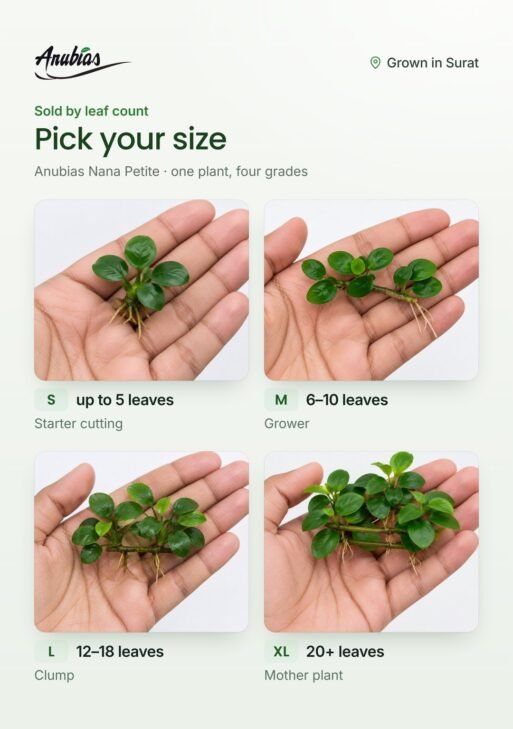
| Anubias Nana Petite | Epiphyte | Foreground / carpet on stones | Tiny leaves, nano tanks | from ₹45 |
| Anubias Nana Gold | Epiphyte | Foreground accent | Golden-yellow colour | from ₹45 |
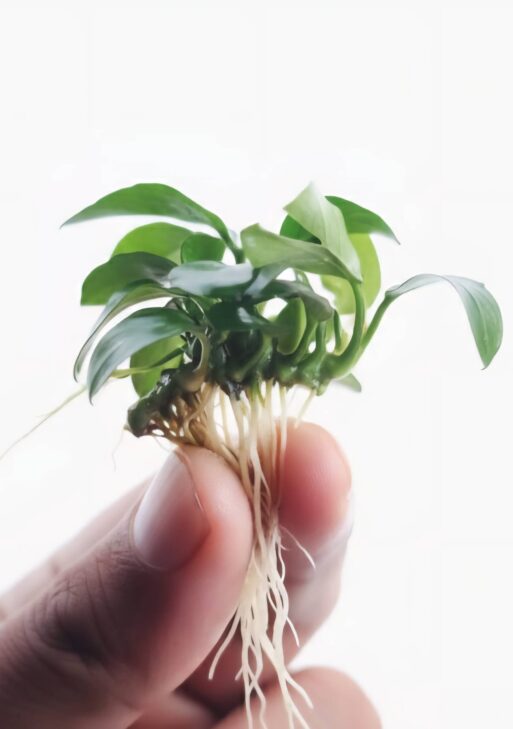
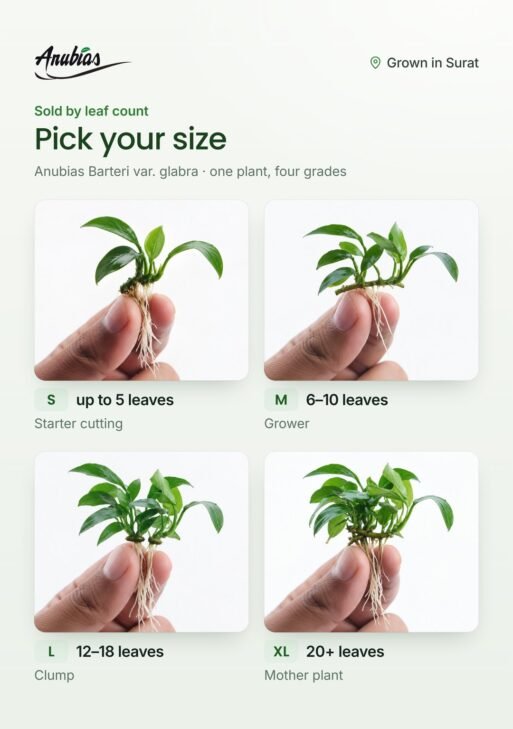
| Anubias Barteri var. glabra | Epiphyte | Midground | Long spear leaves | from ₹45 |
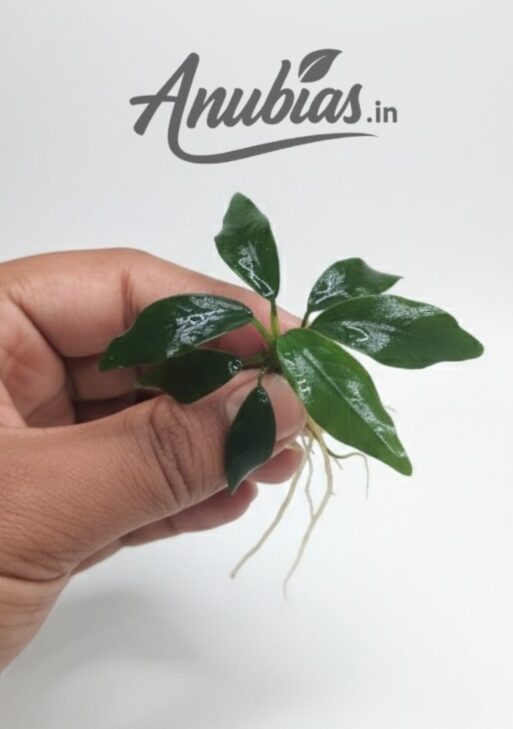
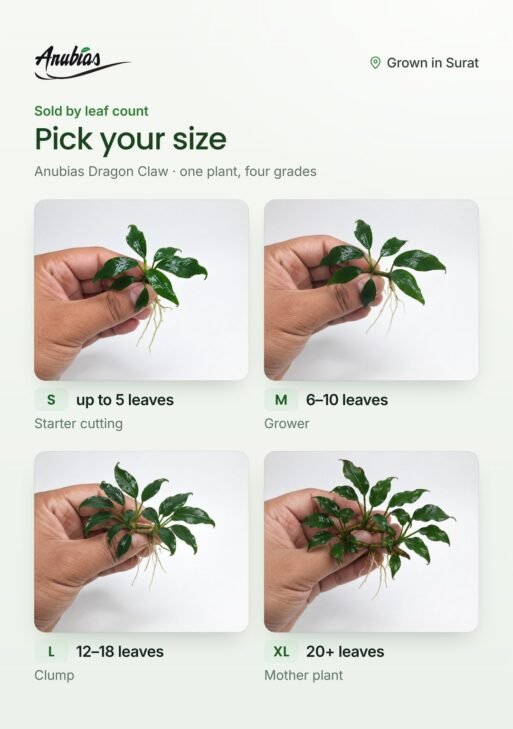
| Anubias ‘Dragon Claw’ | Epiphyte | Midground accent | Wavy, textured leaves | from ₹45 |
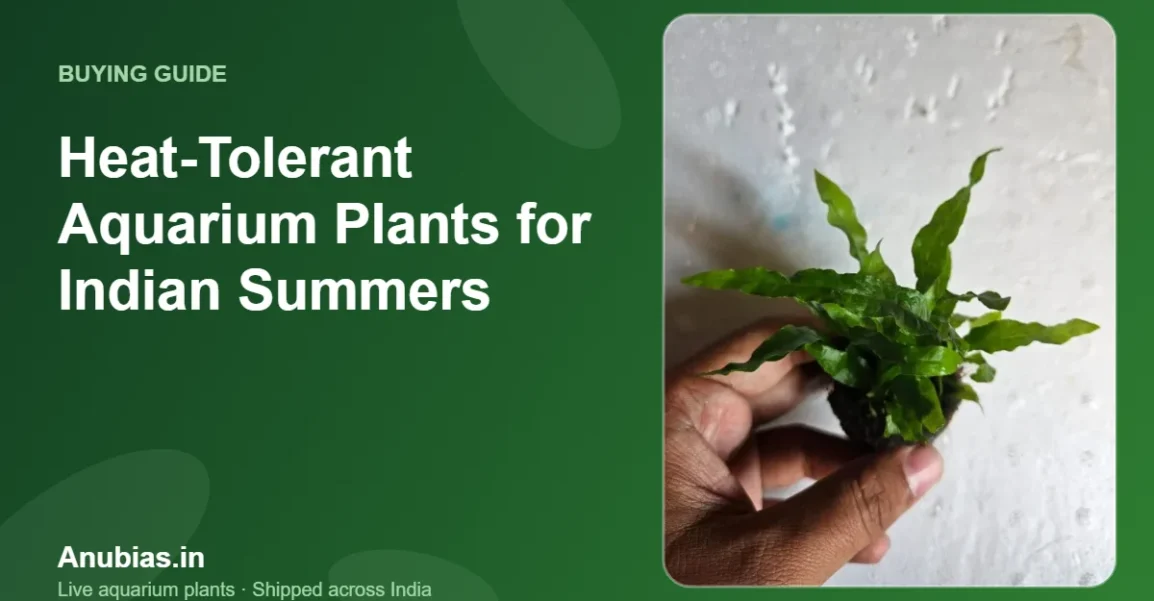
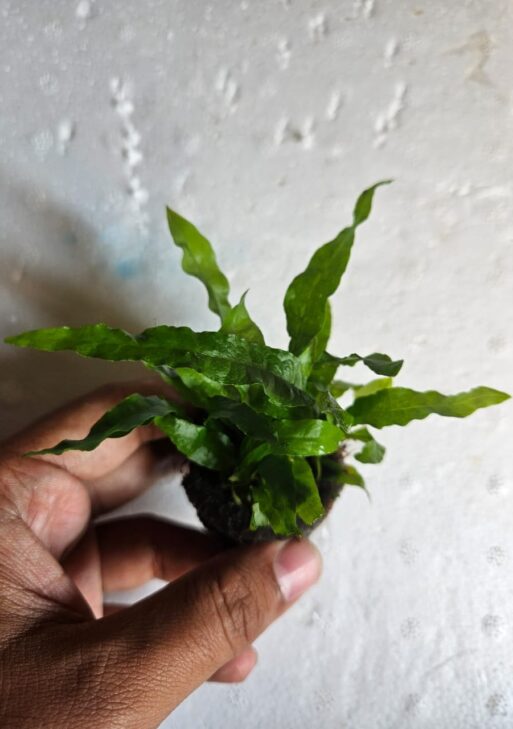
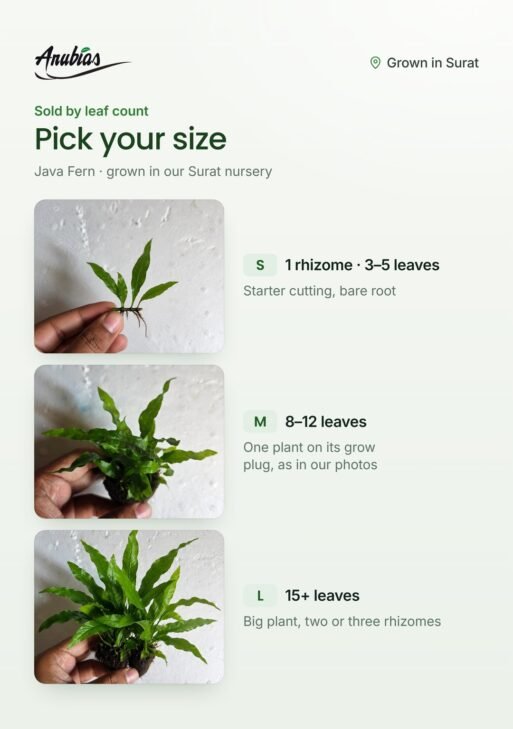
| Java Fern (Microsorum pteropus) | Epiphyte fern | Midground / background | Fast for a low-tech plant | from ₹45 |
| Dwarf Java Fern (Microsorum pteropus ‘Green Gnome’ or ‘Mini’) | Epiphyte fern | Foreground | Compact, under 10 cm | from ₹45 |
| Java Moss (Taxiphyllum barbieri) | Moss | Wood, rock, shrimp tanks | Grows on anything | from ₹70 |
| Christmas Moss (Vesicularia montagnei) | Moss | Walls and trees | Triangular fronds | from ₹90 |
| Cryptocoryne parva | Rooted rosette | Foreground carpet | Slow; root tabs help | from ₹75 |
| Vallisneria Nana (Jungle Val) | Rooted grass | Background | Spreads by runners | from ₹60 |
| Salvinia natans | Floating | Surface | Shade for bettas | from ₹55 |
| Hygrophila polysperma ‘Green’ | Stem | Background | Fast; eats nitrate | from ₹99 |
| Amazon Sword (Echinodorus bleheri) | Rooted rosette | Background centrepiece | Needs root tabs | from ₹135 |
| Dwarf Sagittaria (Sagittaria subulata) | Rooted grass | Foreground | Spreads into a lawn | from ₹105 |
| Marsilea hirsuta | Rooted | Foreground carpet | Clover-like, low tech | from ₹85 |
How to plan a low-tech tank
- Start with epiphytes. Tie 3–5 Anubias and a Java fern to a piece of driftwood or lava rock — they are the backbone of every low-tech layout.
- Add one background plant such as Vallisneria or Hygrophila polysperma to fill height and soak up nitrate.
- Add a foreground: Cryptocoryne parva, Marsilea or a carpet of small Anubias Nana Petite tied to stones.
- Finish with moss or floaters for shade and a natural look.
- Feed lightly: one dose of liquid fertiliser a week and root tabs under rooted plants.
Not sure what fits your tank and budget? Try our free AI tank planner — upload a photo of your tank and it picks low-tech plants for you — or pick a ready-made low-tech plant combo.
Common low-tech mistakes
- Burying Anubias or Java fern rhizomes — they rot. Tie them to wood or rock instead.
- Too much light — slow plants plus strong light equals algae. 6–8 hours of moderate light is plenty.
- Expecting fast growth — low-tech plants grow a leaf every few weeks; that is normal.
FAQ
Which aquarium plant is the easiest of all?
Anubias Nana. It survives low light, no CO₂, a wide temperature range and most fish, including goldfish and cichlids that eat other plants.
Do low-tech plants need fertiliser?
They grow without it, but a weekly dose of a liquid fertiliser keeps leaves greener, and rooted plants like Cryptocoryne and Amazon sword do better with root tabs.
Can low-tech plants grow in sand or gravel?
Yes. Epiphytes do not need substrate at all, and rooted low-tech plants grow in sand or gravel with root tabs pushed in near their roots.