Description
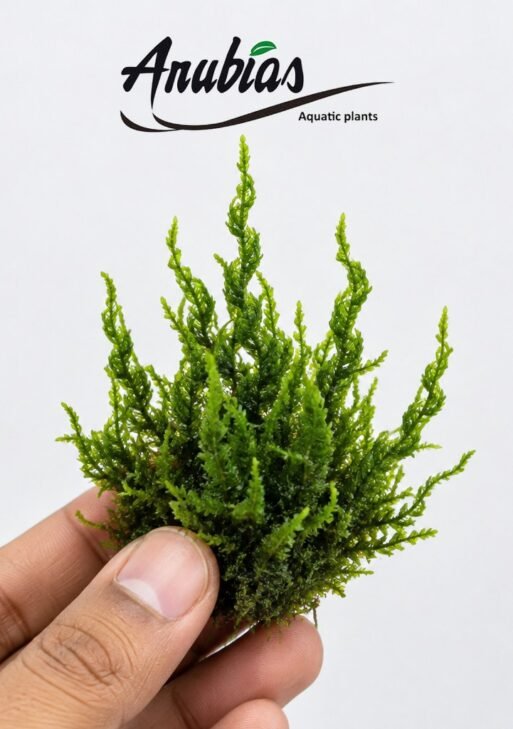
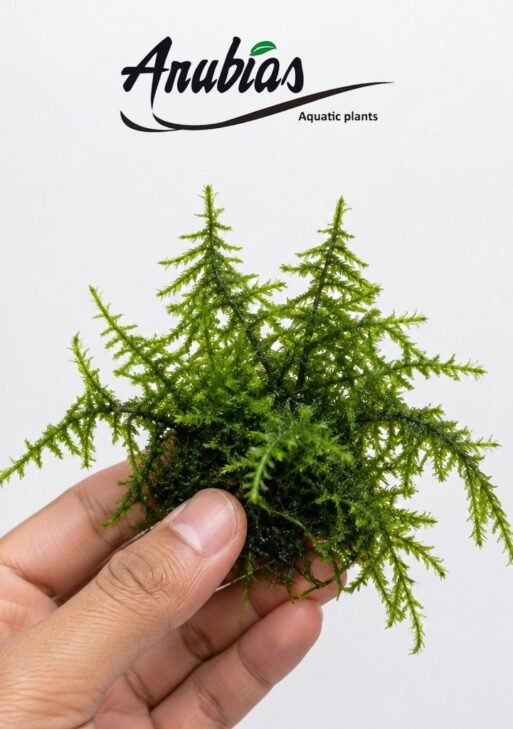
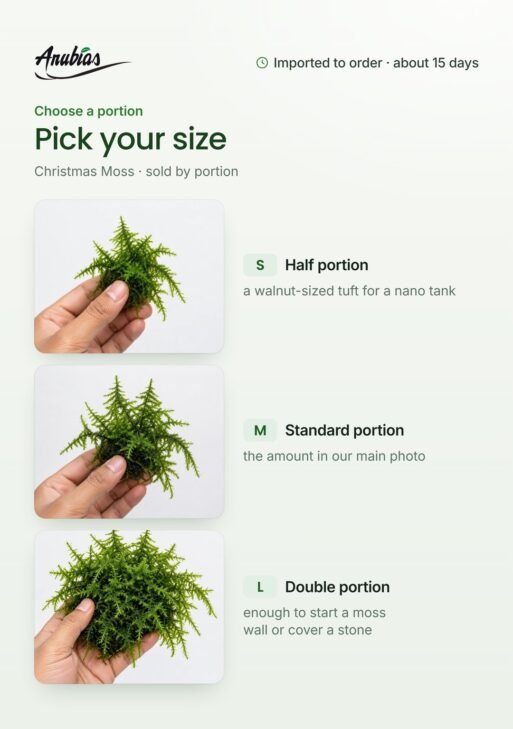
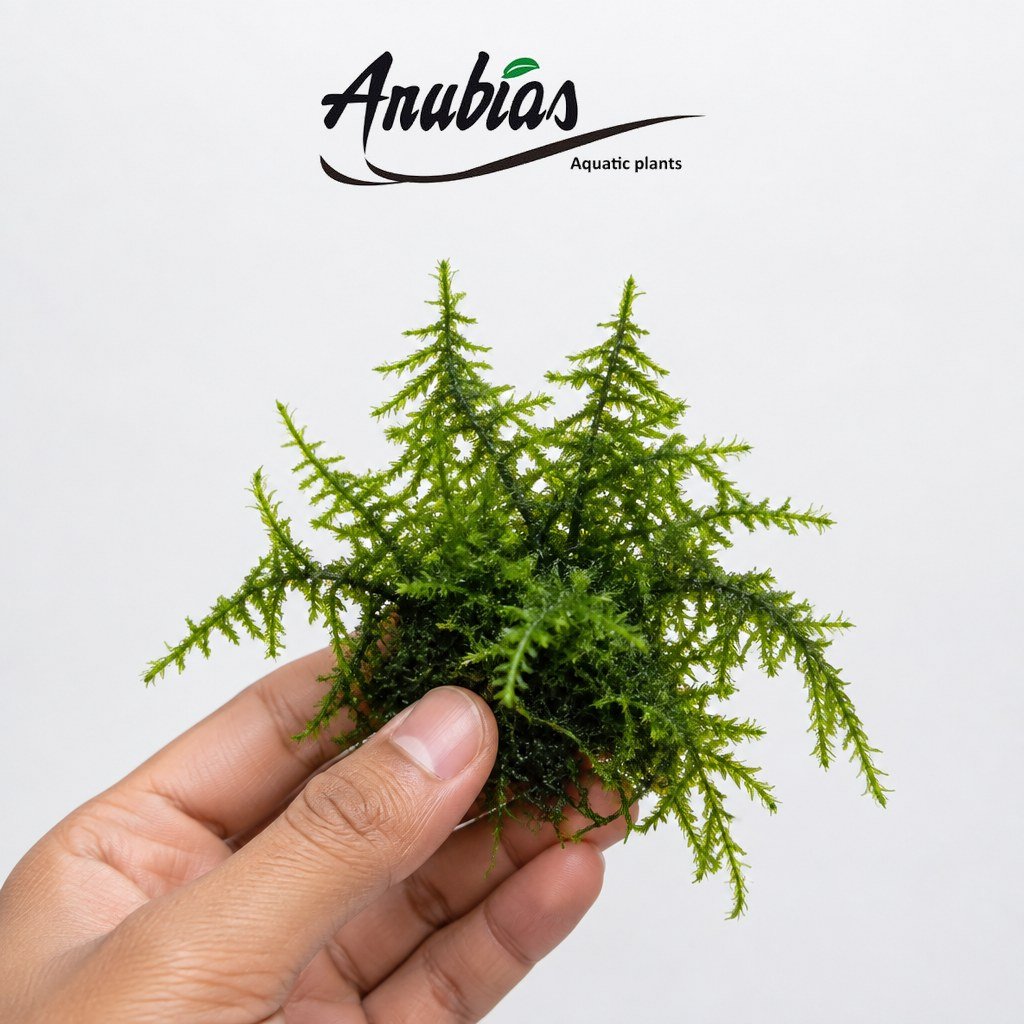
Christmas moss (Vesicularia montagnei) is an aquarium moss from Southeast Asia whose fronds branch in a neat, triangular, fir-tree pattern, which is where the name comes from. It attaches to wood and rock, has no roots, needs no substrate and no CO2, and grows a little slower and tidier than java moss. Christmas moss suits aquascapers who want moss trees, moss walls and mossy stones with a defined, layered look, and shrimp keepers who want a dense, soft refuge that holds biofilm for shrimplets. It is a little fussier about temperature than java moss, so it rewards a cooler, well-circulated tank.
Christmas moss at a glance
| Scientific name | Vesicularia montagnei |
|---|---|
| Family | Hypnaceae |
| Origin | Southeast Asia (Vietnam, Thailand, Malaysia, Indonesia), on wet rocks and roots in shaded streams |
| Difficulty | Easy |
| Light | Low to moderate |
| CO2 | Not required; improves density |
| Temperature | 20–28 °C; best at 20–26 °C |
| pH | 5.5–7.5 |
| Growth rate | Slow to moderate |
| Height/size | Mat 2–5 cm thick; spreads as wide as its surface |
| Placement | Foreground to background on wood, rock or mesh |
| Propagation | Division; every fragment grows |
How to plant christmas moss
Moss is attached, not planted. The thinner the layer, the better it grips and the healthier it stays.
- Rinse the clump in a bowl of tank water and tease it apart into small, loose pieces.
- Spread a thin layer, about 5 mm, across the wood, rock or stainless steel mesh you want to cover. Trim off any long, straggly strands so the fronds lie flat.
- Tie it down with cotton thread or fishing line in a criss-cross pattern, or dab small pieces with aquarium-safe cyanoacrylate gel. For a wall or carpet, sandwich it between two sheets of mesh.
- If you choose the optional attach-to-lava-rock add-on, the moss arrives already tied to a small rock.
- Place it where gentle flow passes over it. Still water lets debris settle in the fronds and smother them.
New fronds grip within two to four weeks. Thread can then be removed or left to rot away. Trimmed pieces float, so net them out before they settle elsewhere.
Christmas moss care: light, CO2, fertiliser and water
Light. Low to moderate. Under moderate light the fronds grow dense and keep their fir-tree shape; in very low light they stretch and look stringy, and under strong light hair algae moves in. A 6–8 hour photoperiod under a basic LED suits it.
CO2. Not required. Christmas moss grows well in a low-tech tank. CO2 injection makes it noticeably denser and faster and is standard in competition scapes, but a patient keeper gets the same result without it.
Fertiliser. It feeds from the water column, so a weekly dose of a complete liquid fertiliser is enough. In a shrimp tank with regular feeding it often needs nothing extra. Avoid copper-based medications, which damage moss and shrimp.
Water. Christmas moss accepts hard Indian tap water and soft water, pH 5.5–7.5. Temperature is its weak point. It does best at 20–26 °C and struggles once water stays above 28 °C, browning from the inside of the clump. In Indian summers, shade the tank, run a clip-on fan across the surface, keep the room cool and do water changes with slightly cooler water. During monsoon power cuts it copes for a day or two; restart the filter so flow returns. Weekly 25–30% water changes and an occasional swish to shake out debris keep it clean.
Growth, trimming and propagation
Growth is slow to moderate: a thin layer grips in two to four weeks and fills in over a few months. The fronds grow outward in flat, triangular layers, which is what gives mossy stones and branches their tidy, scaled look. Trim every few weeks with sharp scissors, taking off the outer third and keeping the layer thin so light reaches the fronds underneath. Net out all trimmings. Rinse the mat gently at water changes to flush out trapped mulm.
Propagation is automatic: every trimmed fragment grows. Tie trimmings to a new rock, press them into a mesh sandwich for a wall, or drop them into a breeding tank as cover.
Where to use it in an aquascape
Christmas moss fits every tank size. In a 1 ft nano of 15–20 litres, a single moss-covered stone or a small branch becomes the whole scape. In 2 ft tanks of 50–60 litres, cover the branches of a piece of driftwood to build a moss tree, or grow a moss wall on mesh against the back glass. In 3–4 ft tanks of 100–200 litres, use it to age rocks and soften the line where hardscape meets substrate.
Pair it with Anubias nana and Java fern on the same wood, carpeting plants in front and stem plants behind. It is a favourite for cherry and crystal shrimp tanks, where it holds biofilm and hides shrimplets, and for breeding egg-scatterers such as tetras and rainbowfish. Bettas and gouramis rest in it. Avoid goldfish and large cichlids, which tear moss apart.
Common problems and fixes
- Browning in the centre of the clump. Cause: layer too thick, or water too warm. Fix: trim thin, improve flow, cool the tank below 28 °C.
- Hair or thread algae growing through it. Cause: too much light or nutrients. Fix: reduce the photoperiod, add Amano shrimp, pull algae out with a toothbrush, replace badly infested sections with clean moss.
- Stringy growth with no fir-tree shape. Cause: too little light. Fix: increase light moderately and trim to encourage branching.
- Moss full of debris. Cause: poor flow. Fix: improve circulation and rinse at water changes.
- Moss floats away. Cause: thread rotted before the moss gripped. Fix: retie and wait longer.
- Melting in summer. Cause: sustained heat above 28 °C. Fix: fan, shade, cooler water changes; move a portion to a cooler tank as backup.
What you receive
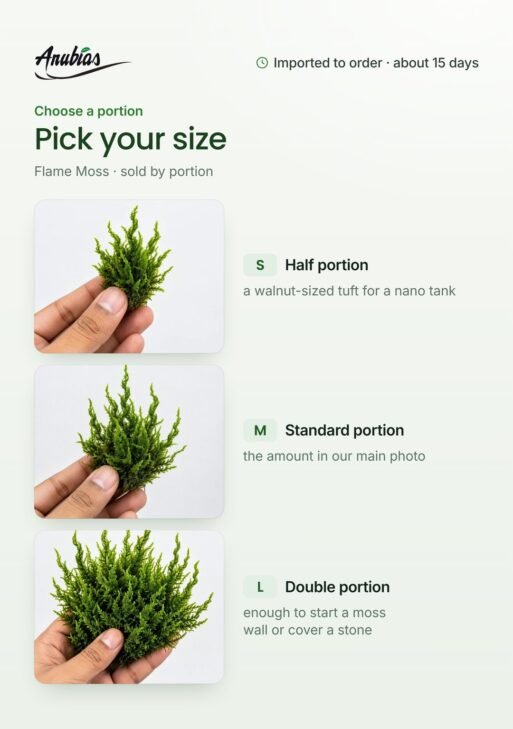
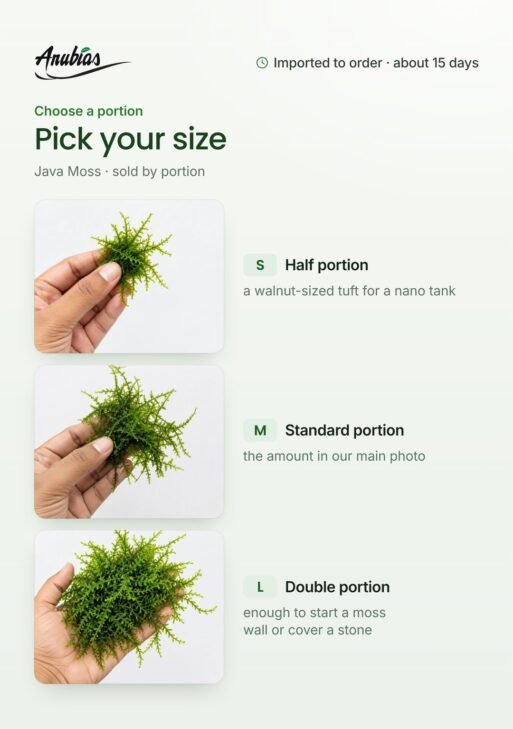
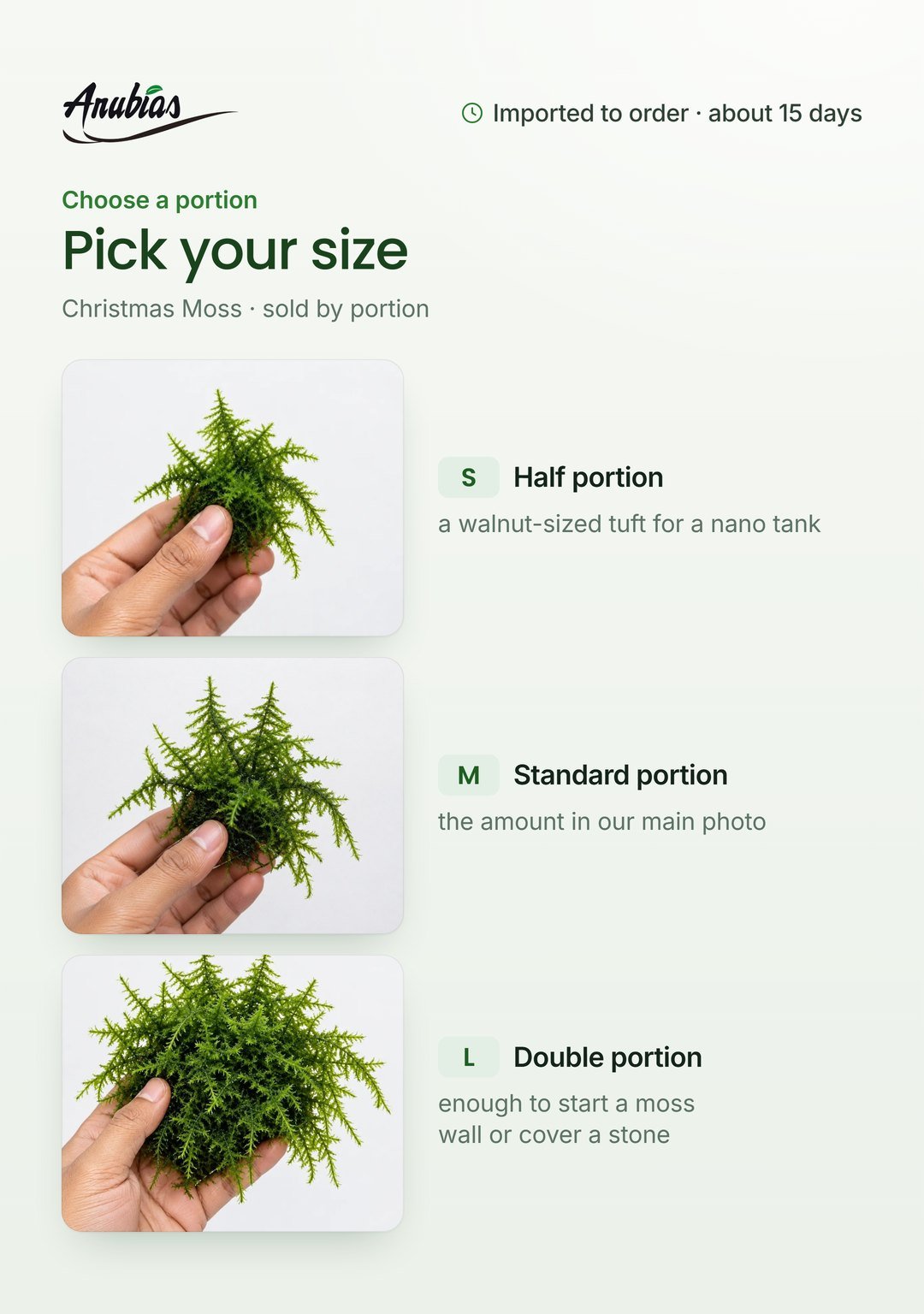
One healthy clump of christmas moss of the size you select (S, M or L), similar to the photo. Each portion is checked before packing, packed moist and shipped across India from Surat. ₹99 shipping, free on orders of ₹999 or more.
Live-arrival guarantee: record one continuous unboxing video within 4 hours of delivery and we will refund or replace a plant that arrived damaged.
FAQ
Does christmas moss need CO2?
No. It grows well in a low-tech tank. CO2 makes it denser and faster but is optional.
Is christmas moss good for beginners?
Yes, with one caution: it prefers water below 28 °C. Keep it thin, in flow and cool and it is easy.
How fast does christmas moss grow?
Slow to moderate. A thin layer grips in two to four weeks and fills in over a few months.
Christmas moss vs java moss: what is the difference?
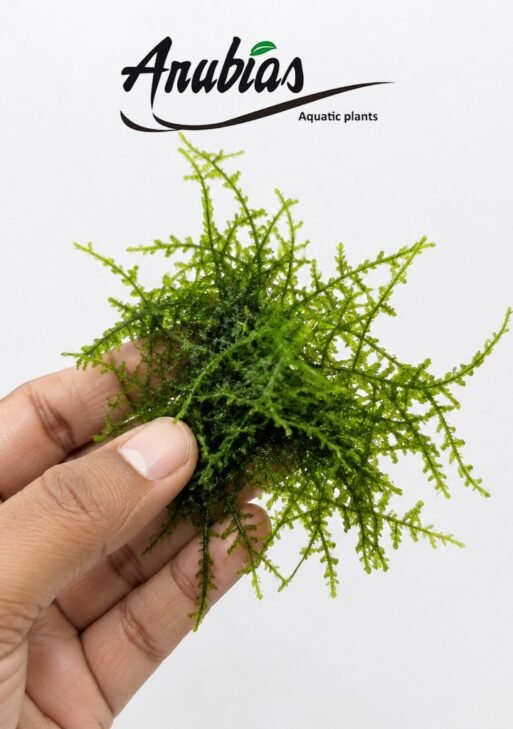
Christmas moss grows in neat, triangular fir-tree fronds and prefers cooler water; java moss is wilder, tougher and handles heat better. Choose christmas moss for show scapes and java moss for breeding tanks or hot rooms.
Can christmas moss grow in warm Indian tanks?
Up to about 28 °C, yes. Above that it browns. A clip-on fan, shade and cooler water changes get it through summer.
How do I attach christmas moss to driftwood?
Spread a thin layer and tie it with cotton thread or fishing line, or glue small pieces with cyanoacrylate gel. It grips in a few weeks.
Is christmas moss safe for shrimp?
Yes. It is one of the best shrimp-tank plants, holding biofilm and sheltering shrimplets.
Not sure what fits your tank? Plan it with our free AI tank planner.