
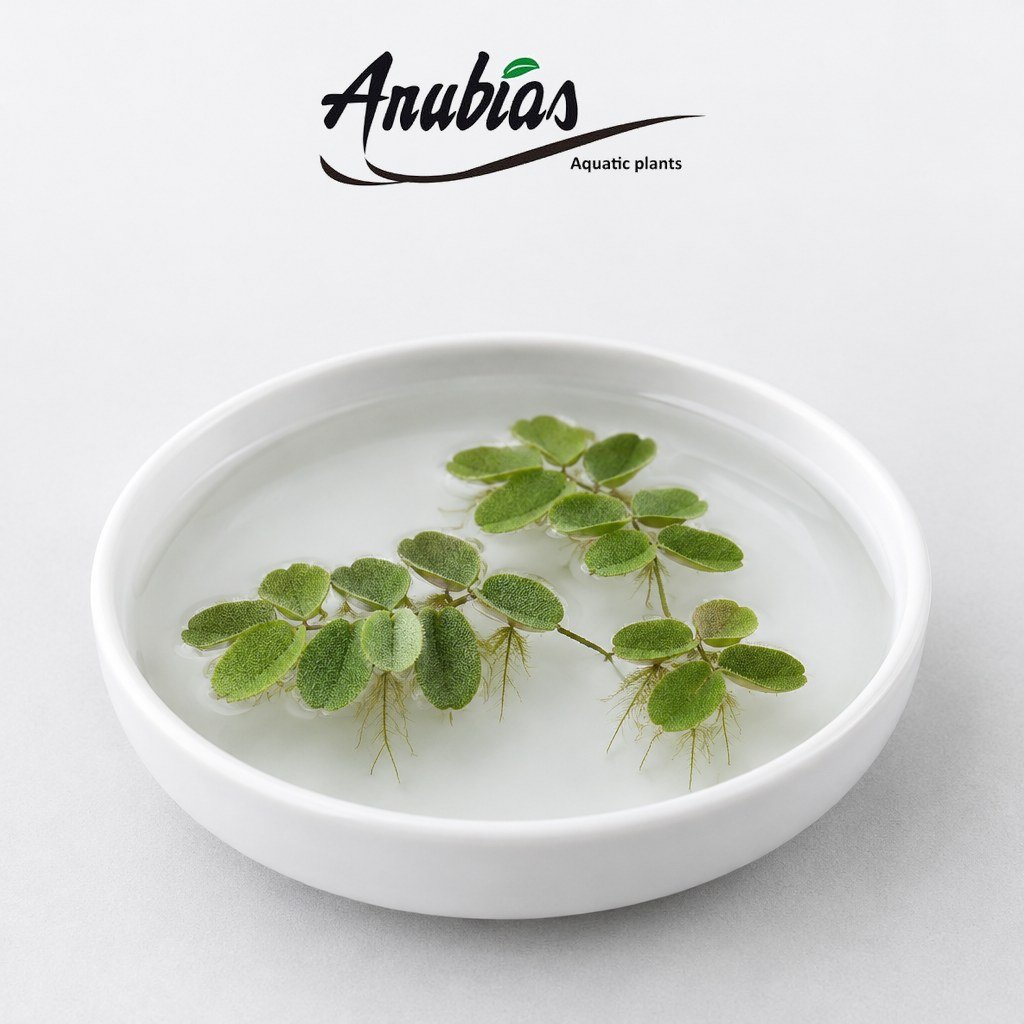
Description
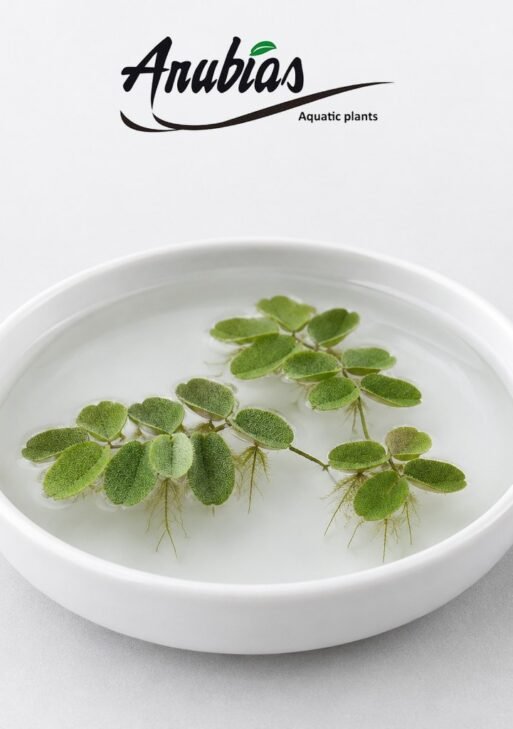
Salvinia natans, the floating fern or floating watermoss, is a small free-floating fern with pairs of oval, velvety green leaves about 1–1.5 cm long that sit on the water surface, with a third leaf hanging below as a feathery root. It is native across Europe, Asia and Africa, including ponds and paddies in India, and is one of the easiest floating plants for aquariums: no substrate, no CO2 and no special light. It suits beginners, betta and shrimp keepers, breeders who need surface cover, and anyone fighting algae with a nitrate-hungry plant.
Salvinia natans spreads fast under good light, shades the tank below, and gives shy fish a sense of cover. The hairs on its leaves repel water, so the leaves stay dry and the plant floats effortlessly as long as the surface is reasonably calm.
Salvinia natans at a glance
| Scientific name | Salvinia natans |
|---|---|
| Family | Salviniaceae (floating ferns) |
| Origin | Europe, Asia (including India) and North Africa |
| Difficulty | Easy |
| Light | Medium to high |
| CO2 | Not needed; it takes CO2 from the air |
| Temperature | 18–30 °C |
| pH | 6.0–8.0 |
| Growth rate | Fast |
| Height/size | Leaves 1–1.5 cm; roots 2–5 cm below the surface |
| Placement | Floating |
| Propagation | Division; the stems break into new plants naturally |
How to plant Salvinia natans
- Open the bag and float the plants on the tank surface. Rinse first if you prefer, but keep the leaf tops dry; wet leaves sink and rot.
- If any plants have flipped upside down, turn them right side up with a finger; the hairy upper leaves must face the air.
- Reduce surface agitation. Point the filter outlet downward or use a lily pipe, and avoid hang-on-back filters that rain water onto the leaves.
- To keep the floaters in one area and away from the filter intake, make a floating ring from airline tubing joined with a connector, or use a suction-cup floating-plant corral.
- Leave a gap of a few centimetres between the surface and the light to prevent heat damage, and keep the lid partly open or use a glass lid, as dripping condensation can damage the leaves.
- That is all. Growth begins within days.
Salvinia natans care: light, CO2, fertiliser and water
Light
Being at the surface, Salvinia gets the strongest light in the tank. Medium light of 30 lumens per litre is enough for steady growth; under high light it multiplies very fast and leaves become larger and slightly cupped. Under weak light it grows slowly but survives. Protect it from a hot lamp sitting directly on the surface.
CO2
None required. Floating plants take carbon dioxide directly from the air, which is why they outgrow submerged plants and are so effective at removing nitrate and ammonia.
Fertiliser
In a stocked tank it usually needs nothing. In a lightly stocked tank, dose a liquid fertiliser weekly; iron shortage shows as pale or yellow new leaves. Because it absorbs nutrients fast, it competes with algae and is a useful tool in a tank with green water or hair algae problems.
Water and Indian conditions
Salvinia natans is native to the subcontinent and copes with hard water, warm summers up to 30 °C and humid monsoon conditions. In tanks with a tight lid in summer, the air above the water gets hot and humid and the leaves can brown; leave a gap for air. Power cuts do not affect it beyond a brief pause in growth. It is sometimes confused with the much larger Salvinia molesta, a notorious invasive weed; natans is the small, well-behaved species, but never release any floating plant into natural waters.
Growth, trimming and propagation
Under good light the plant can double every one to two weeks, so weekly thinning is normal. Simply scoop out a handful with a net and compost it or pass it on; leaving a third of the surface open keeps light and oxygen exchange adequate for the plants below. Propagation is automatic: the horizontal stems branch and break, and each fragment with a leaf pair becomes a new plant. Spores are produced in sporocarps under the leaves in older plants but are not needed for propagation in the aquarium.
Where to use it in an aquascape
Salvinia natans works in every tank size from a 10-litre betta bowl to a 4-foot, 250-litre community tank, and in ponds and tubs. In a 2-foot, 60–70 litre tank a Small portion covers a corner in a fortnight. Use it to dim a tank that is too bright for Anubias nana, Java fern and Cryptocoryne, which prefer shade, and to give labyrinth fish a surface to build bubble nests under.
Keep it away from light-hungry carpeting plants, which need an unshaded surface. It is ideal with bettas, gouramis, guppies, killifish, shrimp and fry, whose first hiding places are its dangling roots. Combine it with red root floater or other floating plants for a mixed surface.
Common problems and fixes
- Leaves turning brown or rotting: water splashing on the leaves, condensation dripping, or heat under a closed lid. Calm the surface and ventilate.
- Plants sinking: leaves got waterlogged or the plant is upside down. Turn it over; replace badly waterlogged plants.
- Yellow new leaves: iron or general nutrient shortage. Dose a liquid fertiliser.
- Covering the whole surface: it is doing its job too well. Thin weekly and keep a third of the surface open.
- Getting sucked into the filter: use a floating corral or a prefilter sponge on the intake.
What you receive
One healthy portion of Salvinia natans (Floating Fern) in the size you select (Small or Standard), similar to the photo. Each portion is checked before packing, packed moist and shipped across India from Surat. ₹99 shipping, free on orders of ₹999 or more. Live-arrival guarantee: record one continuous unboxing video within 4 hours of delivery, and if the plant has arrived damaged we refund or replace it.
FAQ
Does Salvinia natans need CO2?
No. As a floating plant it takes CO2 from the air and grows fast without any injection.
Is Salvinia natans good for beginners?
Yes. It is one of the easiest aquarium plants of all: no substrate, no CO2, and it tolerates hard water and warm temperatures.
Does Salvinia natans reduce algae?
It helps. It absorbs nitrate and ammonia quickly and shades the water, both of which limit algae growth.
How fast does Salvinia natans grow?
Fast. Under medium to high light it can double every one to two weeks and needs weekly thinning.
Salvinia natans vs red root floater: which is better?
Salvinia is hardier and faster, with green velvety leaves; red root floater is slower but turns red under strong light. Both prefer a calm surface.
Why are my Salvinia leaves turning brown?
Usually water on the leaves from filter splash or dripping condensation, or heat trapped under a closed lid. Calm the surface and leave an air gap.
Is Salvinia natans safe for bettas and shrimp?
Yes. Bettas build bubble nests under it and shrimp and fry hide in its roots.
Not sure what fits your tank? Plan it with our free AI tank planner.










There are no reviews yet.