
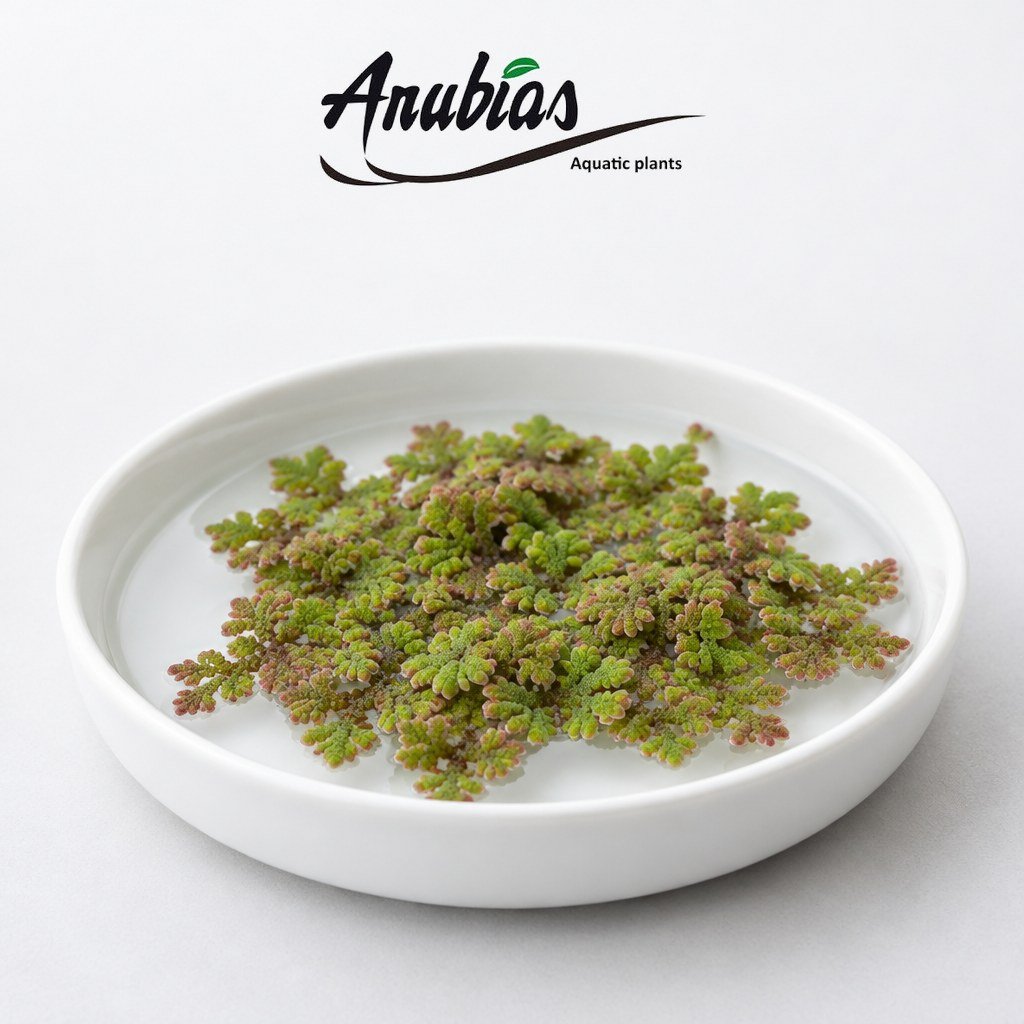
Description
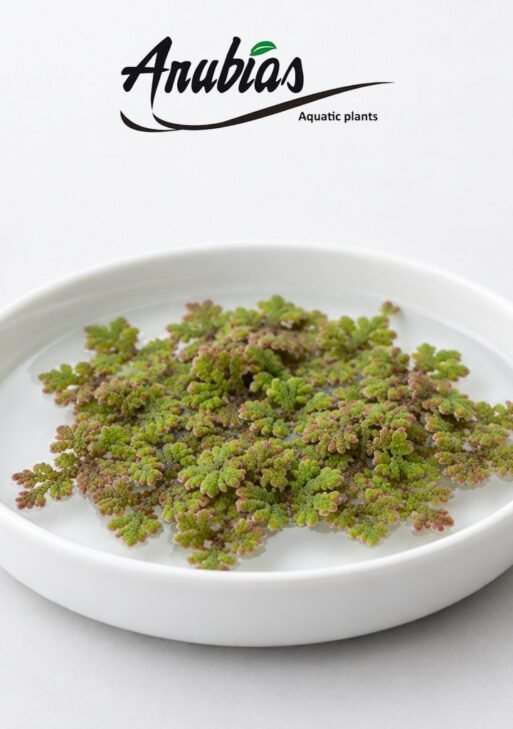
Azolla (Azolla caroliniana), also called mosquito fern or fairy moss, is a tiny free-floating fern whose overlapping scale-like fronds form a green to reddish mat on the water surface, each plant barely 1–2 cm across. It is probably the most widely known floating plant in India, familiar from paddy fields, village ponds and cattle-feed trays, and it is just as useful in the aquarium and garden pond: it grows without substrate or CO2, shades the water, pulls nitrate and ammonia out of the water column, and turns an attractive red under strong light. This listing is for aquarium and pond use. It suits beginners, betta and shrimp keepers, fry raisers and anyone with a bright tank that needs some surface cover.
Azolla is unusual among floating plants because it lives in partnership with a nitrogen-fixing cyanobacterium, Anabaena azollae, inside its leaves, which lets it grow fast even in nutrient-poor water. That same trait makes it a biofertiliser in rice farming and a feed crop for poultry and cattle; in the aquarium it simply means a vigorous, self-sufficient plant.
Azolla at a glance
| Scientific name | Azolla caroliniana (the Azolla cristata/caroliniana group) |
|---|---|
| Family | Salviniaceae (floating ferns) |
| Origin | The Americas; now naturalised across India and the tropics |
| Difficulty | Easy |
| Light | Medium to high; high light turns it red |
| CO2 | Not needed; it takes CO2 from the air |
| Temperature | 15–30 °C (best 20–28 °C) |
| pH | 5.5–8.0 |
| Growth rate | Very fast; can double in under a week |
| Height/size | Individual plants 1–2 cm; roots 1–3 cm |
| Placement | Floating (aquarium, tub, pond) |
| Propagation | Fragmentation; the plants break apart as they grow |
How to plant azolla
- Open the bag and float the azolla on the surface of the tank, tub or pond. Do not submerge it or wet the top of the fronds any more than necessary.
- Calm the surface. Point the filter outlet downward or fit a lily pipe, because constant splashing wets and sinks the fronds.
- Contain it with a floating ring made from airline tubing or a suction-cup corral if you want to keep part of the surface open.
- Keep a small air gap under the lid; azolla dislikes hot, stagnant air and dripping condensation.
- For ponds and tubs, float a handful in a shaded corner first; in full sun it spreads across the surface within a couple of weeks.
- Growth starts within a day or two. Expect the mat to visibly thicken each week.
Azolla care: light, CO2, fertiliser and water
Light
Medium light keeps azolla green and growing; high light or direct sun produces the deep red colour that many people buy it for. Under weak light it stays small, pale and slow. In an aquarium, a standard planted-tank LED is plenty, since the plant sits right under it.
CO2
None. Like all floating plants, mosquito fern takes carbon dioxide from the air, so it grows quickly in tanks with no injection at all and is a good match for low-tech set-ups.
Fertiliser
Thanks to its nitrogen-fixing partner, azolla rarely needs added nitrogen. It still needs phosphate, potassium and iron, which a stocked aquarium or a weekly liquid fertiliser supplies. Pale, stunted fronds with poor red colour usually point to iron shortage. In a tank with nitrate above 20 ppm it will grow explosively and is an effective way to bring nitrate down between water changes.
Water and Indian conditions
Azolla is naturalised across India and handles hard water, monsoon humidity and warm water up to about 30 °C. In peak summer, water above 32 °C and hot air under a closed lid cause browning; shade part of a pond or leave an air gap on an aquarium lid. Power cuts are irrelevant to a floating plant. Never release azolla into natural waterways or drains; it can cover water bodies and is managed as a weed in some regions.
Growth, trimming and propagation
Azolla is one of the fastest-growing plants on earth, capable of doubling its mass in three to seven days under good conditions. In an aquarium that means scooping out a handful or two every week and leaving a third of the surface open for gas exchange and light. Propagation needs no effort: the branching fronds break apart naturally and every fragment keeps growing.
Where to use it in an aquascape
Azolla fits everything from a 5-litre betta jar to a 4-foot, 250-litre community tank, and is a classic choice for outdoor tubs and lily ponds in Indian gardens. In a 2-foot, 60–70 litre tank, a Small portion covers a corner within two weeks. Use it to shade light-sensitive Anubias nana, Java fern and Cryptocoryne, which do better under a dappled surface.
Keep it thinned over high-light carpeting plants, which need an open surface. It mixes well with red root floater and Salvinia among our floating plants. Bettas, gouramis, guppies, killifish and shrimp love the cover; fry hide among the dangling roots; goldfish and tilapia will eat it.
Common problems and fixes
- Fronds turning brown and sinking: splashing water, dripping condensation or trapped heat. Calm the surface and ventilate the lid.
- Azolla stays green, not red: light is moderate. Increase intensity or move the tub into more sun; red develops on new growth over a week or two.
- Pale, small fronds: iron or phosphate shortage. Dose a complete liquid fertiliser.
- Covering the entire surface: expected. Thin weekly and keep a corral in place.
- Clogging the filter intake: fit a prefilter sponge or keep the plant corralled away from the intake.
What you receive
One healthy portion of Azolla caroliniana (Mosquito Fern) in the size you select (Small or Standard), similar to the photo. Each portion is checked before packing, packed moist and shipped across India from Surat. ₹99 shipping, free on orders of ₹999 or more. Live-arrival guarantee: record one continuous unboxing video within 4 hours of delivery, and if the plant has arrived damaged we refund or replace it.
FAQ
Does azolla need CO2?
No. It floats and takes CO2 from the air, so it grows fast in any tank without injection.
Is azolla good for beginners?
Yes. It is one of the easiest plants available: no substrate, no CO2, tolerant of hard water and warm temperatures.
Why does azolla turn red?
Strong light, and to a lesser extent cooler temperatures, trigger red pigments in the fronds. Red azolla is healthy, not stressed.
How fast does azolla grow?
Very fast. Under good light it can double every three to seven days and needs thinning every week.
Azolla vs duckweed: which is better for an aquarium?
Azolla is larger, easier to net out, and colours red; duckweed is smaller, sticks to everything and is harder to remove. Most aquarists prefer azolla.
Can azolla grow in an outdoor pond or tub in India?
Yes. It thrives in Indian ponds and tubs in partial to full sun, and is the same plant used as a feed and paddy biofertiliser crop.
Does azolla control mosquitoes?
A dense mat makes it harder for mosquitoes to breed, which is why it is called mosquito fern, but it is not a complete solution; keep larvae-eating fish in the pond as well.
Not sure what fits your tank? Plan it with our free AI tank planner.










There are no reviews yet.