
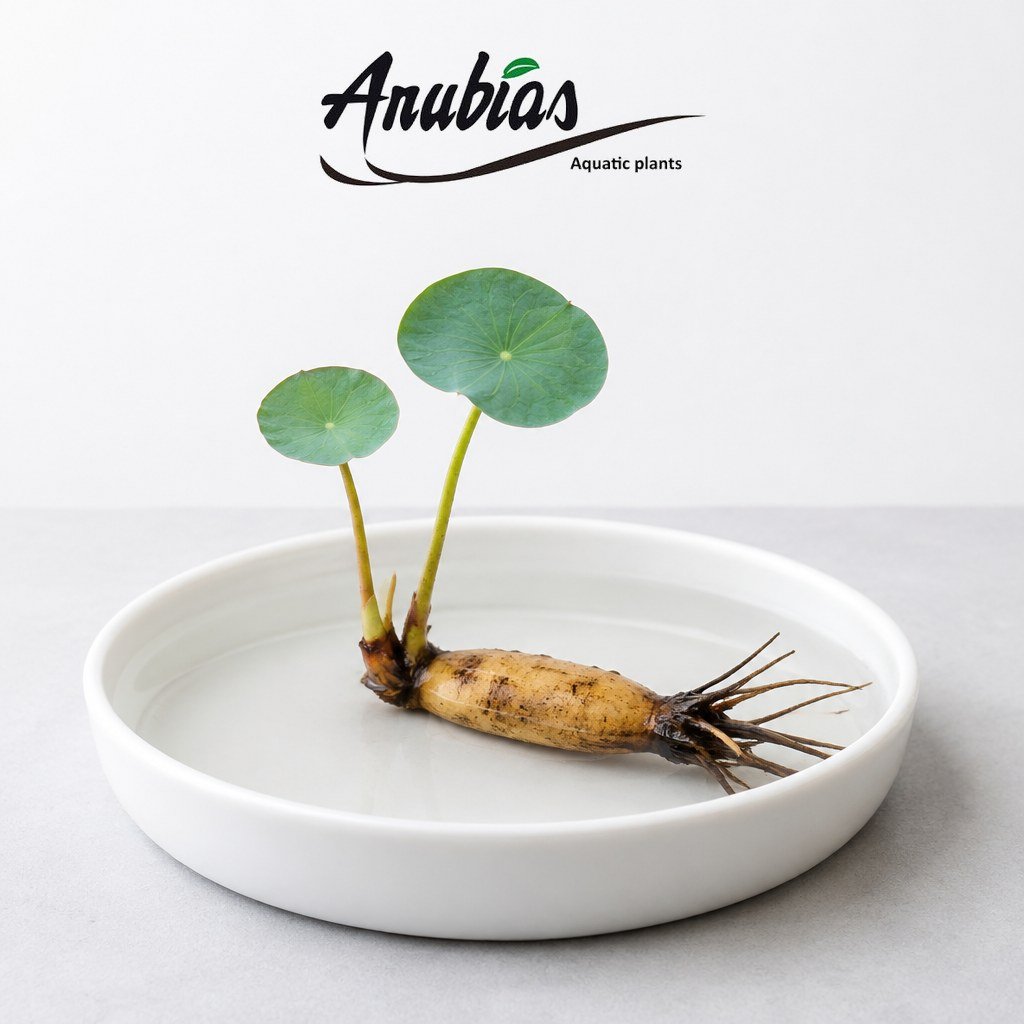
Description
Nelumbo nucifera, the sacred pink lotus, is the flowering plant most Indians picture when they hear “lotus plant” – tall round leaves standing above the water and large pink blooms that open over three mornings. This is a pond and tub plant, not an aquarium plant: it needs open sky, full sun and a wide container of soil. If you have a sunny balcony, terrace or garden pond and want lotus flowers at home, this is the plant to start with.
Pink Lotus (Nelumbo nucifera) at a glance
| Scientific name | Nelumbo nucifera (pink-flowered form) |
|---|---|
| Family | Nelumbonaceae |
| Origin | India, Sri Lanka, South-east Asia, China, Japan and northern Australia |
| Difficulty | Easy to medium (the one hard requirement is full sun) |
| Light | Full sun, at least 6 hours of direct sunlight daily |
| CO2 | Not applicable – grown outdoors in a tub or pond |
| Temperature | 24–35 °C in the growing season; growth slows below 18 °C |
| pH | 6.5–8.0 (ordinary tap and borewell water are fine) |
| Growth rate | Fast in summer and monsoon; dormant or slow in cold winters |
| Height/size | Leaves 30–90 cm above water; spread 60–120 cm depending on tub size |
| Placement | Pond margin, tub, drum or large bowl – outdoors only |
| Propagation | Division of the running rhizome (tuber) in spring; also from seed |
How to plant Pink Lotus (Nelumbo nucifera)
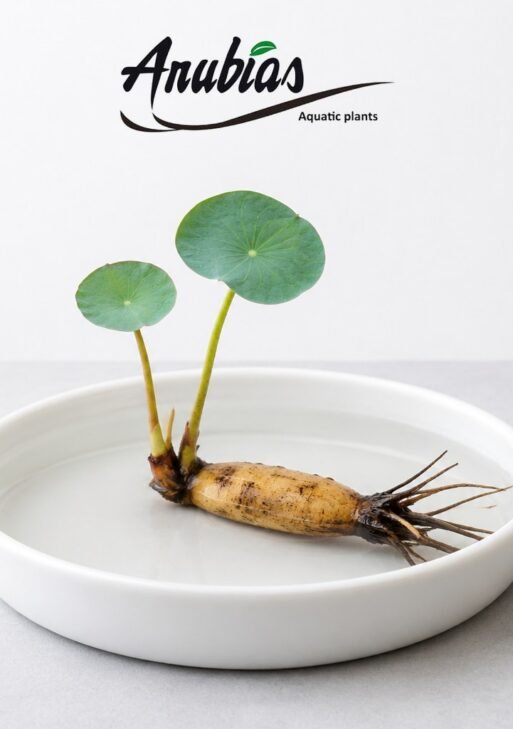
Lotus grows from a banana-shaped tuber with pointed growing tips. If a tip snaps, that section will not grow, so handle the tuber by the thick body.
- Choose a wide container. Width matters more than depth. A tub 45–60 cm across and 25–35 cm deep suits a balcony; 90 cm or more gives bigger leaves and more flowers.
- Add soil, not gravel. Fill 12–15 cm of heavy garden loam or clay-rich soil. Avoid cocopeat, potting mix and compost-rich soil – they float, cloud the water and rot.
- Lay the tuber flat. Half-bury the body with the growing tip pointing upward, above the mud. Pin it with a small stone if it floats.
- Add water slowly. Start with 5–8 cm over the soil; raise to 15–25 cm as leaves rise.
- Full sun immediately. Floating leaves come first, then standing leaves on stalks. Begin feeding only when standing leaves appear.
A rooted plant can be moved with its soil intact at the same depth.
Pink Lotus care: light, CO2, fertiliser and water
Sunlight is non-negotiable. A lotus plant in shade produces a few floating leaves and never flowers. Open terraces and south- or west-facing balconies are ideal. In Indian summers of 38–45 °C it thrives as long as the tub never dries – top up daily in May and June.
Water. Tap, borewell and rainwater all work; hard water is no problem. A few guppies, or azolla from our floating plants, control mosquito larvae.
Fertiliser. Lotus is a heavy feeder once established. Push one aquatic fertiliser tablet (or a small newspaper-wrapped ball of slow-release NPK) 8–10 cm into the soil, away from the tuber, every 3–4 weeks in the growing season. Never fertilise a newly planted tuber.
Monsoon and winter. Place the tub where overflow drains safely and remove torn leaves. In the south the plant keeps a few leaves all year; in the north (nights below 10 °C) it dies back and the tuber rests in the mud – keep the soil wet and it sprouts again in late February.
Growth, trimming and propagation
In warm weather expect floating leaves within two to three weeks, standing leaves in four to six, and flowers in the second or third month. Each flower lasts about three days, then leaves behind the familiar shower-head seed pod.
Cut spent flowers and yellow leaves at the base of the stalk, but never below the water line – the hollow stems carry air to the rhizome, and a submerged cut can rot the tuber.
To propagate, lift the tub in early spring when new tips appear, wash the mud away and cut the rhizome into sections with at least one growing tip and two nodes each. Replant as above. A mature tub gives three to six new plants a year.
Where to use it in an aquascape
Lotus is not a tank plant: its leaves must rise into the air and it needs direct sun, so it will not survive long in an indoor aquarium. Use it for:
- Balcony bowls and tubs – a single 60 cm tub with one lotus, a few floating plants and three or four guppies is a complete miniature pond.
- Garden ponds – plant in a submerged basket so the rhizome does not take over.
- Terrace water gardens – pair with tropical water lilies (Nymphaea) in separate containers for surface cover.
For an indoor planted tank, choose Nymphaea sp. ‘Leopard’ or Nuphar japonica from our range instead.
Common problems and fixes
- No flowers. Almost always too little sun or too small a tub. Move to full sun; repot wider next spring.
- Floating leaves only. Normal for the first few weeks. If it continues for two months, check the sun and reduce water depth to 10 cm.
- Yellow leaves with green veins. Nutrient shortage – feed with a tablet. Old leaves yellowing one at a time in autumn is natural.
- Aphids on leaves and buds. Spray off with a jet of water; avoid pesticides if fish are in the tub.
- Tuber went soft and smelly. Damaged tip or rotting organic soil. Replant any firm piece with an intact tip in fresh loam.
What you receive
One healthy Pink Lotus (Nelumbo nucifera) plant in the size you select – Small or Standard – similar to the plant in the photo. It is checked before packing, packed moist and shipped across India from Surat. Live-arrival guarantee: record one continuous unboxing video within 4 hours of delivery and, if the plant arrived damaged, we refund or replace it.
FAQ
Can Nelumbo nucifera be grown in an aquarium?
No. Lotus leaves must stand above the water and the plant needs direct sunlight, so an indoor tank will not keep it alive. Grow it in a tub, bowl or pond outdoors; for an aquarium choose a true aquatic lily such as Nymphaea sp. ‘Leopard’.
How much sun does a lotus plant need?
A minimum of six hours of direct sunlight every day. Less sun means fewer leaves and usually no flowers.
What size tub is needed for a pink lotus?
A tub 45–60 cm wide and 25–35 cm deep is the practical minimum for a balcony. Wider tubs give bigger plants and more flowers.
How long does it take for a lotus to flower?
In warm weather with full sun, usually two to three months after planting. Plants in small or shaded tubs may not flower in the first year.
Does the lotus plant survive winter in India?
Yes. In most of India it keeps growing or slows down. In the colder north it dies back to the tuber and resprouts in spring – keep the soil wet and do not discard it.
Lotus vs water lily – what is the difference?
Lotus (Nelumbo) holds its leaves and flowers well above the water on stiff stalks; water lilies (Nymphaea) float their leaves on the surface and tolerate smaller containers and partial sun better.
Not sure what fits your tank? Plan it with our free AI tank planner.











There are no reviews yet.