
Description
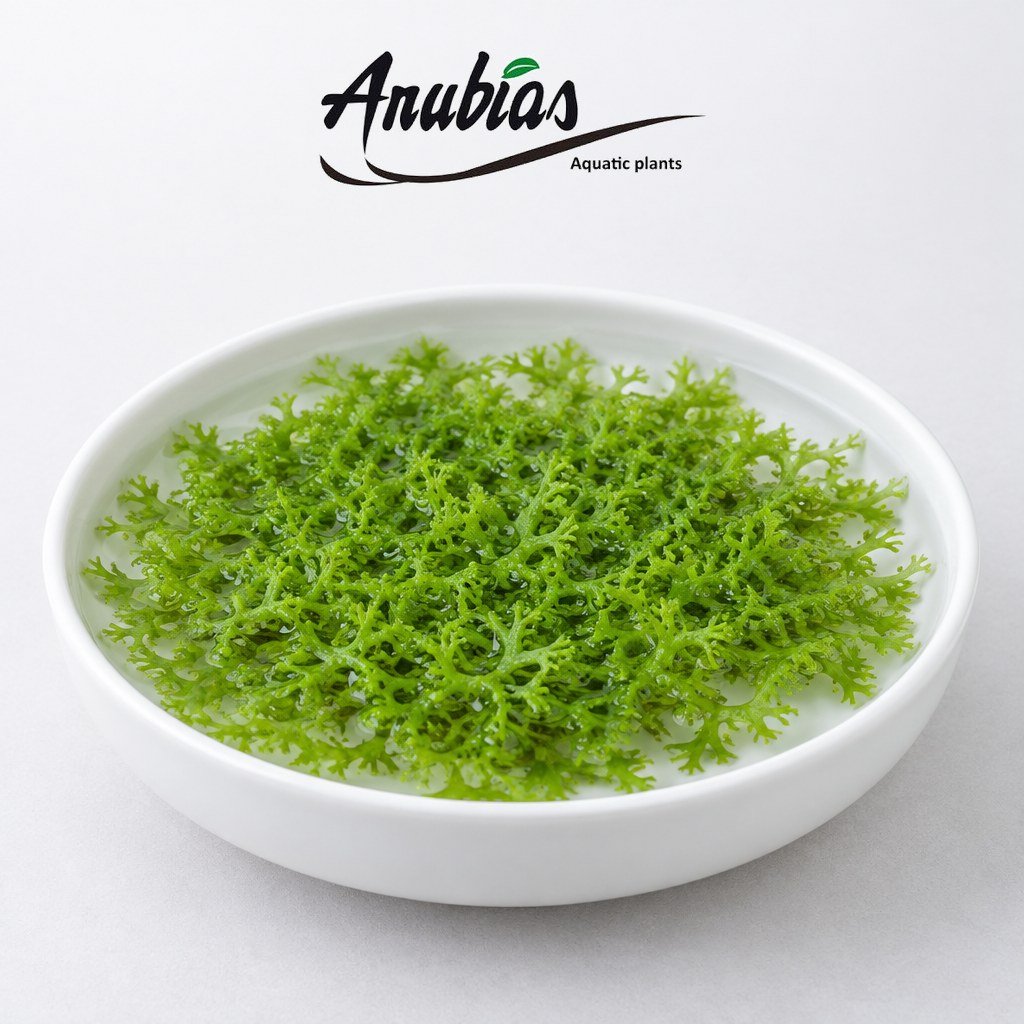
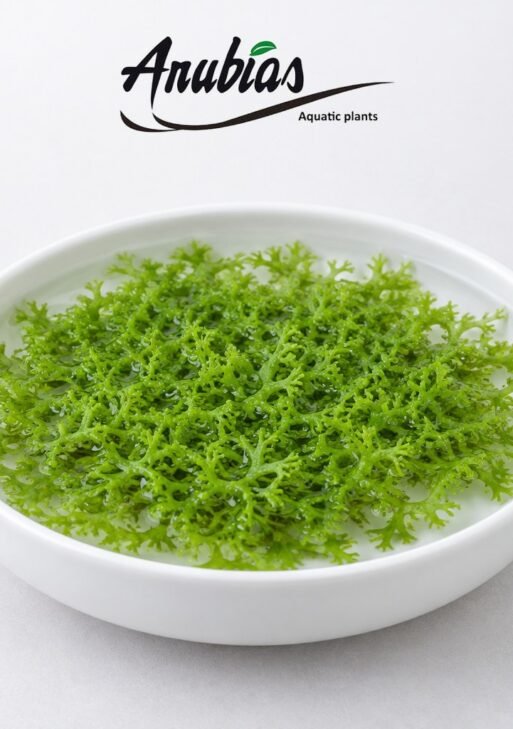
Riccia (Riccia fluitans), often called crystalwort, is a bright green floating liverwort made of tiny forked, ribbon-like branches that knit into a soft, cushiony mat. It has no roots and no true leaves, floats naturally at the surface, and can also be tied to stones or mesh to make a glowing carpet that pearls with oxygen bubbles under good light. Riccia suits shrimp keepers and breeders who want a floating refuge, and aquascapers with good light who want the classic Takashi Amano riccia carpet.
Riccia at a glance
| Scientific name | Riccia fluitans |
|---|---|
| Family | Ricciaceae (a liverwort, not a moss or flowering plant) |
| Origin | Cosmopolitan; found in still waters across Asia, Europe, Africa and the Americas, including India |
| Difficulty | Easy floating; moderate as a carpet |
| Light | Medium to high (low light is fine for floating use) |
| CO2 | Not required floating; strongly recommended for a tied-down carpet |
| Temperature | 18–28 °C |
| pH | 6.0–7.5 |
| Growth rate | Fast |
| Height/size | Mat 1–3 cm thick; spreads sideways without limit |
| Placement | Floating, or tied to stone/mesh as a foreground carpet |
| Propagation | Division; every fragment grows |
How to plant riccia
Riccia has two lives. Left alone it floats; held down it forms a carpet.
As a floating plant:
- Rinse the portion in tank water and pick out any debris.
- Drop it on the surface. To keep it in one place, use a floating ring of airline tubing or a suction-cup barrier in one corner.
- Reduce surface agitation there so the mat is not pushed under and broken up.
As a carpet:
- Choose a flat stone, a piece of slate, or a stainless-steel or plastic mesh pad.
- Spread a thin, even layer of riccia over it, a few millimetres at most. Thick layers rot underneath.
- Wrap it tightly with fishing line, a hair net or a second mesh layer so no strands drift loose.
- Set the stones side by side in the foreground under strong light and, ideally, CO2.
- Trim every one to two weeks so the layer stays thin. Riccia never roots, so the bottom layer dies if light cannot reach it.
Riccia care: light, CO2, fertiliser and water
Light. Floating riccia sits a few centimetres from the lamp and does well under almost any LED. A carpet at the bottom needs medium to high light, around 8 hours a day, to stay compact and bright green. Under weak light the strands stretch upward and lift away from the stone.
CO2. Floating riccia takes CO2 from the air and needs none added. A tied-down carpet is different: without CO2 injection it grows slowly, dulls and rots from underneath. Liquid carbon helps a little, but a pressurised or DIY CO2 system is what produces the dense, pearling carpet riccia is known for.
Fertiliser. Riccia feeds entirely from the water column. A weekly complete liquid fertiliser with nitrogen, potassium and micronutrients keeps it vivid, and it responds well to a little extra iron. Root tabs are irrelevant.
Water. Clean, cool, stable water is the key. Riccia prefers 18–26 °C and grows well to about 28 °C; above 30 °C in an Indian summer it browns and falls apart, so shade the tank, run a cooling fan at the surface or keep it in an air-conditioned room. Moderately hard Indian tap water is fine. Weekly 30% water changes keep the mat free of debris. During monsoon power cuts the floating form is unaffected; a CO2-fed carpet simply pauses.
Growth, trimming and propagation
Riccia doubles its mass in a few weeks under good conditions. Floating, it becomes a thick raft that blocks light to everything below, so skim off a handful every week or two.
A carpet needs trimming with sharp scissors once it is 1–2 cm above the stone. Net out every trimming, because each fragment starts a new colony wherever it lands. Those trimmings are also your propagation: tie them to a new stone or mesh, or float them in a breeding tank. Riccia has no seeds or runners; it simply divides.
Where to use it in an aquascape
Riccia works in these layouts:
- Nature-style and Iwagumi tanks of 2–3 ft (around 60–120 litres) with CO2, as a foreground carpet between stones that pearls under the lights.
- Shrimp tanks of 1–1.5 ft (around 20–40 litres), floating or on stones, where cherry and crystal shrimp graze the biofilm and shrimplets hide in the strands.
- Breeding and betta tanks, where a floating mat shelters fry and anchors bubble nests.
- Low-tech tanks, floating only, alongside other floating plants for surface shade.
Pair the carpet with Anubias nana and Java fern on the hardscape, cryptocoryne in the midground and fine stem plants behind; see more low carpets in our carpeting plants. It is safe with all shrimp, snails, tetras, rasboras, bettas, guppies and otocinclus. Avoid goldfish, large cichlids and plant-eaters, which pull a carpet apart in a day.
Common problems and fixes
- Mat breaking into fragments. Strong surface current or fish disturbing it. Reduce flow near the mat or confine it to a calm corner.
- Carpet lifting off the stone. The shaded bottom layer died. Retie a thinner layer, raise the light and trim more often.
- Brown, mushy riccia. Water too warm, too thick a layer, or very low light. Cool the tank below 28 °C, thin the mat and remove dead parts.
- Hair or thread algae in the mat. High light with unstable CO2 or low nutrients. Fix CO2 first, shorten the photoperiod, add Amano shrimp and pick out clumps with a toothbrush.
- Riccia everywhere in the tank. Fragments escaped after trimming. Net carefully after each trim and fit a sponge on the filter intake.
- Pale, stretched strands. Not enough light or iron. Increase light and dose micronutrients weekly.
What you receive
One healthy riccia portion of the size you select, Small or Standard, similar to the photo. Small suits a nano or shrimp tank or a single carpet stone; Standard covers several stones or gives a generous floating mat for a community tank. Each portion is checked before packing, packed moist and shipped across India from Surat. ₹99 shipping, free on orders of ₹999 or more.
Live-arrival guarantee: record one continuous unboxing video within 4 hours of delivery and we will refund or replace a plant that arrived damaged.
FAQ
Does riccia need CO2?
Not when floating. For a tied-down carpet, CO2 makes the difference between a thin, rotting layer and a dense, pearling one.
Is riccia a moss?
No. Riccia fluitans is a liverwort, a different group of simple plants. It is sold alongside mosses because it is used the same way, but it never roots and prefers brighter light than most mosses.
Is riccia good for shrimp?
Yes. Floating or tied down, it is one of the best shelters for shrimplets and holds plenty of biofilm for them to graze.
How do I attach riccia to rock?
Spread a thin layer over a flat stone or mesh pad and wrap it tightly with fishing line, a hair net or a second mesh layer. Trim every one to two weeks so the layer stays thin.
How fast does riccia grow?
Fast. Floating under good light it can double in two to three weeks; a CO2-fed carpet needs trimming every one to two weeks.
Why is my riccia turning brown?
Usually heat above about 28–30 °C, a layer so thick the underside is shaded, or too little light. Cool the tank, thin the mat and give it more light.
Riccia vs dwarf hairgrass for a carpet?
Riccia is faster and brighter but needs CO2, frequent trimming and retying over time because it never roots. Dwarf hairgrass is slower to fill in but roots and stays put. Choose riccia for a short-term showpiece or shrimp tank, hairgrass for a long-term carpet.
Not sure what fits your tank? Plan it with our free AI tank planner.










There are no reviews yet.