
Quick answer: Amazon frogbit is the best floating plant for most betta tanks: soft trailing roots, easy to thin, ₹90. Red tiger lotus pads, Brazilian pennywort and, in bigger tanks, water lettuce also work. Cover no more than about half the surface so your betta can reach air, and keep floaters away from the filter outlet.
A betta, or fighter fish, spends most of its day in the top few centimetres of the tank. Floating plants turn that bare surface into shade, resting spots and a place for a bubble nest. Here are the five we would pick, what you get with each, and how to stop them taking over. All five are in stock and grown by us in Surat.
Why do bettas like floating plants?
- They live near the surface and breathe air. Bettas have a labyrinth organ and gulp air from the top of the tank.
- They rest under leaves and roots. Long fins are tiring to carry, so a betta will often hang just under a leaf or among trailing roots.
- Males build bubble nests there. A floating leaf gives the nest something to hold on to.
- They prefer softer light. Wild bettas live in shallow, heavily planted water with plenty of cover, and floaters dim the light below.
5 best floating plants for a betta tank
Prices are from our store at the time of writing, and “what you get” is what the product photo shows.
| Plant | Price | What you get | Best for |
|---|---|---|---|
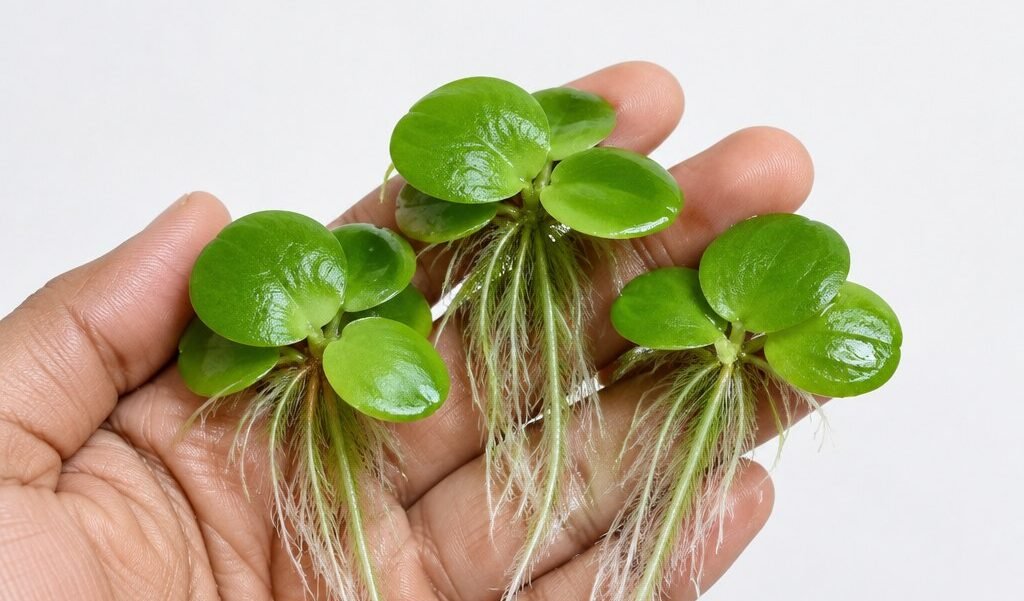
| Amazon Frogbit | ₹90 | A portion of about 3 floating plants | Most betta tanks |
| Red Tiger Lotus | ₹250 | One bare-root bulb with about 4–6 leaves and its roots | Resting pads and red colour |
| Brazilian Pennywort | ₹80 | One bunch of about 5–7 stems | Floating or planted |
| Water Lettuce | ₹90 | One rosette with its roots | Bigger tanks with room above the water |
| Duckweed | ₹60 | A palm-sized portion of about 150–250 fronds | Only if you will net it out weekly |
1. Amazon Frogbit (₹90)
Amazon frogbit is our first pick. Its round leaves are 2–5 cm across and its soft roots trail 10–20 cm down, giving a betta shade above and roots to weave through below. It grows fast, so you lift out extra plants once a week. It wants medium light, calm water and dry leaf tops. See the Amazon frogbit care guide.
2. Red Tiger Lotus (₹250)
Red tiger lotus is a bulb you push into the substrate, one-third to one-half buried. It sends red-and-green leaves up to the surface, where they open into flat lily pads that bettas rest on or under. Add a root tab near the bulb, and cut off extra pads if they shade the whole tank. The red tiger lotus care guide covers planting.
3. Brazilian Pennywort (₹80)
Brazilian pennywort can be planted or left floating. Floated loose, its round leaves spread across the surface on long stems and make good resting spots. It grows in low to high light without CO2 and needs a weekly trim. More in the Brazilian pennywort care guide.
4. Water Lettuce (₹90)
Water lettuce forms fuzzy rosettes with long, feathery roots. Its leaves stand above the water and can rot if they are splashed or pressed against a lid, so it suits a bigger or open-top tank with calm water. The water lettuce care guide explains how to avoid root rot.
5. Duckweed (₹60), with warnings
Duckweed is cheap, safe for bettas and soaks up nitrate fast. But it multiplies relentlessly, sticks to hands and nets, gets pulled into filters and is very hard to remove completely. Only add it if you are happy to net some out every week. Our duckweed care guide shows how to keep it in check.
Compare the three true floaters in our frogbit vs water lettuce vs duckweed guide, or browse the floating plants category.
Floating plants to skip in a betta tank
- Water Mosaic (Ludwigia sedioides). It grows from a pot below the water and needs at least 4–6 hours of direct sun. It belongs in a pond, tub or lotus bowl.
- Water hyacinth. A big pond plant with tall leaves and long roots. It outgrows a betta tank quickly.
- Duckweed, if you will not keep netting it out. A surface covered edge to edge leaves your betta no open water.
How much of the surface should floaters cover?
Up to about half. Keep an open patch at the front where you feed, so pellets do not get caught in leaves and your betta can reach the air. A fully covered surface also cuts gas exchange, which matters more in an Indian summer, when warm water holds less oxygen. Duckweed can double its cover within days in a well-fed tank and frogbit spreads fast too, so check weekly and never tip the extras into drains or ponds. More in our guide to floating plants.
Keeping floaters out of the filter
- Gentle flow. A sponge filter or baffled outflow stops floaters being pushed under or pulled into the intake. The betta-safe tank setup guide covers filter choice.
- An airline-tubing ring. Join the ends of a length of airline tubing with a small connector and float the ring away from the outlet, with the floaters inside. It also keeps an open patch for air and feeding.
- Thinning weekly. Pull out extra plants and any bits near the intake. A sponge pre-filter on the intake keeps small leaves out and protects long fins.
Do floating plants need extra light or fertiliser?
Not extra light. Floaters sit closest to the lamp, so a basic LED is enough. The risk is heat and wet leaves: leaves touching the lid or sitting under a hot light can burn or rot, so leave a gap above the water and keep leaf tops dry.
Free floaters feed only from the water, and a lightly stocked betta tank can run short. If new leaves come in small or pale, add a light weekly dose of liquid fertiliser. The frogbit care guide covers dosing and leaf melt, and our heat-tolerant plants guide has tips for keeping a tank cool in summer.
What to grow under the floaters
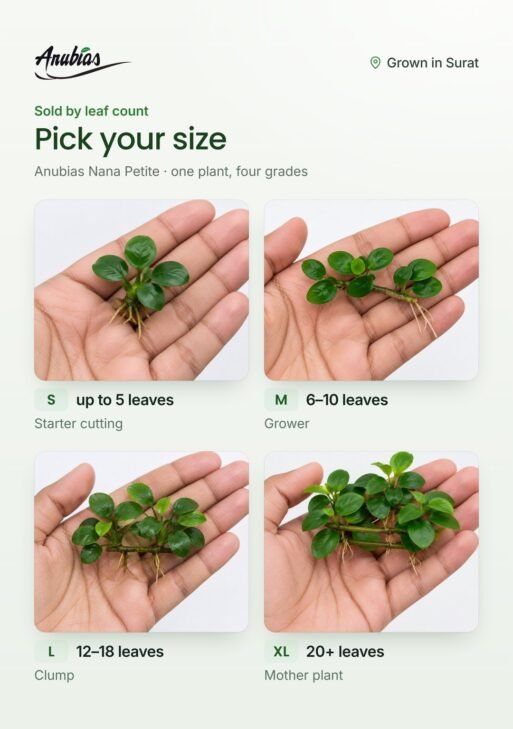
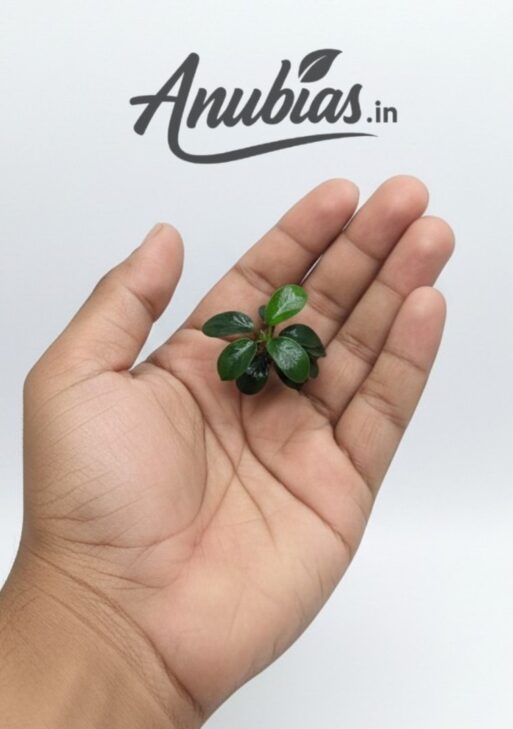
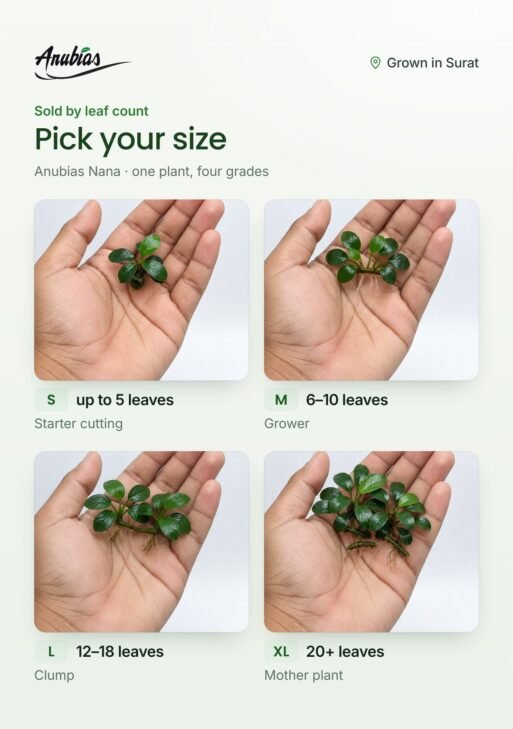
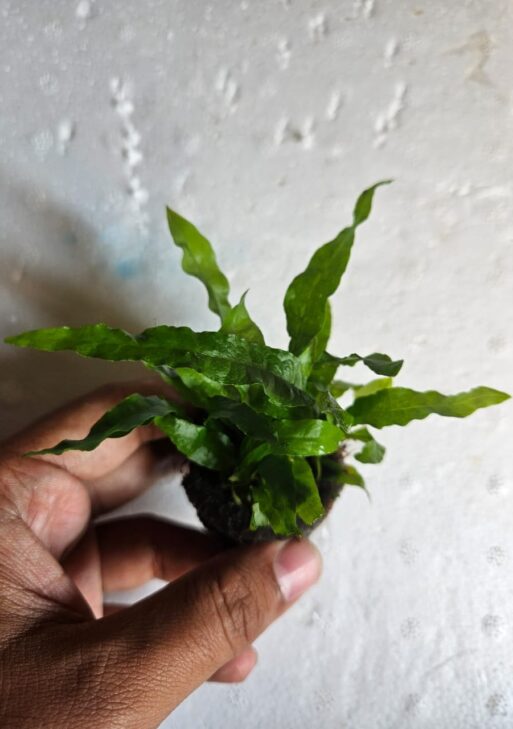
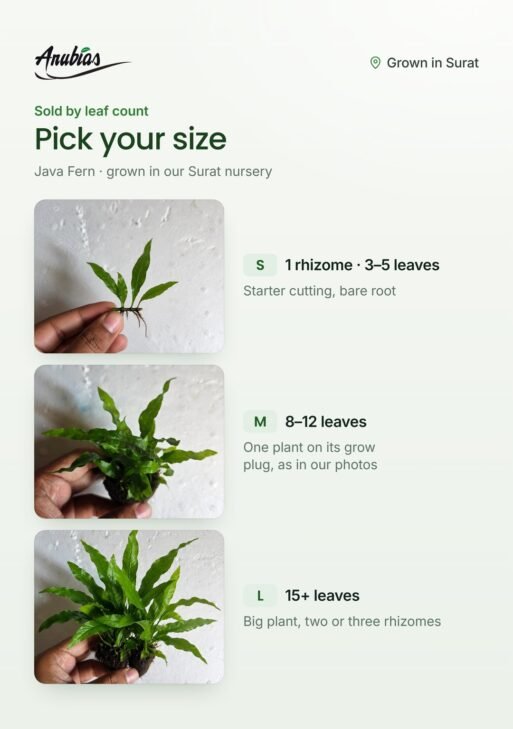
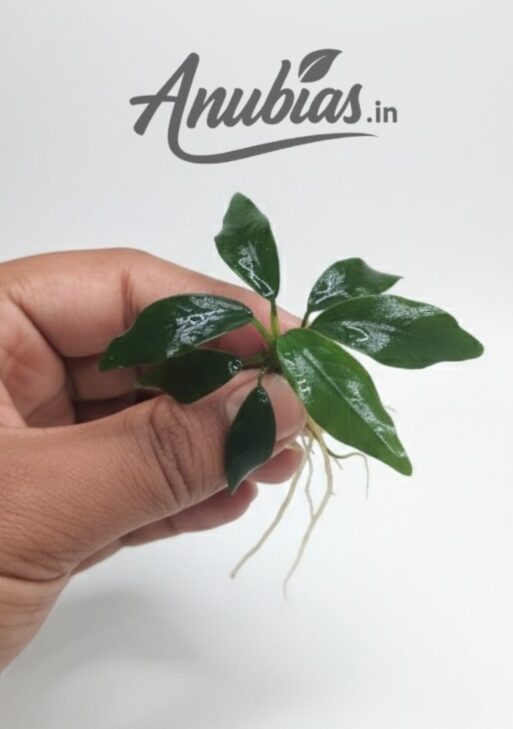
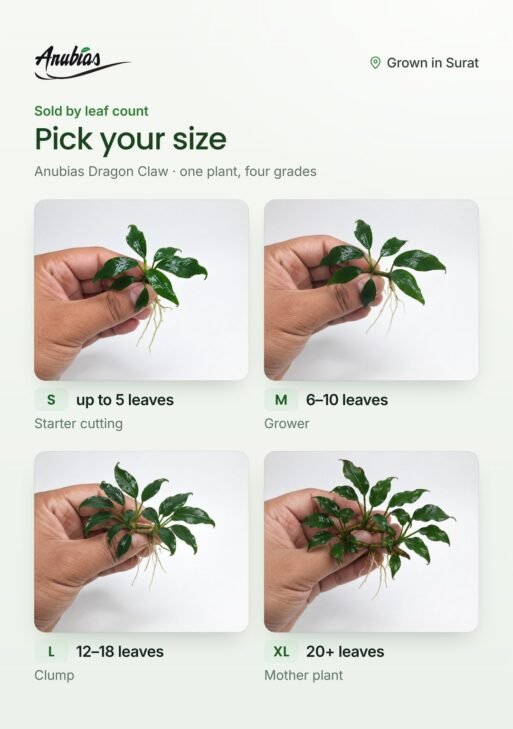
Floaters shade the tank, so choose low-light plants below. Anubias Nana and Java fern tie to wood or rock, grow without CO2 and have broad leaves bettas rest on. Anubias Nana is sold by size: S ₹90 (up to 5 leaves), M ₹120 (6–10) and L ₹200 (12–18). Java fern is ₹175 for a clump with roughly 12–15 leaves. Skip carpets and red stem plants that need strong light. See also our low-light aquarium plants, plants without CO2 and best plants for betta and shrimp tanks.
Betta tank kit: floaters plus resting leaves
Our betta tank kit puts these together for a 20–40 litre tank with no CO2 and gentle flow: Anubias Nana (M) ₹120, Java fern ₹175, Amazon frogbit ₹90, red tiger lotus ₹250 and Indian almond leaves (pack of 50) ₹100, a total of ₹735. Shipping is ₹99 anywhere in India and free on orders of ₹999 or more, prepaid through Razorpay (UPI, cards or netbanking). Browse the rest of our betta tank care range.
Frequently asked questions
Can a betta live with duckweed?
Yes. Duckweed is harmless to bettas. The problem is for you: it multiplies fast, gets into filters and is hard to remove completely. Keep it inside a floating ring and net out the extra every week so your betta always has open water.
Do floating plants reduce oxygen?
Only when they cover the whole surface. Floaters release most of their oxygen into the air, and a surface sealed edge to edge cuts gas exchange. Cover no more than about half and the water stays well aerated.
Will frogbit survive delivery in October heat?
Usually, yes. Frogbit is hardy and copes with warm water up to about 28 °C. We grow it in Surat, hand-pack it and send it by courier. Float it as soon as the parcel arrives. If a plant arrives dead or damaged, send one continuous unboxing video within 4 hours of delivery on WhatsApp (+91 81416 96983) or email (buyanubias@gmail.com) and we will refund or replace it. Photos alone are not accepted.
What does one unit look like?
What the product photo shows. For example, frogbit (₹90) is a portion of about 3 floating plants, water lettuce (₹90) is one rosette with its roots and Brazilian pennywort (₹80) is a bunch of about 5–7 stems.
Is red tiger lotus a floating plant?
Not quite. It is a bulb planted in the substrate, and its leaves grow up to open as floating lily pads. Trim extra pads if they start shading the rest of the tank.