
Live plants release oxygen as they photosynthesise, which is why “oxygen plants” are popular in Indian aquariums. But how much oxygen they add depends on the plant, the light and the time of day.
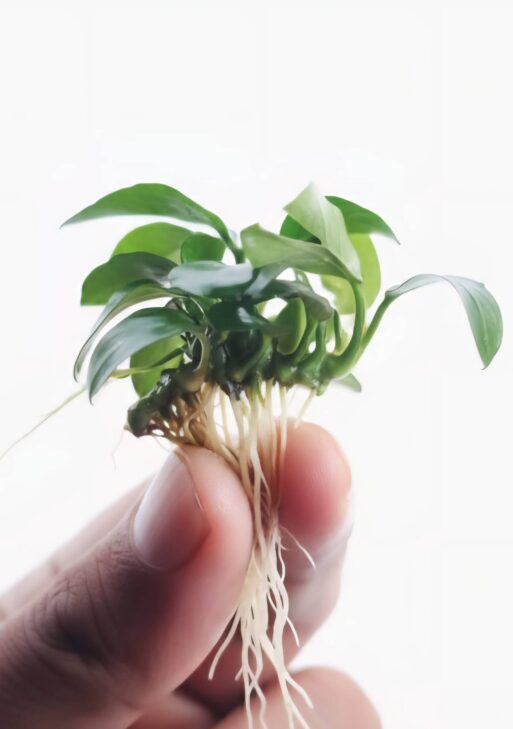
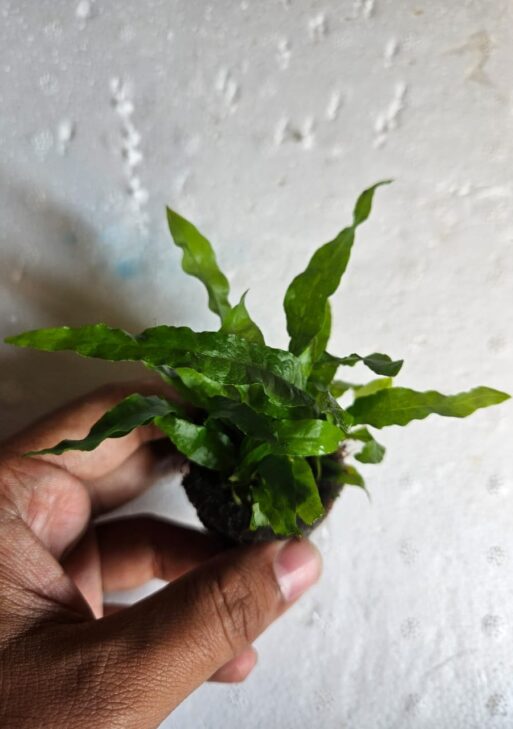
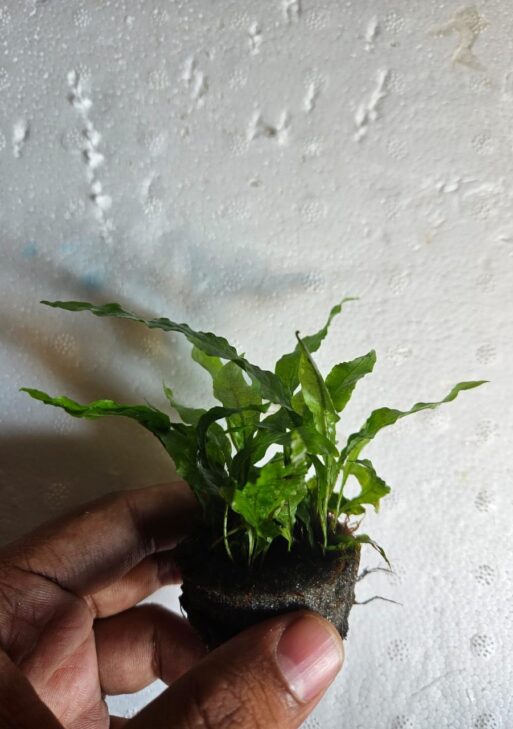
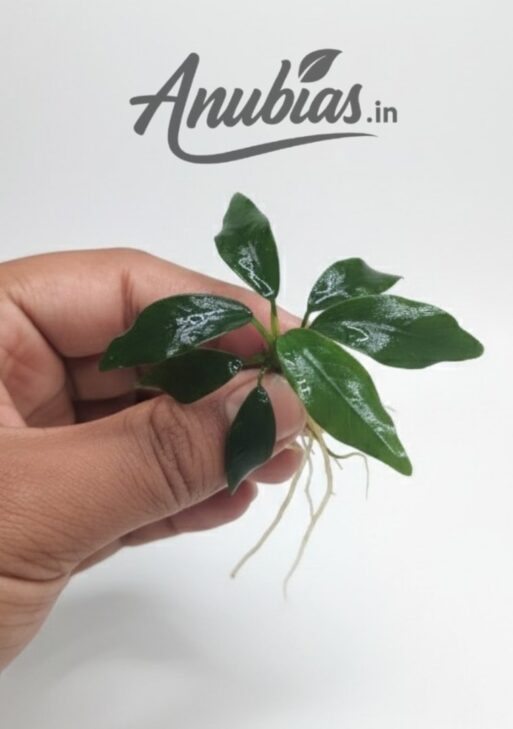
Quick answer: The best oxygen plants for aquariums are fast-growing submerged plants such as Egeria densa, Water wisteria, Vallisneria and Cabomba, because they photosynthesise the most under light. Slow plants like Anubias and Java fern add very little, and floating plants release much of their oxygen into the air. Plants only produce oxygen while the lights are on and use it at night, so in heavily stocked or warm tanks they do not fully replace an air pump or good surface movement.
How plants add oxygen
Under light, plants use carbon dioxide and release oxygen. Sometimes you can even see tiny bubbles on leaves, called pearling. At night photosynthesis stops and plants, like fish, use oxygen, so oxygen is lowest just before the lights come on.
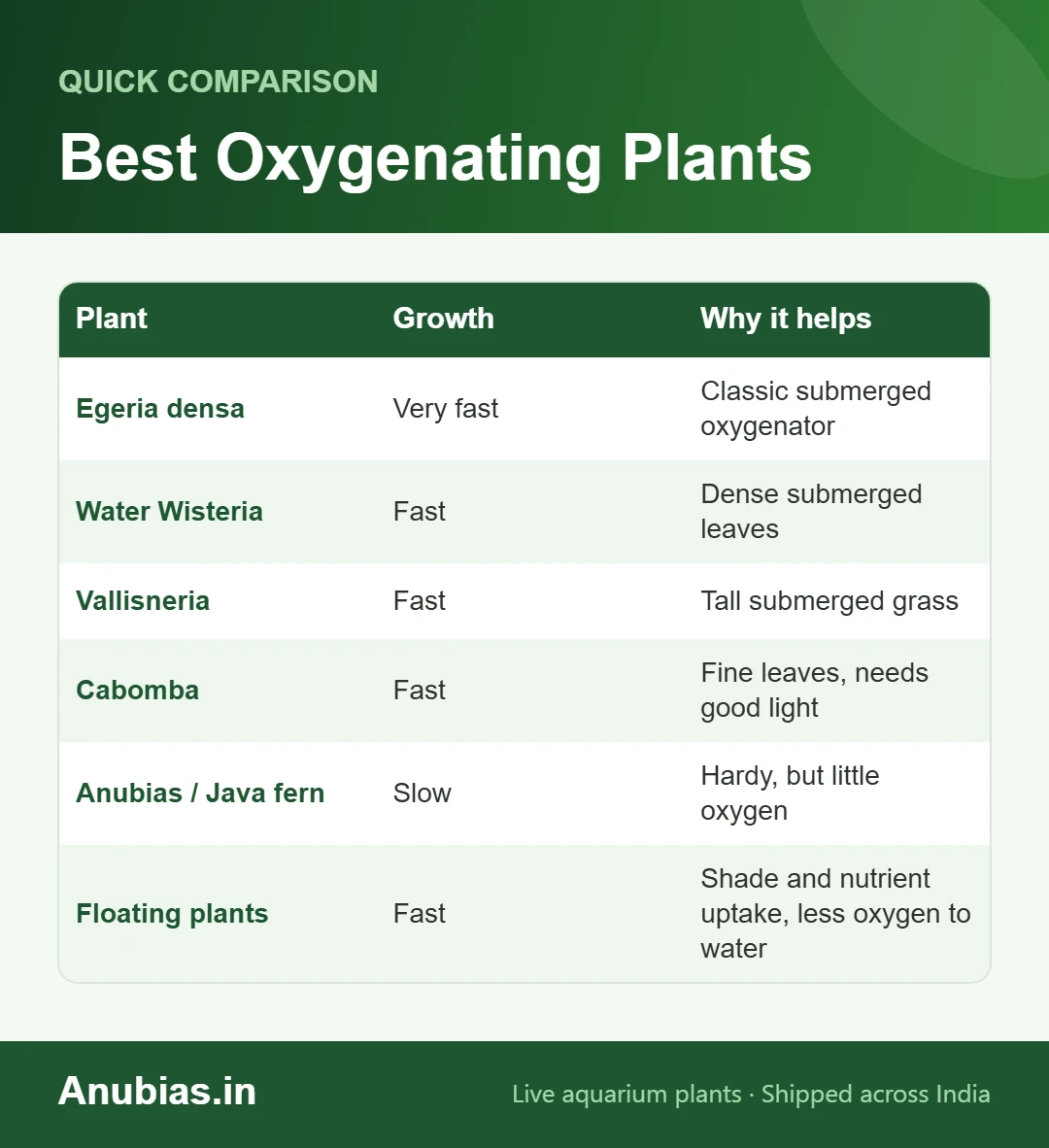
Best oxygenating plants
- Egeria densa: very fast, a classic oxygenator for goldfish and cooler tanks.
- Water wisteria: fast, dense leaves.
- Vallisneria: tall grass that fills the background.
- Cabomba: fine leaves, but needs medium to high light.
Can plants replace an air pump?
In a lightly stocked planted tank with good surface movement from a filter, plants often supply enough oxygen during the day. But an air pump or strong surface agitation is still wise when:
- the tank is heavily stocked, or has goldfish;
- water is warm, since warm water holds less oxygen (common in Indian summers);
- fish gasp at the surface early in the morning;
- there is a power cut and the filter stops.
See summer care for planted tanks and power-cut tips.
What to do when fish are gasping at the surface
Gasping is an emergency and planting more stems will not fix it in time. Work through these in order.
- Lower the water level slightly or angle the filter outlet so it breaks the surface. Surface movement is the fastest way to get oxygen in.
- Switch on any air pump you own, even a small one, and leave it running through the night.
- Do a partial water change with dechlorinated water that is cooler than the tank, but not cold, no more than a couple of degrees down at a time.
- Stop feeding for a day. Uneaten food and the bacteria breaking it down both consume oxygen.
- Clear away any decaying leaves or thick uneaten matter from the substrate.
- Run a fan across the water surface if the room is hot. Evaporation cools the tank and cooler water holds more oxygen.
If gasping happens mainly in the early morning, oxygen is bottoming out overnight and the fix is permanent aeration after lights out, not more plants.
Habits that quietly lower oxygen
Several common setups work against you without any obvious symptom until a hot week arrives.
- A filter outlet pointed downwards below the surface, giving good flow but almost no gas exchange.
- A tightly fitted glass lid with no gap, which traps humid air and slows exchange.
- A surface completely covered by floating plants, which also blocks the exchange that keeps oxygen stable at night.
- Overstocking. More fish at 30 degrees is a very different load from the same fish at 24 degrees.
- A thick layer of mulm and dead leaves that keeps bacteria working around the clock.
- Overdosing liquid carbon products, which can lower oxygen availability in an already warm tank.
None of these matter much in a cool, lightly stocked tank. All of them matter in an Indian summer, which is exactly when they show up together.
Plants in this guide

Frequently asked questions
Which aquarium plant gives the most oxygen?
Fast submerged plants such as Egeria densa and Water wisteria produce the most oxygen under good light.
Do aquarium plants produce oxygen at night?
No. Plants produce oxygen only in light and use oxygen at night, so avoid heavy stocking without aeration.
Can I keep fish without an air pump if I have plants?
Often yes in a lightly stocked tank with a filter that moves the surface, but warm or crowded tanks still benefit from an air pump.
हिंदी में पढ़ें: एक्वेरियम के लिए ऑक्सीजन पौधे.
Do floating plants add oxygen to the water?
Much less than people assume, because their leaves sit in air and release oxygen to the room rather than the tank. Their submerged roots and stems contribute a little, but their real value is nutrient removal and shade. If oxygen is your goal, a submerged fast grower does more.
Is a sponge filter enough aeration for a planted tank?
Usually yes, provided it is sized for the tank and the bubbles are breaking the surface properly. A sponge filter driven by an air pump gives constant surface turnover, which is the part that matters. It is also the safest option overnight, when plants are consuming oxygen rather than producing it.
Will adding more plants let me keep more fish?
Only slightly, and not in the way most people hope. Plants help with nitrate and add daytime oxygen, but they consume oxygen at night when your stock is most vulnerable. Stock for what the tank and filter can handle at its warmest, then add plants for water quality rather than as extra capacity.
Fighting nitrate? See which aquarium plants actually lower ammonia and nitrate.
Bubbles on the leaves? Read what pearling actually means.