
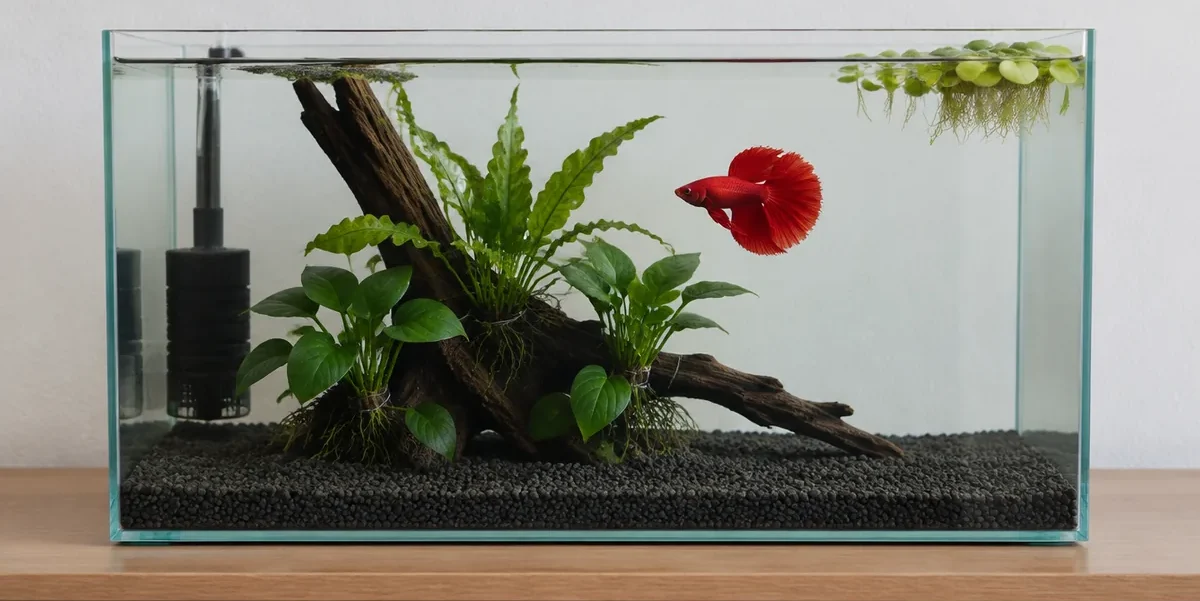
Quick answer: A betta (fighter fish) needs a 20–40 litre tank with a lid, a sponge filter, a thermometer, a water conditioner and live plants with broad, smooth leaves, plus a 25–50 W heater where winters get cold. A basic setup costs about ₹2,170 (about ₹2,590 with a heater). A better build costs about ₹5,840. The plants in our Betta tank kit cost ₹635. Cycle the tank for 3–4 weeks before the fish goes in.
What do you need for a betta tank?
- Tank: 20–40 litres, such as a 1.5 ft tank.
- Lid: bettas jump. Leave a small air gap under it, because bettas breathe air at the surface.
- Sponge filter and a small air pump: gentle flow.
- Heater: 25–50 W with a thermostat, where winters get cold.
- Thermometer: tells you whether you need the heater.
- Water conditioner: removes chlorine from tap water.
- Ammonia and nitrite test kit: tells you when the tank has cycled.
- Live plants: broad leaves to rest on, floating cover to hide under.
- Indian almond leaves: optional, they tint the water.
- Betta pellets: small and floating.
What size tank does a betta need?
The 1–3 litre “betta tanks” sold online look neat on a desk, but they are too small. Waste from one fish turns the water toxic within a few days, the temperature swings with the room, and there is no space for a filter or a heater.
Plan for at least 20 litres. A standard 1.5 ft tank (45 × 25 × 25 cm) holds about 25–28 litres and costs ₹500–₹1,000 at a local aquarium shop. More water stays clean for longer. Our aquarium volume calculator works out the litres in any tank, and the betta-safe planted tank guide covers layout and flow.
Do you need a heater in your city?
Bettas are tropical fish and do best at 24–28°C. Below about 22°C they turn sluggish, eat less and fall ill more easily.
- North India (Delhi, Punjab, Uttar Pradesh, Rajasthan, Bihar): an unheated tank can fall well below 20°C on winter nights. Use a heater from about November to February.
- Pune, Hyderabad, Bengaluru: winter nights can bring a tank down to about 20–22°C. A heater helps from December to February.
- Kerala, Chennai, Goa and Mumbai: rooms rarely drop far below 24°C, even in January. Many keepers here skip the heater.
Let a thermometer decide. Check the tank early on a cold December or January morning. If it reads below 24°C, add a heater with a thermostat and set it to 26°C. Start with about 1 watt per litre (25 W for 20–25 litres, 50 W for 40 litres). In a cold North Indian room, go one size up, such as 50 W for a 25-litre tank. Our winter care guide has more on heaters. In May and June the problem reverses: a tank in a closed room can cross 30°C, so keep it out of direct sun.
Does a betta need a filter or an air pump?
A betta does not need an air pump to breathe. Its labyrinth organ lets it gulp air from the surface, which is how wild bettas survive in still paddy-field water. It still needs a filter, because the filter holds the bacteria that break down ammonia from waste.
A sponge filter (₹150–₹300) run by a small air pump is the simplest choice. Bettas have long, heavy fins and tire in strong current, so avoid powerful hang-on or canister filters in a small tank. If power cuts are frequent where you live, a battery-backup air pump (around ₹390) keeps the sponge running.
Which plants suit a fighter fish tank?
Bettas rest on broad leaves near the surface and feel safer under floating cover. Our Betta tank kit has four plants chosen for this, ₹635 in total, plus a ₹100 pack of almond leaves (₹735 for the full kit):
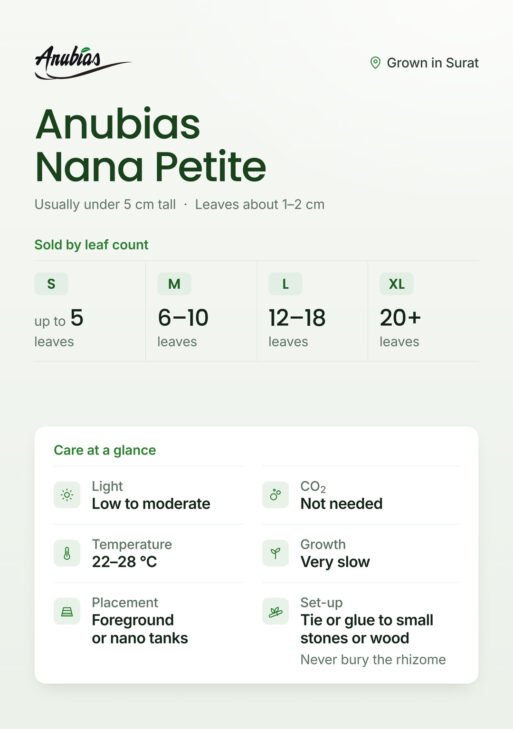
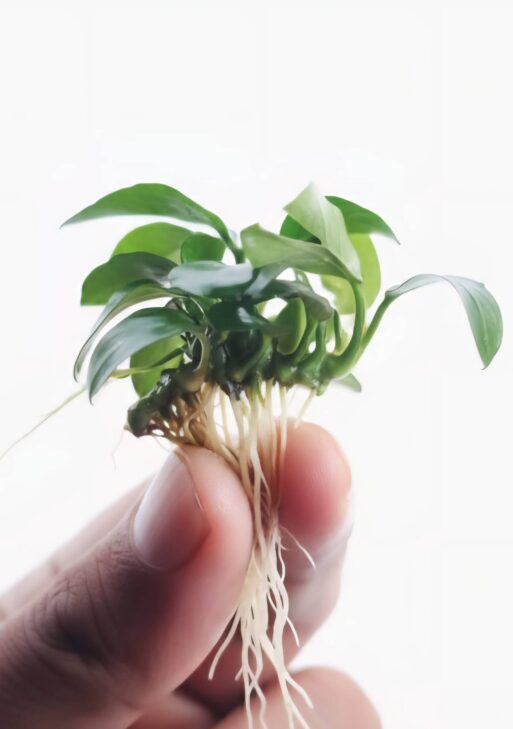
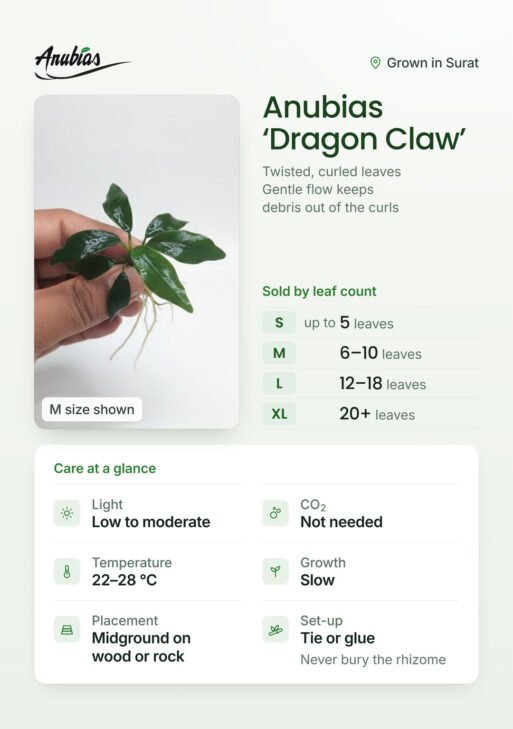
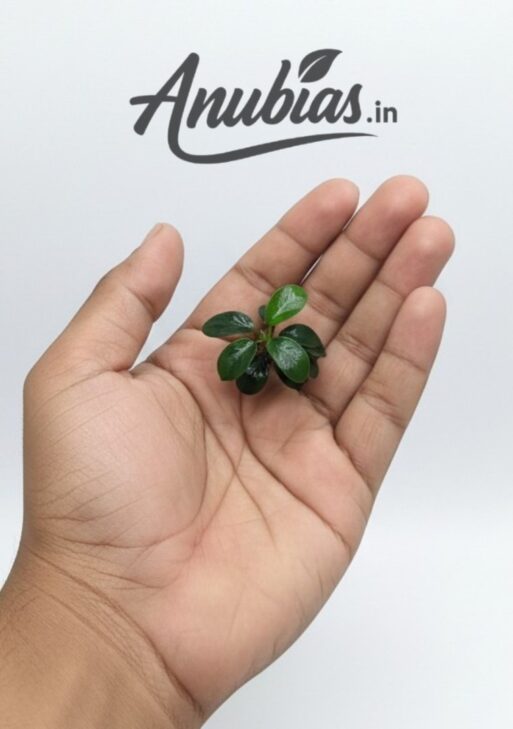
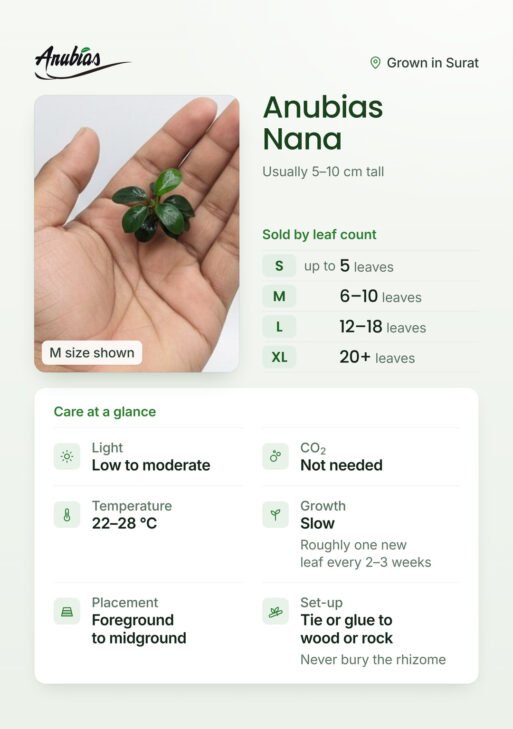
- Anubias Nana M (6–10 leaves), ₹120: broad, tough resting leaves. Tie it to stone or wood; do not bury the rhizome.
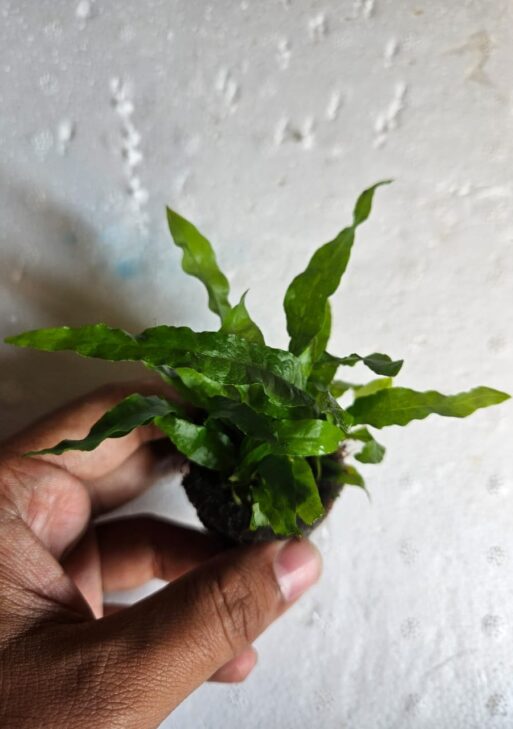
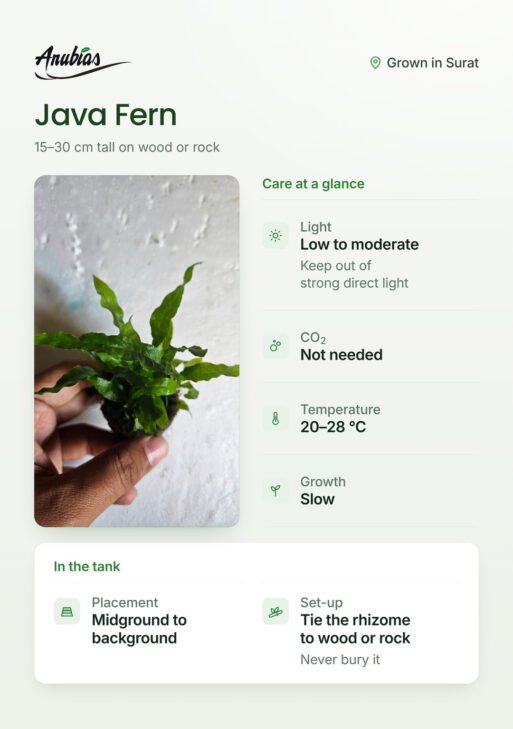
- Java fern, ₹175: tough, smooth leaves that grow in low light. Tie it on like the Anubias; it needs no substrate.
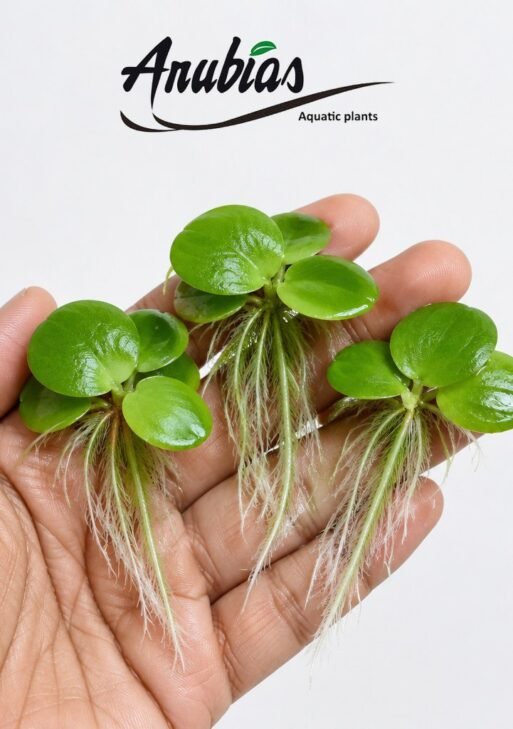
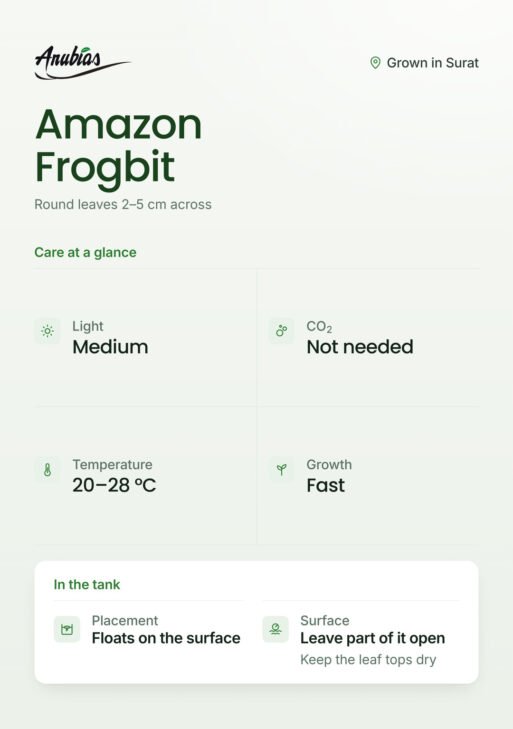
- Amazon frogbit, ₹90: floating shade. Males often build bubble nests under it.
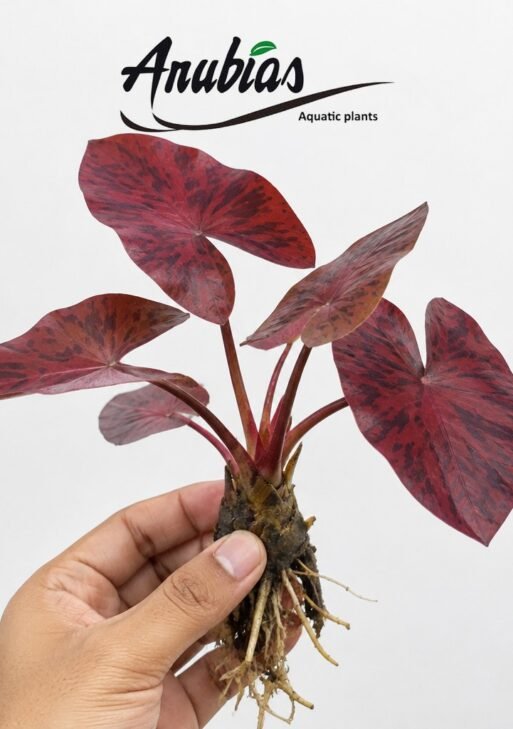
- Red tiger lotus, ₹250: red leaves, and lily pads at the surface if you let them grow. Press the bulb into sand with its top showing.
On a tighter budget, start with Anubias Nana S (up to 5 leaves, ₹90) and frogbit (₹90), ₹180 in all. None of these need CO2; see aquarium plants without CO2 for more. Frogbit spreads fast, so read our floating plants guide on thinning it.
Our live-arrival guarantee covers every order: if a plant arrives dead, send one continuous unboxing video within 4 hours of delivery and we refund it. Photos alone are not accepted.
Should you add Indian almond leaves?
Indian almond leaves (catappa, from the desi badam tree) release tannins that tint the water tea-brown and can lower pH slightly in soft water, like the shallow, leaf-littered paddies and marshes bettas come from. Use one medium leaf per 20–40 litres and replace it after 3–4 weeks. Our Indian almond leaves cost ₹100 for 50, which lasts one tank roughly 3 years. They are optional.
How much does a betta tank setup cost in India?
Hardware prices are typical online prices on Amazon.in, Flipkart and Indian aquarium stores in September 2026. Local shops are often cheaper. Plant prices are ours. An ammonia and nitrite test kit is extra and not in the table.
| Item | Budget build | Better build |
|---|---|---|
| Tank (1.5 ft, 25–28 litres) | ₹600 | ₹1,000 |
| Lid | ₹200 (cut acrylic sheet) | ₹450 (ready-made cover) |
| Sponge filter | ₹150 (single) | ₹300 (double) |
| Air pump | ₹325 | ₹460 |
| Heater, 25–50 W with thermostat | ₹0 in the south, ₹420 in the north | ₹550 |
| Thermometer | ₹80 (glass) | ₹280 (digital) |
| Water conditioner, 100 ml | ₹320 | ₹750 (Seachem Prime) |
| Betta pellets | ₹120 | ₹720 (Hikari Betta Bio-Gold, 20 g) |
| Sand, 2–3 kg | ₹0 (not needed) | ₹499 |
| Plants | ₹180 (Anubias Nana S + frogbit) | ₹635 (Betta tank kit plants) |
| Indian almond leaves, 50 | ₹100 | ₹100 |
| Plant shipping | ₹99 | ₹99 |
| Total | ₹2,174 (₹2,594 with heater) | ₹5,843 |
Plants ship for ₹99 anywhere in India, free on orders from ₹999. Payment is prepaid through Razorpay (UPI, cards or netbanking).
How do you set up and cycle a betta tank?
Day 1:
- Rinse the tank with plain water. No soap.
- Add sand if you are planting the lotus. Tie the Anubias and Java fern to stone or wood with cotton thread.
- Fill with tap water and add conditioner.
- Fit the sponge filter, air pump, heater and thermometer. Wait 15 minutes before you switch the heater on.
- Float the frogbit, add an almond leaf and close the lid.
Weeks 1–4: a new tank has not yet grown the bacteria that break down waste. To grow them, add a pinch of fish food every two days. Test ammonia and nitrite twice a week. The tank is ready when both read zero for a week, usually after 3–4 weeks. Our nitrogen cycle guide explains each stage.
If the fish is already home, feed lightly and change 25–30% of the water every two days until ammonia and nitrite stay at zero.
What should you do in the first week with your betta?
Float the sealed bag for 15–20 minutes so the temperatures match, then net the fish in. Do not pour the shop water into your tank.
Feeding: 2–3 pellets twice a day. Remove anything not eaten within two minutes. A new betta may ignore food for a day or two, which is normal.
Water changes: about 25% once a week, around 6 litres in a 1.5 ft tank. Treat the new water with conditioner and match its temperature.
Watch for: clamped fins, long spells on the bottom or white spots. Check the thermometer first, then test for ammonia.
Plants in this guide
Grown in Surat (pre-order plants imported to order) · live-arrival guarantee with a 4-hour unboxing video · ₹99 shipping, free from ₹999
Price range: ₹90 through ₹250
Frequently asked questions
What is the ideal setup for a betta tank?
A 20–40 litre tank with a lid, a sponge filter, a thermometer, a water conditioner and live plants such as Anubias, Java fern and frogbit. Add a 25–50 W heater set to 26°C if the tank drops below 24°C in winter. Cycle the tank for 3–4 weeks before the fish goes in.
How much does a betta tank setup cost in India?
About ₹2,170 for a basic 1.5 ft tank setup with plants, or about ₹2,590 with a heater. A better build with a double sponge filter, digital thermometer, Seachem Prime, sand and the four Betta tank kit plants costs about ₹5,840. Plants ship for ₹99, free on orders from ₹999.
Can a betta survive without an air pump?
Yes. A betta breathes surface air through its labyrinth organ, so it needs no extra aeration. It still needs a filter to keep ammonia at zero. Most betta tanks use an air pump only to run the sponge filter.
Can a betta go 3 days without eating?
Yes. A healthy adult betta can go 3 days without food with no harm. Feed normally before you leave and skip holiday feeder blocks, which foul the water in a small tank.
Can two male bettas share a tank?
No. Male bettas fight and can badly injure or kill each other. Keep one male per tank.
Does a betta tank need CO2?
No. Anubias, Java fern, frogbit and red tiger lotus all grow without CO2 in low to medium light.