
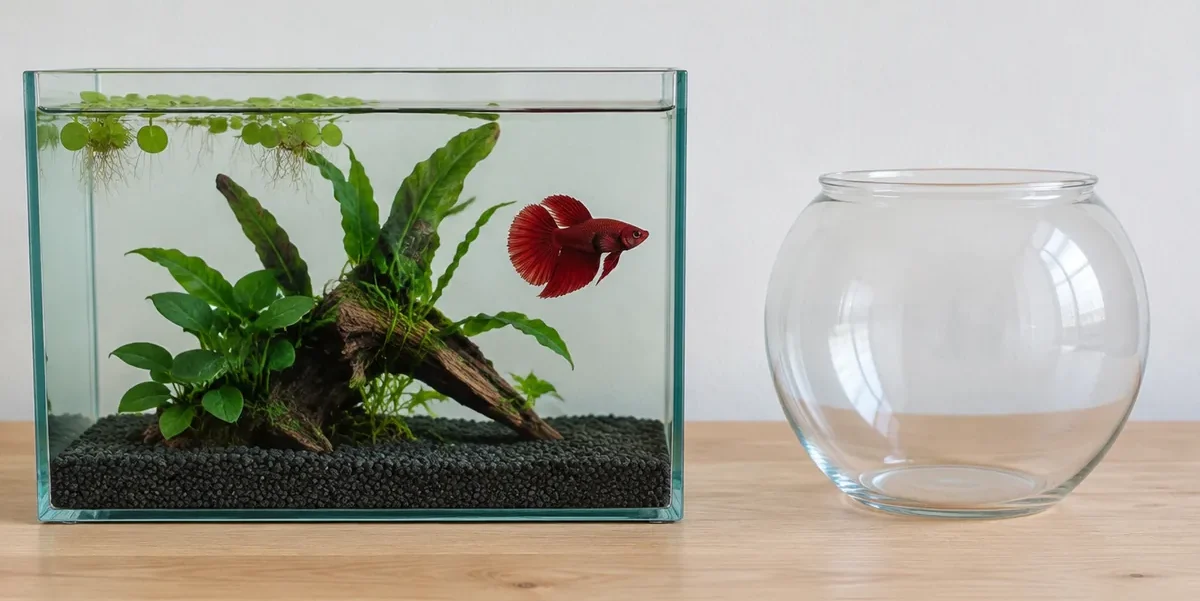
Quick answer: Keep a fighter fish in a tank, not a bowl. One betta needs at least 20 litres (a 5-gallon tank is about 19 litres), a lid, gentle filtration and a heater in cold months. Bowls and 2–3 litre “betta tanks” build up ammonia within days and change temperature fast, which shortens the fish’s life.
In India, bettas are sold as fighter fish, often in a small plastic box or a glass bowl. A fighter fish can survive in a bowl for a while. It will not stay healthy there.
Bowl vs tank: what actually changes for a betta?
Water volume. A betta releases ammonia all day through its gills and waste. In a 2 litre bowl, that ammonia is ten times more concentrated than in a 20 litre tank. Uneaten food makes it worse.
Ammonia build-up. In a filtered tank, bacteria in the filter turn ammonia into nitrite and then nitrate, which is far less toxic. A bowl has almost nowhere for those bacteria to live, so ammonia keeps rising until you change the water. Clamped fins, fin rot and a fish lying at the bottom are common signs.
Temperature swings. Bettas do best at a steady 24–28°C. A small bowl follows the room. Near a window on a May afternoon it can pass 32°C. On a December night in Delhi or Lucknow it can drop below 18°C. A 20 litre tank changes much more slowly.
Surface area. Bettas gulp air from the surface, but their gills still need oxygen from the water. Round bowls and vases narrow at the top, so less oxygen gets in. A rectangular tank has far more open surface.
How many litres does a fighter fish need?
One betta needs at least 20 litres. Foreign advice says “5 gallons minimum”, meaning US gallons, and 5 US gallons is about 19 litres. Indian shops sell tanks by length. A 1 ft tank (30 × 20 × 25 cm) holds only about 13 litres once filled. A 1.5 ft tank (45 cm long, 25 cm deep, 25–30 cm tall) holds about 25–30 litres once filled, a good size for one betta. Check your own tank with our aquarium volume calculator.
| Water volume | Typical container | Water changes (one betta) | Verdict |
|---|---|---|---|
| 2 litres | Bowl, jar or 1–3 litre “betta tank” | Half the water daily; ammonia still rises between changes | Not suitable |
| 5 litres | Large jar or small plastic tank | Half the water every 2 days | Short-term only |
| 10 litres | Small tank with a sponge filter | 30–40% twice a week | Survivable, but tight |
| 20 litres (about 5 gallons) | Filtered, cycled nano tank | 25–30% once a week | Minimum we recommend |
| 30–40 litres (8–10 gallons) | 1.5 ft planted tank, gentle filter | 20–25% once a week | Best: most stable |
These are rough figures for one adult betta fed once or twice a day. Overfeeding can foul any small volume within a day.
Are the small betta tanks and partition tanks sold online OK?
Shopping apps sell plastic or acrylic “betta tanks” that hold about 1–3 litres, often with an LED lid and a plastic plant. Some are double tanks with a divider, for keeping two male fighters side by side.
They work as a travel box or a hospital tank for a few days. They are not a home. Partition tanks are worse: each fish gets half of an already tiny volume, and two males that can see each other flare all day. For two bettas, use two tanks, or split a tank of 40 litres or more with a solid divider that reaches the lid.
Put the money towards a plain glass tank of 20 litres or more. Our planted tank setup cost guide shows what a basic setup costs.
Does a fighter fish need a filter, air pump or heater?
A filter, yes. An air pump for bubbles, no. Bettas breathe air at the surface, so bubbles do not help them breathe. The filter matters because its bacteria break down ammonia.
A small sponge filter is the usual choice. It runs off an air pump and gives gentle flow, which suits long fins. If a filter pushes the fish around, cover the outlet with a piece of sponge.
A new filter has no bacteria yet. Cycle the tank before the betta goes in: add an ammonia source, such as a pinch of fish food, and wait until ammonia and nitrite both test zero. This usually takes 3–6 weeks. Our nitrogen cycle guide explains each step. A heavily planted tank with no filter can work if you are strict about water changes; see aquarium plants without a filter.
In most of north and central India, water drops below 24°C from about November to February, so use a small heater with a thermostat then. About 1 watt per litre is enough, so a 25 W heater suits a 20–25 litre tank. In summer the bigger risk is overheating.
Already have a bowl? Make it safer this week
- Plan a bigger container soon. Until you buy a tank, even a clean, unused 15–20 litre plastic tub is safer than a 2 litre bowl.
- Change water often. Replace 30–50% every day or two. Treat tap water with a water conditioner first, because city supply is chlorinated. Match the temperature.
- Add a lid. Bettas jump. Leave a few centimetres of air between the water and the lid, because bettas breathe at the surface.
- Keep it out of direct sun. Sun overheats a small bowl within hours. Keep it away from AC vents too.
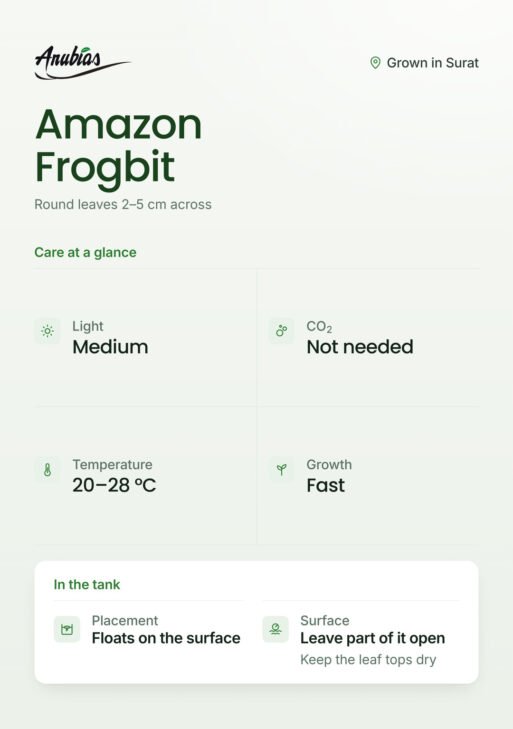
- Add floating plants. A few Amazon frogbit give shade and take up some ammonia.
- Feed less. Two or three pellets once or twice a day is enough. Remove anything not eaten within two minutes.
Easy plants for a small betta tank
Bettas like broad leaves to rest on near the surface and floating cover overhead. These plants need no CO2.
- Nano low-tech kit, ₹445: two Anubias Nana Petite and one Anubias Nana (all size S) plus a Dwarf Java fern, for tanks up to 30 litres.
- Betta tank kit, ₹735: Anubias Nana (size M), Java fern, Amazon frogbit, a red tiger lotus and a pack of almond leaves, for 20–40 litre tanks.
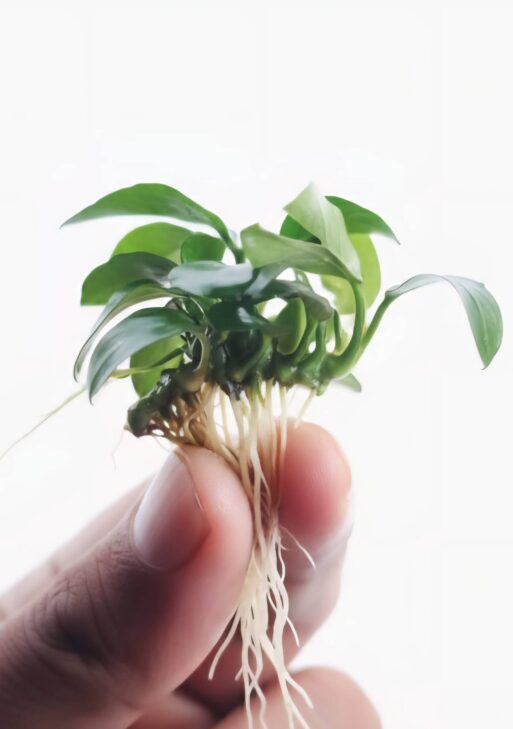
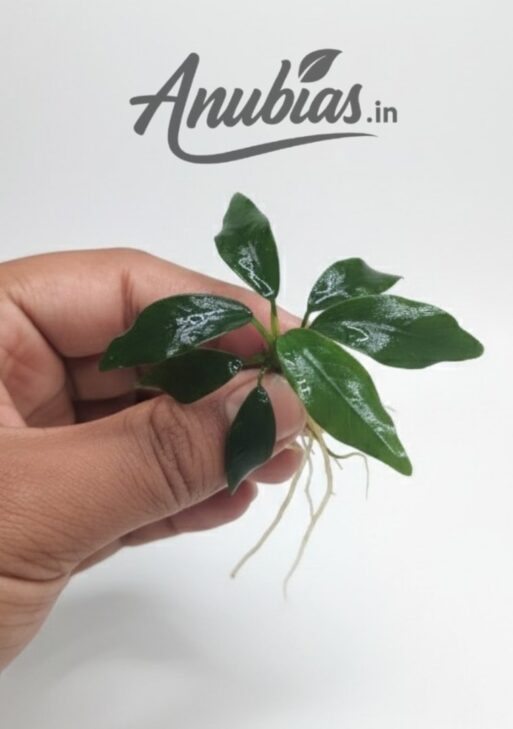
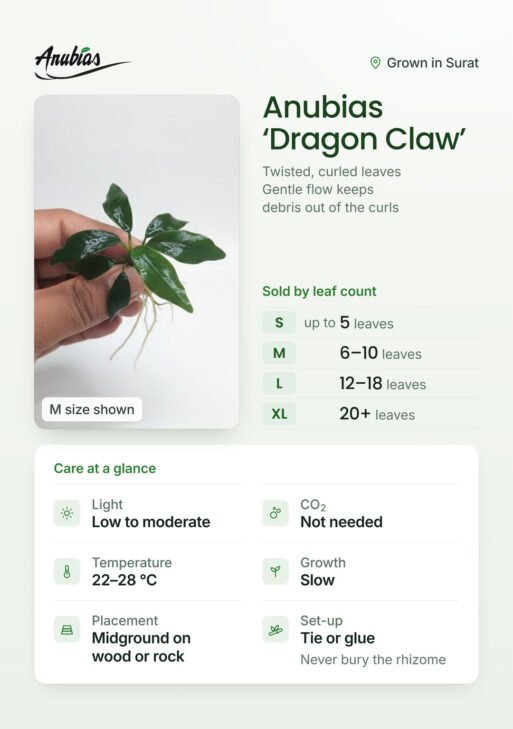
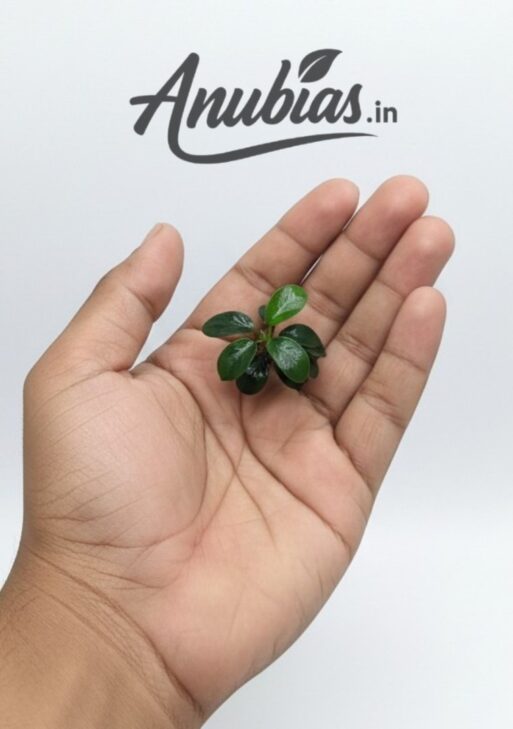
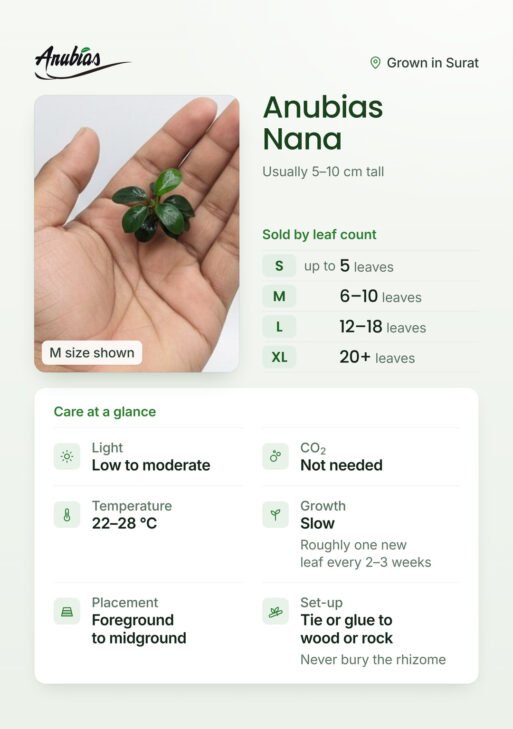
- Anubias Nana, ₹90 for size S (up to 5 leaves): broad leaves that bettas rest on. Tie the rhizome to wood; do not bury it.
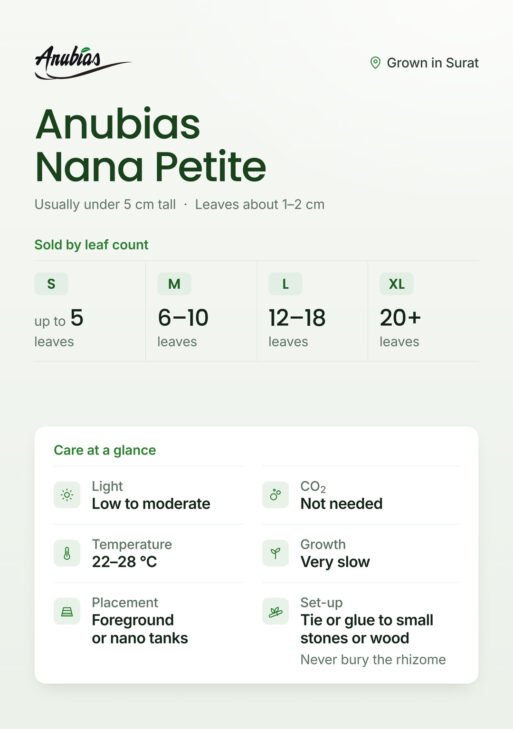
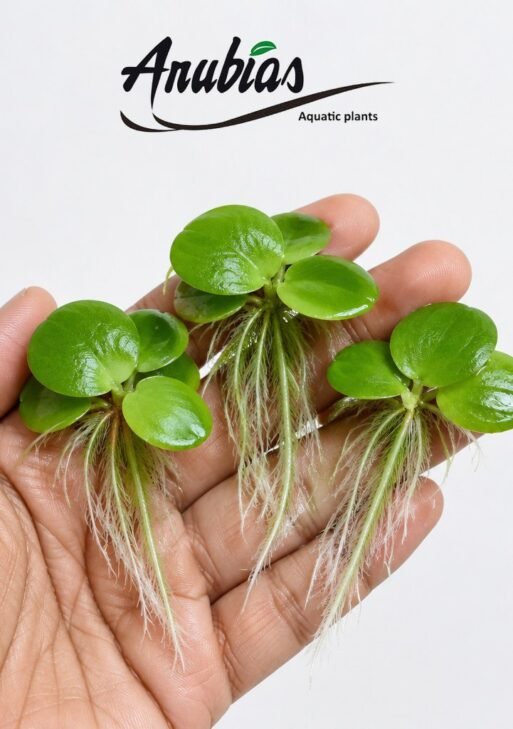
- Anubias Nana Petite, ₹90 for size S (up to 5 leaves): a smaller version for nano tanks.
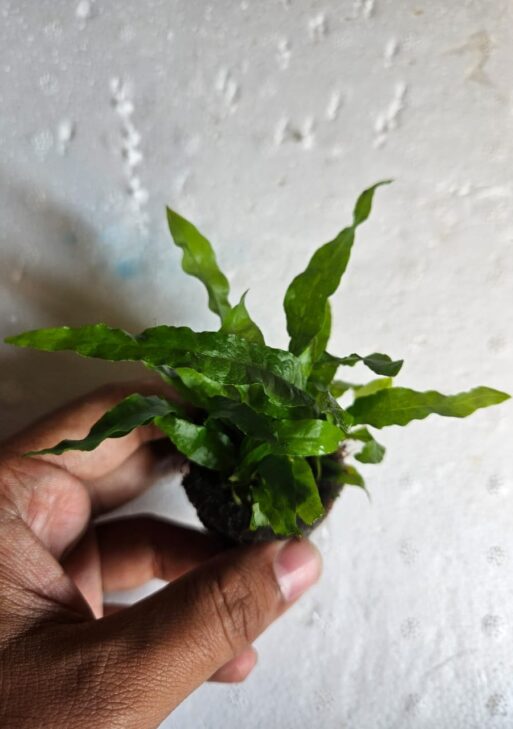
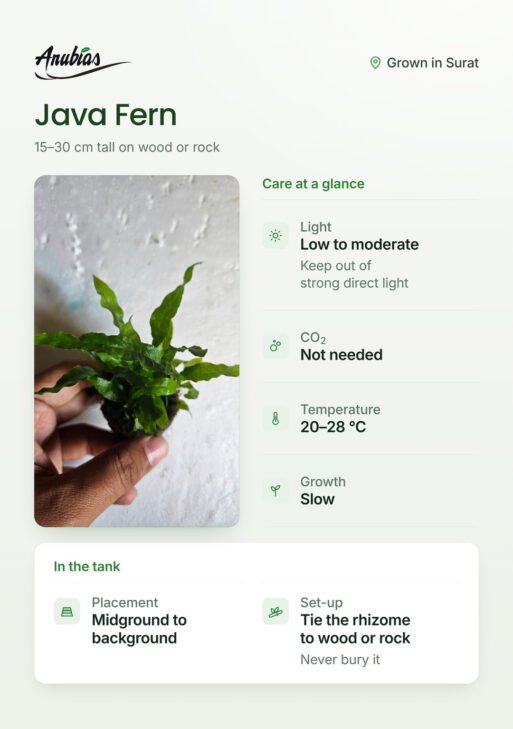
- Dwarf Java fern, ₹175: stays short and needs no substrate.
- Amazon frogbit, ₹90: floating cover. Scoop out extras so the betta can still reach the surface.
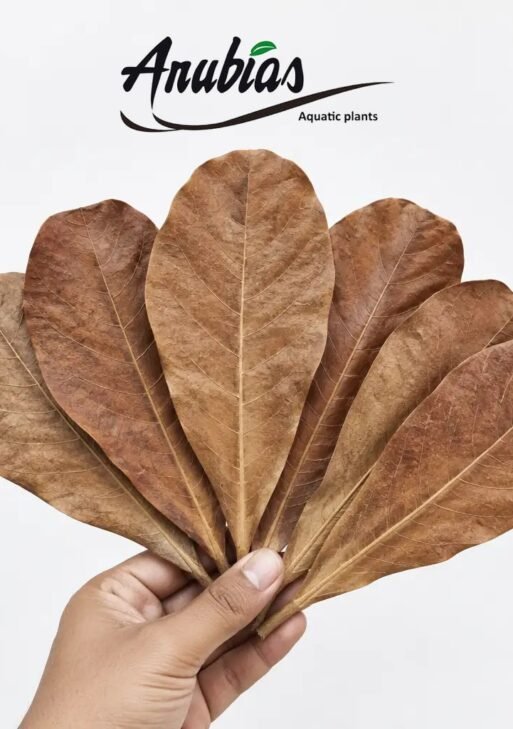
- Indian almond leaves, ₹100 for a pack of 50: one leaf per 20–40 litres releases tannins that tint the water tea-brown and can lower pH slightly. Replace it when it turns thin and see-through, usually every 3–4 weeks.
Plants absorb some waste, but they do not replace water changes. Our guide to plants that reduce ammonia and nitrate shows how much they can do. For layout and flow, see the betta-safe planted tank setup guide.
Plants in this guide
Grown in Surat (pre-order plants imported to order) · live-arrival guarantee with a 4-hour unboxing video · ₹99 shipping, free from ₹999
Price range: ₹90 through ₹250
Price range: ₹90 through ₹250
How long do fighter fish live in a tank?
With good care, a fighter fish usually lives 3–5 years. Shop bettas are often several months old when you buy them. In a small unfiltered bowl, ammonia burns, fin rot and temperature stress usually cut that short. A healthy betta shows bright colour, holds its fins open and eats eagerly. Males often build bubble nests at the surface.
Frequently asked questions
Is a fighter fish lucky for home?
Keeping a fighter fish for luck is a vastu belief with no evidence behind it. What matters for the fish is placement: a steady spot away from direct sun, AC vents and TV speakers.
Can a betta live in a vase with a plant on top?
Not well. The roots cannot remove ammonia fast enough, and the plant blocks the surface the betta must reach to breathe air. Bettas do not eat roots either, so the fish still needs feeding.
Is a betta tank under ₹500 good enough?
Usually not. The plastic “betta tanks” sold online at that price mostly hold 1–3 litres. Use one as a travel box or a short-term hospital tank. For a permanent home, a plain glass tank of 20 litres or more from a local aquarium shop is a better buy.
How often should I change water in a small betta tank?
Under 10 litres, change 30–50% every day or two. In a filtered, cycled 20 litre tank, 25–30% once a week is usually enough. Always use dechlorinated water at the same temperature.
How many litres is 5 gallons?
Five US gallons is about 19 litres, which is what most betta advice means. Five UK gallons is about 23 litres. Either way, aim for 20 litres or more for one betta.