
The money plant (pothos) is one of the most common houseplants in India, and many people grow it with its roots hanging into a fish tank. Done correctly it is a cheap way to soak up nitrates. Done wrong, it rots.
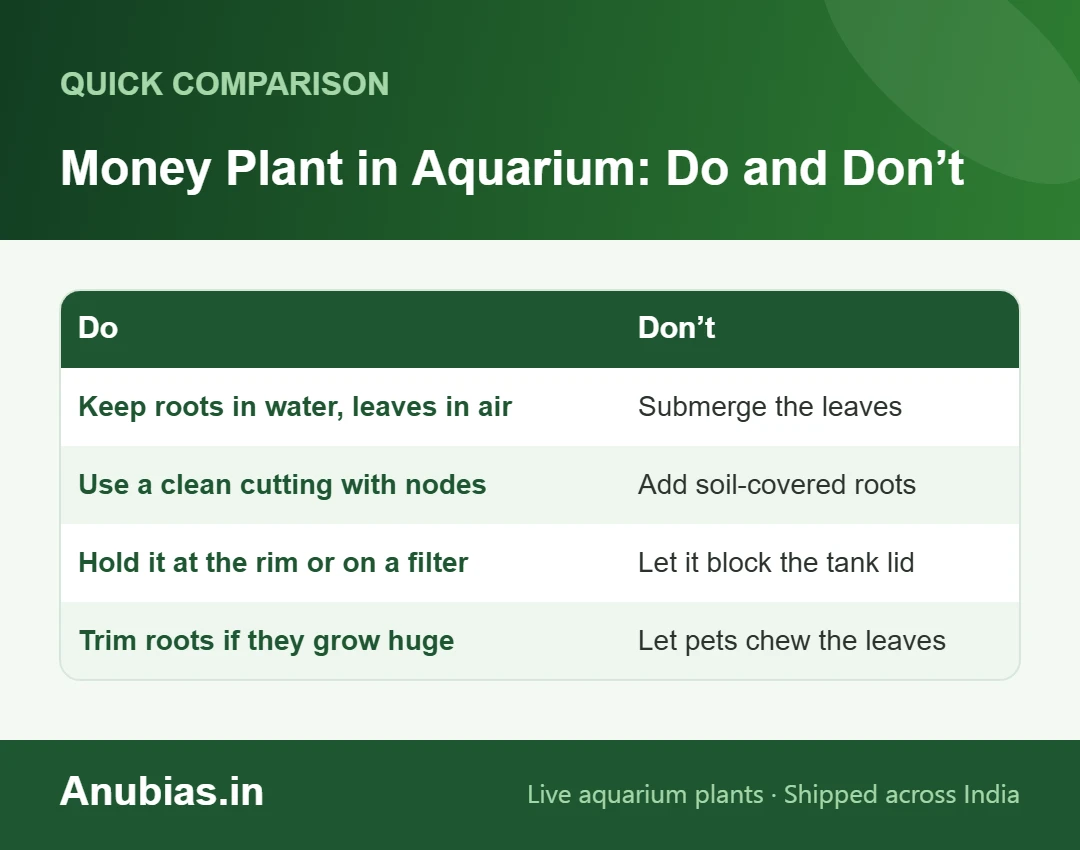
Quick answer: Yes, you can grow a money plant (pothos) in an aquarium as long as only the roots are in the water and the leaves stay in the air. The roots absorb nitrates and other nutrients, which can help limit algae. Use a clean cutting with a few nodes, rinse off all soil, and hold it at the rim, in a hang-on-back filter or on a holder. Never submerge the leaves, because pothos is not an aquatic plant and its leaves rot underwater.
How to set it up
- Cut a healthy stem with 2–3 nodes (the bumps where roots grow).
- Remove any soil and rinse the stem well.
- Place the nodes and roots in the water, keeping all leaves above it.
- Secure it with a holder, clip or the top of a hang-on-back filter so it cannot fall in.
- Trim roots if they fill too much of the tank.
Benefits
- Absorbs nitrates, which can help reduce algae. Plants that reduce algae.
- Roots give small fish and fry cover.
- Almost no care needed.
Safety
Keeping pothos roots in the tank is generally fine for fish. However, pothos contains compounds that can irritate the mouth of cats, dogs and children if the leaves are chewed, so keep it out of reach. Anubias belongs to the same plant family, see is Anubias toxic?.
Want true aquarium plants instead?
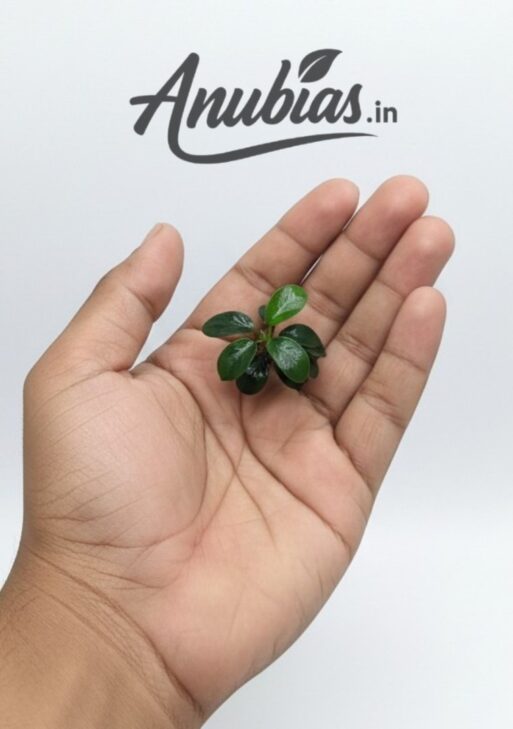
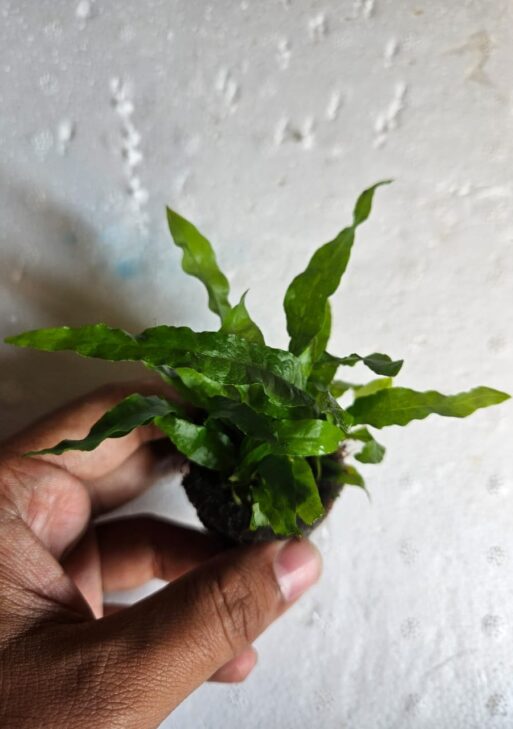
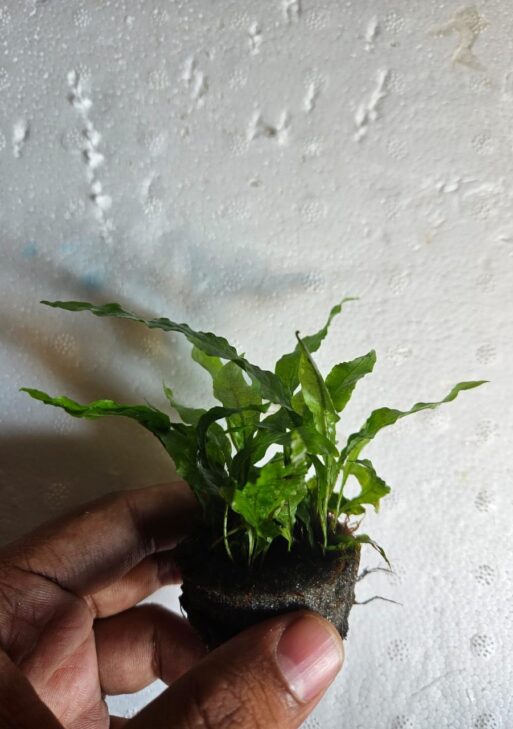
For plants that grow fully underwater, try easy beginner plants such as Anubias and Java fern, or fast-growing plants for nitrate control.
Mistakes that rot a money plant on a tank
Almost every failure comes down to water sitting where it should not. The most common error is dropping a whole cutting into the tank so the leaves float. Submerged leaves go translucent within a week, then break down and feed algae.
The second mistake is leaving the plant on a lid where condensation pools around the stem. The nodes stay wet but get no air, and the stem turns soft and brown just above the water line. Leave a finger gap between the water surface and the lowest leaf so the stem can breathe.
- Do not bury the cutting in gravel or soil inside the tank.
- Do not let a long trailing vine dip back into the water at the far end.
- Do not add garden fertiliser or soil water to feed it; the tank is the feed.
- Do not let dust build on the leaves, since it blocks the light the plant needs to pull nitrate.
How it behaves through an Indian year
Growth is not steady across the seasons, and that is normal. In a warm Indian room the plant pushes new leaves fast from roughly March through the monsoon, so this is when it strips the most nitrate and when you will be trimming roots most often.
In peak summer, when tank water sits at 28 to 32 degrees, the submerged roots still cope but the aerial part suffers if it also gets afternoon sun through a window. Bright indirect light near a wall is better than a sunny sill. Direct sun heats the tank as well, which is the bigger problem.
Through a cool north Indian winter the plant slows down and may stop producing new leaves entirely. Do not panic and start dosing anything; the roots keep working quietly and growth returns with warmth. If the whole vine is losing older leaves rather than just one or two, the room is too dark rather than too cold.
Variegated money plants with heavy white marbling grow slower and absorb less, so a plain green pothos is the more useful choice if you want it doing a job rather than looking decorative.
Plants in this guide


Frequently asked questions
Can money plant grow fully underwater?
No. Pothos is not an aquatic plant; its leaves rot when submerged. Keep only the roots in water.
Is money plant good for aquarium water?
Its roots absorb nitrates and nutrients, which can help water quality and limit algae, but it does not replace water changes.
Is money plant safe for fish?
Roots in the water are generally safe for fish. Keep leaves out of reach of pets and children.
हिंदी में पढ़ें: एक्वेरियम में मनी प्लांट कैसे लगाएं.
Will money plant roots clog my filter?
They can, if you let them grow into the intake or across the media chamber. Roots follow flow, so a plant sitting on top of a hang-on-back filter will eventually push a mat into the box. Trim the root mass back every couple of months and keep it away from the intake strainer.
How many money plant cuttings do I need for a two foot tank?
Two or three healthy cuttings are plenty for a normally stocked two foot tank. More than that shades the water surface and gets in the way of feeding without removing much extra nitrate. Judge by results: if nitrate still climbs between water changes, the answer is fewer fish or more water changes, not more pothos.
Can I use money plant on a betta jar or shrimp tank?
Yes, and it suits both well because neither needs strong flow. In a betta jar keep the roots to one side so the fish still has open surface to breathe at. In a shrimp tank the root mat collects biofilm and becomes a favourite grazing spot, so trim it lightly rather than stripping it all at once.