
The midground ties a tank together, linking short foreground plants to the tall background. Good midground plants are medium-sized, slow to outgrow their space and often sit on hardscape.
Quick answer: The best midground aquarium plants are Anubias, Cryptocoryne wendtii, Bucephalandra and Java fern, all of which grow in low to medium light without needing CO2. Hygrophila pinnatifida adds texture on hardscape in medium to high light, and Red tiger lotus makes a bold focal plant in medium to high light. Tie Anubias, Java fern and Bucephalandra to wood or rock, and give Cryptocoryne and Red tiger lotus root tabs.
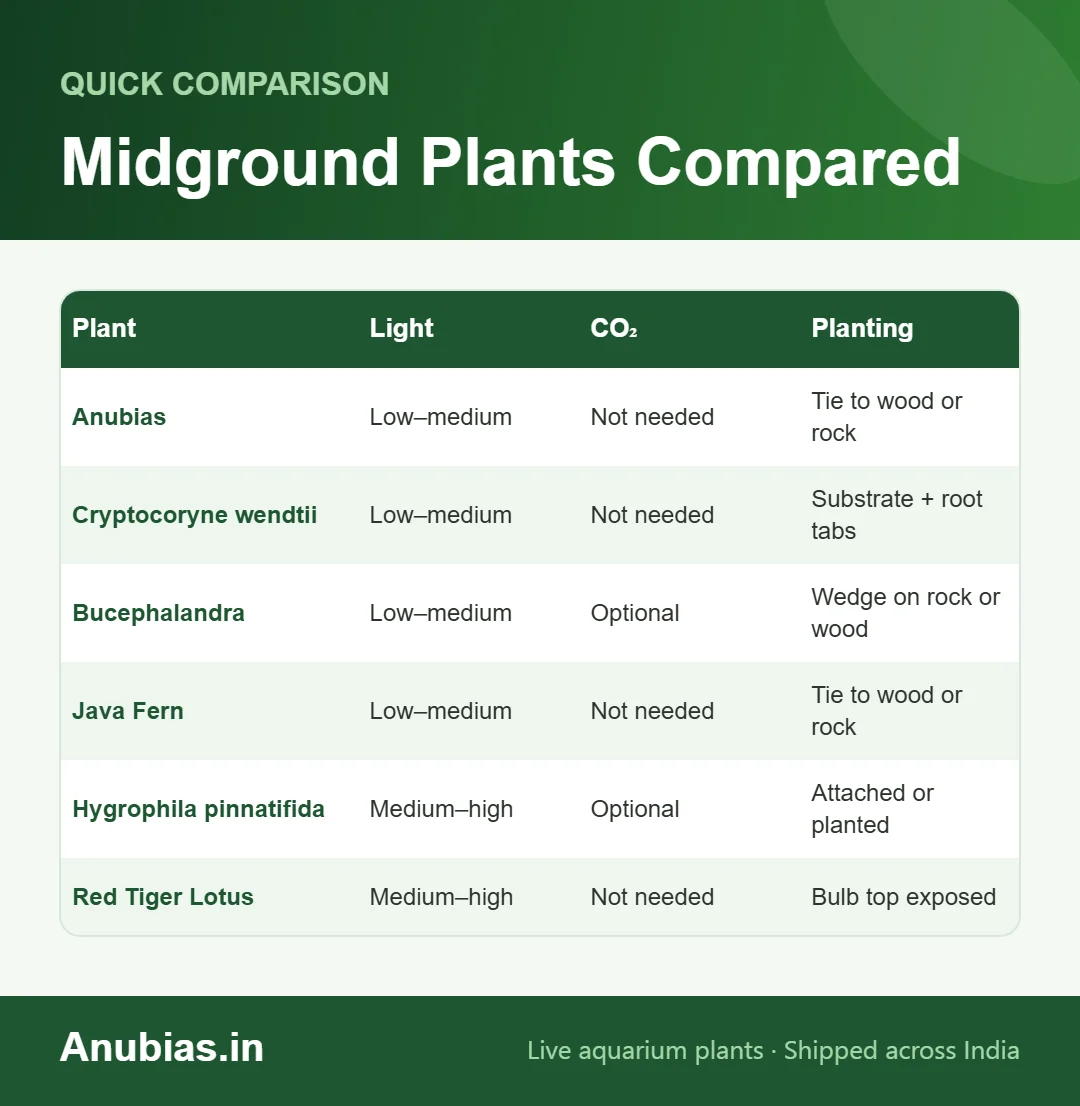
Top midground picks
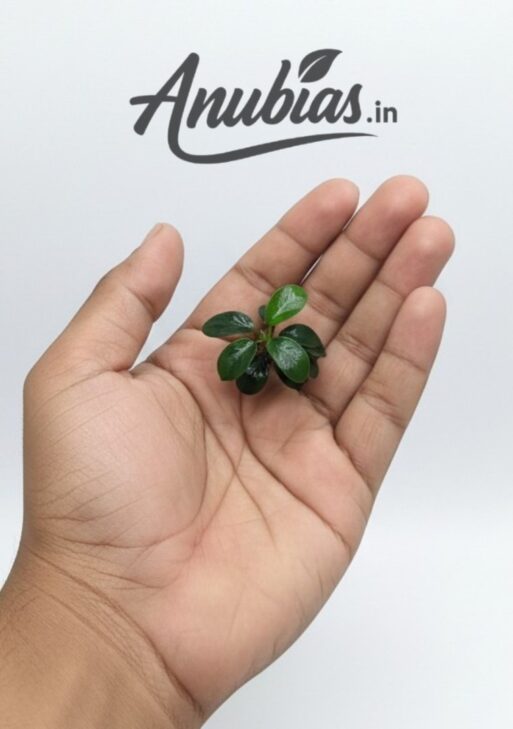
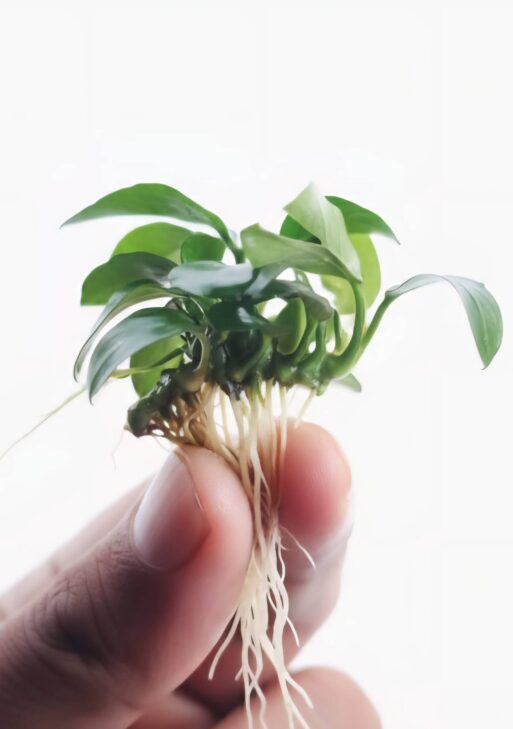
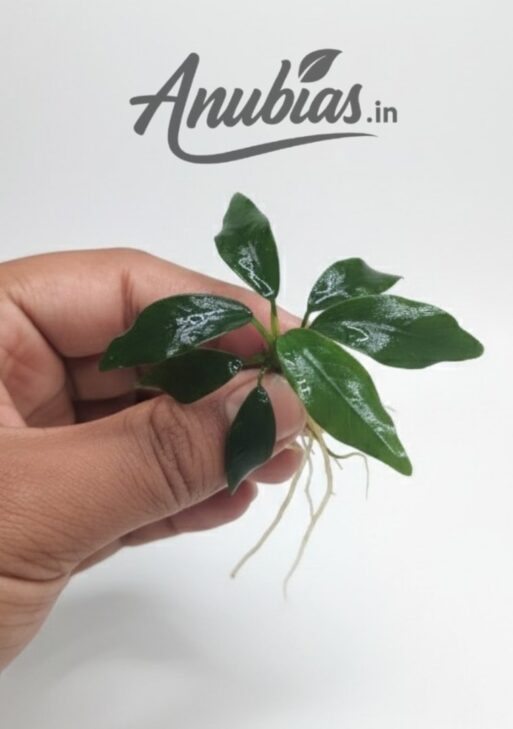
Anubias
Nana, barteri and congensis all work, depending on tank size. Slow growth keeps the layout stable. Anubias plant types.
Cryptocoryne wendtii
A rooted plant for low to medium light; it may melt after planting before regrowing. Crypt wendtii green vs red.
Bucephalandra
Compact, colourful and very slow; wedge onto rock or wood. Bucephalandra care guide.
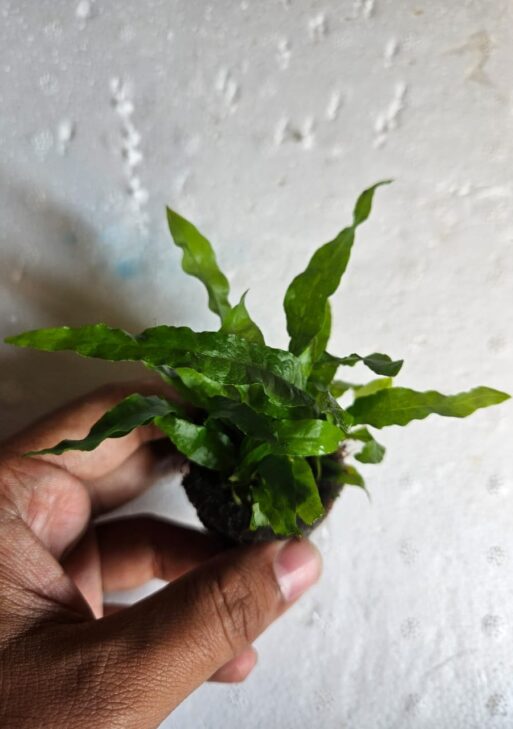
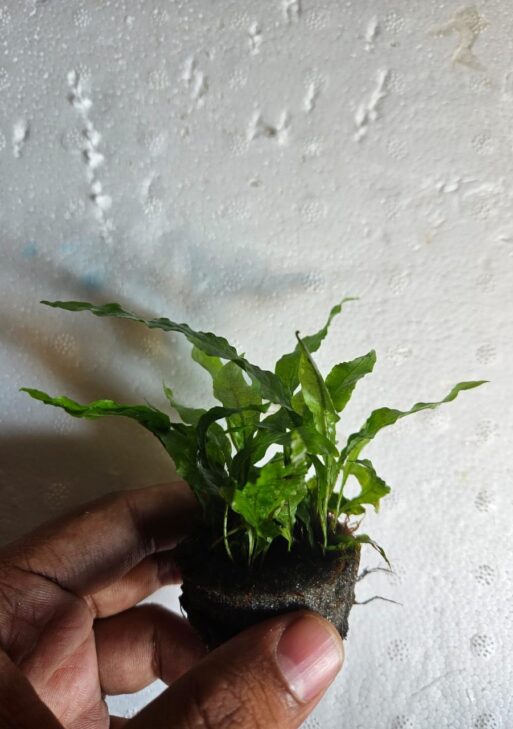
Java Fern
Taller leaves that add height to rockwork and wood. Java fern types.
Hygrophila pinnatifida
Grows attached to hardscape or planted, with reddish undersides in good light. Hygrophila pinnatifida care guide.
Red Tiger Lotus
A striking focal plant; plant with the bulb top exposed and feed with root tabs. Red tiger lotus care guide.
Layout tips
- Use hardscape to lift epiphytes to midground height.
- Group plants in odd numbers and vary leaf size for depth.
- Keep fast background growers trimmed so they do not shade the midground: trimming guide.
A simple midground plan for a two-foot tank
A two-foot tank has roughly a hand’s width of usable midground, which is less room than most people plan for. Working to a rough scheme stops it becoming a jumble.
- Place the hardscape first and decide where the visual weight sits, usually slightly off-centre rather than dead middle.
- Put one larger-leaved plant beside that focal point as the anchor, so the eye has somewhere to rest.
- Add a group of three to five rooted plants of one species to one side, planted with gaps so they can grow into each other, not as a solid block from day one.
- Attach one or two epiphytes to the hardscape at a different height, which stops the midground reading as a flat band.
- Leave genuine open substrate somewhere, because empty space is what makes the planted areas look deliberate.
Resist filling every gap at setup. Most midground plants roughly double their footprint within a few months, and a layout that looks slightly sparse at planting usually looks correct by month three.
Keeping the midground looking right long term
Midground plants are mostly slow growers, and slow growers accumulate problems quietly rather than dramatically.
Old leaves are the first thing to watch. A leaf that has been on the plant for a year will collect spot algae no matter how good the tank is, and two or three such leaves make an otherwise healthy group look tired. Cut them off at the base rather than trying to clean them.
Runner spread is the second. Rooted midground species creep outward and will march into the foreground or under the background stems if you let them. Lift the strays every couple of months and replant them where you want them, or pass them on.
Shading is the third, and it is the one people miss. Background stems grow fast and lean forward, and by the time the midground looks dull it has often been in shadow for weeks. Trim the background on a schedule rather than only when it reaches the surface.
Plants in this guide

₹ 220
Frequently asked questions
What is a good midground plant for beginners?
Anubias and Cryptocoryne wendtii are the easiest; both grow in low light without CO2.
Is Anubias a midground plant?
Yes. Most Anubias suit the midground, while miniatures like Nana Petite fit the foreground and larger types like congensis can reach the background.
Do midground plants need special substrate?
Epiphytes do not. Rooted plants like Crypts and Red tiger lotus benefit from root tabs.
Shop the plants in this guide: Hygrophila Pinnatifida, Red Tiger Lotus / Red Water Lily.
Shop midground plants on Anubias.in.
How many midground plants does a two-foot tank need?
Usually five to eight plants in total, arranged as one or two groups plus an anchor specimen, rather than a continuous row. Buying more than that tends to produce overcrowding within a few months as each plant widens. It is cheaper and looks better to start with fewer and divide them later.
Can stem plants be used in the midground?
Yes, as long as you are willing to trim them every couple of weeks, because most stems will keep growing straight past midground height. Plants that creep sideways rather than shooting upward adapt best. If you want a low-maintenance midground, slow-growing rosette plants and epiphytes are the easier choice.
How far from the front glass should midground plants sit?
Leave at least a hand’s width of foreground in front of them in a small tank, and more in a larger one. That open space is what gives a layout depth and also gives you room to siphon without disturbing roots. Plants pushed right up to the glass make the tank look shallower than it is.