
Betta fish and live plants are one of the most popular combinations in Indian fishkeeping, and for good reason: a well-planted betta tank looks better, holds water quality more steadily, and gives a naturally territorial, sometimes nippy fish plenty of cover to feel secure in. But bettas also have specific needs that clash with a few common planted-tank habits — strong filter flow and sharp plastic decor being the two biggest offenders against those long, delicate fins. This guide walks through tank size, flow, substrate and plant choice so you can build a setup that keeps both your betta and your plants thriving.
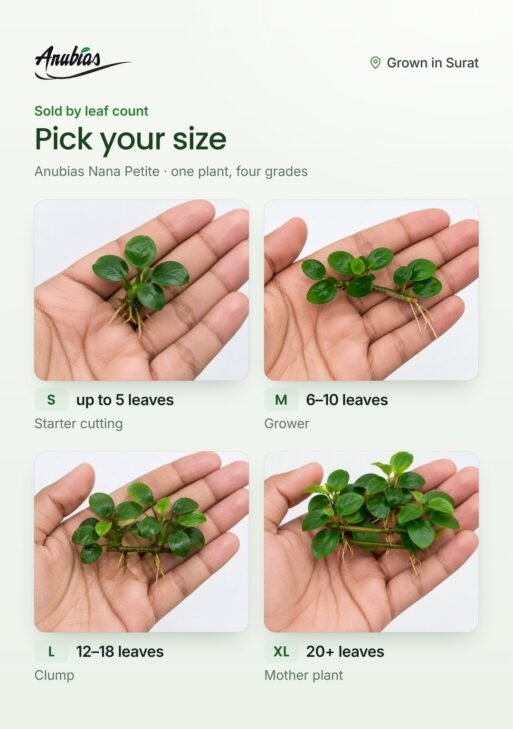
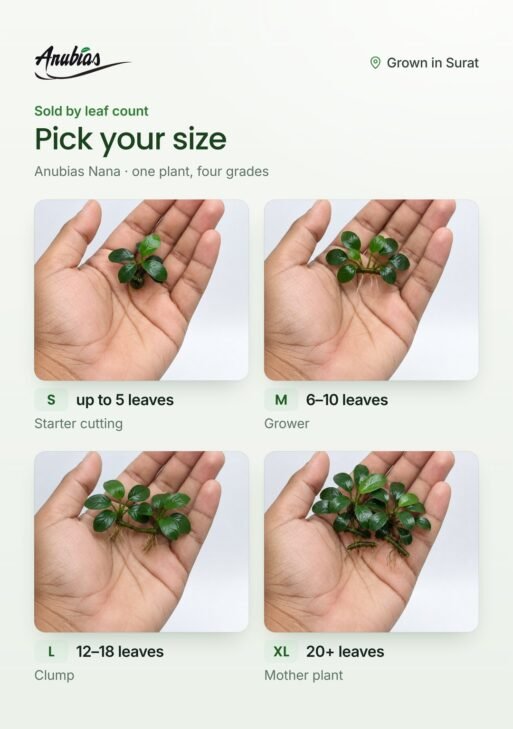
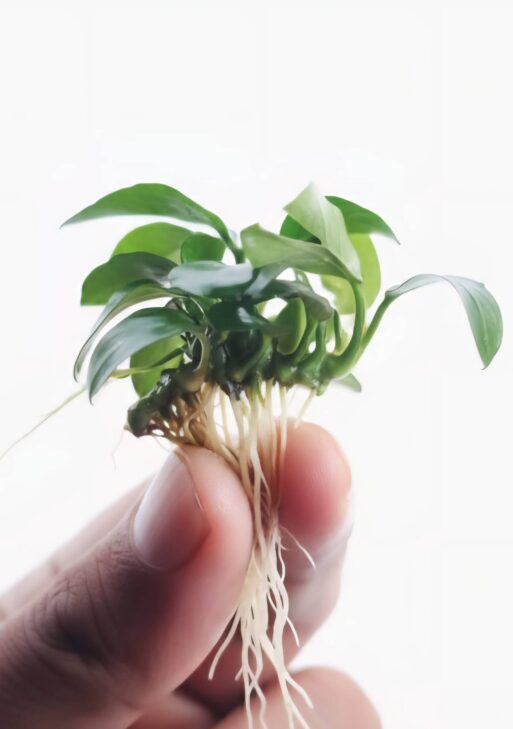
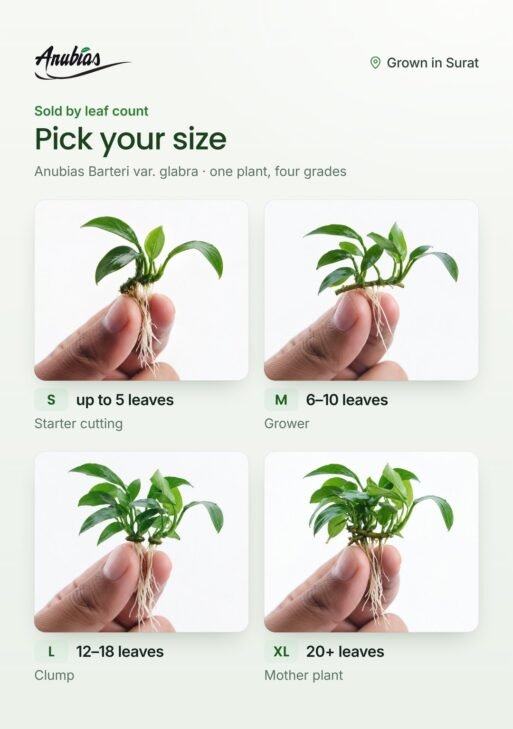
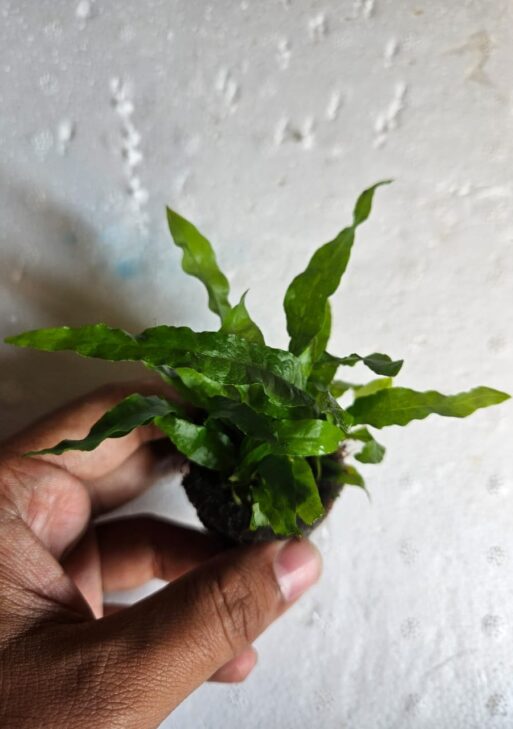
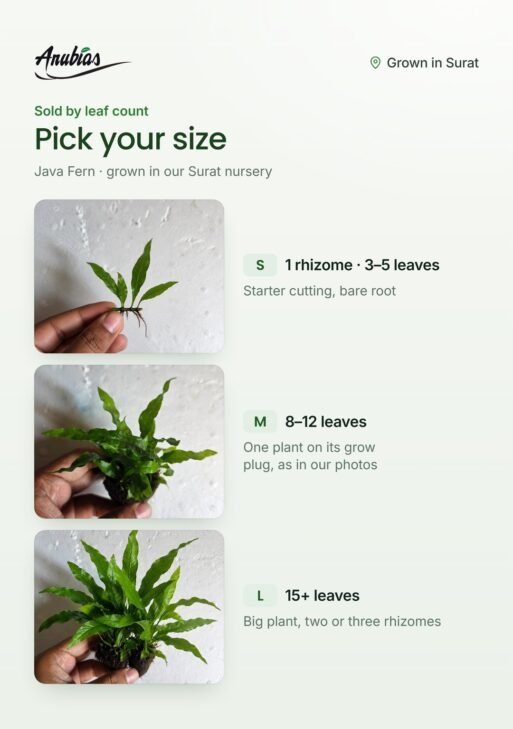
Betta or fighter fish? Same fish: in India bettas are usually sold as fighter fish (Betta splendens). Everything in this guide applies to any betta you buy locally. Want the plants in one go? Our Betta tank kit bundles Anubias Nana, Java fern, Amazon frogbit, a red tiger lotus and a pack of Indian almond leaves, sized for a 20–40 litre tank. Many betta keepers also drop in one dried Indian almond leaf per 20–40 litres; its tannins tint the water tea-brown and can lower pH slightly. We sell them at ₹100 for a pack of 50, which lasts one tank roughly 3 years.
Quick answer: A betta does best in a planted tank of 8 to 10 gallons (30-40L), with 5 gallons as the absolute minimum. Use a gentle filter such as a sponge filter or a baffled outflow, since strong current exhausts long-finned bettas. Stick to soft, broad-leaved plants like Anubias, Java Fern and Bucephalandra rather than anything sharp or plastic, add a floating plant for surface cover, and always cycle the tank before the betta goes in.
Why Bettas and Live Plants Are a Natural Match
In the wild, bettas live in shallow rice paddies, ditches and slow-moving pools choked with vegetation, not open water. Dense planting recreates that environment: it gives a betta places to rest near the surface, break sightlines between territories if you ever house more than one, and reduces the stress that comes from feeling exposed in a bare tank. Plants also pull ammonia and nitrate out of the water between water changes, which matters more in a small tank where waste concentrates quickly.
Choosing the Right Tank Size for a Betta
Five gallons (about 19 litres) is the realistic floor for a betta, and even then only with a heater, filter and regular maintenance. An 8-10 gallon tank is a far more comfortable standard: it holds temperature and water parameters more steadily, gives you enough footprint to plant properly instead of cramming everything against the glass, and still qualifies for the plant selection in our nano tank plant guide. Avoid tall, narrow “vase” style tanks — bettas are labyrinth fish that gulp air at the surface, and a tank that is deep but cramped horizontally still limits swimming room even if the fish can reach air easily.
Water Flow and Filtration: Keeping Bettas Comfortable
This is where betta needs and typical planted-tank advice genuinely conflict. Bettas evolved in still water, and their long fins create drag that makes swimming against strong current exhausting over time — you will often see a stressed betta clamping its fins or hiding behind decor to avoid the flow. The fix is not to skip filtration but to soften it: a sponge filter is the standard recommendation because it filters efficiently at very low flow, or you can angle a hang-on-back or internal filter’s outflow against the glass so it diffuses before reaching open water. Conveniently, this lower-flow approach also suits low-tech planted tanks well, since less surface agitation means less CO2 is driven out of the water for your plants to use.
Best Plants for a Betta Tank (No Torn Fins)
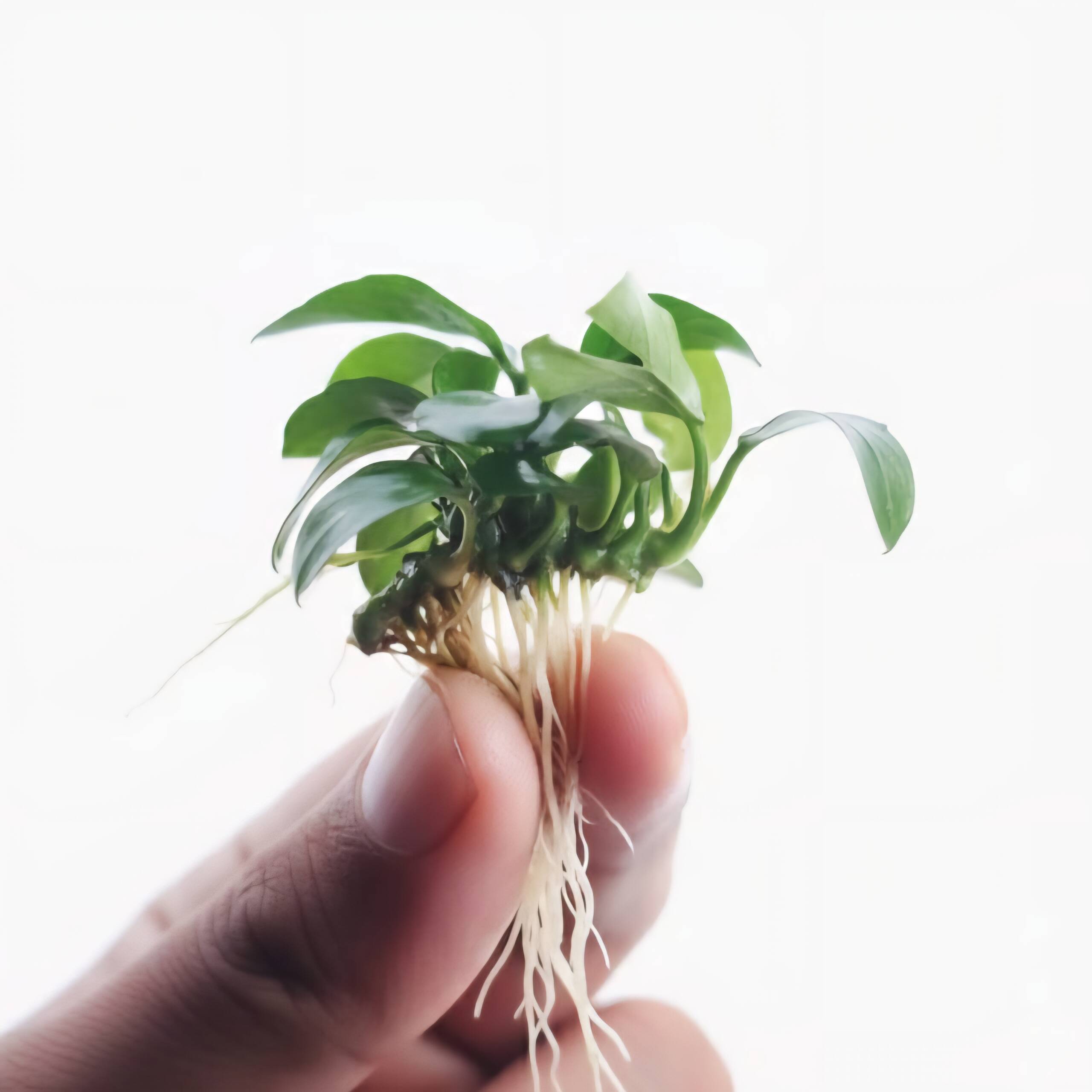
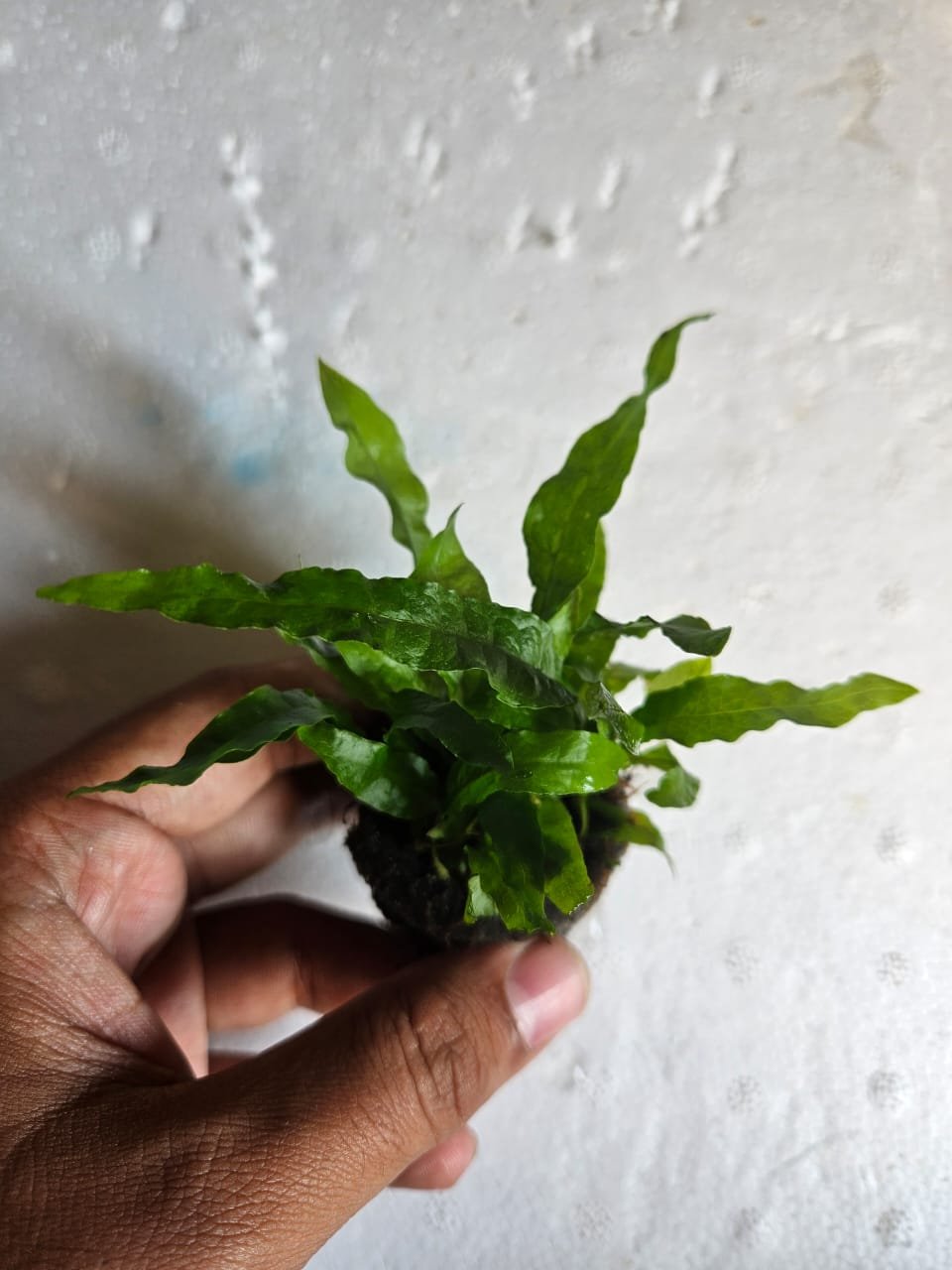
Choose soft, broad-leaved or fine-leaved plants over anything with stiff, pointed edges, and skip plastic plants entirely — their seams and rigid edges are a common cause of fin splits. Reliable, betta-safe choices include Anubias Nana and other Anubias varieties, Java Fern, Bucephalandra, and Cryptocoryne wendtii. All four attach to or root in a low-light, low-tech setup without demanding CO2, which keeps maintenance simple. Fine-leaved stems like Water Wisteria are also safe and give a betta more mid-tank cover. For a full species list geared to both bettas and shrimp, see our best plants for betta and shrimp tanks guide.
Floating Plants: The Betta’s Favourite Feature
If you add one thing beyond a couple of anchor plants, make it a floating species. Bettas are surface-oriented fish, and trailing roots from a floater like Amazon Frogbit give them a shaded resting spot right where they naturally want to be, while also softening harsh overhead lighting that can stress bettas kept under bright reef-style fixtures. Duckweed works too but multiplies fast enough to cover a small tank within weeks, so it needs more active thinning than frogbit if you want to keep the surface partly open for your betta to breathe comfortably.
Substrate, Heater and Lighting Basics
Bettas do not dig or root through substrate the way some catfish or loaches do, so the choice comes down to what your plants need rather than the fish — a nutrient-rich soil or a capped sand layer both work fine under an Anubias- and fern-heavy layout. A heater set to hold a steady 24-27°C is non-negotiable, since bettas are tropical fish that suffer in cooler Indian winters without one; our winter care guide covers this in more detail. Moderate, not maximal, lighting suits both the low-light plants above and a betta’s preference for calmer, shadier water.
Cycling the Tank Before Your Betta Moves In
The single most common way new keepers lose a betta is adding the fish to an uncycled tank, where ammonia from waste has nowhere to go because the beneficial bacteria colony has not established yet. Run the tank planted and filtered for at least two to three weeks first, testing ammonia and nitrite until both read zero, before adding your betta. Our nitrogen cycle guide walks through the process and realistic timelines in more depth, and our low-tech planted tank setup guide is a useful companion if this is your first tank of any kind.
More fish and shrimp guides:
Frequently Asked Questions
Can a betta live in a planted tank with no filter? It is possible in a heavily planted tank with frequent manual water changes, but a gentle filter such as a sponge filter makes water quality far more stable and is strongly recommended, especially under 10 gallons where waste concentrates quickly.
Do bettas eat aquarium plants? Bettas are primarily carnivorous and generally leave live plants alone, occasionally nibbling out of curiosity rather than hunger. Visible plant damage is far more often caused by flow stress, low light or poor water quality than by betta grazing.
What is the best floating plant for a betta tank? Amazon Frogbit is a strong choice because its trailing roots give bettas a resting spot near the surface and it is easy to thin when it spreads. Duckweed works too but multiplies quickly and needs more regular removal in a small tank.
Grown in Surat (pre-order plants imported to order) · live-arrival guarantee with a 4-hour unboxing video · ₹99 shipping, free from ₹999