
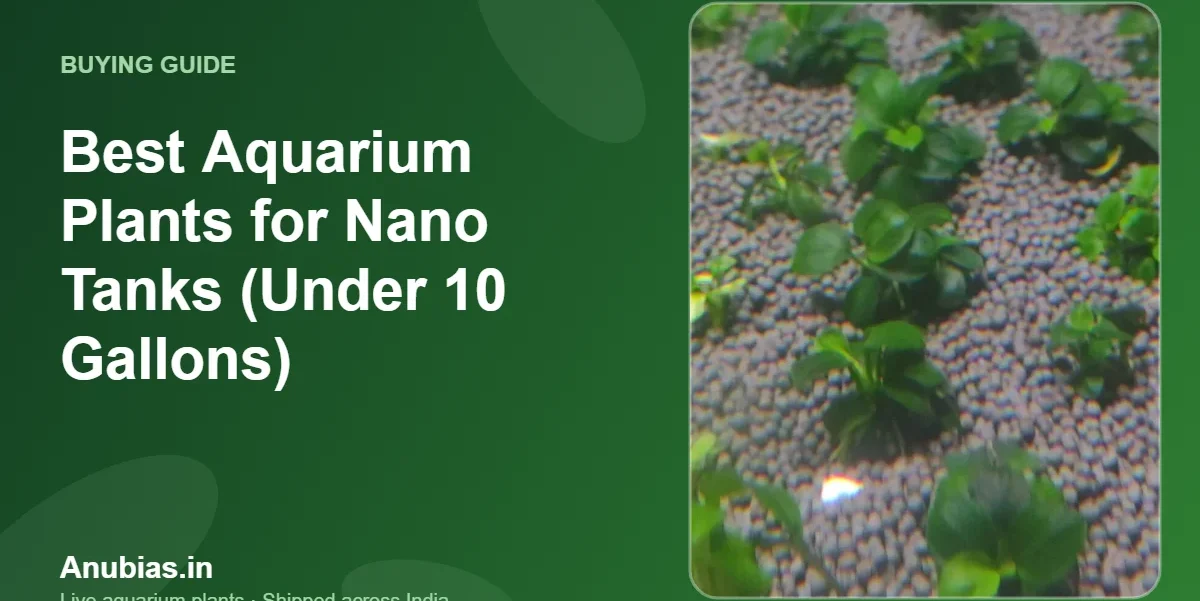
Nano tanks — anything from a 2.5-gallon bowl to a 10-gallon cube — are one of the fastest-growing setups among Indian hobbyists, popular for desks, apartments and shrimp-only setups where floor space is limited. But a nano tank isn’t just a smaller version of a normal aquarium. Water volume swings faster, stock LED lights sit much closer to the surface than a full hood, and a plant that looks proportionate in a 20-gallon tank can swallow a 5-gallon one within a month. The plants below are chosen specifically because they stay in scale, tolerate a small volume’s faster swings, and don’t need deep substrate or high light to look good.
Quick answer: The best nano-tank plants stay small, grow slowly and do not depend on deep substrate: Anubias Nana Petite, Anubias Nana Gold, dwarf Java Ferns, Dwarf Hairgrass, Micranthemum Monte Carlo and floaters like Amazon Frogbit. Epiphytes that attach to hardscape are the easiest choice because many nano cubes ship with little or no substrate, and a stock LED sitting just 15–20 cm above the water is more intense than it looks.
What Makes a Plant Nano-Tank-Suited
Four things matter more in a nano tank than in a standard one. Mature size — a plant needs to stay small relative to the tank, not just start small. Growth rate — fast growers that are easy to manage in a 40-gallon community tank can need trimming every few days in a 5-gallon cube. Substrate independence — many nano cubes ship with little or no substrate, so epiphytes that attach to hardscape rather than root in soil are far easier to work with than rooted stem plants. And light distance — a stock LED sitting just 15–20cm above the water is far more intense than the same light on a standard hood, so plants that prefer low-to-moderate light avoid the stress and algae that come with overdriving a small tank.
The Best Aquarium Plants for Nano Tanks
1. Anubias Nana Petite
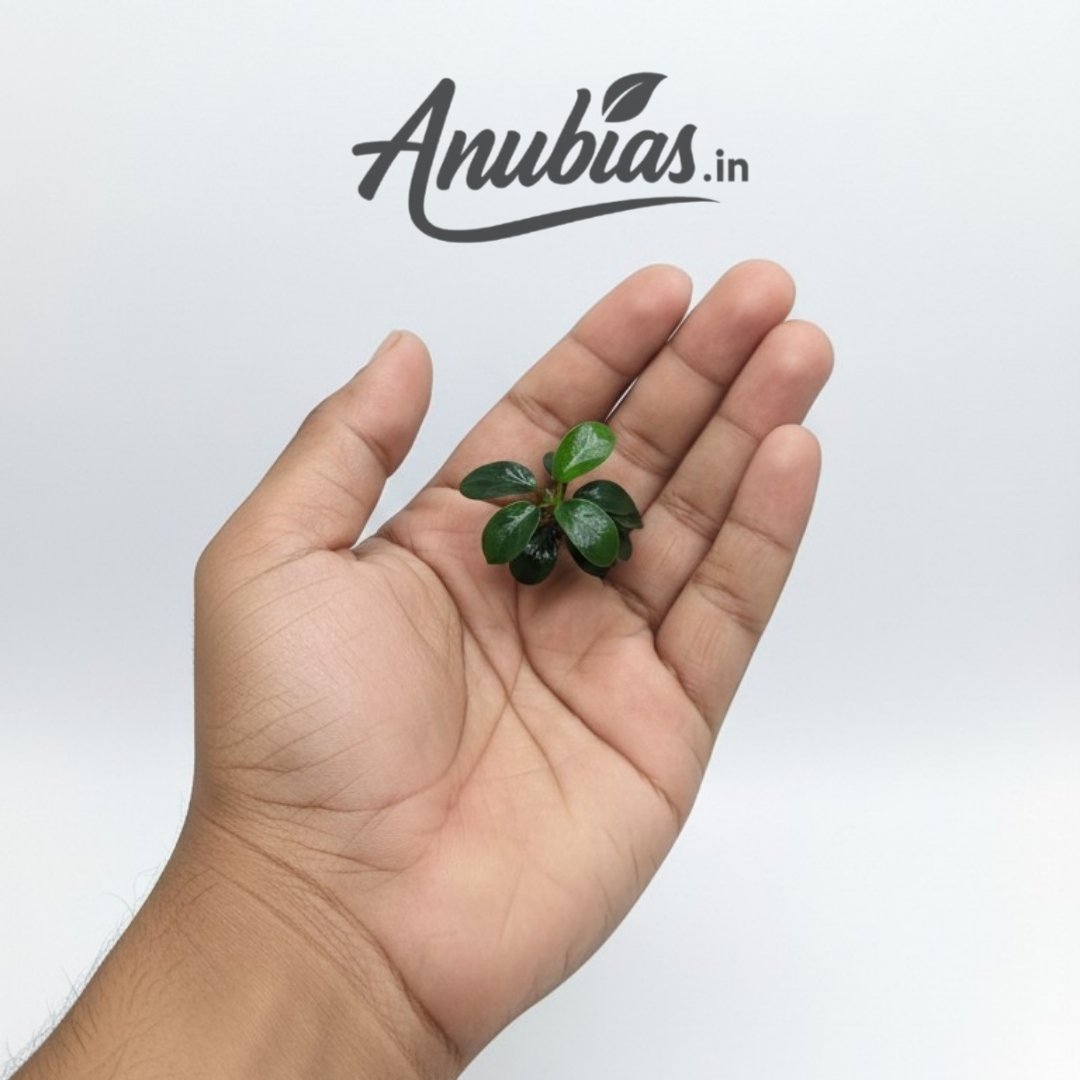
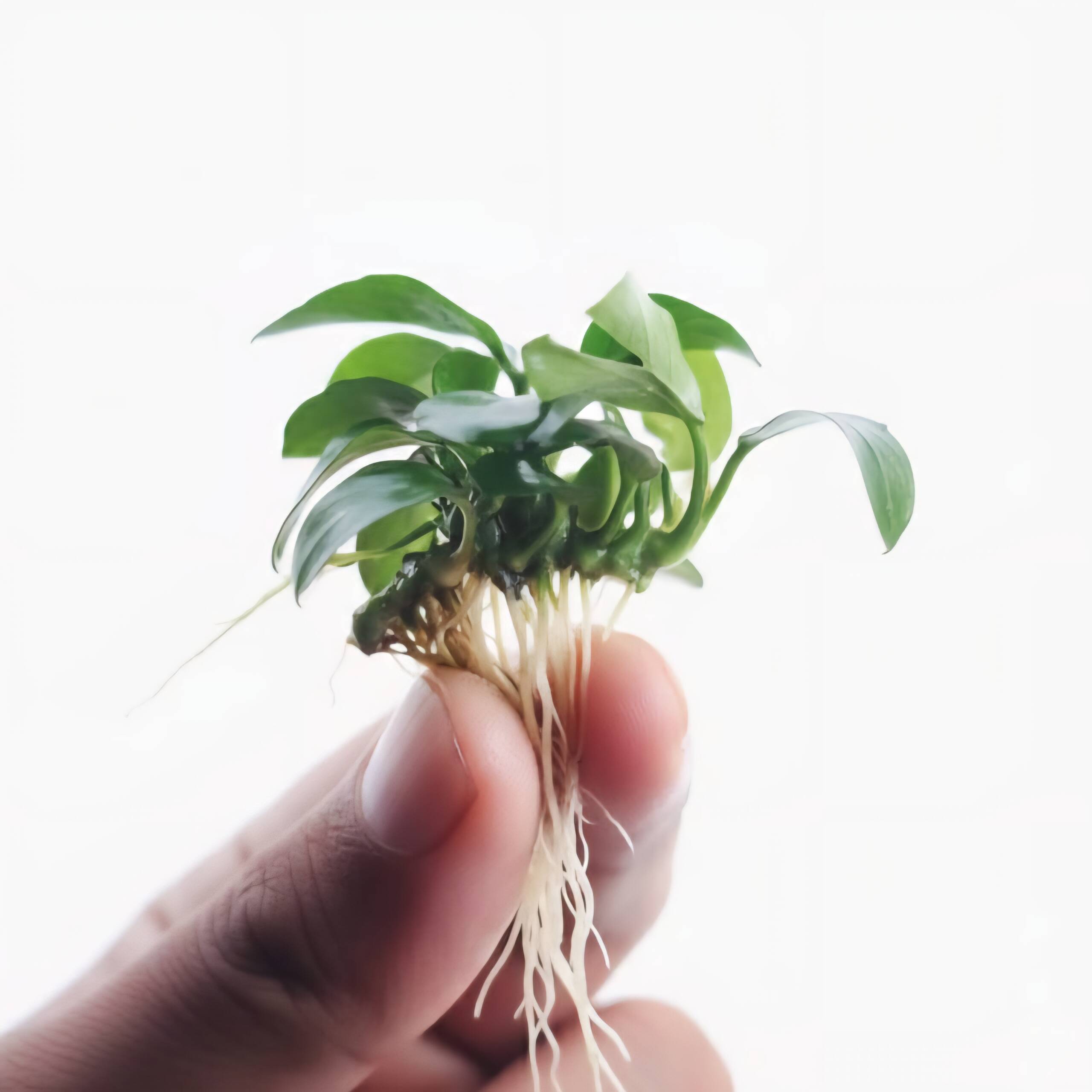
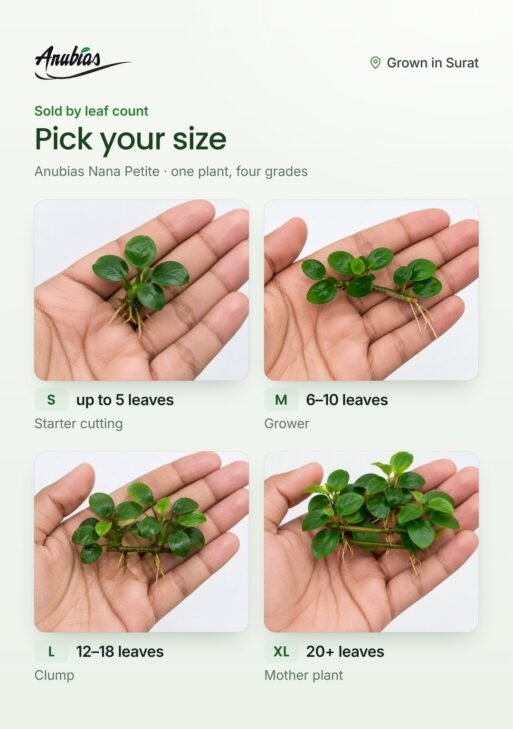
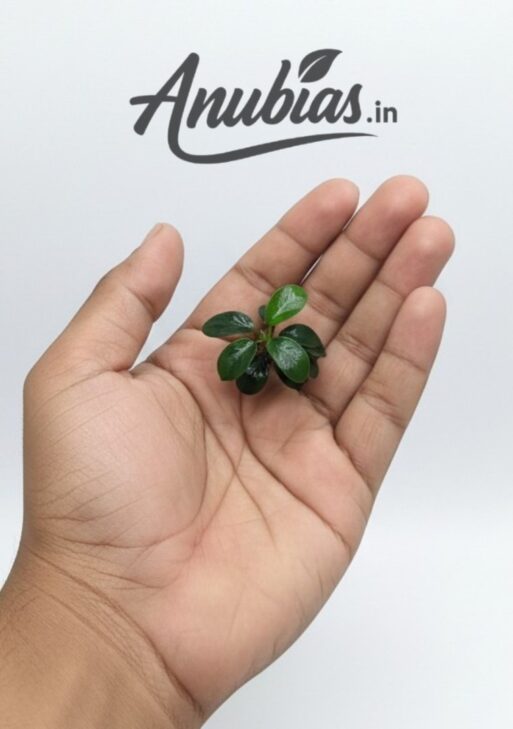
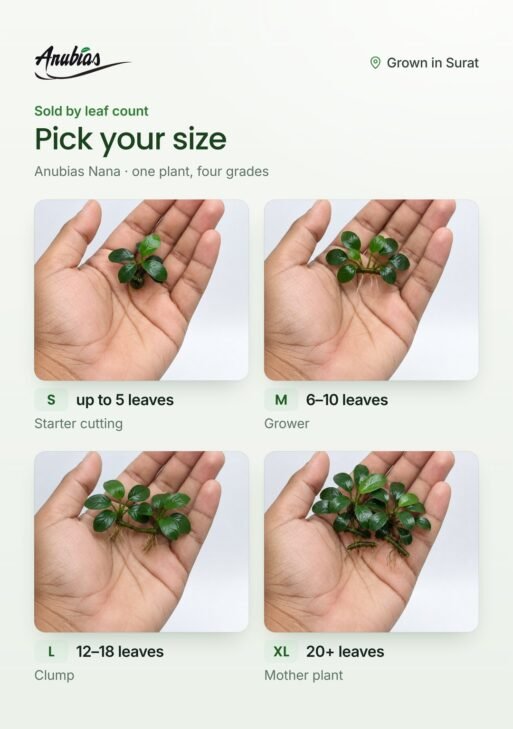
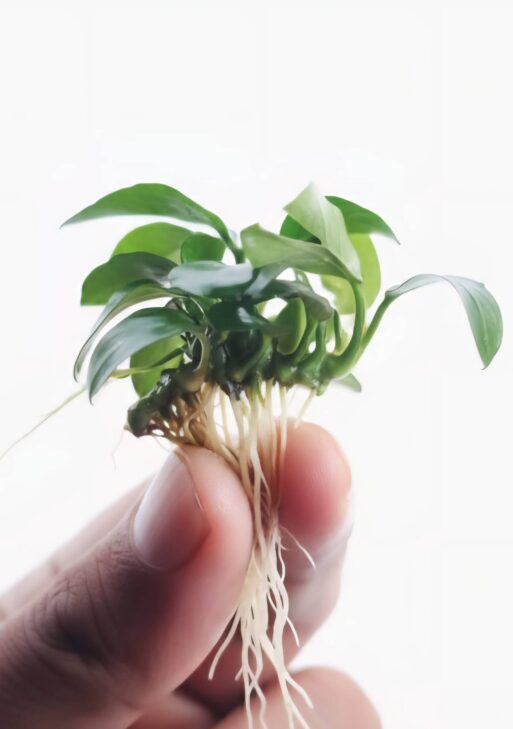
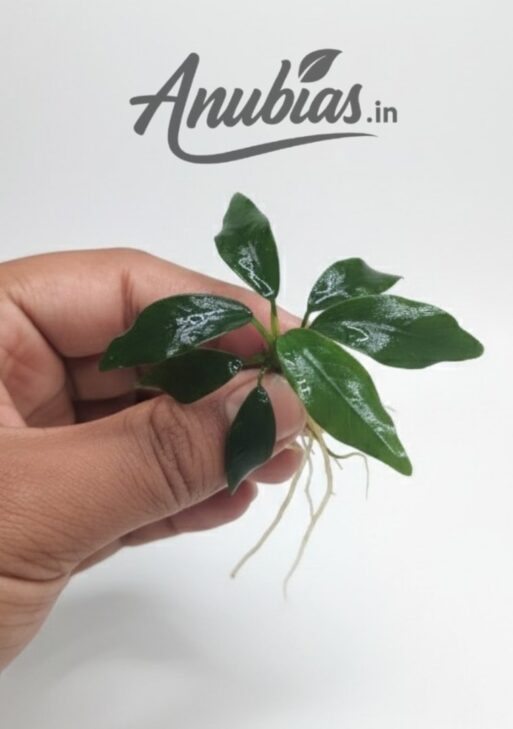
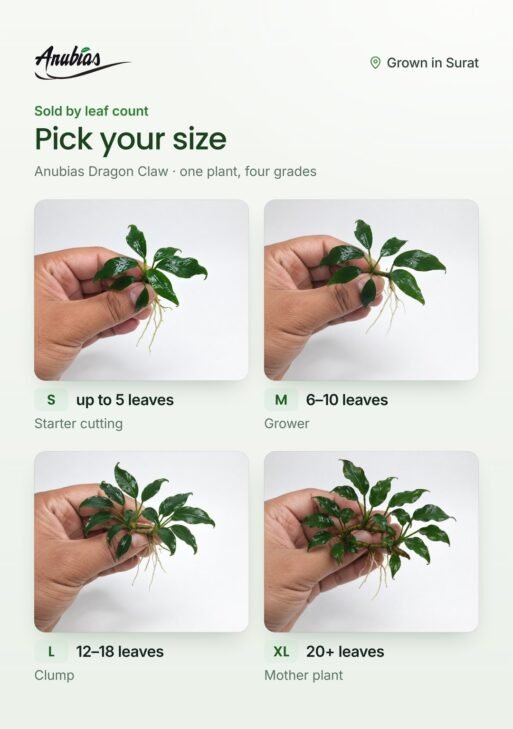
The smallest true Anubias variety and arguably the single best nano-tank plant sold in India. Its leaves rarely exceed 2–3cm, it attaches to a coin-sized piece of driftwood or lava rock, and it tolerates the low light most nano cube LEDs put out without complaint. Give it months, not weeks, to show new growth — that’s normal for Anubias, not a sign of a problem.
Care: low light · 22–28°C · attach to hardscape, don’t bury the rhizome. Shop Anubias Nana Petite.
2. Anubias Nana Gold
Same miniature scale as Nana Petite, with distinctive golden-green colouring that stands out against darker driftwood — a good way to add contrast without adding a second species that competes for space. Just as tolerant of low light and just as slow to establish.
Care: low light · 22–28°C · attach to hardscape. Shop Anubias Nana Gold.
3. Dwarf Java Fern (Green Gnome / Mini)
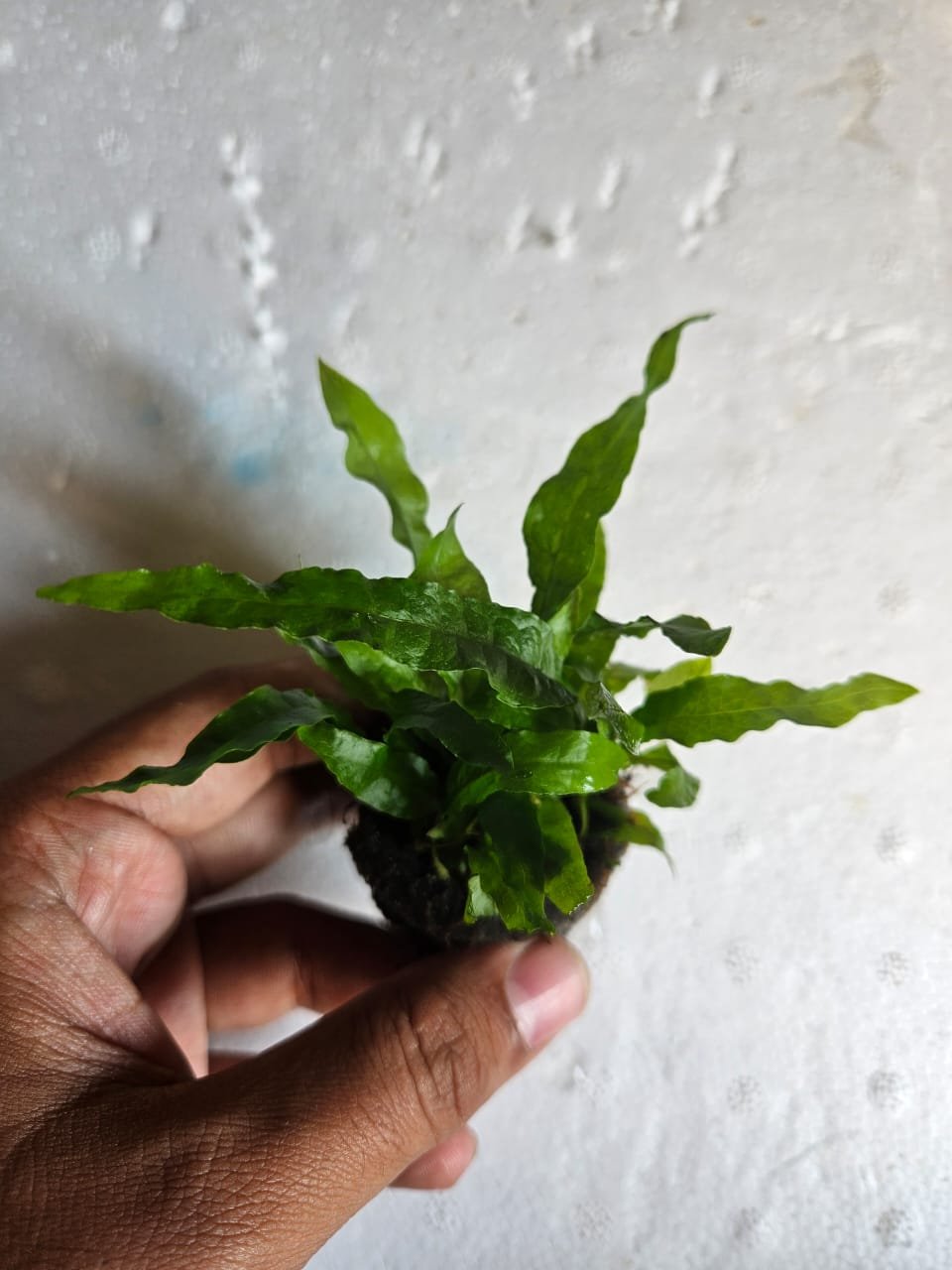
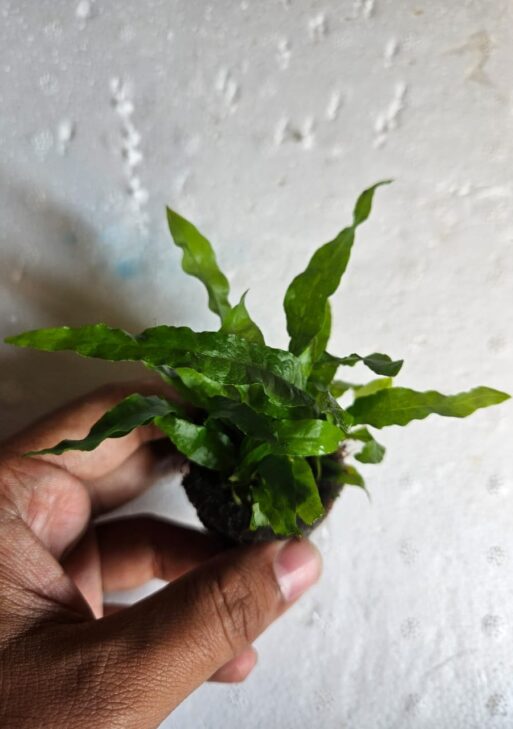
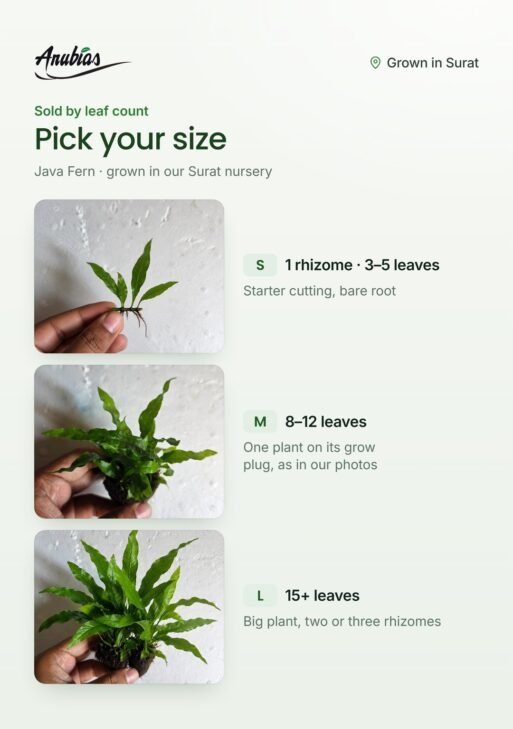
Regular Java fern is a nano-tank classic but eventually gets too large for a 5-gallon cube. This dwarf cultivar was selected specifically to stay compact, so you get the same nearly-indestructible epiphyte with leaves scaled to a small tank.
Care: low–moderate light · 20–28°C · attach to hardscape. Shop Dwarf Java Fern.
4. Java Fern Philippine
A slightly larger-leafed Java fern variety that works well as a background or side accent in a 7.5–10 gallon tank, where the smallest dwarf varieties can look sparse. Just as forgiving as any Java fern — low light, wide water tolerance, minimal care. See our guide to attaching epiphytes to hardscape for the same method used on Java fern.
Care: low–moderate light · 20–28°C · attach to hardscape. Shop Java Fern Philippine.
5. Dwarf Hairgrass (Eleocharis acicularis)
The most scale-appropriate true carpet for a nano tank — its fine, grass-like blades read as a lawn even in a 5-gallon footprint, unlike coarser carpeting species that look oversized in a small tank. It wants more light than the epiphytes above and appreciates a nutrient-rich substrate layer to carpet well.
Care: moderate light · 20–28°C · plant in substrate, trim runners to keep it low. Shop Dwarf Hairgrass.
6. Micranthemum ‘Monte Carlo’
A fine, round-leafed alternative to hairgrass that’s more forgiving of imperfect light and still low-tech tolerant, though it fills in faster with a bit of CO2. Its small leaf size keeps it in proportion even in the smallest nano cubes — see our carpeting plants comparison for how it stacks up against hairgrass.
Care: low–moderate light · 20–28°C · plant in substrate. Shop Monte Carlo.
7. Amazon Frogbit
A small-format floater whose trailing roots give shrimp and fry somewhere to hide without needing any substrate or attachment at all — useful in a nano shrimp tank where every centimetre of substrate is already earmarked for a carpet. Keep the surface only partially covered so light still reaches plants below.
Care: bright surface light · 20–28°C · float, thin regularly. Shop Amazon Frogbit.
8. Duckweed
The smallest floater available and genuinely useful in tiny bowls and desktop cubes where even frogbit looks large. It multiplies quickly in a nutrient-rich nano tank, so plan on netting some out weekly — left unmanaged, it covers a small surface faster than it would a larger tank. See our duckweed care guide for how to keep a patch under control.
Care: low–bright light · 18–30°C · float, thin weekly. Shop Duckweed.
Setting Up a Nano Tank the Right Way
Attach epiphytes to hardscape before you add substrate or fill the tank — it’s far easier to position Anubias and Java fern on dry rock and driftwood than underwater in a 5-gallon footprint. Resist the urge to fill every gap; nano tanks read as cluttered far faster than large ones, and two or three well-placed pieces of hardscape usually look better than five. Stock lightly and add plants gradually — a small water volume has far less buffering capacity, so a sudden bioload increase from a fully-planted tank set up in one afternoon swings parameters faster than the same load would in a 40-gallon tank. If you’re adding a cleanup crew, isopods are a good scale match for a nano tank’s bioload. Finally, check your light’s actual distance from the water rather than assuming a “low light” LED stays low light in a shallow nano cube — the closer the light, the more intense it lands on the plants below, which is often why algae shows up in nano tanks running lights meant to be gentle. Our lighting buyer’s guide covers how to judge this properly.
More tank setup guides:
Frequently Asked Questions
What is the best plant for a small nano tank under 5 gallons? Anubias Nana Petite is the safest choice — its mature leaf size stays under 3cm, it doesn’t need substrate, and it tolerates the low light most nano cube LEDs produce.
Do nano tanks need CO2 for plants to grow? No. Anubias, Java fern and Monte Carlo all grow without injected CO2 in a nano tank, though carpets fill in faster and denser with it; a weekly liquid fertiliser is usually enough for a low-tech nano setup.
How many plants should I put in a 10-gallon nano tank? Fewer than you would think — two or three anchored epiphytes plus a small carpet patch is usually enough to look intentional, since dense growth uses up the buffering capacity of a small water volume faster than in a larger tank.
Ready to plan your nano tank? Browse our full aquarium plant collection — hand-picked and delivered across India with a live-arrival guarantee.
Grown in Surat (pre-order plants imported to order) · live-arrival guarantee with a 4-hour unboxing video · ₹99 shipping, free from ₹999