
Anubias and Cryptocoryne are the two plants most Indian hobbyists reach for when they want reliable green cover in low light without CO2 — and both show up constantly in the same “beginner-friendly, low-tech” recommendation lists. But they solve the low-light problem in almost opposite ways: one is mounted on hardscape and never touches the substrate, the other is rooted and spreads through it. That difference changes how you plant them, how they behave over time, and which one actually fits the spot you have in mind.
Quick answer: Anubias is an epiphyte — tie or glue its rhizome to wood or rock and never bury it — while Cryptocoryne roots in substrate and slowly spreads by runners into a colony. Both give reliable green cover in low light without CO2: pick Anubias for hardscape-mounted, near-zero-maintenance cover, and Crypts for a rooted midground that fills in on its own.
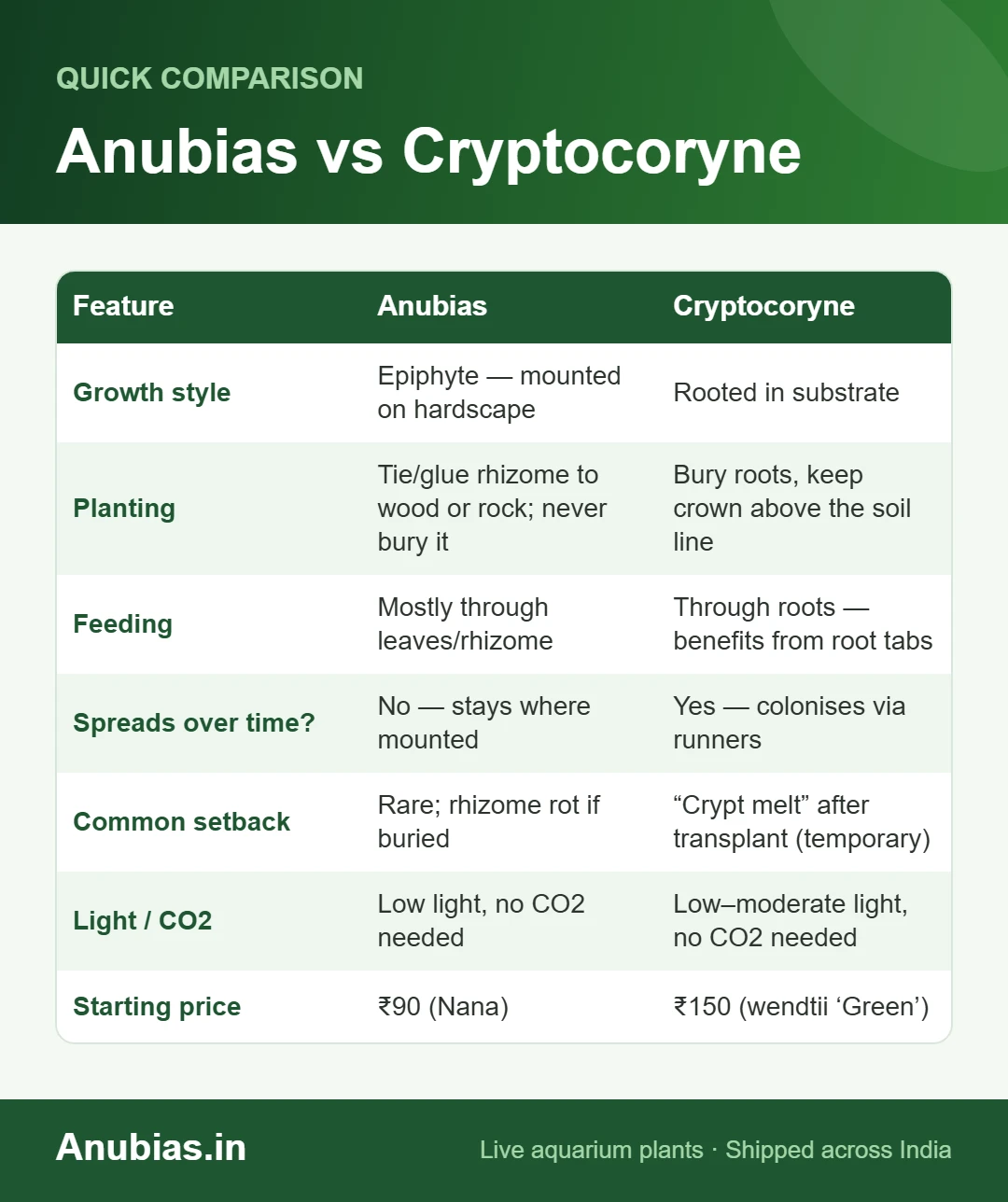
Two Different Growth Strategies
The easiest way to understand these two plants is to stop comparing their leaves and compare how they feed and anchor. Anubias is an epiphyte — in nature it grows attached to rocks and roots above the substrate, absorbing what it needs mostly through its leaves and rhizome rather than through soil. Cryptocoryne is a true rooted plant, feeding through roots buried in substrate the way a houseplant does. Everything else — planting method, propagation, even how each one “fails” — follows from that one distinction.
Anubias — Mount It and Leave It
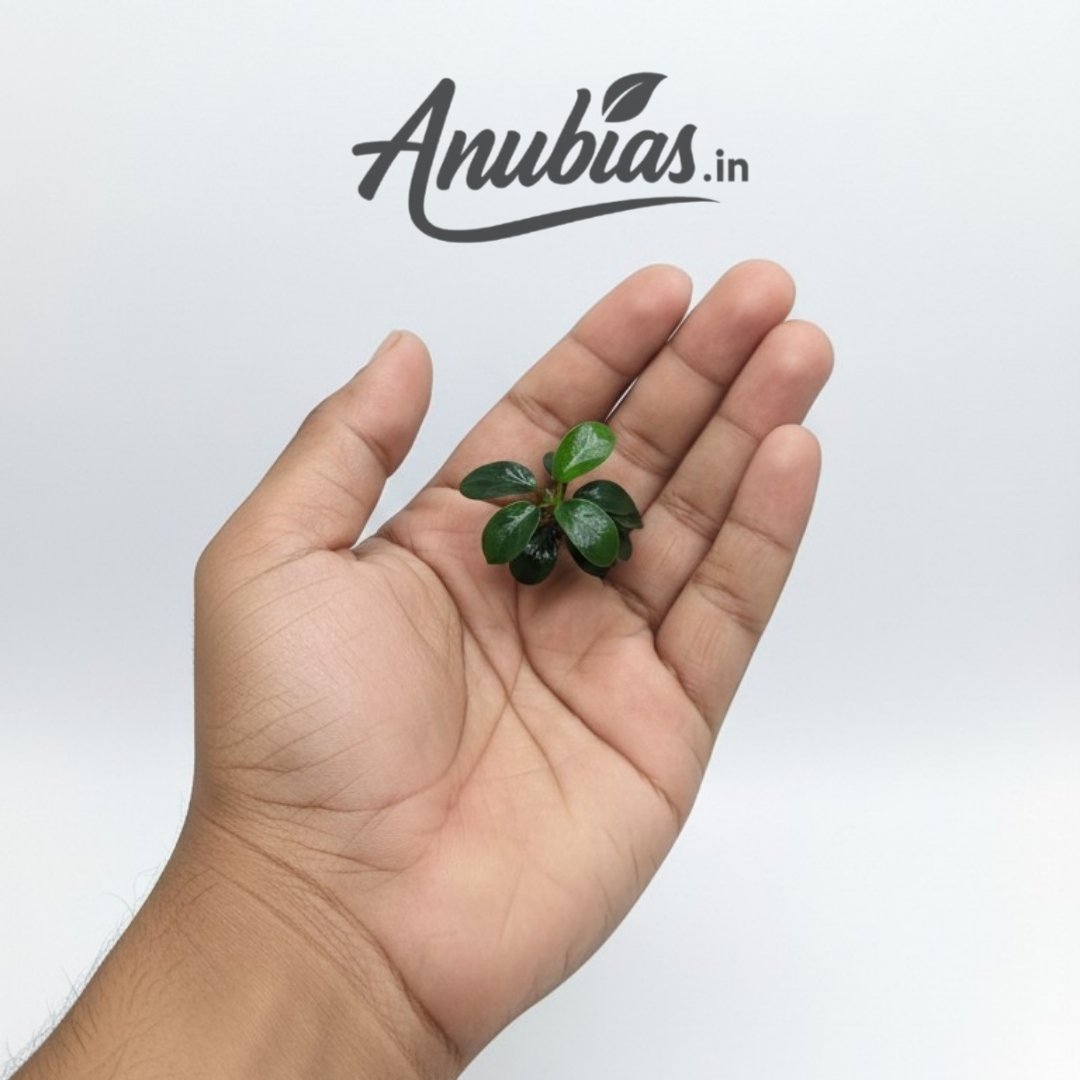
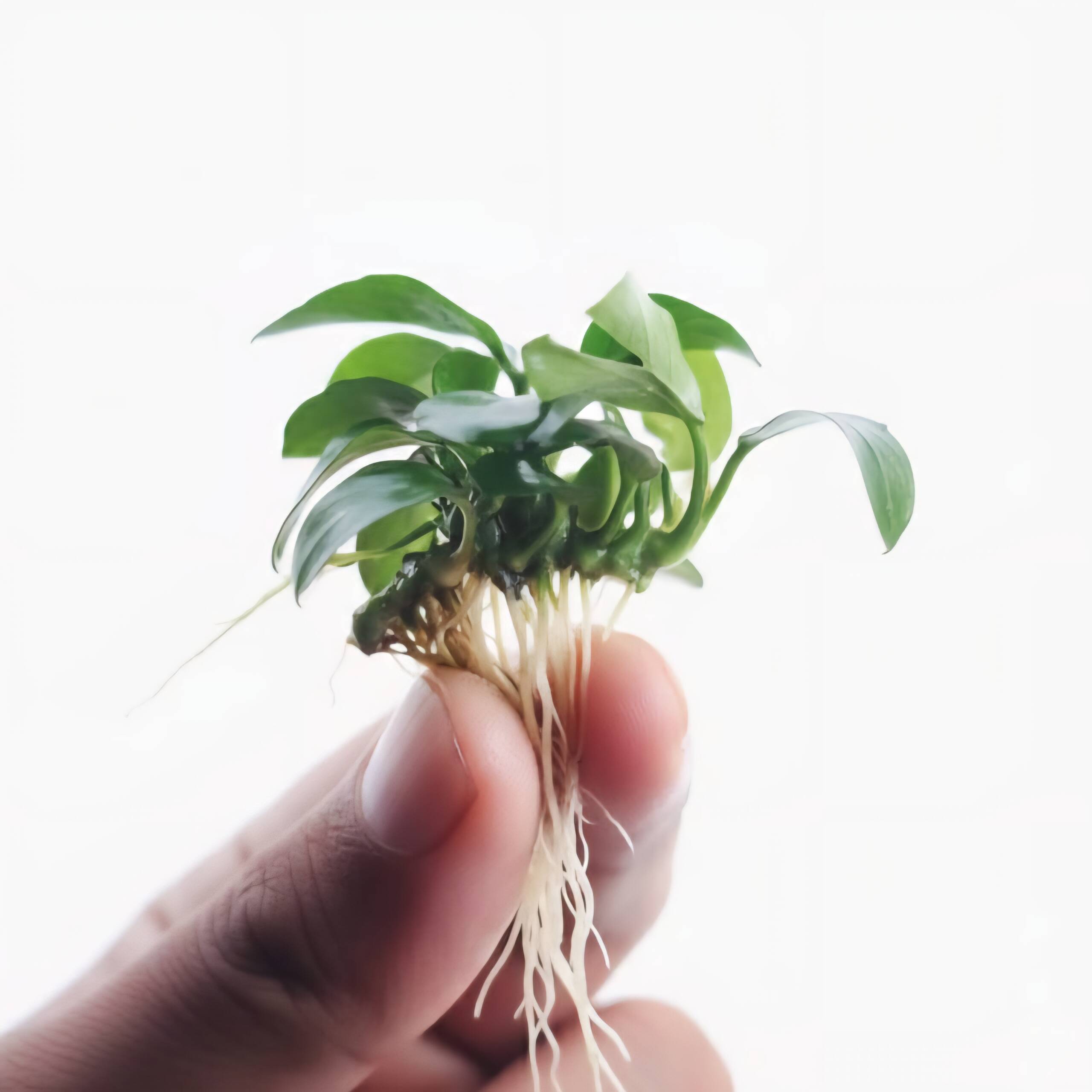
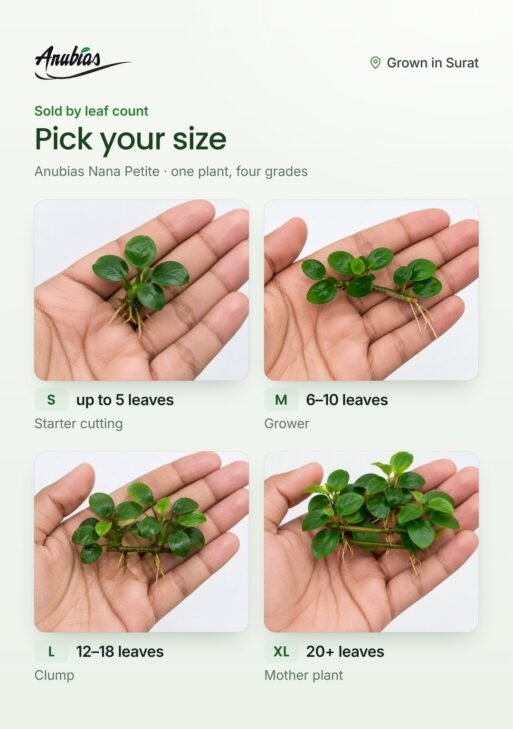
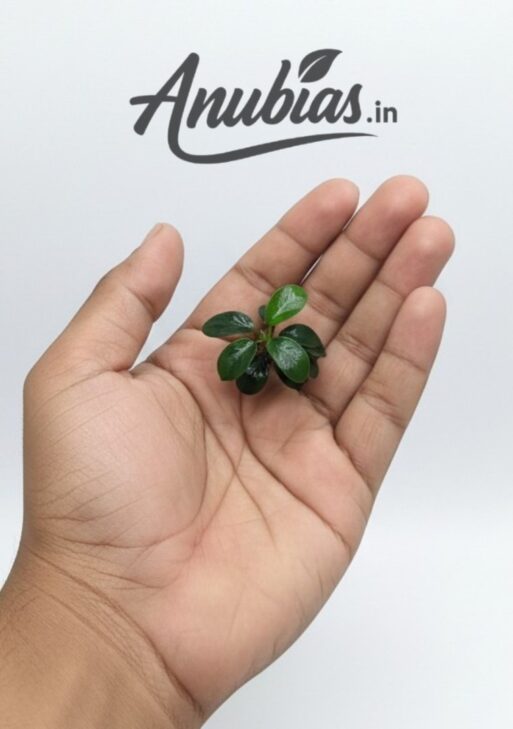
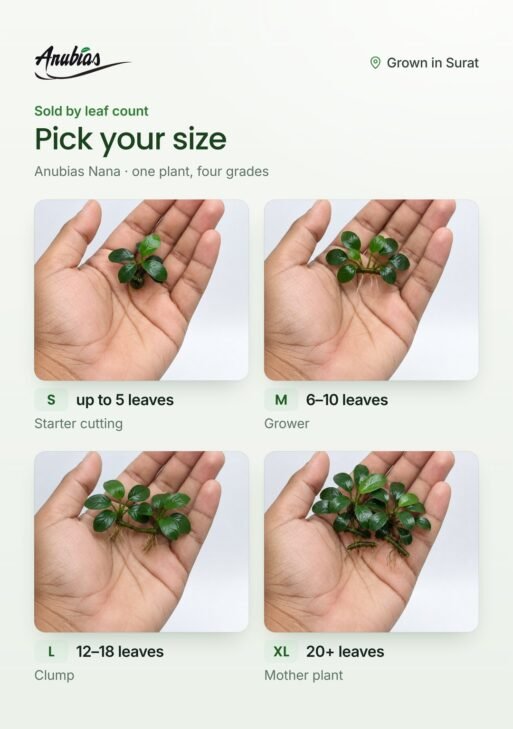
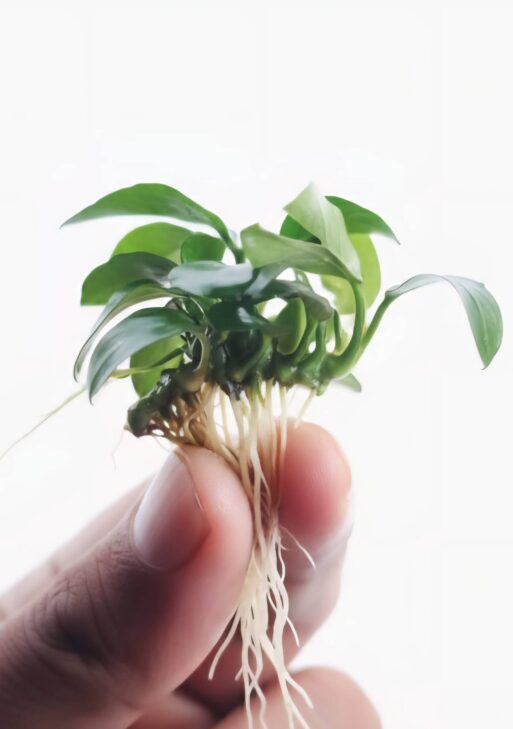
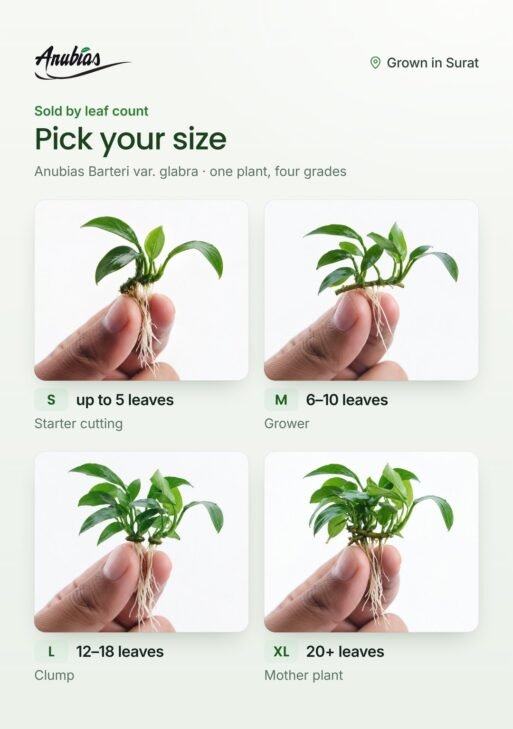
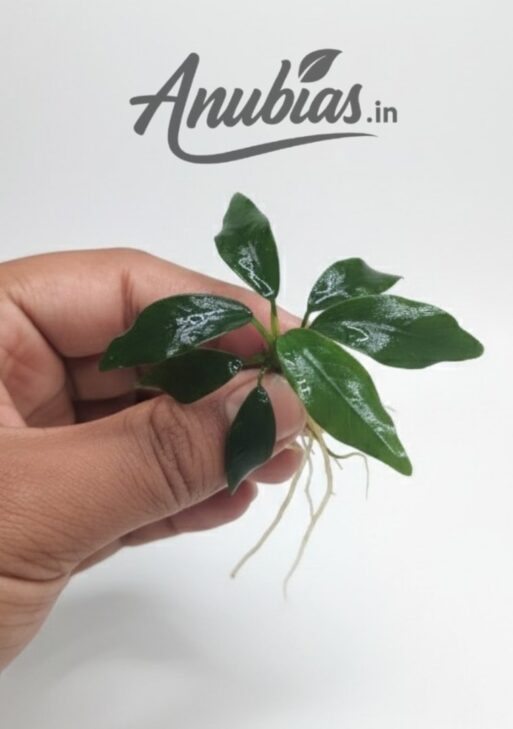
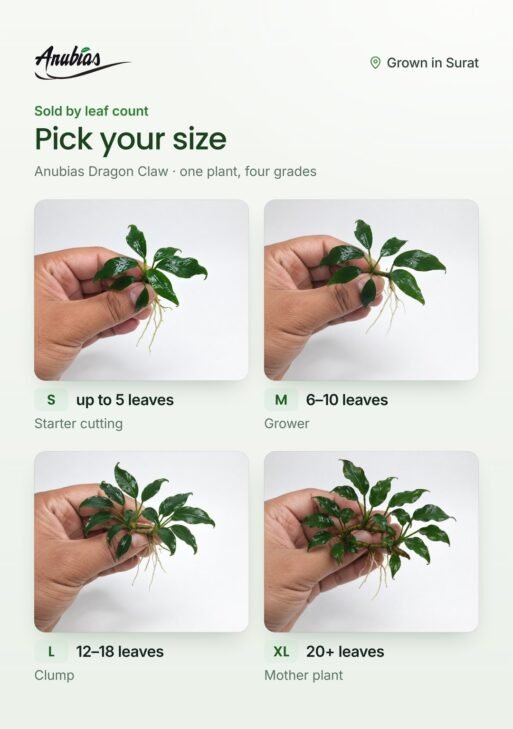
Anubias attaches to driftwood or rock with its rhizome — a thick horizontal stem that must stay above the substrate rather than buried in it, since a buried rhizome will rot. Once tied or glued in place, it stays exactly there: growth is slow (a handful of new leaves a year is normal) and the plant does not spread or colonise the tank on its own. That slowness is also its biggest strength — it tolerates deep shade, inconsistent dosing and beginner mistakes better than almost any other plant sold on anubias.in, and it comes in sizes from the tiny Nana Petite up to large specimen varieties, so scale is rarely a limitation. For full planting and propagation detail, see our Anubias care guide.
Cryptocoryne — Root It and Let It Spread
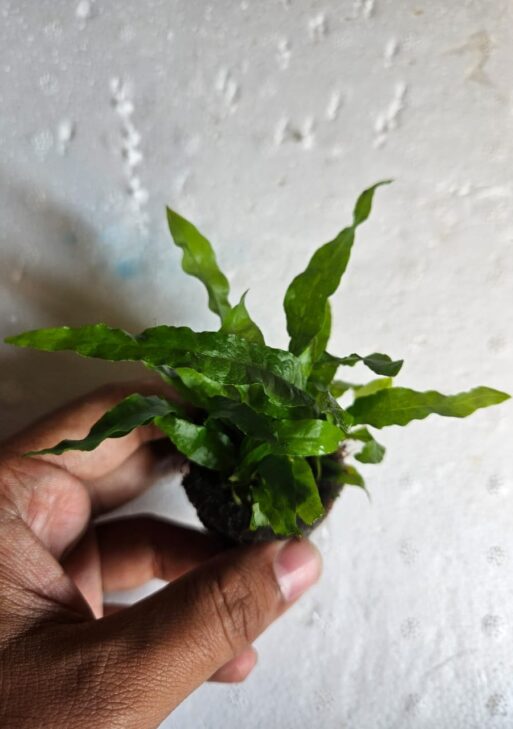
Cryptocoryne wendtii ‘Green’ is planted the opposite way: bury the roots in substrate while keeping the crown — the base of the leaves — sitting just above the soil line. Because it feeds through its roots, it benefits noticeably from a nutrient-rich substrate or root tabs in a way Anubias simply does not need. Left alone, a healthy crypt sends out runners that root down and throw up new plantlets, gradually turning one crown into a spreading colony that fills in a section of midground or background over months — something Anubias never does on its own. Cryptocoryne is also a huge genus, so if wendtii’s size does not suit your tank, our Cryptocoryne species guide covers smaller and larger alternatives.
The “Melt” Question
Ask anyone who has kept Cryptocoryne about “crypt melt” and you will get a knowing nod — leaves turning mushy and dissolving within days of planting or after a big change in water parameters. It looks alarming but is normal: the plant is shedding leaves it can’t maintain in new conditions, and healthy roots almost always push out fresh growth within a few weeks. Anubias essentially never does this. Because it is not rooted in substrate, it is untouched by the water-parameter shifts that trigger crypt melt, and the only thing that reliably damages it is a buried or physically injured rhizome. If you want a plant that will not go through a dieback phase after being moved or after a substrate change, Anubias is the safer bet; if you can tolerate a temporary melt in exchange for a plant that spreads on its own afterward, Cryptocoryne delivers that instead.
Comparison Table
| Anubias | Cryptocoryne | |
|---|---|---|
| Growth style | Epiphyte — mounted on hardscape | Rooted in substrate |
| Planting | Tie/glue rhizome to wood or rock; never bury it | Bury roots, keep crown above the soil line |
| Feeding | Mostly through leaves/rhizome | Through roots — benefits from root tabs |
| Spreads over time? | No — stays where mounted | Yes — colonises via runners |
| Common setback | Rare; rhizome rot if buried | “Crypt melt” after transplant (temporary) |
| Light / CO2 | Low light, no CO2 needed | Low–moderate light, no CO2 needed |
| Starting price | ₹90 (Nana) | ₹150 (wendtii ‘Green’) |
Cryptocoryne or Anubias: which should you choose?
Choose Anubias for a plant you mount on wood or rock and leave alone: it does not spread, and Anubias Nana starts at ₹90, grown in Surat. Choose Cryptocoryne for open substrate you want filled in over months: it roots, spreads by runners and costs ₹150–₹170, imported to order in about 15 days. Many low-tech tanks run both.
If you want a plant to decorate a specific piece of wood or rock and stay exactly there indefinitely with almost no maintenance, Anubias is the better fit — it is the lower-effort option and the more forgiving of the two if you tend to forget dosing schedules. If you have open substrate in the midground or background that you want to fill in naturally over time, and you don’t mind a short melt phase while it settles in, Cryptocoryne is the one built for that job, since it spreads on its own where Anubias will not. Many low-tech Indian tanks run both side by side — Anubias mounted on the hardscape, Cryptocoryne carpeting the substrate around it — since they occupy different physical space and place no competing demands on light or CO2. If you are also weighing a third rhizome option, our Anubias vs Bucephalandra comparison covers how that plant stacks up against Anubias as well.
More Cryptocoryne guides:
Frequently Asked Questions
Can I attach Cryptocoryne to driftwood instead of planting it, the way Anubias is mounted? It is not recommended. Cryptocoryne feeds through its roots and grows poorly without substrate contact, so it should be planted in soil or gravel rather than tied to hardscape.
Is crypt melt a sign that my Cryptocoryne is dying? Usually not. As long as the roots are undisturbed, most crypts push out new, better-adapted leaves within two to four weeks of a melt. Trim the mushy leaves and leave the roots in place rather than removing the plant.
Which one is better for a low-light tank with no fertiliser dosing? Anubias tolerates neglect better, since it survives on very little and does not depend on substrate nutrients. Cryptocoryne will still grow in low light but colours and fills in faster with at least occasional root tabs.
If the crypt column won you over, see every Cryptocoryne we stock for the species and forms currently available.
Choosing a crypt? Compare Crypt wendtii Green vs Red.
Filling the middle of your aquascape? See the best midground aquarium plants.
Comparing another hardscape plant? See Java fern vs Anubias.
Grown in Surat (pre-order plants imported to order) · live-arrival guarantee with a 4-hour unboxing video · ₹99 shipping, free from ₹999