
Anubias and Bucephalandra are often mentioned together — both are hardy epiphytes that attach to hardscape and thrive in low light without CO₂. So what’s the difference, and which should you buy?
Quick answer: Care is nearly identical: both are epiphytes tied to wood or rock with the rhizome unburied, needing low-to-moderate light and no CO2. Anubias has broad, glossy leaves, more sizes and lower prices, and rarely melts. Bucephalandra has smaller leaves with a metallic sheen, costs more and often sheds leaves (“buce melt”) after moving. Pick by tank size and budget.
Care: almost identical
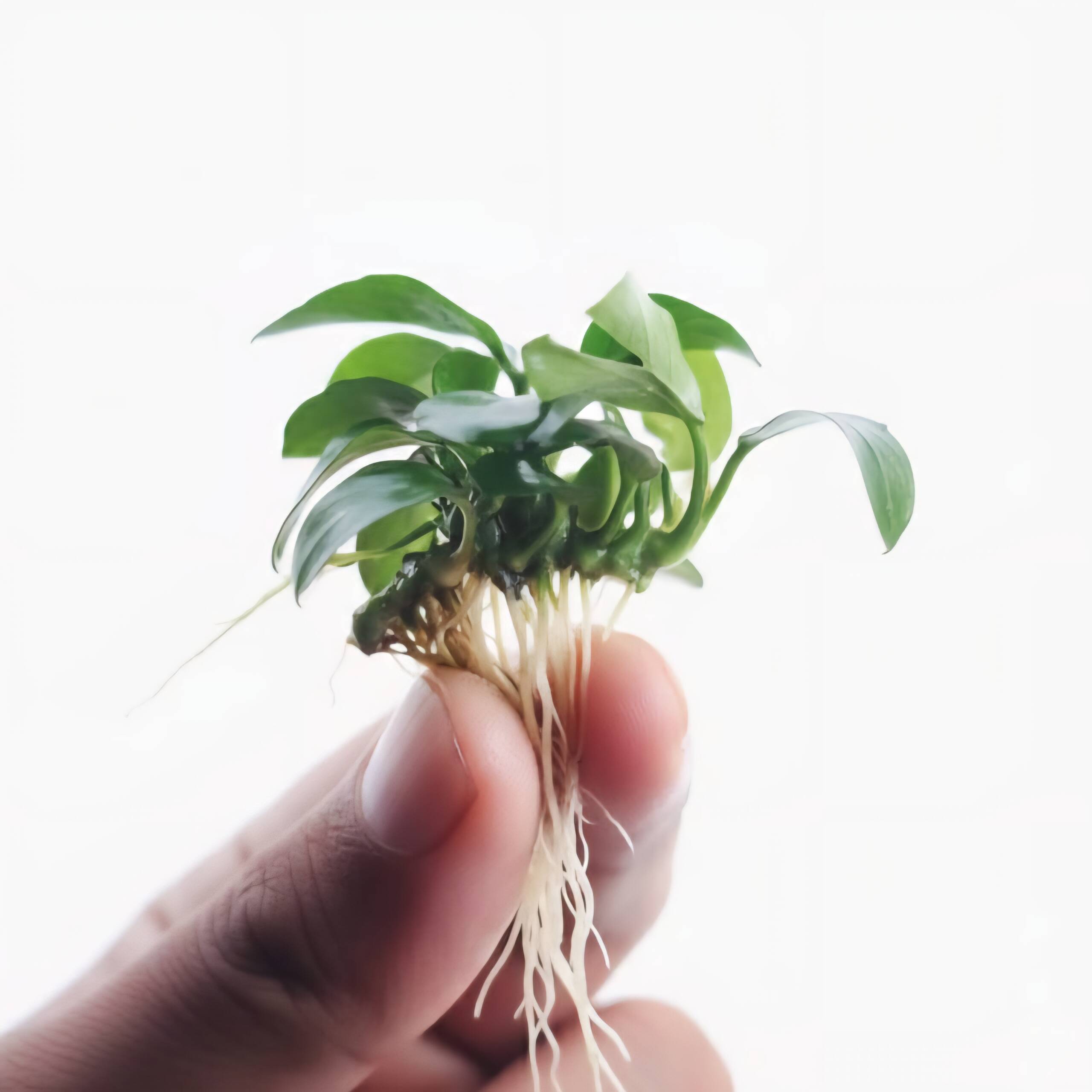
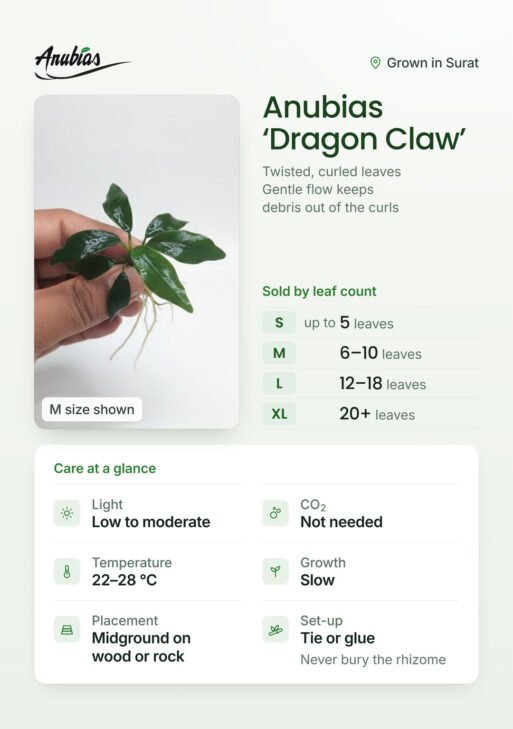
Both attach to wood or rock (never bury the rhizome), need only low-to-moderate light, and require no CO₂. If you can grow one, you can grow the other.
Appearance
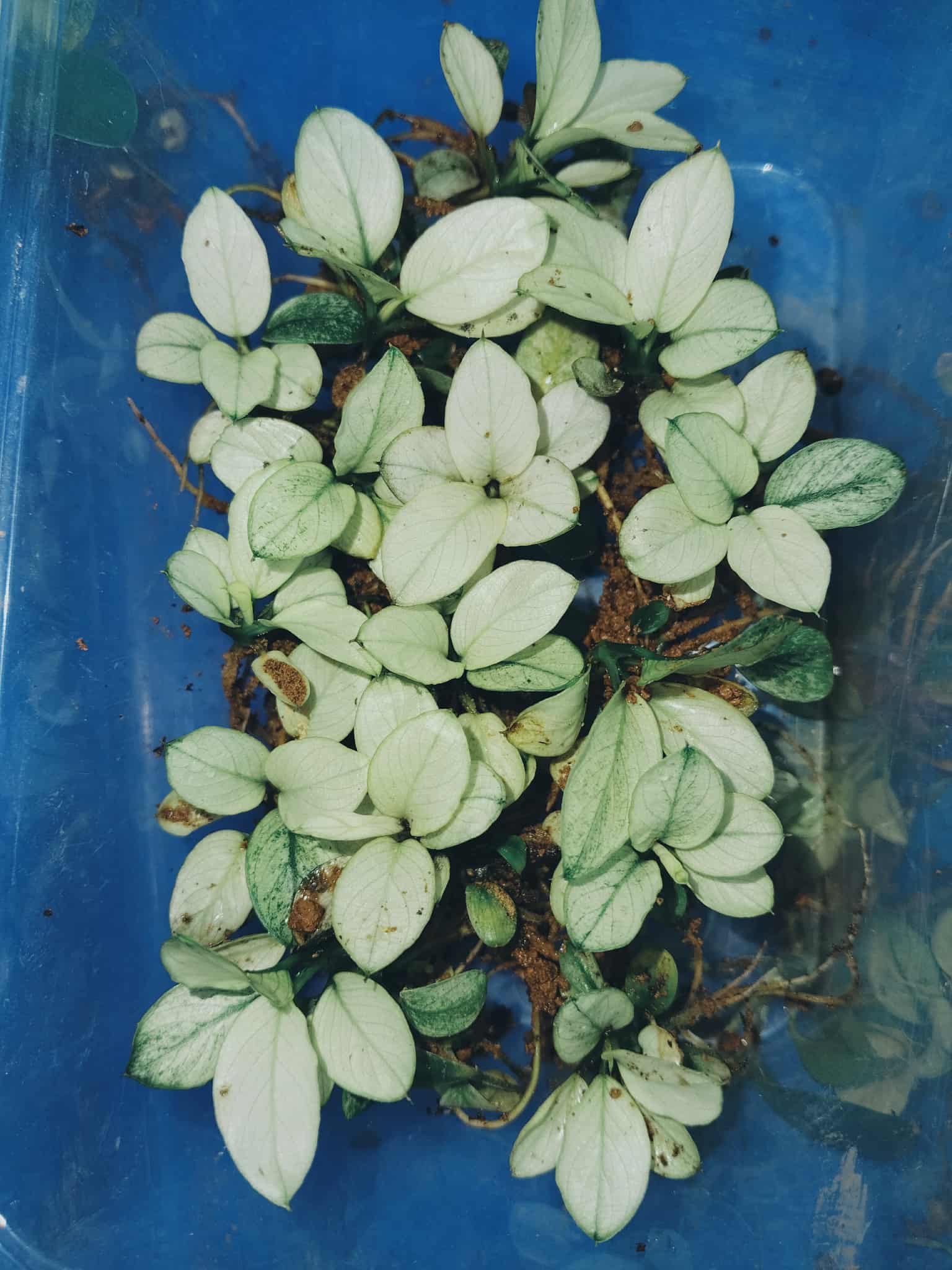
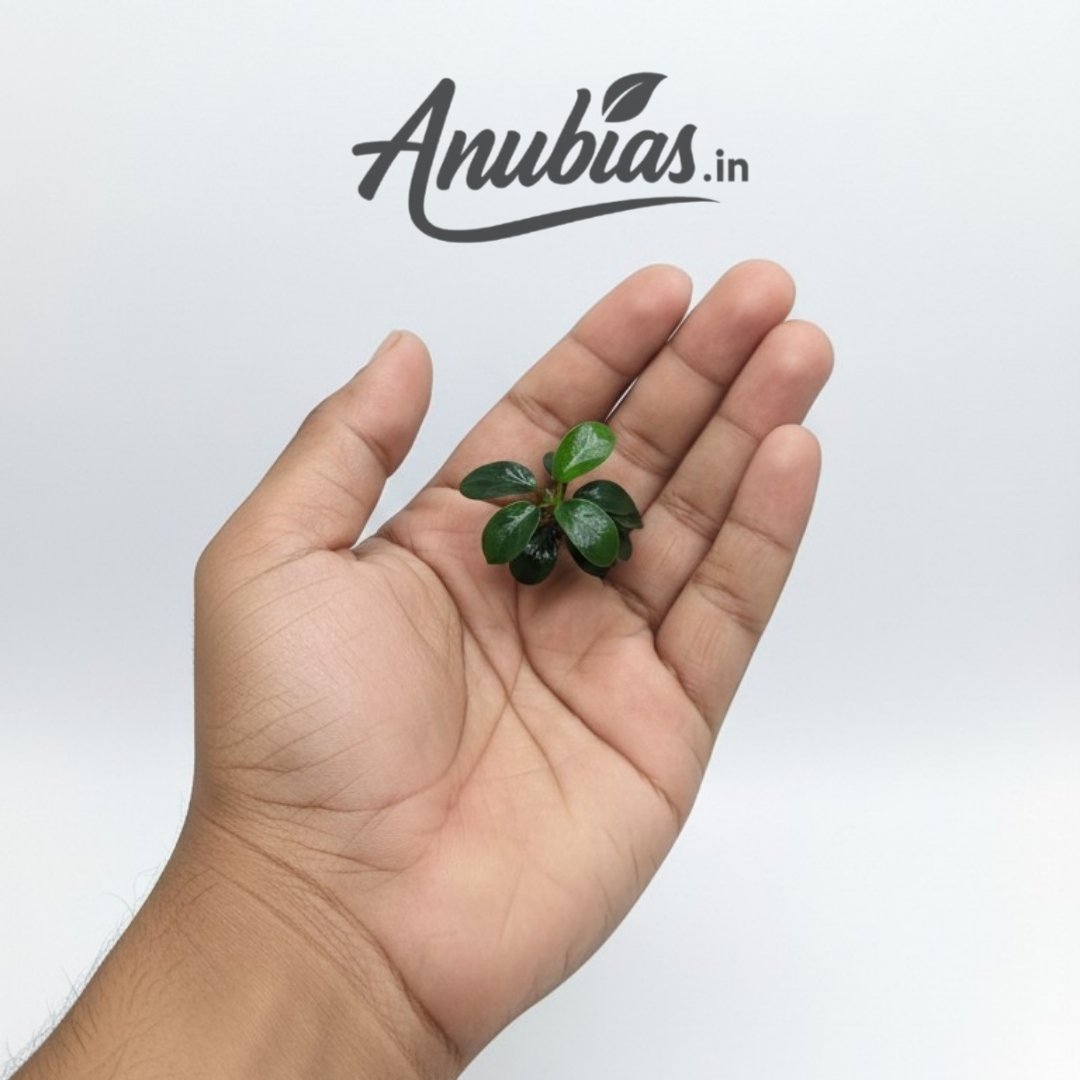
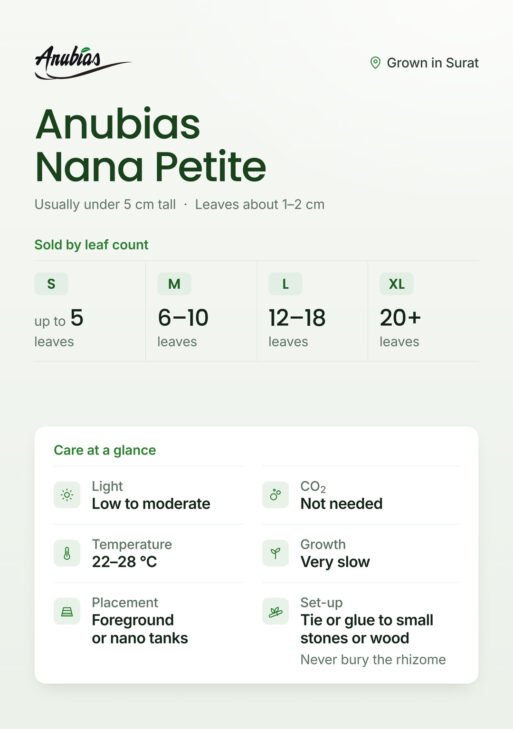
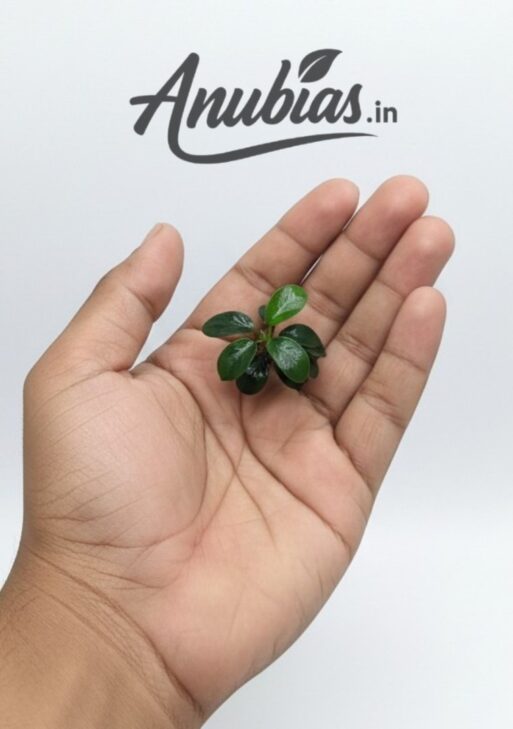
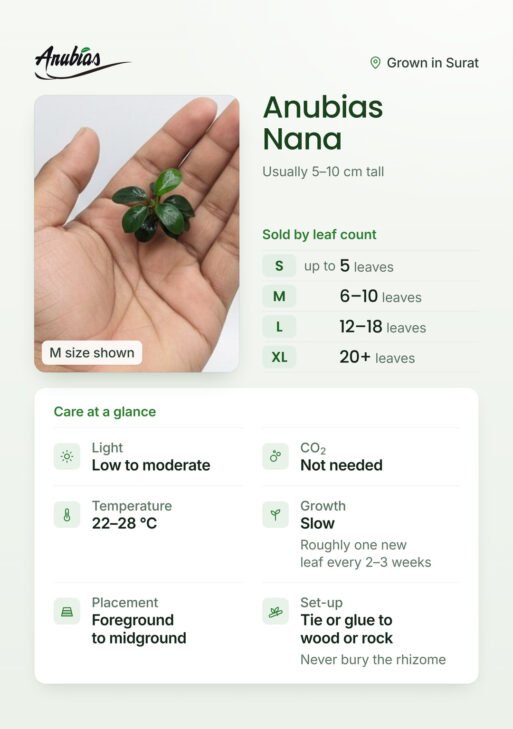
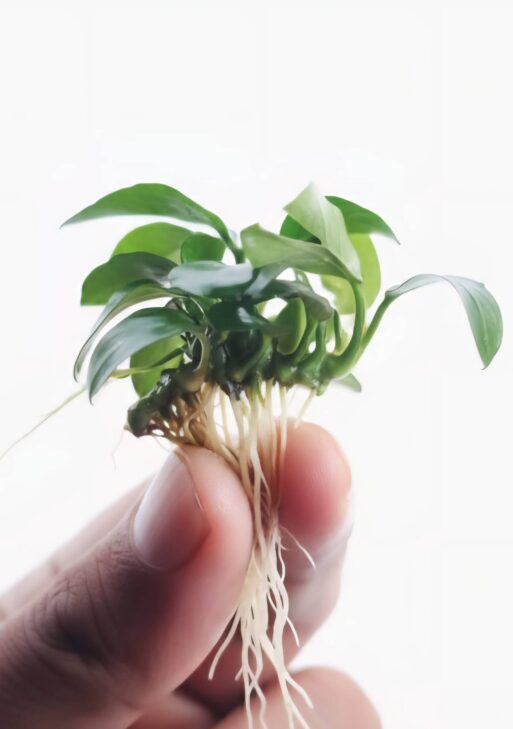
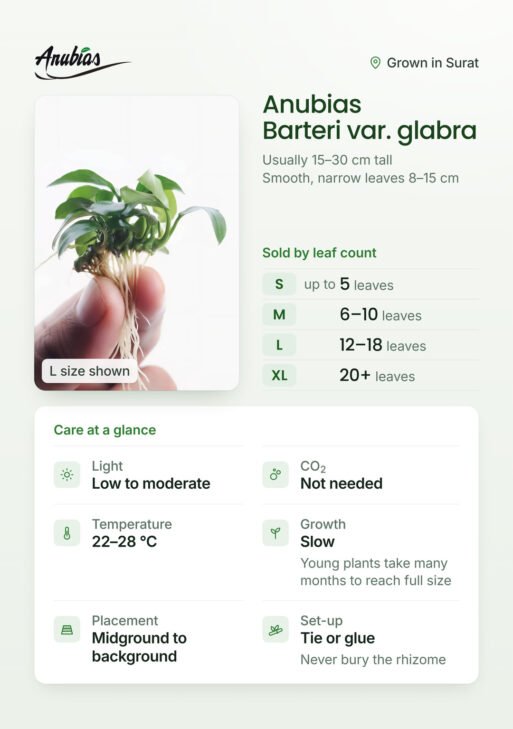
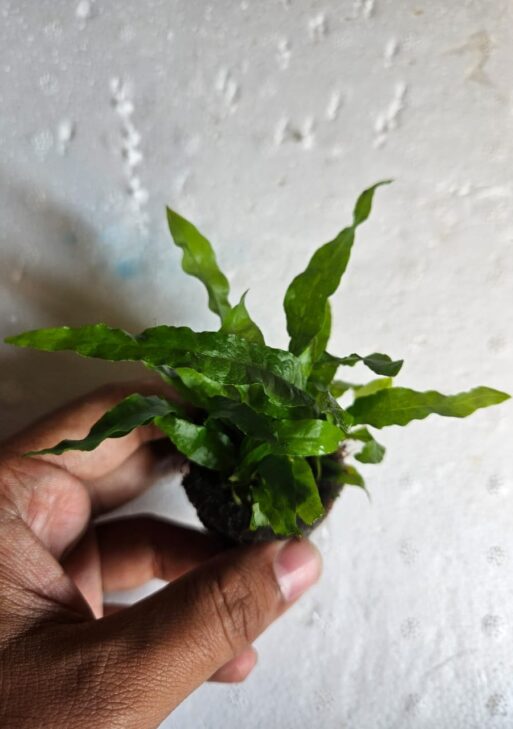
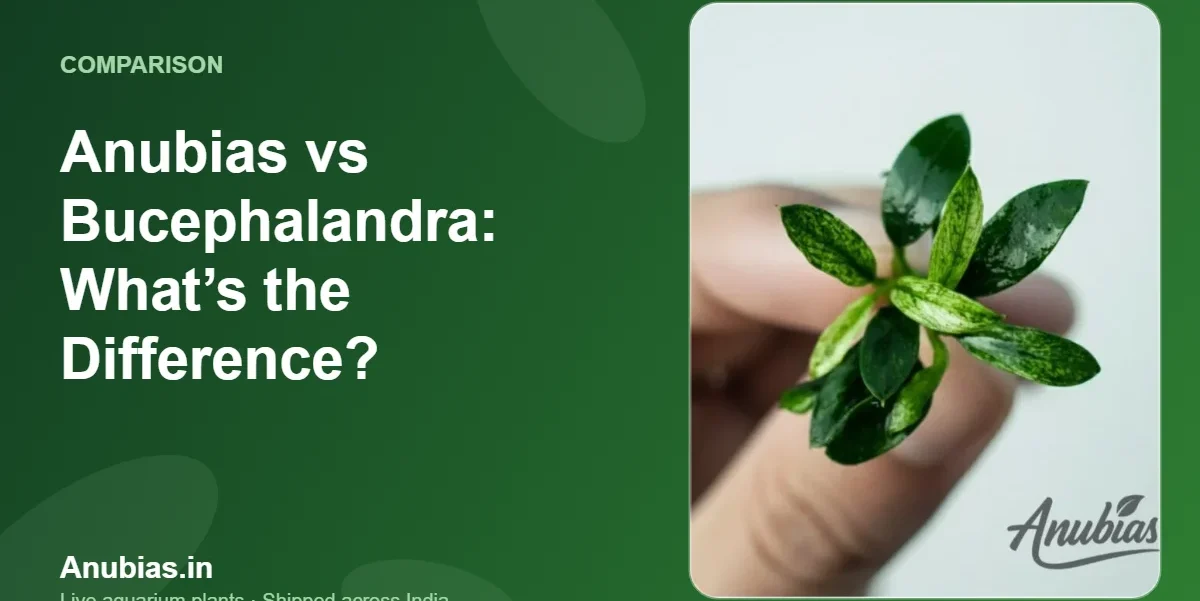
Anubias has broad, glossy, rounded leaves and ranges from tiny (Nana Petite) to large (Barteri). Bucephalandra has smaller, narrower leaves, often with a metallic blue-green sheen and fine spots — a more “jewel-like” look for nano scapes.
Melt
Bucephalandra commonly drops a few leaves after being moved (“buce melt”) before adapting; Anubias rarely melts unless its rhizome is buried or damaged. See Bucephalandra melting for what to expect after planting.
Price
Bucephalandra is usually pricier, as it grows slowly and many varieties are collector items. Anubias offers more size and budget options — compare all 16 Anubias plant types in our guide.
On Anubias.in, Anubias starts at ₹90, and graded varieties such as Anubias Nana run from ₹90 (S, up to 5 leaves) to ₹250 (XL, 20+ leaves). Our Bucephalandra plants cost ₹299–₹649 and are currently on pre-order: they are imported to order and take about 15 days.
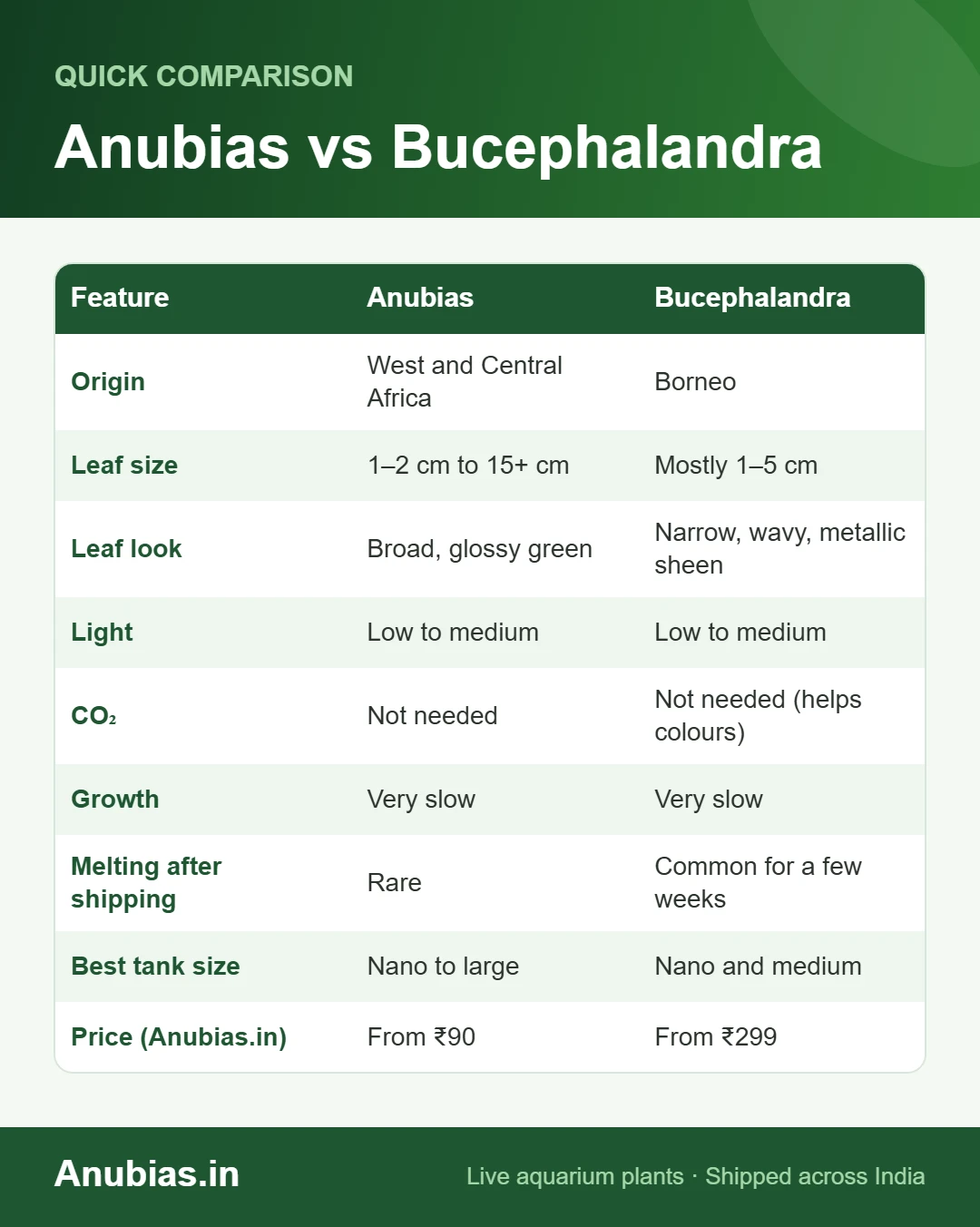
Anubias vs Bucephalandra: comparison table
| Feature | Anubias | Bucephalandra |
|---|---|---|
| Origin | West and Central Africa | Borneo |
| Leaf size | 1–2 cm (Nana Petite) to about 15 cm (Barteri) | Mostly 1–5 cm |
| Leaf look | Broad, glossy green; some variegated forms | Narrow, often wavy, with blue, purple or metallic sheen and spots |
| Light | Low to medium | Low to medium |
| CO₂ | Not needed | Not needed (helps colours) |
| Growth | Very slow | Very slow |
| Melting after shipping | Rare | Common for a few weeks (“buce melt”) |
| Best tank size | Nano to large tanks | Nano and medium tanks, close-up detail |
| Price in India (Anubias.in) | From ₹90 | ₹299–₹649 (pre-order, imported to order in about 15 days) |
Is Bucephalandra harder to grow than Anubias?
No, but it is less forgiving right after purchase. Once settled, Bucephalandra needs the same low light, stable temperature (22–28 °C) and attached rhizome as Anubias. The difference is the first month: Buce often sheds leaves as it adjusts to new water, while Anubias usually just stops growing for a while. Keep parameters stable, avoid moving the plant, and new leaves appear from the rhizome within a few weeks.
Which is better for nano tanks and shrimp tanks?
For nano tanks under 40 litres, Bucephalandra and Anubias Nana Petite are the two best epiphytes because they keep a small scale. Buce gives more colour variety; Petite gives denser green cover at a lower price. Both are safe for shrimp and bettas, and their slow growth means very little trimming in small tanks.
How to use Anubias and Bucephalandra together
- Use Anubias Nana or Barteri on larger wood for bulk and structure.
- Tuck Bucephalandra into rock crevices and wood joints where its colour can be seen up close.
- Keep both slightly shaded under taller plants or floating plants to reduce algae on slow-growing leaves.
- Glue or tie both by the rhizome and never bury it.
More Bucephalandra guides:
Bucephalandra or Anubias: which should you choose?
Choose Anubias if you want value, more sizes and a plant that rarely melts: Anubias Nana starts at ₹90 and is grown in Surat. Choose Bucephalandra for small, colourful leaves in nano aquascapes; ours cost ₹299–₹649 and are imported to order, taking about 15 days. Many aquascapes use both.
For a deeper dive into either plant, see our full Anubias care guide or Bucephalandra care guide.
Frequently asked questions
Why is Bucephalandra more expensive than Anubias?
Buce grows very slowly, many varieties are collector cultivars, and most stock is tissue-culture or imported, so supply is smaller. Common Anubias varieties are produced in much larger numbers.
Can Anubias and Bucephalandra grow out of water?
Yes, both grow emersed in humid paludariums and terrariums, which is how many nurseries grow them. Leaves may change shape or melt slightly when moved between emersed and submerged conditions. Both also suit a wabi-kusa setup, a damp mound of substrate kept in a shallow dish of water.
Do they need fertiliser?
Neither needs heavy dosing. A light weekly liquid fertiliser helps if leaves turn pale or growth stops completely.
Is Bucephalandra a type of Anubias?
No. Bucephalandra is a separate genus, not a type of Anubias. Both belong to the same aroid family, Araceae, and both grow from a creeping rhizome with similar care needs, but Bucephalandra comes from Borneo and Anubias from West and Central Africa.
Comparing prices? See the Bucephalandra price guide for India.
Deciding between them? Compare Bucephalandra vs Java fern.
Grown in Surat (pre-order plants imported to order) · live-arrival guarantee with a 4-hour unboxing video · ₹99 shipping, free from ₹999