

Quick answer: A wabi-kusa is a mound or ball of moist substrate sitting in a shallow dish of water, with the plants growing in air rather than underwater. Anubias and Bucephalandra suit it well because their rhizomes sit on the surface and never get buried. The whole thing lives or dies on humidity, so plan a cover, steady misting and bright indirect light before you buy anything.
What a wabi-kusa actually is
A wabi-kusa is a free-standing mound of moist growing medium, usually shaped into a rough ball, placed in a shallow bowl or tray with a centimetre or two of water at the base. The medium wicks that water upwards, and the plants grow emersed, in air, with their roots damp and their leaves dry. There is no filter, no fish and usually no circulation at all.
The appeal is that it looks like a piece of riverbank you carried indoors, and it costs far less to run than a planted tank. The trade-off is that a wabi-kusa is an open, low-volume system, so it dries out quickly and needs attention every day or two rather than every week.
Wabi-kusa, paludarium and riparium: the difference
A paludarium is an enclosed tank split between land and water, usually with a proper water section deep enough for fish or shrimp, a background planted with epiphytes, and often a small pump. It is a permanent build with glass on all sides and a lid.
A riparium keeps the tank mostly full of water and suspends planters near the surface, so marsh plants push their leaves out into the room while their roots stay submerged. It is essentially a planted tank with the top half growing in air.
A wabi-kusa is the smallest and simplest of the three: a mound, a dish, a little water, no equipment. It is the right starting point if you want emersed growth in a flat without committing to a tank, and it is the only one of the three you can move to a different room in one hand.
The best plants for emersed life
Stick to plants that already grow out of water in nature. Nurseries across the world raise Anubias, Bucephalandra and Cryptocoryne emersed as standard, which is why these species take to a wabi-kusa so readily.
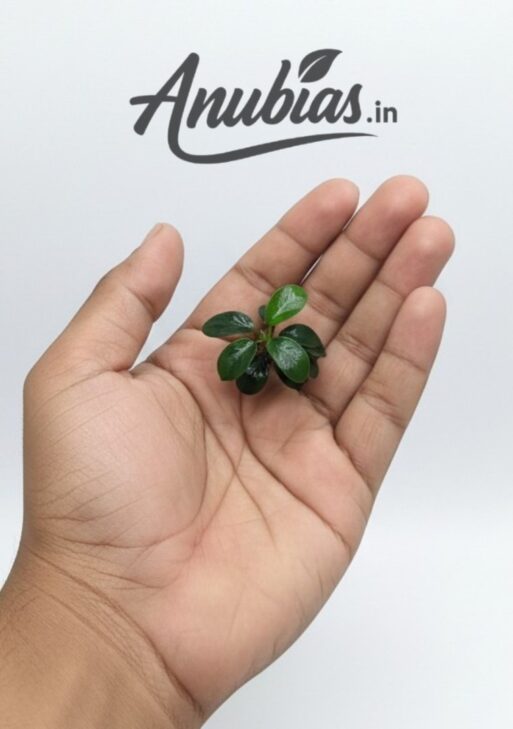
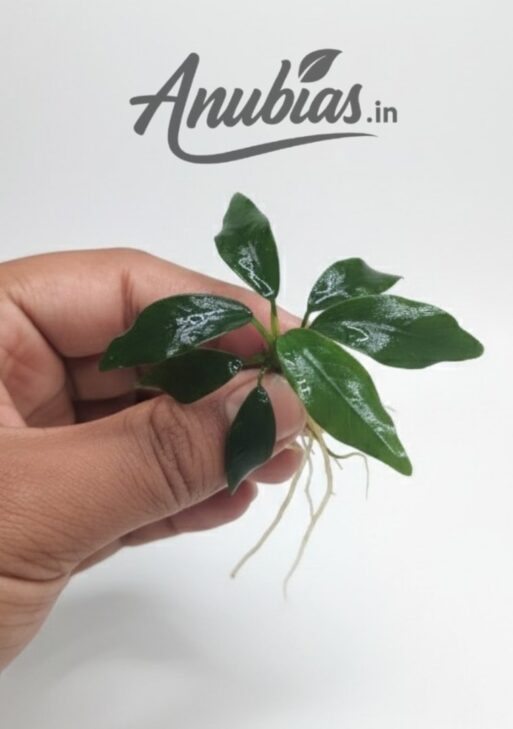
- Anubias is the backbone. Anubias Nana Petite and Anubias Nana (both ₹90) are the right scale for a small mound, Anubias Barteri var glabra (₹90) and Anubias Coffeefolia (₹250) give you taller, heavier-textured leaves for the back of a larger one.
- Bucephalandra gives colour and fine detail at the front. Bucephalandra ‘Wavy Green’ (₹299), ‘Brownie Ghost’ (₹350) and ‘Kedagang’ (₹399) all grow emersed happily and often colour up better in air than underwater.
- Mosses hold the surface together and keep it damp. Java Moss (₹120), Christmas Moss (₹150) and Flame Moss (₹150) all work; Java Moss is the most forgiving if your misting is irregular.
- Hydrocotyle is the creeper that softens the edges. Hydrocotyle Tripartita ‘Japan’ (₹170) runs across the mound and spills over the rim, and Brazilian Pennywort (₹80) does the same on a larger scale.
- Cryptocorynes add bulk and a different leaf shape. Cryptocoryne wendtii ‘Green’ (₹150) and the red form (₹170) are sold emersed-grown and settle in without the melt they show when submerged.
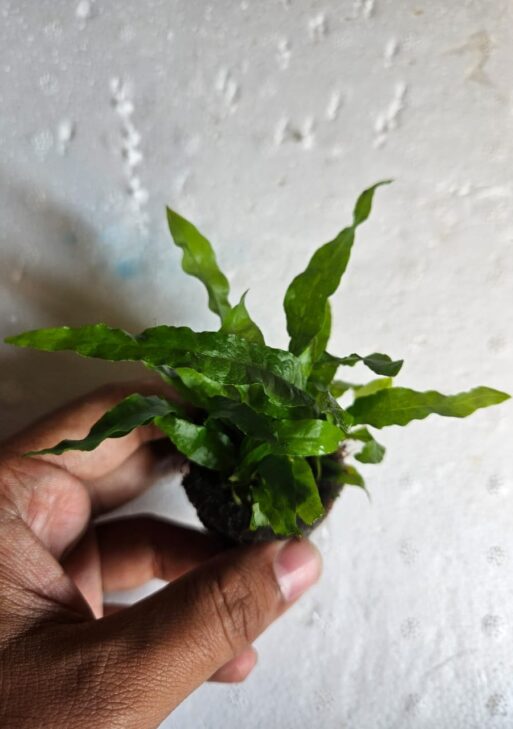
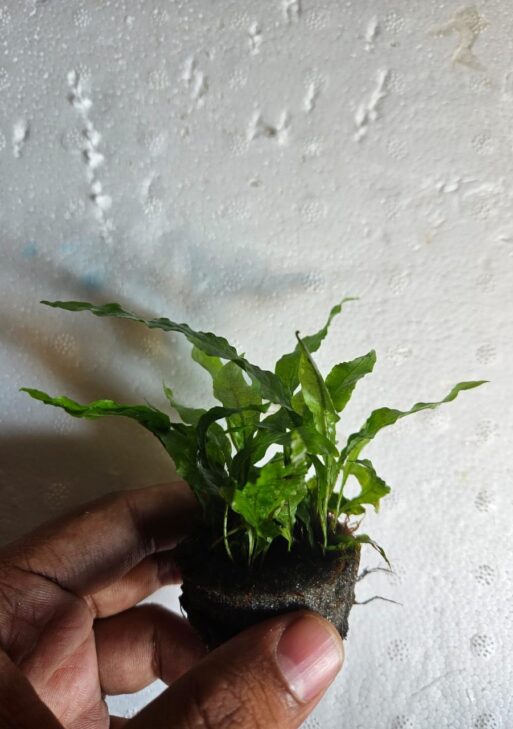
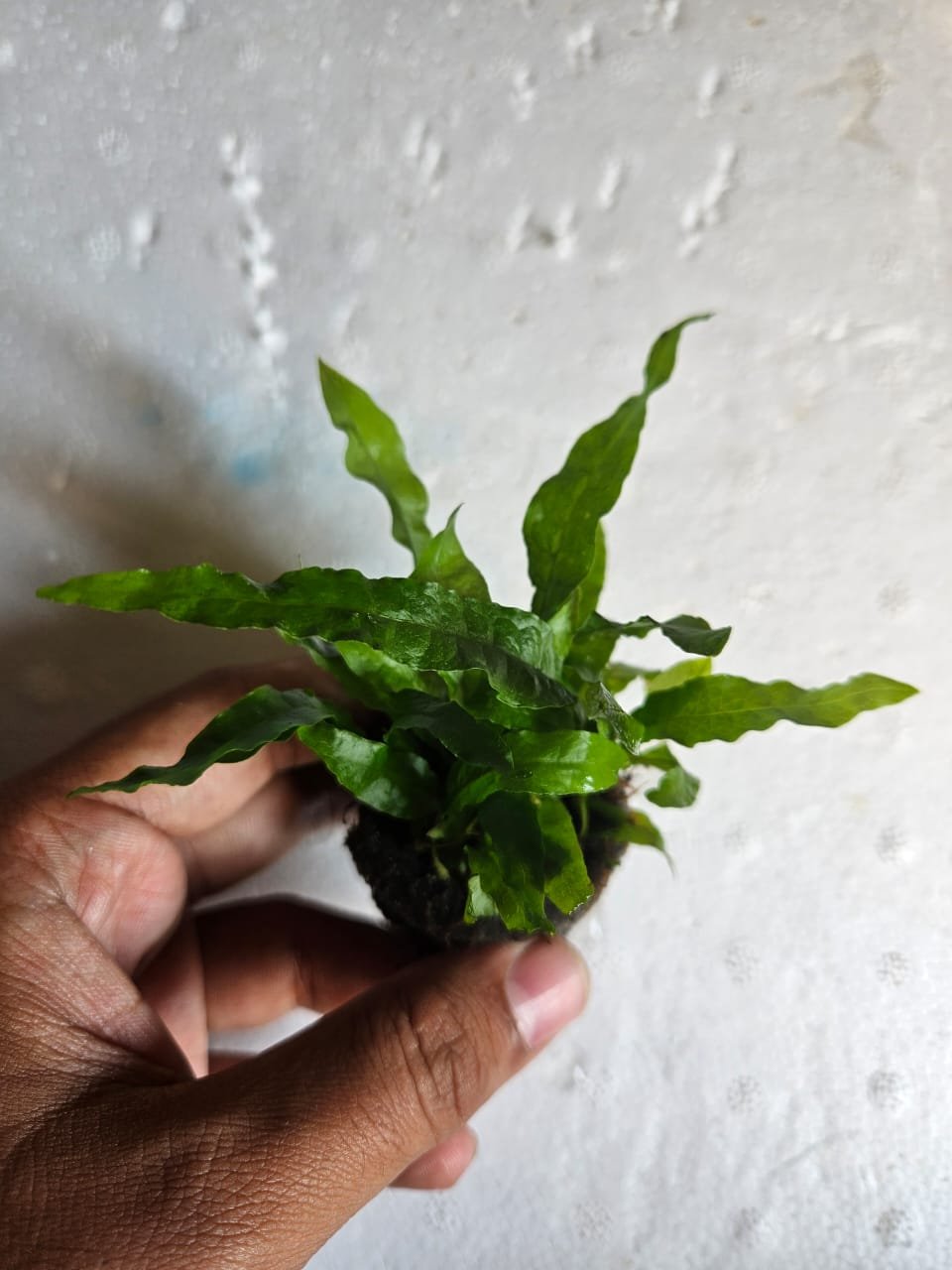
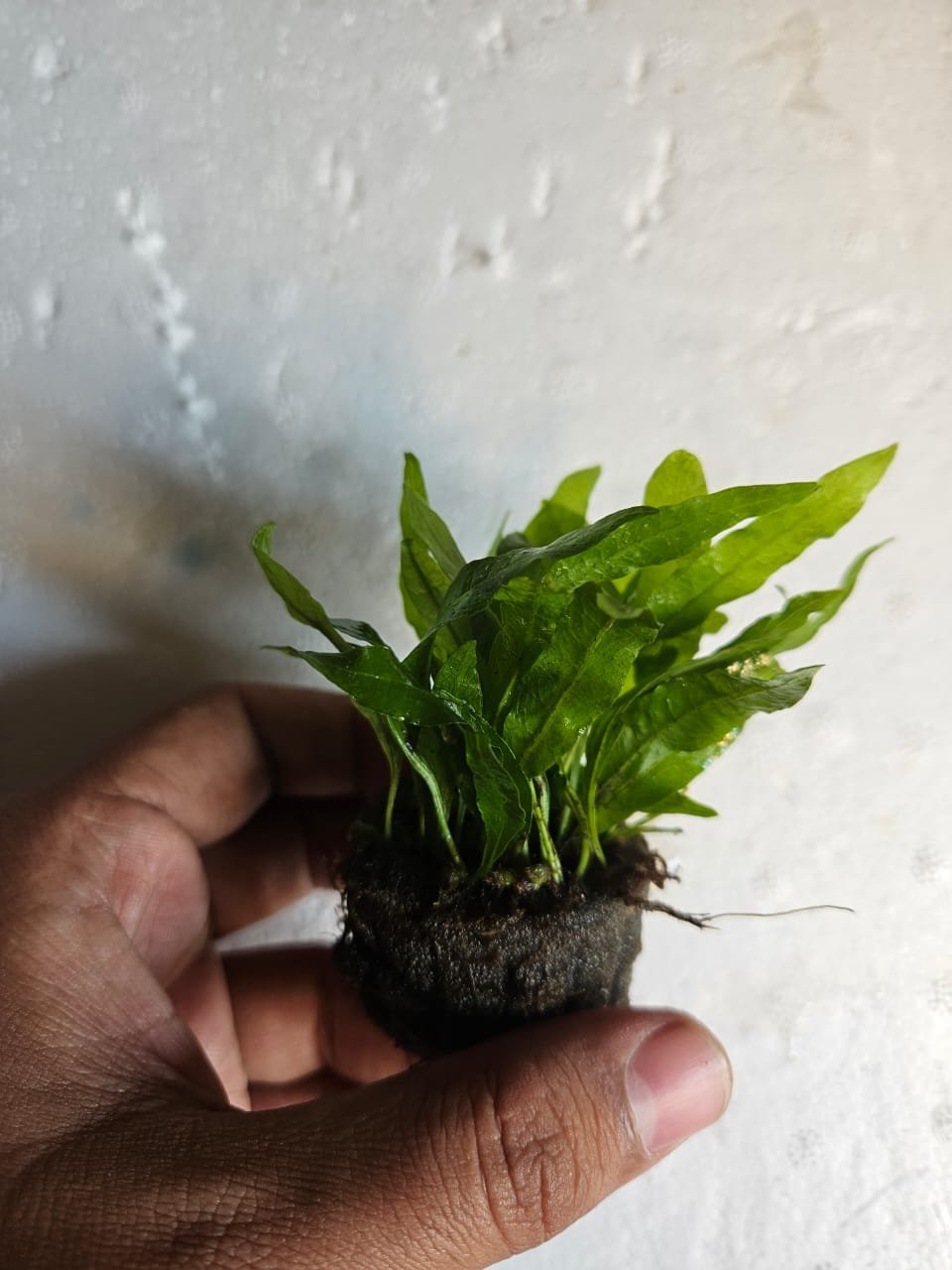
Java Fern (₹175) is worth adding if you want height. Avoid stem plants sold for underwater use, such as Rotala or Ludwigia: they can be converted, but they need far more consistent humidity than a beginner’s first bowl provides.
Building the ball or mound
Work in this order and the whole build takes about an hour.
- Core. Take a fist-sized ball of soaked coco peat, aquasoil or a mix of both, squeezed firm enough to hold its shape. Some people wrap a small piece of lava rock or a cut sponge at the centre to hold water; both work.
- Soil layer. Press a thin outer coat of aquasoil or a nutrient-rich aroid mix over the core. This is what your Cryptocorynes and Hydrocotyle will root into.
- Moss wrap. Cover the whole mound in damp sphagnum moss or a sheet of live moss. Sphagnum is the more reliable choice because it holds moisture without turning airless.
- Binding. Wind cotton thread or fishing line around the ball in criss-crossing passes until nothing shifts when you lift it. Cotton rots away in a couple of months, by which time roots hold the shape.
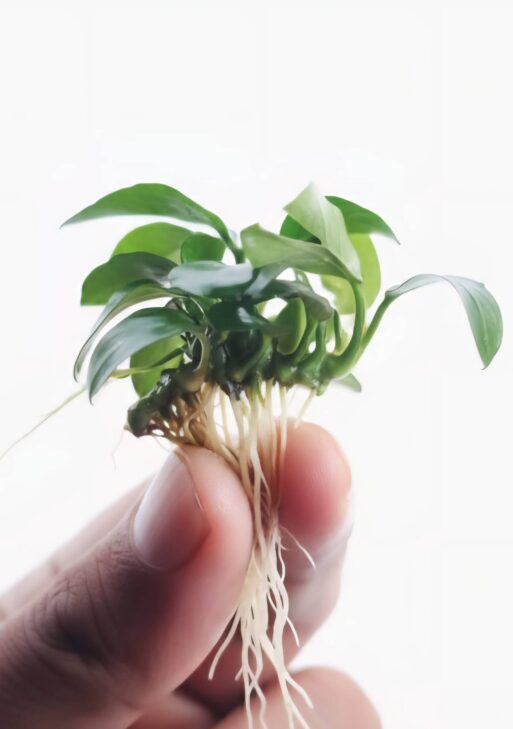
- Planting. Push the roots of your Anubias and Bucephalandra into the moss layer and tie the rhizome down on the surface. The rhizome — the thick horizontal stem the leaves rise from — is never buried, on a wabi-kusa or anywhere else. Buried rhizomes rot.
Sit the finished mound in a shallow dish with 1–2 cm of dechlorinated water. Top that water up as it evaporates rather than letting the dish run dry.
Humidity is everything
Emersed Anubias wants humidity around 70% or higher. Room air in most Indian flats is nowhere near that for much of the year, so a cover is not optional for the first six to eight weeks while the plants convert.
A cut plastic bottle, a glass cloche, an upturned jar or cling film over a bowl all work. Keep it fully closed for the first two weeks, then open it a finger’s width for an hour a day, widening the gap over the following month. Mist once or twice daily with dechlorinated water while the cover is on, more often once it comes off.
Indian seasons change the job considerably. Summer runs roughly 28–32 °C, which Anubias and Bucephalandra tolerate at the top end of their 22–28 °C comfort range, but the dry north-western air in Gujarat, Rajasthan and Delhi strips moisture fast — keep the cover on and mist morning and evening. Monsoon is the easy season: humidity is naturally high, so open the cover wider and watch for mould instead. Winter in the north is dry again and indoor heating makes it worse, so go back to a mostly closed cover.
Light and placement in a flat
Bright indirect light is the target. A north or east-facing window a foot or two back from the glass is ideal; direct afternoon sun through Indian glass will cook a closed container within an hour and scorch the leaves.
If no window suits, a desk lamp with a 6500K LED bulb at 25–30 cm for eight hours a day is enough for Anubias and Bucephalandra, both of which are low-to-moderate light plants. A small clip-on grow light does the same job more tidily. Do not over-light: these are slow growers, and surplus light on a damp mound simply grows algae and cyanobacteria.
How emersed leaves change
Plants bought from a submerged tank will drop some older leaves as they convert. Expect yellowing over the first few weeks; that is the plant retiring leaves it grew for water. Bucephalandra does this more visibly than Anubias, and the same process runs in reverse when buce goes into a tank, which is what hobbyists call buce melt.
The new emersed leaves come in smaller, thicker and often darker or more strongly coloured, with a waxier surface. As long as the rhizome stays firm and green, the plant is fine. The first new leaf is your signal that the conversion worked.
Isopods and springtails
A bioactive base means a small clean-up crew living in the moss and soil, eating mould, leaf litter and waste so you do not have to pick it out. Springtails handle mould on the surface and are the more important of the two; isopods break down dead leaves and moss.
Our Isopods (Bioactive Clean-Up Crew) are ₹700, and Cubaris sp. ‘Rubber Ducky’ are ₹1,200 for a display colony. Add them only after the mound has been damp and stable for two or three weeks, and only to a setup with some ventilation — a permanently sealed, waterlogged container will kill them. A pinch of leaf litter or a piece of cork bark on the mound gives them somewhere to hide.
Common failures
- Brown, crispy leaf edges. Humidity too low. Close the cover further and mist more often.
- White fuzzy mould on the moss or wood. Stagnant air. Increase ventilation, reduce misting slightly, and let springtails do the rest. It usually passes on its own in new setups.
- Soft, blackening rhizome. Waterlogged and airless — almost always because the rhizome was buried or the mound sat in too much water. Cut back to firm tissue, retie on the surface and lower the water level.
- The mound dried out. Usually the dish ran empty during a hot week. Re-soak it slowly, and set a reminder to check the water level every second day in summer.
- Pale, stretched leaves. Not enough light or nutrients. Move it closer to the window, or mist with heavily diluted liquid fertiliser every few weeks — our Green Plus + Trace set is ₹250 for the 100 ml pair.
Build it, cover it, and leave it alone apart from misting. Most wabi-kusa failures come from fiddling, not neglect.
Plants in this guide

Frequently asked questions
How long does a wabi-kusa take to settle in?
Plan on six to eight weeks. The first two weeks are fully covered, the next month is gradual ventilation, and somewhere in there you should see the first new emersed leaf. Older submerged-grown leaves yellowing during this period is normal and not a sign of failure.
Can I keep fish or shrimp in the dish at the bottom?
No. The water layer in a wabi-kusa is only a centimetre or two deep, unfiltered and unheated, and it evaporates daily. It exists to keep the mound damp, not to house livestock. If you want animals, build a paludarium with a proper water section instead.
Do I need CO2 or a special fertiliser?
No CO2 — emersed plants take carbon straight from the air, which is one reason emersed Anubias often grows faster than submerged. A heavily diluted liquid fertiliser misted over the leaves every couple of weeks is plenty.
Will the moss and soil smell?
A healthy mound smells like damp earth. A sour or sulphurous smell means it is waterlogged and airless: lower the water in the dish, increase ventilation and check whether any rhizome has gone soft at the base.
Can I move my wabi-kusa plants into a tank later?
Yes, Anubias and Bucephalandra move both ways. Expect them to drop their emersed leaves and grow submerged ones over a few weeks. Keep the rhizome firm, exposed and tied to wood or rock, and the plant will come through the transition.
Plants for a wabi-kusa
Bucephalandra, variegated Anubias and mosses all grow emersed. Browse them in the Bucephalandra and Anubias categories.