
Java fern and Anubias are the two go-to beginner aquarium plants. Both are hardy, low-light epiphytes that attach to hardscape — so which should you start with? Here’s how they compare.
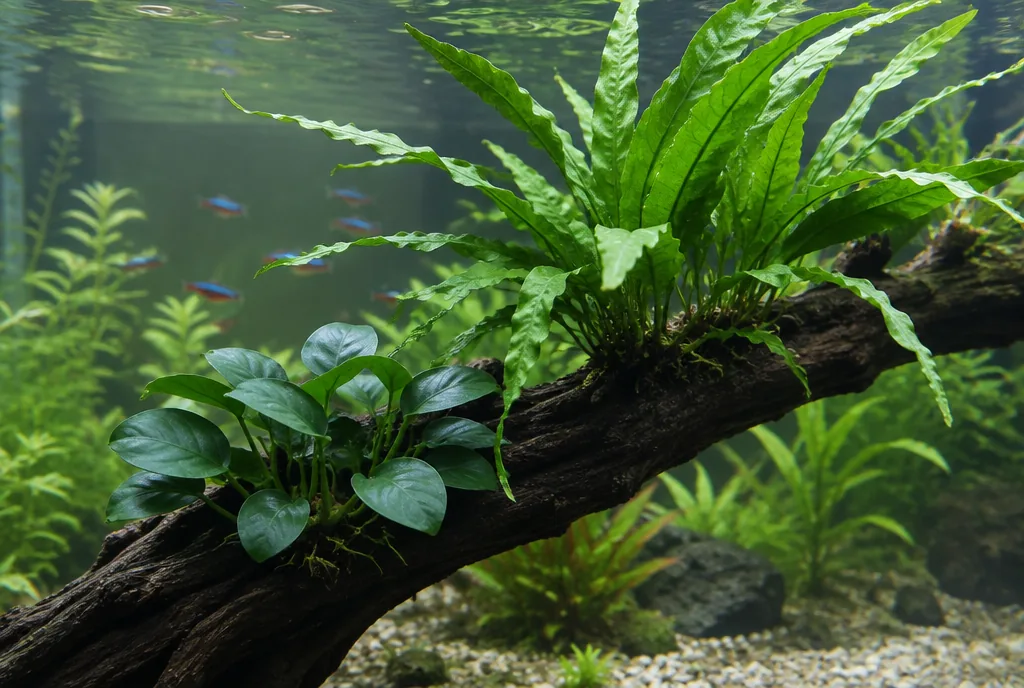
Quick answer: Both are hardy, low-light epiphytes that need no CO2 and grow tied to wood or rock with the rhizome left unburied, so care is nearly identical. Pick Anubias, especially Anubias Nana, for compact, glossy foreground accents; pick Java fern for taller, strappy background cover that hides equipment. Most beginners grow both together.
Appearance
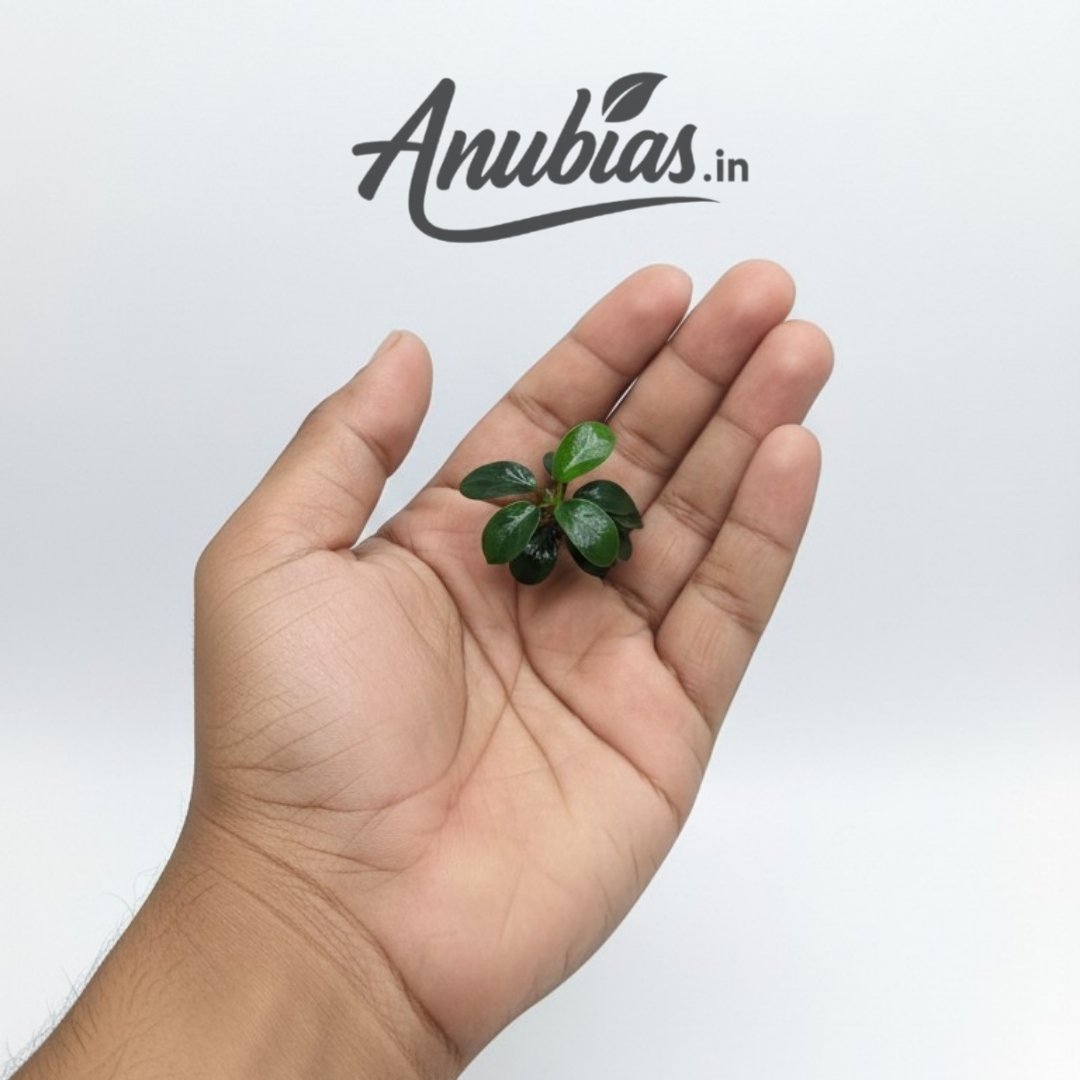
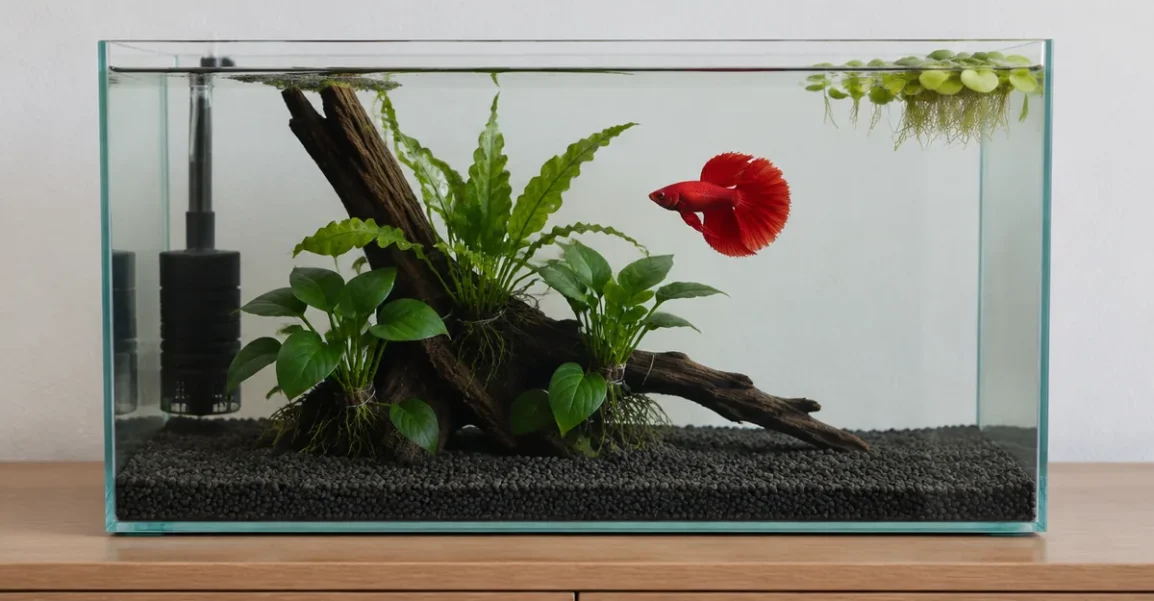
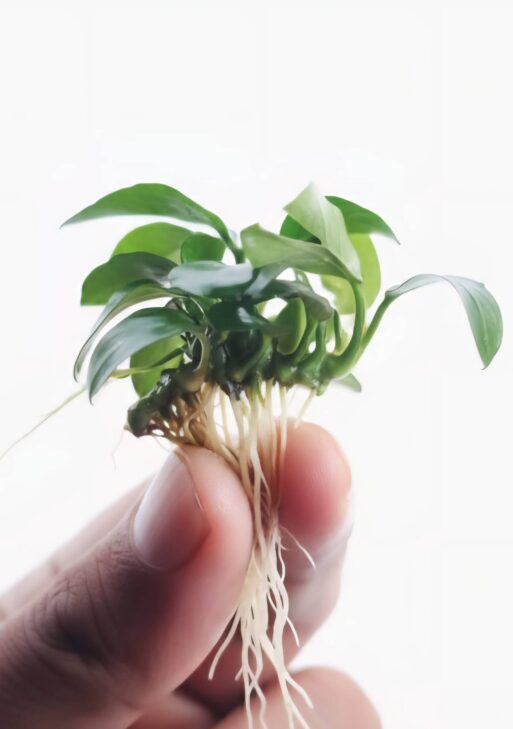
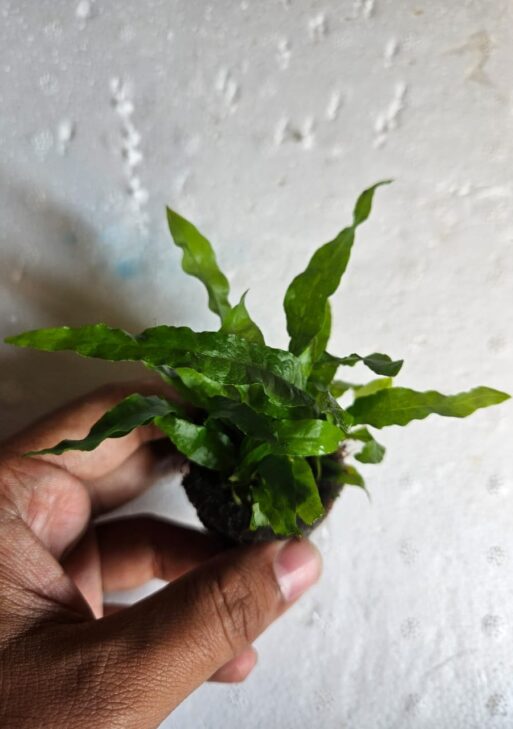
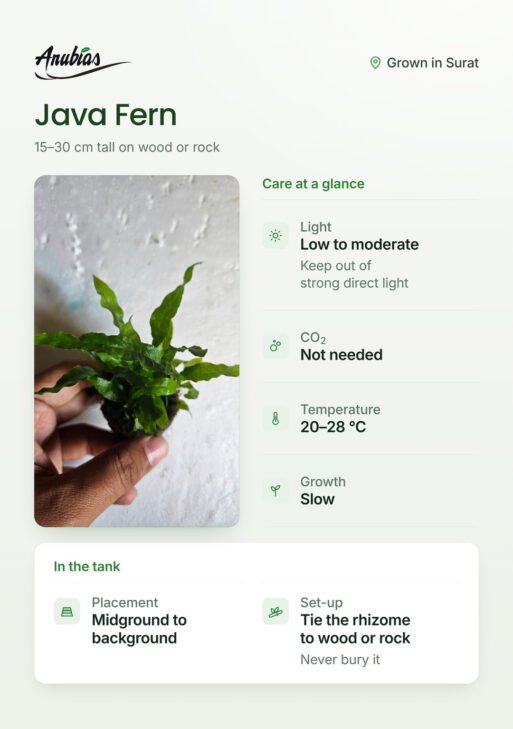
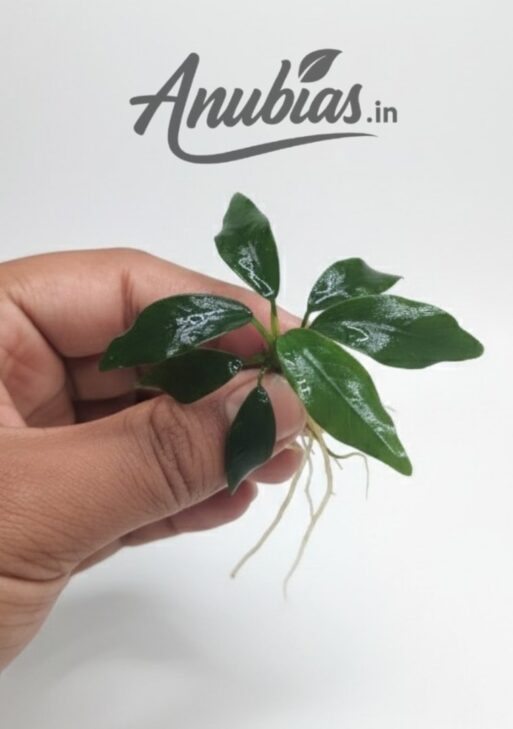
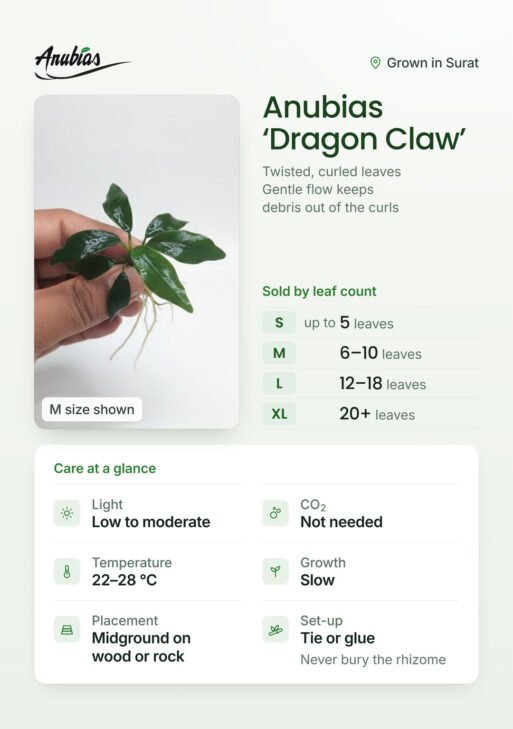
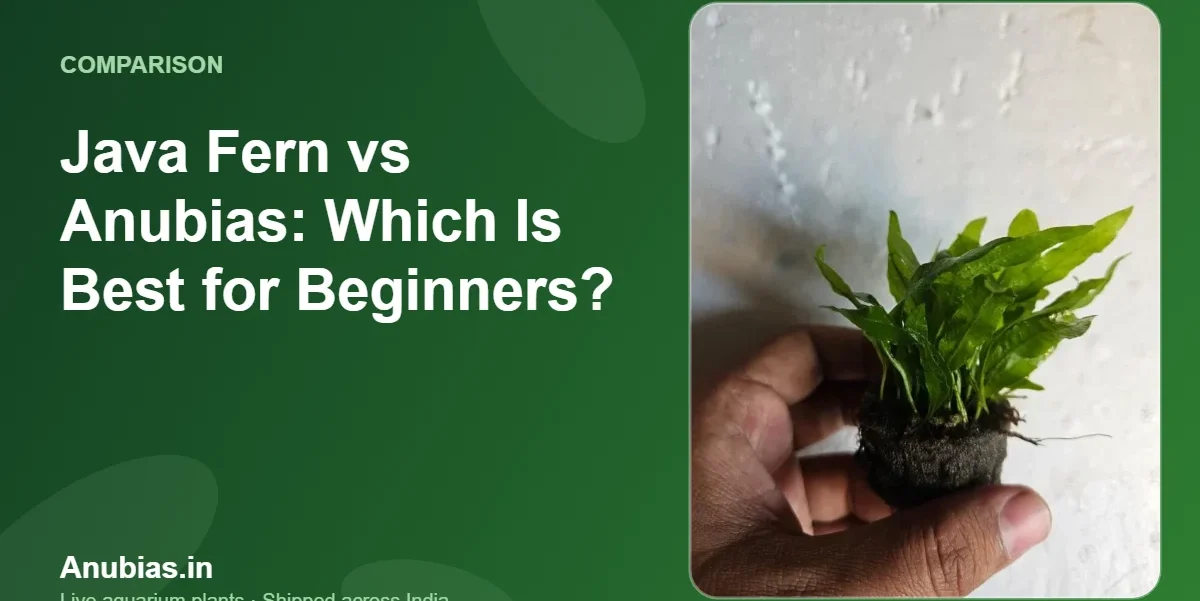
Anubias has thick, glossy, rounded leaves and a compact habit. Java fern has longer, textured, strappy leaves and a taller, bushier look.
Care — nearly identical
Both want low-to-moderate light, no CO₂, and attaching to wood or rock (never bury the rhizome). Both tolerate a wide range of water and are very hard to kill.
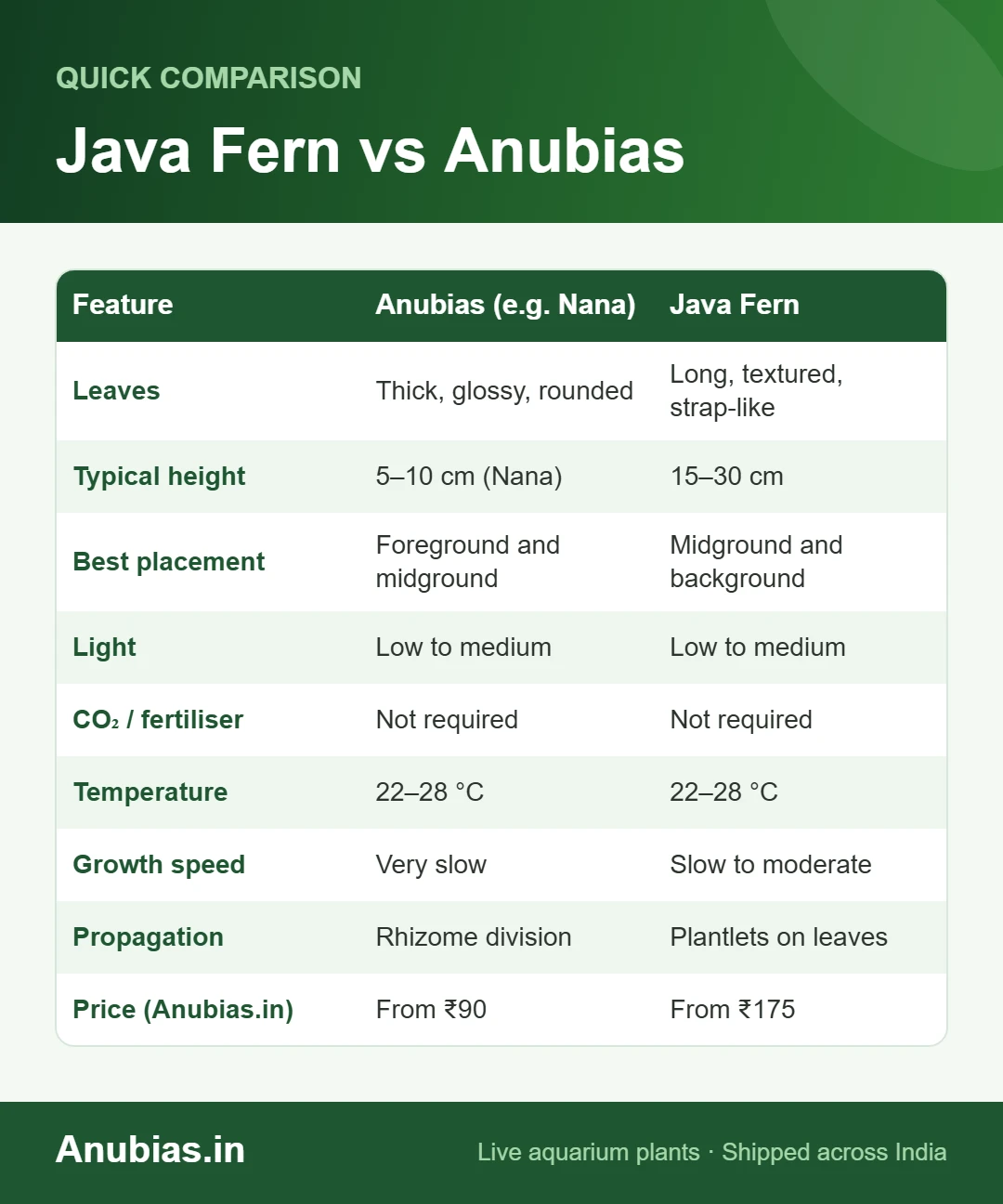
Java Fern vs Anubias: side-by-side comparison
| Feature | Anubias (e.g. Nana) | Java Fern |
|---|---|---|
| Leaf shape and size | Thick, glossy, rounded; small and compact on Nana | Long, textured, strap-like fronds |
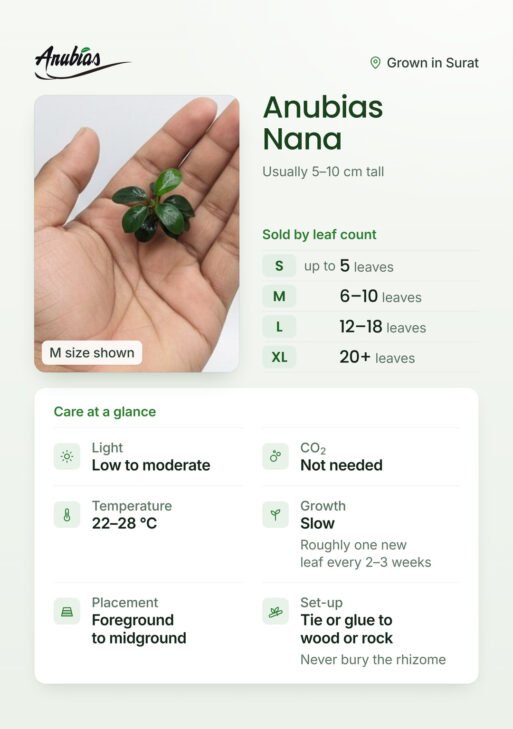
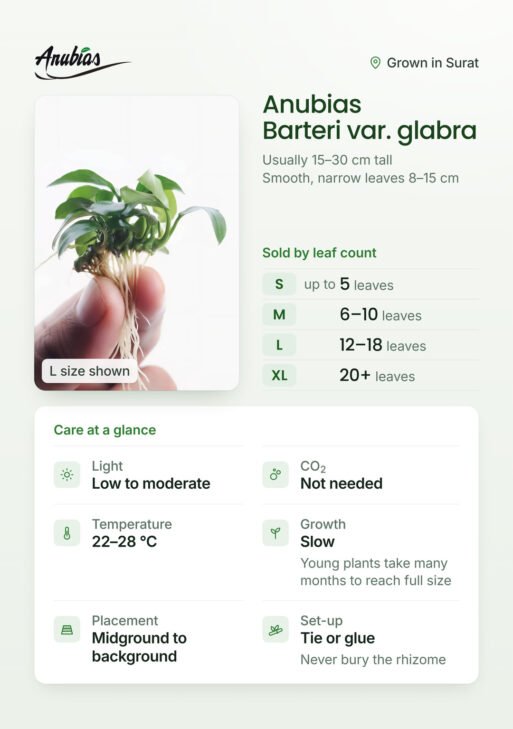
| Typical height | 5–10 cm (Nana), 15–30 cm (Barteri) | 15–30 cm (Dwarf types stay under 10 cm) |
| Best placement | Foreground and midground | Midground and background |
| Light | Low to medium | Low to medium |
| CO₂ / fertiliser | Not required | Not required |
| Temperature | 22–28 °C | 22–28 °C |
| Growth speed | Very slow (about one new leaf every 2–3 weeks) | Slow to moderate |
| Propagation | Cut the rhizome into pieces | Rhizome division and baby plantlets on leaves |
| Common issue | Algae spots on old leaves in bright light | Brown, transparent patches from low nutrients |
| Price in India (Anubias.in) | From ₹90 | From ₹175 |
Rhizomes compared
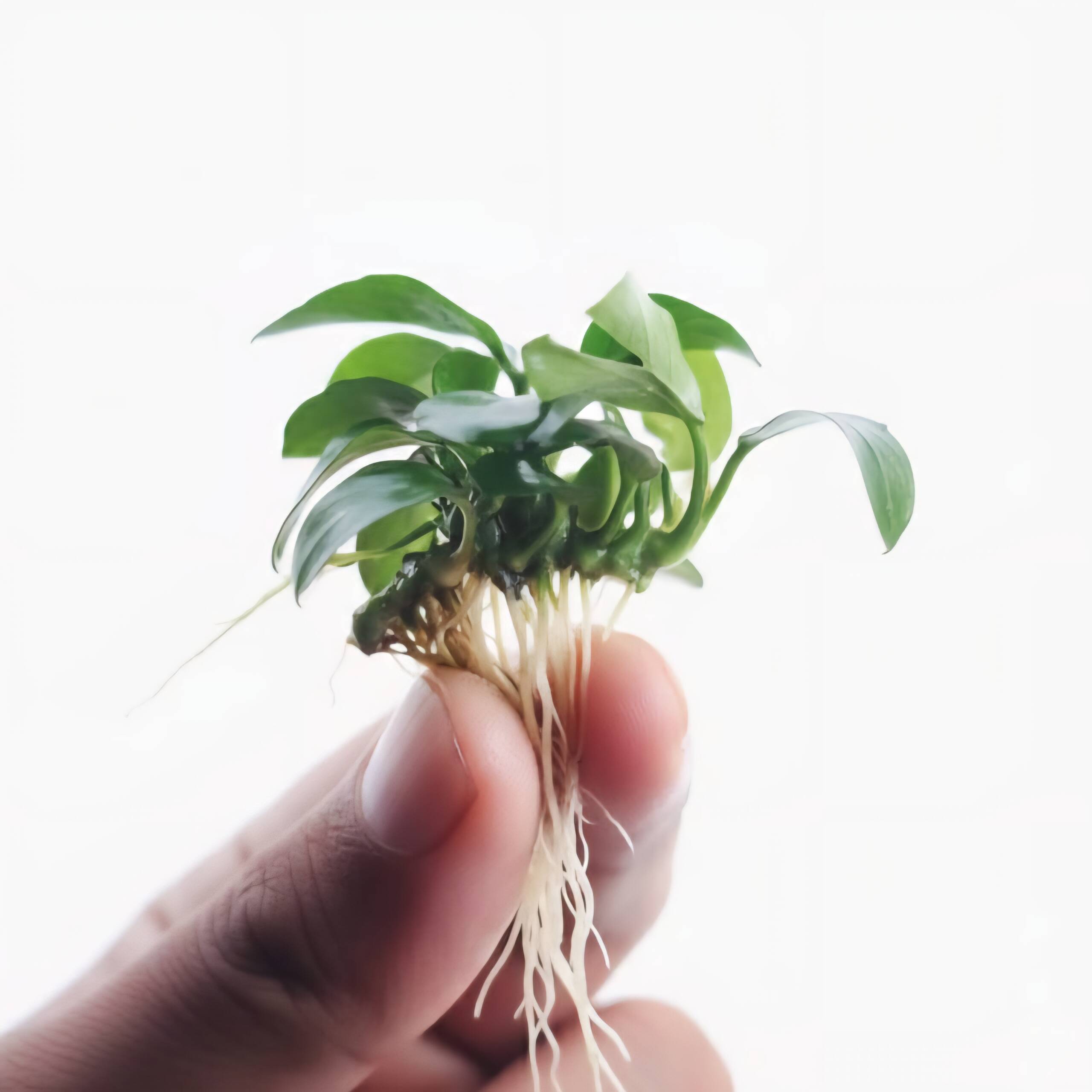
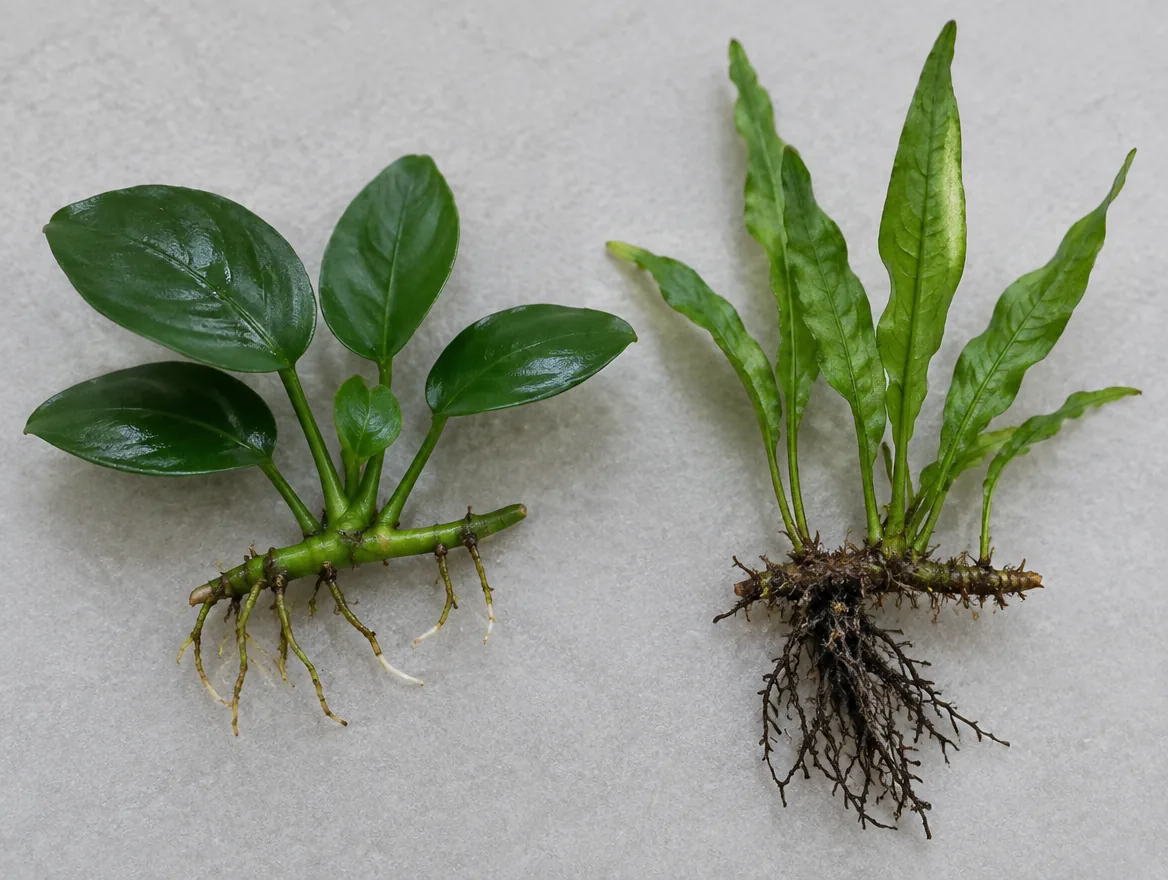
Both plants grow from a rhizome, a stem that creeps sideways over wood or rock, and both rot if you bury it. They are easy to tell apart. The Anubias rhizome is green, smooth and firm, usually about as thick as a pencil, with leaves on short stalks along its top. The Java fern rhizome is thinner, dark brown to black and covered in fine, hair-like roots, with the fronds rising straight from it. When you attach either one, the thread or glue goes on the rhizome and the growing tip stays free.
Where to place each one
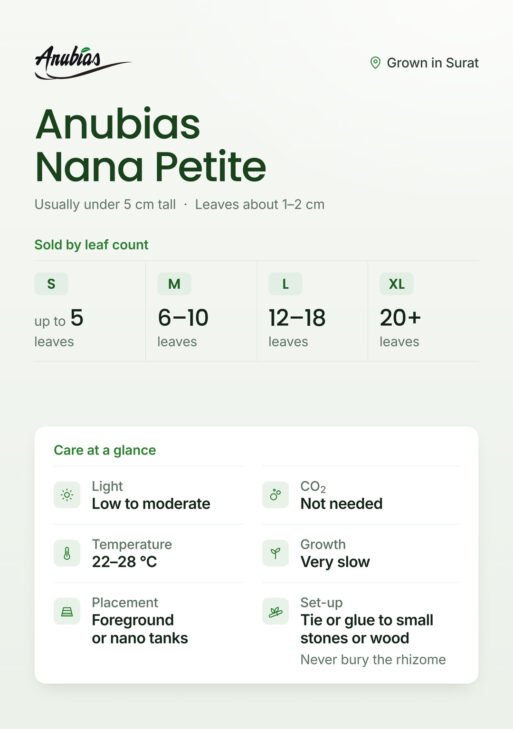
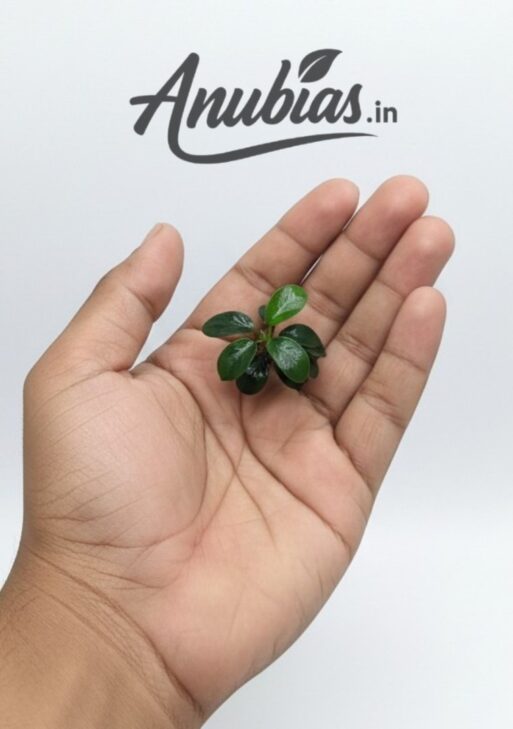
Both belong on wood or rock rather than in the substrate. Anubias Nana stays about 5–10 cm tall, so tie it low on the hardscape at the front or in the midground; Nana Petite is smaller still, and Barteri var. glabra (15–30 cm) suits the midground of bigger tanks. Java fern usually reaches 15–30 cm, so give it the upper branches of the wood or the back of the tank, where it can hide the filter and heater. Dwarf Java fern stays much shorter and can sit further forward. Placing Anubias partly in the shade of the fern also helps keep algae off its slow leaves.
Which grows faster, Java Fern or Anubias?
Java fern grows faster than Anubias. In a typical low-tech Indian tank, Java fern adds new fronds and baby plantlets steadily, while Anubias puts out roughly one leaf every two to three weeks. That slow growth is exactly why Anubias stays neat for months with almost no trimming, and why its older leaves are more likely to collect algae if the light is strong.
Are Java Fern and Anubias safe for bettas, shrimp and goldfish?
Both are excellent for bettas (Anubias leaves make perfect resting spots near the surface) and shrimp, which graze biofilm off the leaves. Both plants have tough, bitter-tasting leaves that most fish ignore, so they are among the few plants that survive with goldfish, cichlids and silver dollars. If your fish uproot everything, attaching either plant to wood or rock solves the problem completely.
Java fern and Anubias together: how to grow both
Java fern and Anubias grow well together because they need the same conditions: low to medium light, no CO2, 22–28 °C water and a rhizome tied to wood or rock, never buried. Attach Anubias low and at the front, Java fern higher and towards the back, and add a light liquid fertiliser weekly if leaves pale.
- Tie or glue (gel superglue) Anubias to the lower parts of rocks and wood at the front of the tank.
- Attach Java fern higher up and towards the back, where its taller leaves can hide filters and heaters.
- Keep the rhizome of both plants above the substrate so it does not rot.
- Run lights for 6–8 hours a day; longer or brighter lighting mainly feeds algae on Anubias leaves.
- Dose a light, all-in-one liquid fertiliser once a week if leaves pale or Java fern develops brown patches.
Common problems and quick fixes
- Black or brown dots under Java fern leaves: usually spores (sori), which are normal and a sign of a mature plant.
- Brown, see-through patches on Java fern: nutrient shortage; add a liquid fertiliser and remove badly damaged leaves.
- Green or black spots on Anubias leaves: too much light; shade the plant, shorten the photoperiod and wipe the leaves gently.
- Soft, mushy rhizome on either plant: rhizome rot, often from burying it; cut away the soft part and re-attach the healthy section.
How to attach both (same method)
- Take the plant out of its pot and gently pull away any grow plug or rock wool from the roots; this matters most for Java fern.
- Hold the rhizome against the wood or rock, with the growing tip free.
- Wrap cotton thread or fishing line around the rhizome three or four times between the leaves and knot it underneath. Or put a small dab of gel superglue on a dry spot and press the rhizome on for 20 to 30 seconds.
- Return it to the tank with the rhizome uncovered; the roots may hang into the substrate. Both grip within a few weeks.
How each one multiplies
Java fern makes baby plants for you. Small plantlets grow on older leaves, often near the tips. Once a plantlet has its own roots and 3 to 4 leaves, pull it off gently and tie it to a new spot. You can also cut a long Java fern rhizome into sections that each keep several leaves.
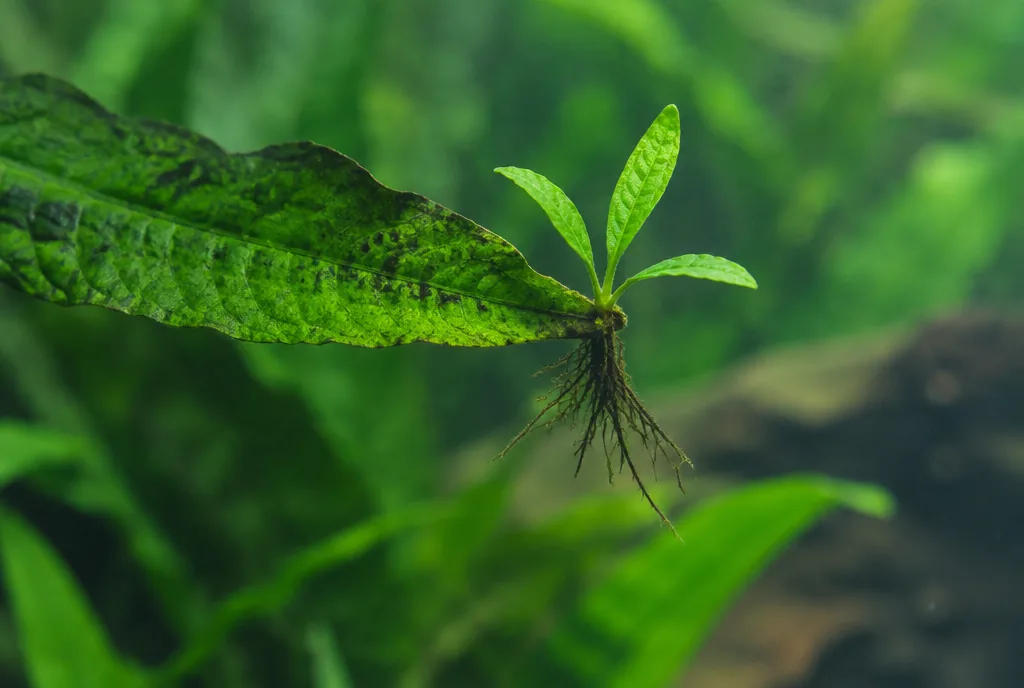
Anubias does not make plantlets. To get more plants, wait until the rhizome is long and has plenty of leaves, then cut it with a clean blade into pieces that each keep 3 or more leaves. Tie or glue each piece to wood or rock and expect a pause of a few weeks before new leaves appear.
Care at a glance
| Factor | Anubias | Java fern |
|---|---|---|
| Light | Low to moderate | Low to moderate |
| CO2 | Not required | Not required |
| Temperature | 22–28 °C | 20–28 °C |
| pH | 6.0–7.5 | 6.0–7.5 |
| Growth | Slow, roughly one new leaf every 2–3 weeks | Slow to moderate |
| Placement | Foreground and midground, on wood or rock | Midground and background, on wood or rock |
| How to attach | Tie or glue the rhizome; never bury it | Tie or glue the rhizome; never bury it; remove the grow plug first |
Anubias or Java fern: which should you choose?
Choose Anubias if you want a compact, slow-growing plant for the foreground or midground: Anubias Nana stays 5–10 cm tall and starts at ₹90. Choose Java fern for taller background cover that grows faster and hides equipment; every Java fern we sell costs ₹175. Care is the same, so many tanks use both.
- Foreground/midground accents: Anubias (especially Anubias Nana).
- Background cover / hiding equipment: Java fern, such as Java Fern Philippine.
- Honestly? Get both — they look fantastic together in a low-tech scape.
Shop Anubias and Java fern — hand-picked, shipped across India with a live-arrival guarantee.
Whichever you choose, both are beginner-proof — see our Java fern care guide or Anubias care guide for full growing instructions.
Decided on the fern? See the Java fern varieties we stock — regular, dwarf, Philippine and Wrinkled Leaf all ship with a live-arrival guarantee.
More Java fern guides:
Start with the Anubias Five
One of each of our five Surat-grown Anubias, sized by leaf count.
Build your setFrequently asked questions
Is Java fern or Anubias better for beginners?
Both are ideal first plants. Choose Anubias Nana if you want a compact plant for the front of the tank, and Java fern if you want taller cover at the back. Many beginners buy both.
Can Java fern and Anubias be planted in soil or gravel?
Their roots can go into the substrate, but the rhizome must stay above it. Burying the rhizome is the most common reason both plants rot.
Do Java fern and Anubias need CO2?
No. Both grow well without CO2 or special substrate, which is why they are the most popular plants for low-tech tanks in India.
Leaves turning brown or black? See Java fern problems and fixes.
Deciding between them? Compare Bucephalandra vs Java fern.
Weighing a rooted plant instead? Compare Cryptocoryne vs Anubias.
Grown in Surat (pre-order plants imported to order) · live-arrival guarantee with a 4-hour unboxing video · ₹99 shipping, free from ₹999