
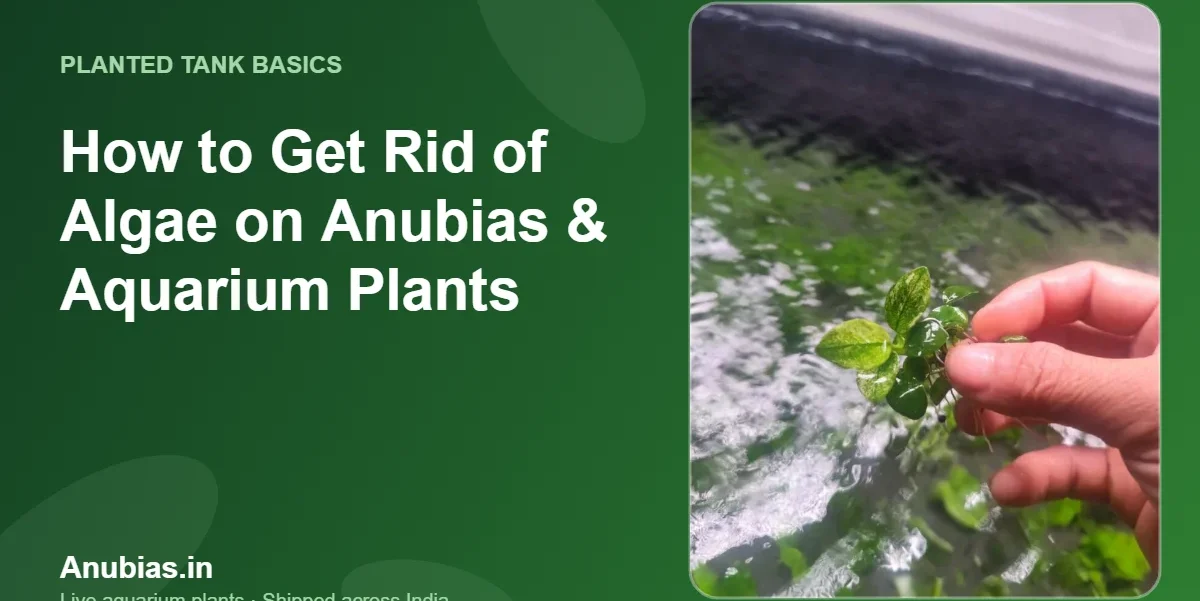
Algae on Anubias and other slow growers is one of the most common planted-tank frustrations. The good news: it’s almost always fixable. Here’s how.
Quick answer: Gently wipe affected leaves or trim badly covered old ones, improve water flow, and add a clean-up crew of Amano shrimp, nerite snails or otocinclus. Prevent regrowth by cutting lighting to about 8 hours a day, doing regular water changes, not overfeeding and dosing fertiliser consistently. Anubias attracts algae because each leaf sits in the tank for months.
Why it happens
Because Anubias and Bucephalandra grow slowly, each leaf sits in the tank for months — a long window for algae to settle, especially under strong or long lighting with excess nutrients.
How to remove it
- Gently wipe affected leaves, or trim badly covered old leaves.
- Spot-treat stubborn spots and improve water flow around the plant.
- Add a clean-up crew: Amano shrimp, nerite snails or otocinclus.
How to prevent it
- Reduce lighting to ~8 hours a day and avoid intense light on slow growers.
- Keep up regular water changes and don’t overfeed.
- Dose ferts consistently so plants (not algae) use the nutrients.
- Keep some fast-growing plants that reduce algae by out-competing it for light and nutrients.
Identify your algae first
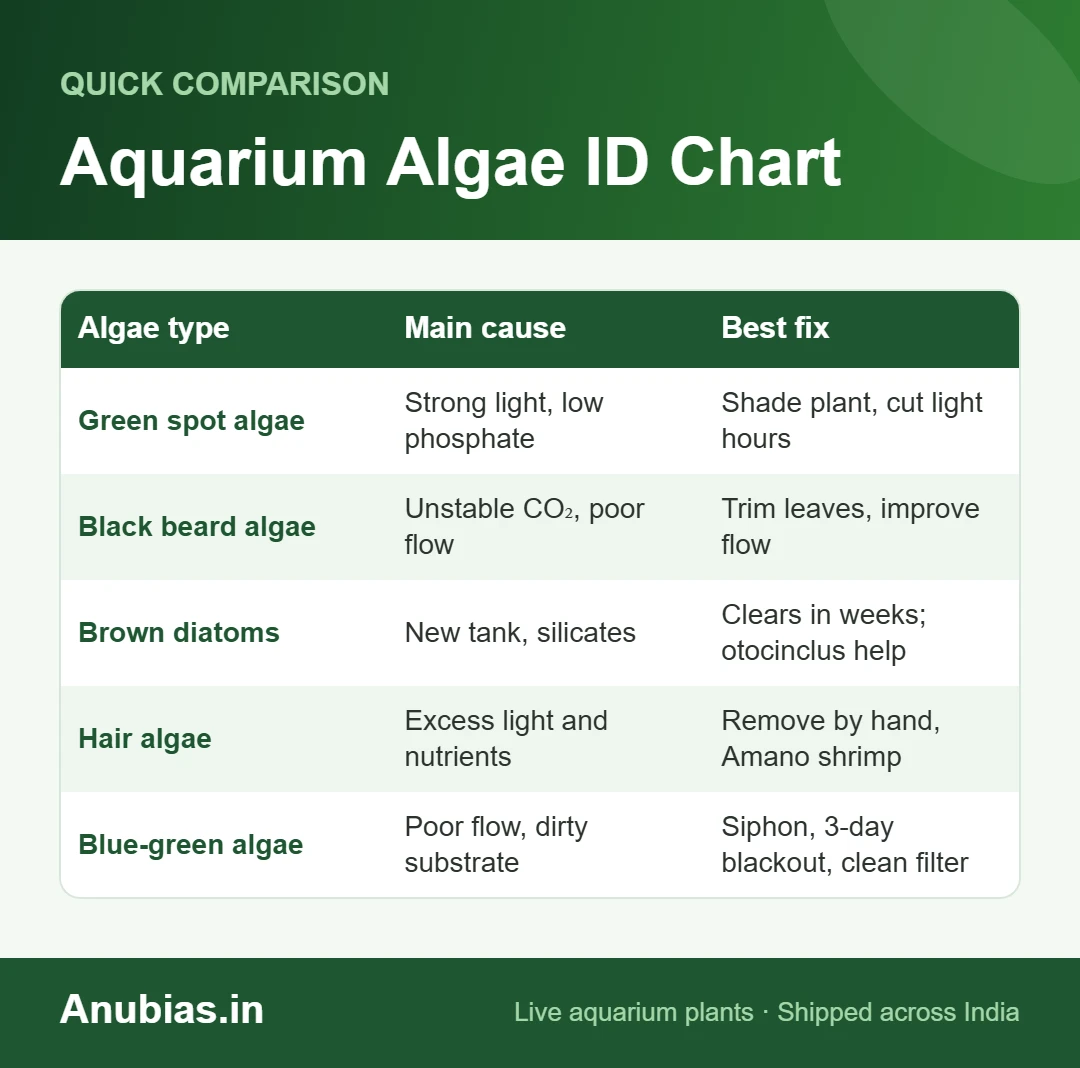
| Algae type | What it looks like | Main cause | Best fix |
|---|---|---|---|
| Green spot algae (GSA) | Hard green dots on Anubias and glass | Strong light, low phosphate | Shade the plant, cut light hours, scrape glass; nerite snails help |
| Black beard algae (BBA) | Dark, fuzzy tufts on leaf edges and wood | Unstable CO₂ and poor flow | Trim affected leaves, improve flow, spot-treat carefully |
| Brown diatoms | Brown dusty film that wipes off | New tank, silicates | Usually clears in weeks; otocinclus and snails eat it |
| Hair / thread algae | Long green strands | Excess light and nutrients | Remove by hand, add Amano shrimp, reduce light |
| Blue-green algae (cyanobacteria) | Slimy blue-green sheets with a bad smell | Poor flow, dirty substrate | Siphon out, blackout 3 days, clean filter, improve flow |
Why algae loves Anubias in particular
Anubias gets algae because its leaves live for months. A fast stem plant replaces its leaves every few weeks, so algae has no time to build up. An Anubias leaf can stay in the tank for a year, slowly collecting green spot and black beard algae, especially when it sits directly under a strong LED. Placing Anubias in shade, under taller plants or wood overhangs, is the most effective long-term fix. For dark, stubborn tufts, follow our guide to black beard algae on Anubias.
Step-by-step: cleaning algae off Anubias leaves
- Lift the plant (or the wood it is attached to) out of the tank.
- Rub leaves gently between your fingers or with a soft toothbrush under dechlorinated water.
- Cut off old leaves that are more than half covered; the rhizome will grow new ones.
- Replace the plant in a shadier spot with better water movement.
- Shorten the lighting period to 6–8 hours and keep it consistent with a timer.
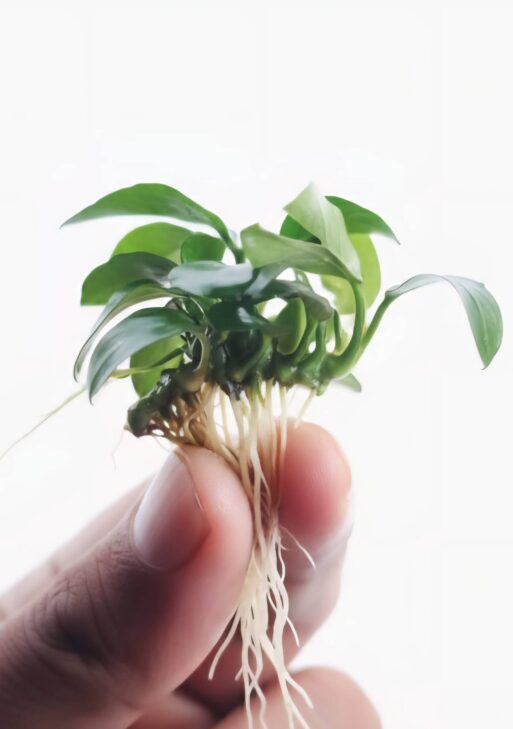
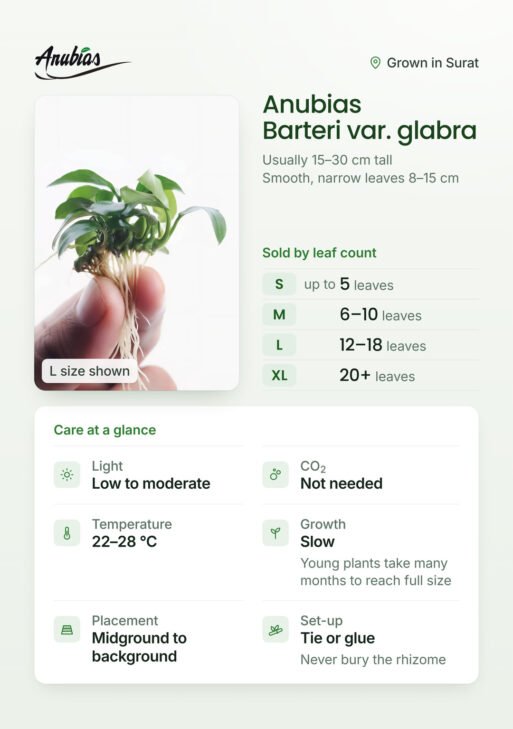
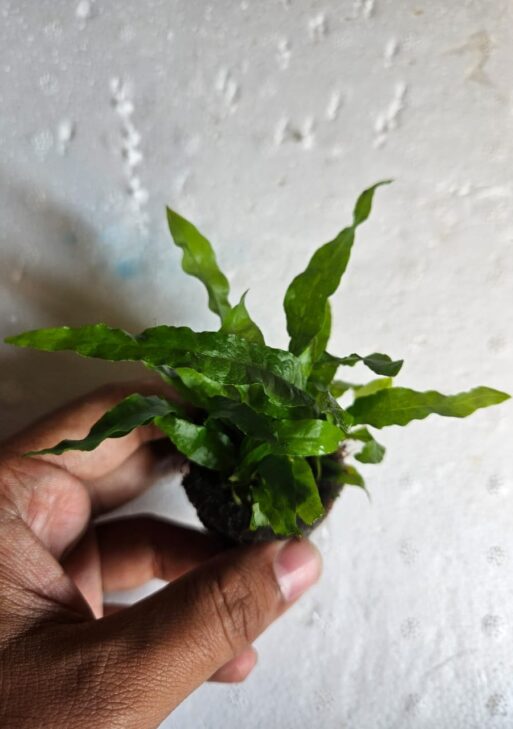
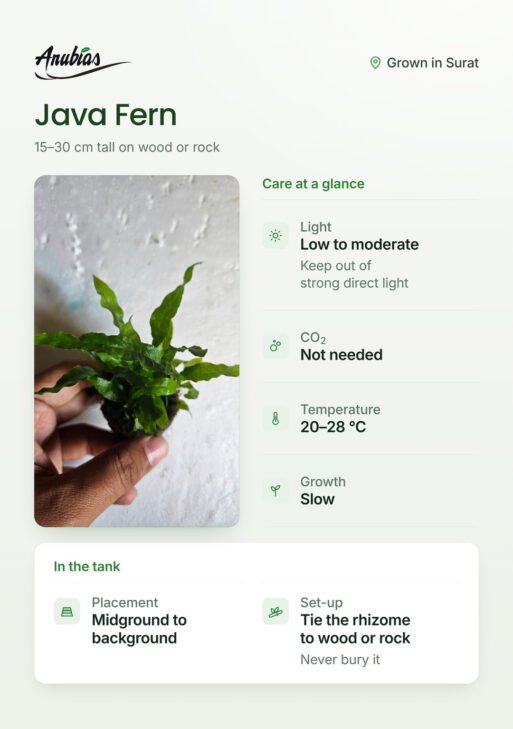
Start with healthy, algae-free stock — browse our Anubias and ferns & mosses, shipped across India with a live-arrival guarantee.
Prevention helps too — see which plants naturally help reduce algae.
Frequently asked questions
Will algae kill my Anubias?
Rarely. Heavy algae blocks light and slows growth, but the rhizome usually survives. Trim covered leaves and fix the light balance, and new clean leaves will follow.
Which algae eaters are safe with plants?
Amano shrimp, nerite snails and otocinclus eat algae without damaging plants. Avoid large plecos and goldfish if you want to protect soft-leaved plants.
Can I use hydrogen peroxide or algaecide?
Spot treatments can work, but they are risky for shrimp, snails and sensitive plants. Fix light, flow and nutrients first; chemicals only treat the symptom.
Grown in Surat (pre-order plants imported to order) · live-arrival guarantee with a 4-hour unboxing video · ₹99 shipping, free from ₹999