
Quick answer: Leaving a planted tank for one to two weeks is mostly preparation, not gadgets. Do a larger water change and a hard trim a week before you go, cut the photoperiod to five or six hours on a timer, skip extra fertiliser, use a tested automatic feeder or a briefed neighbour rather than a block feeder, and plan for Indian heat and power cuts.
Start a week before you leave, not the night before
The single biggest mistake is treating holiday prep as a last-minute job. A planted tank that is stable, trimmed and freshly changed will coast for two weeks; a tank that was disturbed the evening before you left will be fighting a bacterial or algae wobble exactly when nobody is watching it.
Seven to ten days out, do a slightly larger water change than usual with dechlorinated water, rinse the filter sponge in old tank water, and then leave the filter alone until you return. Cleaning the filter on departure day is a classic way to come home to cloudy water, because you have knocked back the bacteria right before the tank loses its daily attention.
Do a hard trim in the same week. Cut stems back further than feels comfortable, remove every yellowing or algae-covered leaf, and thin floating plants so light still reaches the substrate. Trimmed plants grow into that space instead of shading each other and rotting at the base. Two more rules for the final week: no new plants and no new fish, since both need daily watching for the first fortnight.
Cut the photoperiod while you are away
Most planted aquariums run best on 6–8 hours of light a day. While you are travelling, drop that to around 5–6 hours on a plug-in timer. Nobody is there to enjoy the tank, so the extra hours buy you nothing and cost you algae.
The reason is simple. With no water changes, no trimming and no glass wiping, nutrients drift upward and plants slow down slightly. Light is the one input you can reduce without touching anything else, and reducing it is what stops the tank tipping from “healthy” to “green” in your absence.
Keep the block consistent and single. A timer running the same 5–6 hours daily beats a relative switching lights on at random. If you do not own a timer, buy one before you travel — it is the cheapest holiday insurance here.
Fertiliser and CO2: stop, reduce or automate
For a one-week trip, the honest answer for most tanks is simple: dose as normal the day you leave, then nothing. Plants carry enough reserve in the water column and substrate for seven days, and unspent fertiliser with reduced light is just algae fuel.
For two weeks, dose normally before you go and accept a little slowdown. Do not “double dose to cover the fortnight” — that is the worst version of this decision, because the nutrients sit there through the entire period with no water change to reset them. Slightly hungry plants recover in days; an algae bloom takes weeks to undo.
CO2 injection needs a decision rather than a guess. Options, in order of how much I trust them:
- Leave it running on the solenoid and timer, set to come on with the shortened photoperiod — only if the system has already run reliably for months and you trust the cylinder to last.
- Turn it off entirely and reduce light to match. Plants adapt, growth slows, fish are safe. For a two-week trip this is usually the right call.
- Leave it running unattended on a system you have recently changed — do not. A stuck solenoid or drifting needle valve with nobody home is a fish-killing failure, not an inconvenience.
If you switch CO2 off, drop the light hours as well. High light with no CO2 for fourteen days is the fastest route to a tank full of thread algae.
Feeding: who will feed my fish on holiday
Healthy adult fish handle a week without food comfortably. They do not enjoy it, but it does no harm, and a fasted tank produces almost no waste. For a seven-day trip with an established, well-fed community, doing nothing is genuinely a safe and often the best option.
Two weeks is different. Most adult fish will survive it, but it is a long stretch, and small or young fish, shrimp-heavy tanks and anything recently bought should not be asked to. Plan a feeding method rather than hoping.
Please avoid holiday block feeders, the plaster-like “14-day” blocks. They dissolve continuously, dump minerals and uneaten food into the water, and in a planted tank with no water changes they are one of the most reliable ways to come home to cloudy water and an ammonia spike.
A battery automatic feeder set to one small portion every second or third day is far better. Test it for a full week before you travel, because most units dispense more than you expect. Fill it with a fine sinking pellet or small flake, never a food that swells.
The other option is a person. Pre-portion the food into a pill organiser or small folded paper packets, one packet per feeding day, and tell them plainly to feed only what is in the packet. Left to their own judgement, helpful people overfeed. Portioned food removes the judgement entirely.
Heat and power cuts while nobody is home
This is the part that is specific to keeping fish in India, and it matters more than feeding. A closed flat in an Indian summer gets hot, and a planted tank that normally sits at a comfortable temperature can climb to 28–32 °C once the fans are off and the windows are shut for two weeks.
Before you travel, move the tank out of direct sun and leave a clip fan angled across the water surface, running continuously. Surface evaporation is the cheapest cooling there is, but it drops the water level noticeably over a fortnight, so fill the tank to the top before you go and leave a bottle of treated water for topping up.
Warm water holds less oxygen, and that is the real risk, not the temperature itself. Run an air stone through the trip and keep the filter outlet agitating the surface. A battery-backed air pump that kicks in automatically is worth buying in monsoon season, when power cuts of several hours are routine and the filter stops circulating.
Two more monsoon-specific habits: put the plugs on a surge protector, and unplug the heater entirely if you are travelling in peak summer. A stuck-on heater in a 32 °C room is a far bigger danger than a cool tank.
Brief your neighbour with one page, not a conversation
Verbal instructions do not survive two weeks. Write a single sheet, tape it beside the tank, and keep it to things a non-fishkeeper can actually do.
- Feed one packet on these dates only. Do not feed extra. Fish looking hungry is normal.
- Do not touch the light timer, the filter or any plug except the fan.
- If the water level drops below the filter outlet, add the bottle of treated water kept under the tank.
- If the water turns milky, a fish is lying on its side, or the power has been out more than half a day, send me a photo and call.
- Do not remove dead plant leaves or anything else from the tank.
Give them your number, a photo of the tank looking normal, and your local aquarium shop’s number. The photo does more work than any written description.
Coming home: what looks bad but is fine
Expect the tank to look slightly rough. A dusting of algae on the glass, some yellowing lower leaves on stems, a thin film on the surface and a lower water line are all normal after two weeks and need no drama.
Resume gently. Top up with dechlorinated water, do a normal water change the next day rather than a huge one immediately, wipe the glass, trim the worst leaves and return the timer to your usual 6–8 hours over a few days. Leave the filter alone for another week or two, and feed lightly at first.
What does need action: a strong smell, genuinely cloudy or milky water, fish gasping at the surface, or a stopped filter. In those cases test the water, do a 30% change with dechlorinated water, get aeration running and hold off feeding for a day while things settle.
Build a tank that can survive a fortnight alone
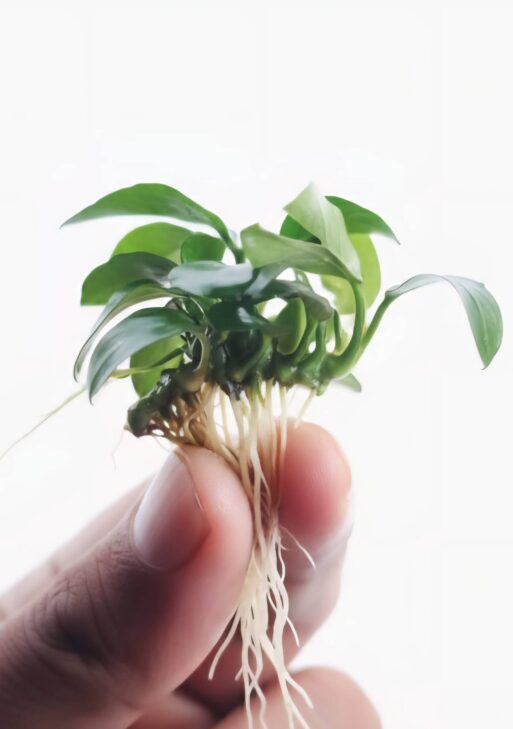
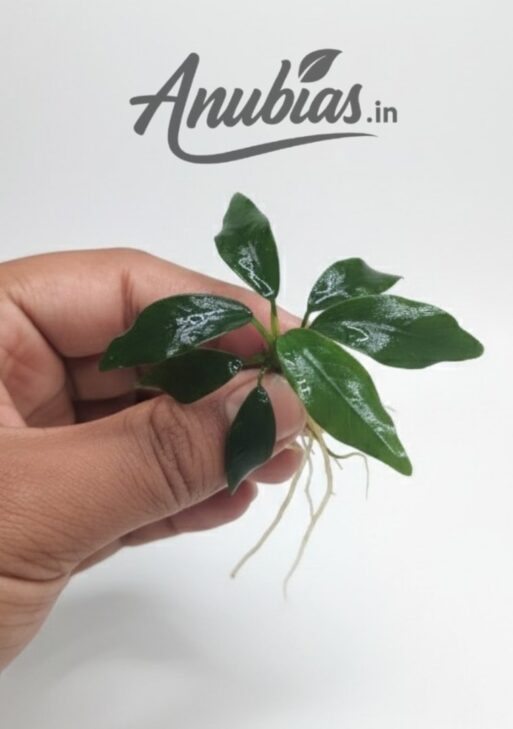
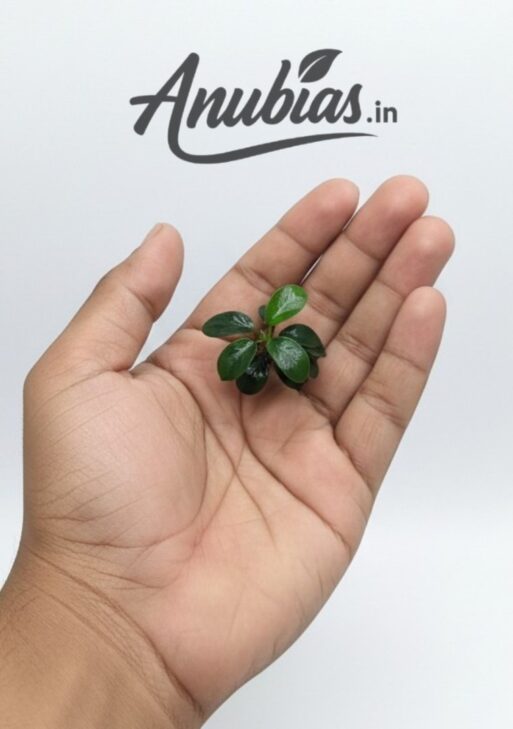
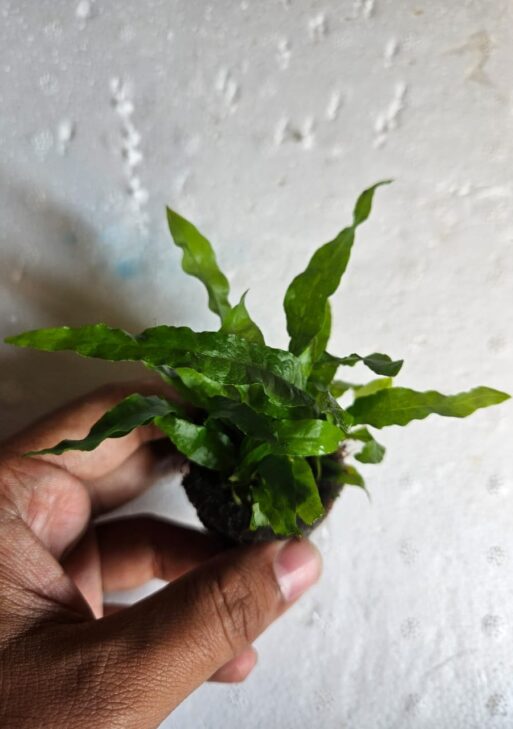
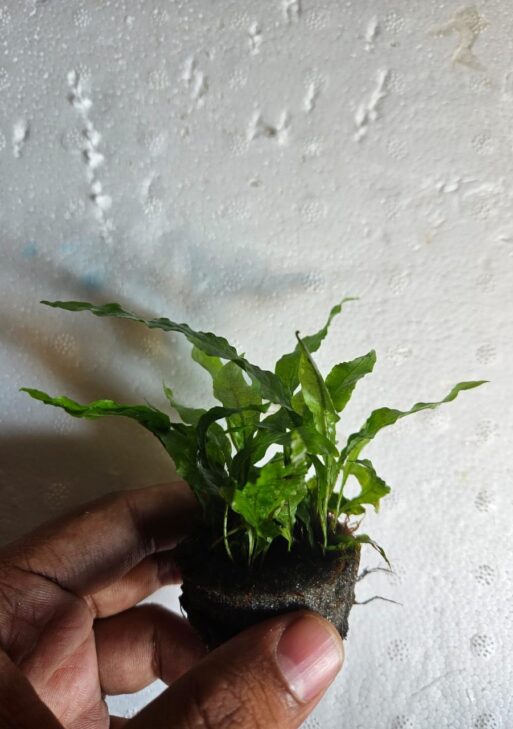
If you travel often, choose plants that do not need you. Anubias, Bucephalandra and Java fern are the low-maintenance backbone — slow, tough, undemanding about light and fertiliser, and entirely content to be ignored for two weeks. Tie or glue them to wood and stone, and never bury the rhizome in substrate, which rots them whether you are home or not.
Add Vallisneria or Water Wisteria for height, and keep some floating plants to soak up nutrients while the lights are short. What to avoid before a long trip is a demanding carpet, fast stems needing weekly trims, or anything CO2-dependent.
Understock slightly, keep a proper filter with room to spare, and the same tank that is easy to travel away from turns out to be easy to live with the rest of the year too.
Plants in this guide


Frequently asked questions
Can I leave my fish tank for 2 weeks?
Yes, if you prepare it. Healthy adult fish, an established filter and low-maintenance plants will manage a fortnight provided you do a water change and hard trim a week before, shorten the photoperiod, arrange feeding every second or third day, and deal with heat and power cuts. Small fish, shrimp-heavy tanks and recent purchases need a person or an automatic feeder rather than fasting.
How long should the aquarium light stay on while I am away?
Drop from your usual 6–8 hours to about 5–6 hours a day on a plug-in timer. Nobody is there to enjoy the tank, and with no water changes or glass wiping the extra hours mostly feed algae. Keep it as one consistent block and switch off any decorative or moonlight LEDs.
Should I use a holiday block feeder?
No, not in a planted tank. Those plaster-like blocks dissolve continuously and add minerals and uneaten food to water that is getting no changes, which is a common cause of cloudy water and an ammonia spike. A battery automatic feeder tested for a week beforehand, or pre-portioned packets for a neighbour, is far safer.
Do I stop dosing fertiliser and CO2 before travelling?
Dose fertiliser as normal on the day you leave and then stop. Never double dose to cover the trip, because those nutrients sit in the water with no water change to reset them. For CO2, either leave a long-proven solenoid running on the shortened photoperiod, or switch it off and reduce light to match.
What should I do about power cuts and summer heat?
Move the tank out of direct sun, leave a fan blowing across the surface, keep an air stone running and fill the tank to the top so evaporation does not expose the filter outlet. In monsoon season a battery-backed air pump is worth buying, and in peak summer unplug the heater, since a stuck heater in a hot room is the bigger risk.
Plants that look after themselves
Anubias, Bucephalandra, Java fern and mosses survive a fortnight alone without trimming or dosing. Browse them in the shop.