Description
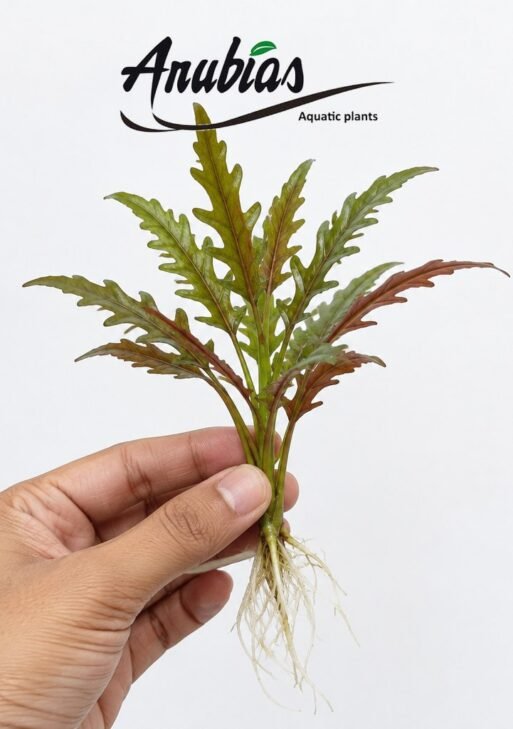
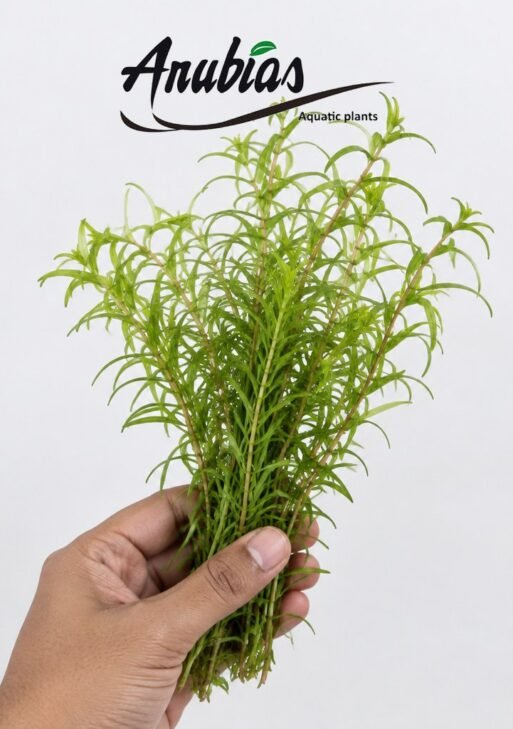
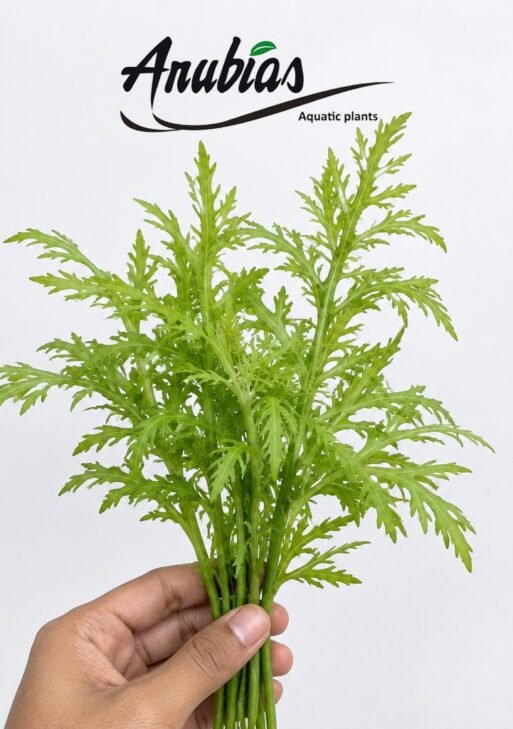
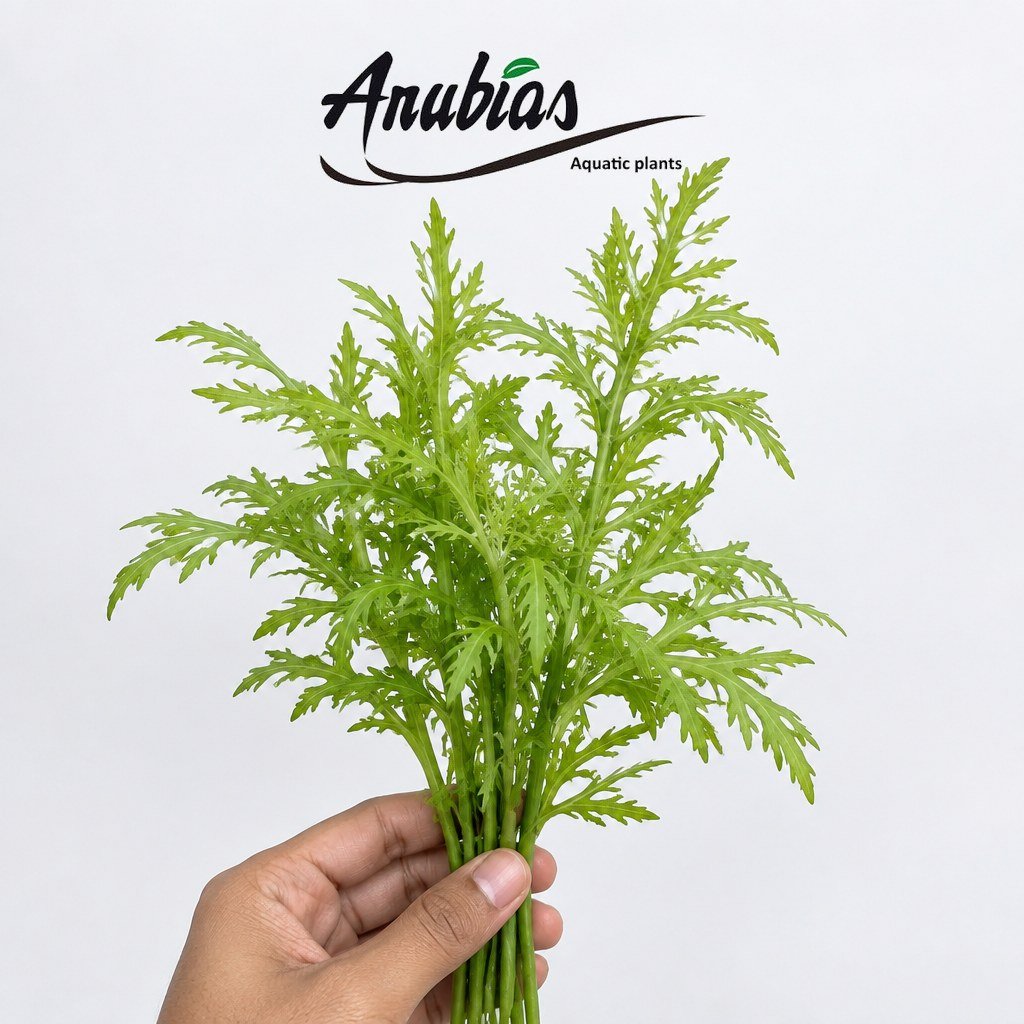
Water wisteria (Hygrophila difformis) is the near-unkillable beginner stem plant with delicate, fern-like leaves. It grows fast, forgives almost every mistake, works planted in the substrate or left floating, and its bright green, deeply cut foliage gives a tank a full, mature look within weeks. Water wisteria suits first-time planted-tank keepers, breeders who need quick cover for fry, and anyone fighting algae in a new tank, because few plants absorb nutrients faster.
Water wisteria at a glance
| Scientific name | Hygrophila difformis |
|---|---|
| Family | Acanthaceae |
| Origin | India, Bangladesh, Nepal, Bhutan, Thailand and Malaysia, in marshes and slow streams |
| Difficulty | Very easy |
| Light | Medium to high (tolerates low) |
| CO2 | Not required; speeds growth |
| Temperature | 22–27 °C (tolerates 20–30 °C) |
| pH | 6.0–8.0 |
| Growth rate | Fast |
| Height/size | 20–50 cm; stems 10–20 cm wide |
| Placement | Midground to background in substrate, or floating |
| Propagation | Stem cuttings; leaf fragments can root |
How to plant water wisteria
Water wisteria is a stem plant and can be grown two ways.
Planted. Rinse the bunch, remove any ties and cut each stem cleanly below a node. Strip the leaves from the bottom 2–3 cm and push the stems about 2 cm deep into the substrate, 3–5 cm apart, towards the back or sides of the tank. It roots in sand, gravel or aqua soil within a week.
Floating. Simply drop the stems on the surface. They grow horizontally, send down roots and shade the tank below. Floating water wisteria is the quickest cover for fry and the fastest way to pull excess nitrate from a new tank.
It can also be grown emersed in a paludarium or at the surface of an open-top tank, where the leaves become thicker and less divided and the plant may flower with small purple blooms.
Water wisteria care: light, CO2, fertiliser and water
Light. Medium to high light gives the most finely divided, bushy growth. Under low light the plant still survives, but the leaves become broader and less lobed and the stems stretch towards the surface. Leaf shape changes with conditions, which is why the species is named difformis.
CO2. Not needed. Water wisteria grows quickly without any carbon supplement. With CO2 it becomes a weed and may need trimming weekly.
Fertiliser. Because it grows so fast, it empties the water of nutrients. Dose a complete liquid fertiliser with iron and potassium once a week. Iron shortage shows first as pale, yellow-green new leaves; potassium shortage as holes in older leaves. Rooted stems also appreciate root tabs.
Water. Being native to the Indian subcontinent, water wisteria is perfectly adapted to local conditions. It accepts hard tap water, tolerates summer temperatures of 30 °C and above with only a slowdown, and shrugs off monsoon power cuts. Keep it between 22 and 27 °C for the best growth, and change 25–30% of the water weekly to replace the nutrients it consumes.
Growth, trimming and propagation
Expect several centimetres of growth a week, more with CO2. Trim stems when they reach the surface or start to shade the plants in front. Cut the top 10–15 cm off, and the remaining stem branches into two or three new shoots, making the group bushier.
Replant the tops to thicken the group or start a new one. Any stem section with a node roots within days, and even a single healthy leaf left on the substrate can sprout a plantlet. This makes water wisteria one of the cheapest plants to multiply: one bunch becomes a full background in a couple of months.
Where to use it in an aquascape
Water wisteria is a background or midground filler. In a 2 ft tank (60–90 litres) a group of 6–8 stems in a rear corner forms a green screen that hides the filter and heater; in 3–4 ft tanks (120–250 litres) plant it along the back wall for a dense hedge. In nano tanks of 1 ft (15–25 litres) it is best kept floating or trimmed hard, as it outgrows the space.
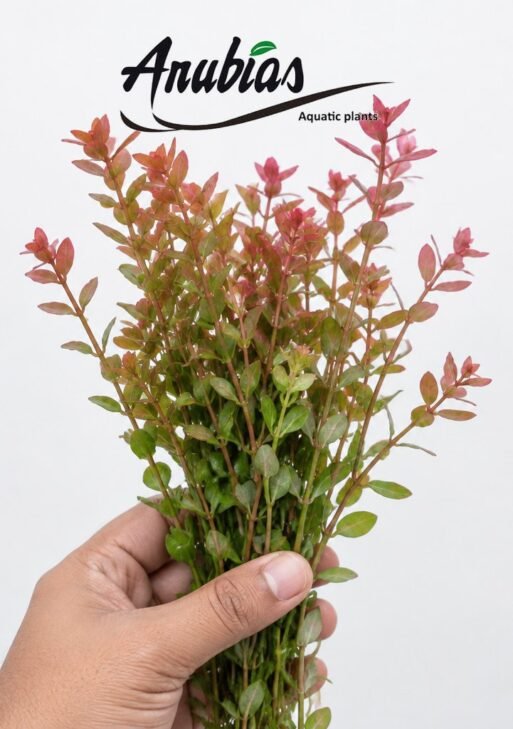
It pairs well with slower plants that benefit from its nutrient uptake: Anubias nana and Java fern on hardscape in the midground, cryptocoryne in the foreground, and other stem plants for colour contrast. Red stems such as Ludwigia repens look stronger against its bright green.
It is safe with shrimp, snails and all community fish, and its dense foliage gives fry and shy fish excellent cover. Goldfish and large herbivorous cichlids will eat it; in those tanks it works as a fast-growing, cheap snack rather than a decoration.
Common problems and fixes
- Leaves melting in the first week or two. Emersed-grown leaves (thicker, less divided) die back under water. Fix: leave the stems in place; new, finer submerged leaves follow quickly.
- Pale or yellow new growth. Cause: iron deficiency from the plant’s rapid uptake. Fix: dose an iron-containing fertiliser weekly.
- Holes in older leaves. Cause: potassium shortage. Fix: dose potassium or a complete fertiliser.
- Leggy stems with sparse leaves. Cause: low light. Fix: raise the light; trim and replant the tops.
- Lower leaves dropping. Cause: stems planted too close, shading each other. Fix: space stems 3–5 cm apart and trim regularly.
- Plant takes over the tank. Cause: it is doing well. Fix: trim weekly and share or compost the cuttings.
What you receive
One healthy bunch of water wisteria in the size you select (Small or Standard), similar to the photo. Each bunch is checked before packing, packed moist and shipped across India from Surat. ₹99 shipping, free on orders of ₹999 or more.
Live-arrival guarantee: record one continuous unboxing video within 4 hours of delivery and we will refund or replace a plant that arrived damaged.
FAQ
Does water wisteria need CO2?
No. It grows fast without CO2 in any reasonably lit tank. CO2 only makes it grow faster.
Is water wisteria good for beginners?
Yes. It is one of the easiest aquarium plants available, tolerating low light, hard water, warm temperatures and irregular fertilising.
Can water wisteria float?
Yes. Leave the stems on the surface and they grow horizontally, rooting into the water. Floating water wisteria is ideal fry cover and a nutrient sponge.
How fast does water wisteria grow?
Several centimetres a week under medium light, faster with CO2. Expect to trim every two to three weeks.
Why are my water wisteria leaves changing shape?
Leaf shape varies with light and whether the plant is submerged or emersed. Finely divided leaves mean good light under water; broad leaves mean low light or emersed growth.
Water wisteria vs hornwort: which is better for a beginner tank?
Both are easy and fast. Water wisteria can be rooted and looks tidier; hornwort cannot root and sheds needles. For a planted look, choose water wisteria.
Not sure what fits your tank? Plan it with our free AI tank planner.