
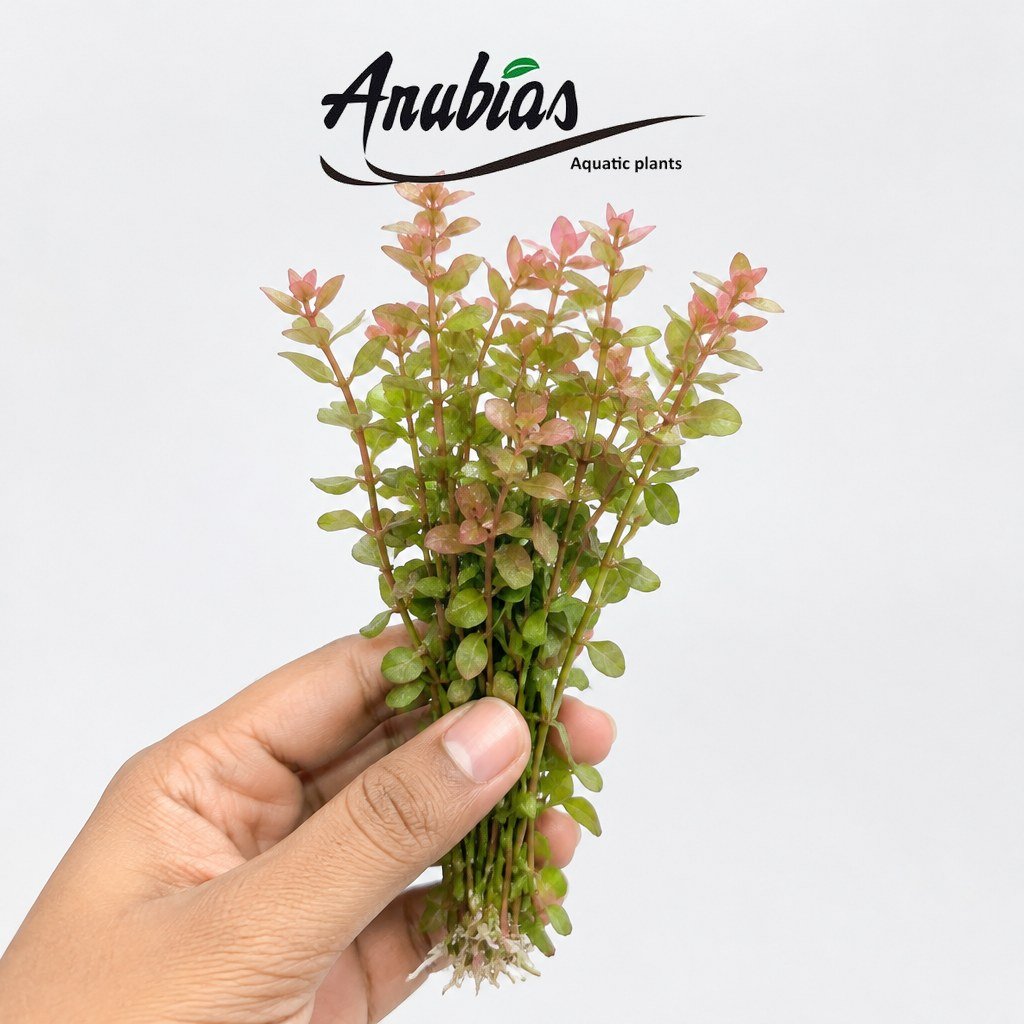
Description
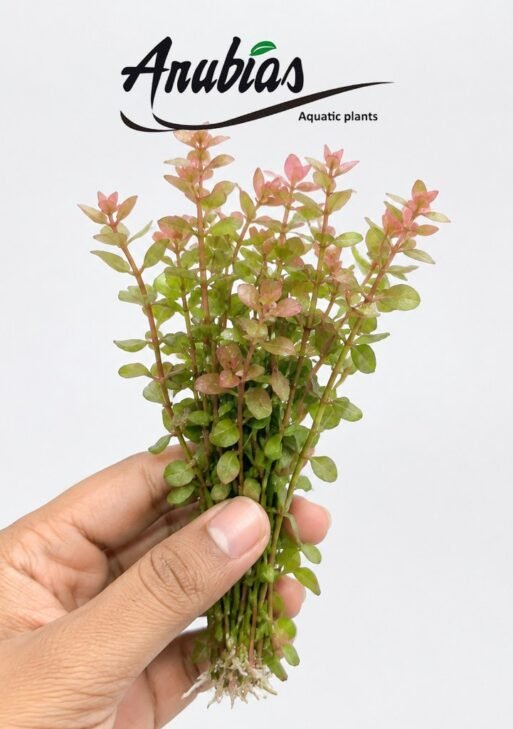
Rotala indica is a small, upright stem plant native to India and much of Asia, with stiff rounded leaves set closely along the stem and tips that blush pink to red under good light. It is slower and more compact than its cousin Rotala rotundifolia, which makes it one of the few Rotala species that works in the midground of a nano tank. Beginners can grow it without CO2; aquascapers use it as a neat, bonsai-like filler that holds its shape between trims.
Rotala indica at a glance
| Scientific name | Rotala indica |
|---|---|
| Family | Lythraceae |
| Origin | India, Sri Lanka, Southeast Asia and East Asia; grows in paddy fields and wet ground |
| Difficulty | Easy to medium |
| Light | Medium; medium-high for pink tips |
| CO2 | Optional; helps compact growth |
| Temperature | 20–28 °C |
| pH | 6.0–7.5 |
| Growth rate | Slow to medium |
| Height/size | 10–30 cm tall; stems 1–2 cm wide |
| Placement | Midground; background in nano tanks |
| Propagation | Stem cuttings and side shoots |
How to plant Rotala indica
- Rinse the portion in dechlorinated water and trim any bruised stem ends.
- Remove leaves from the lowest 2 cm of each stem.
- Push each stem 2–3 cm into the substrate with tweezers, about 2 cm apart. The stems are thin, so grip the base rather than the leafy top.
- Plant in a tight group of several stems; Rotala indica looks best as a dense cluster rather than scattered singles.
- Keep the group away from the filter outflow for the first week.
Because it grows slowly, Rotala indica benefits from a nutrient-rich substrate or root tabs more than fast Rotalas do. Sand and gravel are fine with regular liquid dosing.
Rotala indica care: light, CO2, fertiliser and water
Light: medium light keeps Rotala indica compact and green with a faint pink flush at the tips. Medium-high light brings out stronger pink and red on the upper leaves. In low light it survives but stretches and loses its tidy look. It needs less light than Rotala macrandra or Rotala Blood Red, so a mid-range LED is enough.
CO2 is optional. Rotala indica is one of the better Rotalas for low-tech tanks; it simply grows more slowly. With CO2 at 15–25 ppm the leaves sit closer together and the plant forms a neat column.
Fertiliser: a complete liquid fertiliser once or twice a week is enough. Because growth is slow, avoid heavy dosing that feeds algae on the leaves. Iron and potassium support the pink tips.
Indian conditions: this is a native plant and handles hard tap water (GH 8–18) and warm tanks well. At 30–32 °C in summer growth almost stops but the plant holds; keep the photoperiod to 6–7 hours during heat to reduce algae. It is unaffected by monsoon power cuts of a few hours.
Growth, trimming and propagation
Rotala indica grows 1–3 cm a week, far slower than Rotala rotundifolia, which means fewer trims and less maintenance. Trim when stems reach the height you want, cutting just above a node and leaving at least 6–8 cm. The base sends up side shoots and the stand becomes denser and more shrub-like over time, which is why it is often compared to a bonsai.
Replant tops to widen the group. Older stems can become woody at the base; every few months, replace them with fresh tops. Propagation is simply trimming and replanting; because growth is slow, allow three to four months for one portion to fill a midground patch.
Where to use it in an aquascape
Rotala indica is ideal for nano tanks of 1 ft to 1.5 ft (20–40 litres), where it can be the background, and for 2 ft (60–70 litre) and larger tanks as a midground plant in front of taller stem plants. It is also a favourite for Iwagumi and bonsai-tree layouts, planted in pockets between stones.
Pair it with Anubias nana on rock, a carpeting plant in front, and a small Cryptocoryne for a leaf-shape contrast. In community tanks it gives shrimp and small fish a dense refuge.
Safe with tetras, rasboras, bettas, guppies and all shrimp. Goldfish and large cichlids will dig it out.
Common problems and fixes
- Stems stretch and leaves space out: not enough light. Move the group under the fixture or raise intensity.
- Algae on the leaves: slow growers collect algae when nutrients or light exceed demand. Shorten the photoperiod, add shrimp and trim the worst leaves.
- Base goes woody and bare: age. Replant fresh tops and discard old bases.
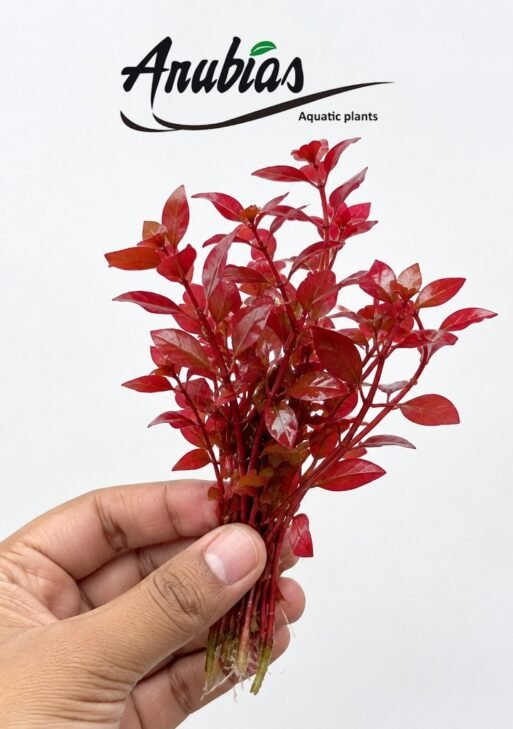
- No pink: light is medium or lower. Raise it; colour appears on new growth within two to three weeks.
- Leaf drop after arrival: some adaptation loss is normal in week one; new tips confirm recovery.
- Stunted tips: usually a micronutrient shortage. Dose a complete micro fertiliser.
What you receive
You receive one healthy portion of Rotala indica in the size you select (Small or Standard), similar to the one in the photo. It is checked before packing, wrapped moist and shipped across India from Surat. Live-arrival guarantee: record one continuous unboxing video within 4 hours of delivery and we refund or replace any plant that arrives damaged.
FAQ
Does Rotala indica need CO2?
No. It grows without CO2 under medium light, just more slowly. CO2 gives tighter leaf spacing and faster growth.
Is Rotala indica good for beginners?
Yes. It is slow, compact and tolerant of hard Indian water, so it needs less trimming and fewer adjustments than fast stem plants.
Rotala indica vs Rotala rotundifolia: what is the difference?
True Rotala indica has rounder, stiffer leaves, grows upright and slowly, and stays small. Rotala rotundifolia is faster, narrower-leaved and sprawls. Many shops sell rotundifolia under the indica name; ours is the slow, compact plant.
How fast does Rotala indica grow?
Slowly: 1–3 cm a week. Expect to trim every four to six weeks rather than fortnightly.
Can Rotala indica grow in a nano tank?
Yes, it is one of the best Rotalas for nano tanks because it stays short and dense.
Can Rotala indica grow in sand?
Yes, with liquid fertiliser or root tabs. Aquasoil helps because the plant is a slow grower that benefits from steady root nutrients.
Not sure what fits your tank? Plan it with our free AI tank planner.












There are no reviews yet.