
Description
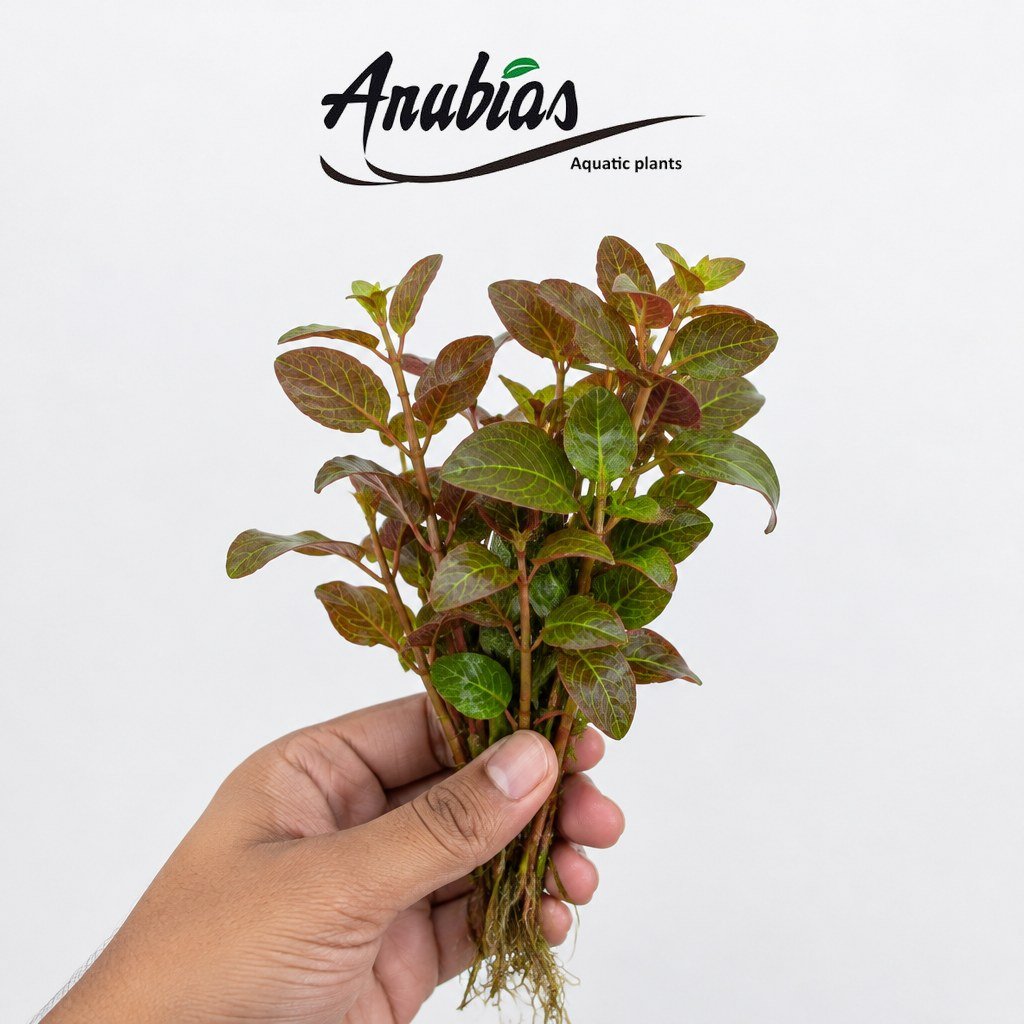
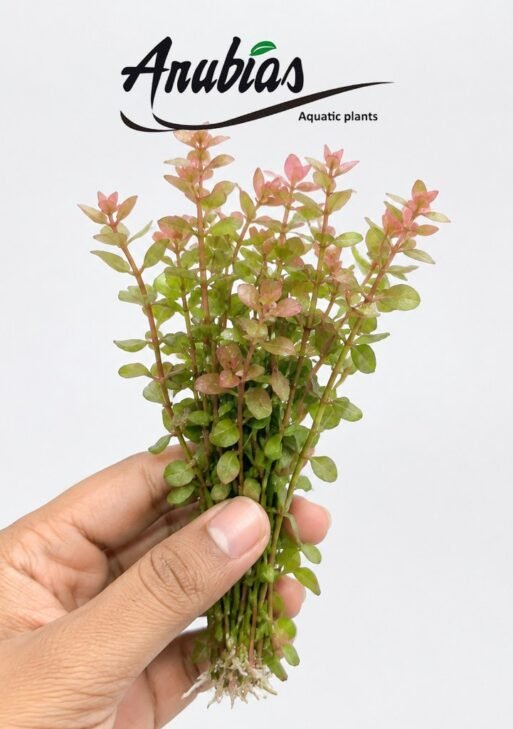
Ludwigia senegalensis is a West African stem plant with small, rounded leaves patterned in rust-red and copper with darker veins, a look that no other Ludwigia offers. It is a demanding plant that wants soft, acidic water, strong light and CO2, so it is best suited to hobbyists who already run a stable high-tech tank. Grown well, it forms a compact, intricately patterned midground group that becomes the detail everyone notices.
Ludwigia senegalensis at a glance
| Scientific name | Ludwigia senegalensis (also traded as Ludwigia sp. ‘Guinea’) |
|---|---|
| Family | Onagraceae |
| Origin | West Africa (Senegal, Guinea and neighbouring countries) |
| Difficulty | Medium to hard |
| Light | High |
| CO2 | Required for good growth |
| Temperature | 22–28 °C |
| pH | 5.0–6.8 |
| Growth rate | Slow to medium |
| Height/size | 15–40 cm tall; stems 3–5 cm wide |
| Placement | Midground |
| Propagation | Stem cuttings |
How to plant Ludwigia senegalensis
- Rinse the portion gently in dechlorinated water; the stems are brittle, so handle them by the base.
- Strip the leaves from the lowest 2–3 cm of each stem.
- Plant each stem with tweezers, 2–3 cm deep and 3 cm apart. It grows slowly, so give it space rather than crowding.
- Place it directly under the light, in the midground where it will not be shaded by taller plants.
- Keep flow gentle and avoid moving the stems once planted; it dislikes disturbance.
Plant it in a nutrient-rich, slightly acidic aquasoil. Inert sand or gravel is possible but gives weaker growth and makes the water chemistry harder to control.
Ludwigia senegalensis care: light, CO2, fertiliser and water
Light: Ludwigia senegalensis needs high light, roughly 70 PAR or more at the plant, to stay compact and show its rust-red veined pattern. Under medium light it grows green-bronze, loses the pattern and stretches.
CO2 is essential. Without injected CO2 at a steady 25–30 ppm it stalls, drops leaves and slowly fades. Stability matters as much as quantity; a CO2 swing during the day shows up as stunted tips within a week.
Fertiliser: dose a complete liquid fertiliser daily or on alternate days with ample iron and micronutrients. Keep nitrate moderate (5–10 ppm), phosphate and potassium plentiful, and iron steady for the strongest colour.
Indian conditions: this is the hard part. Ludwigia senegalensis wants soft, acidic water: GH 2–6, KH 0–3, pH 5.5–6.5. Hard borewell or municipal water (GH 12 and above, KH 8 and above) causes twisted, stunted growth and eventual decline. Plan on RO water remineralised lightly, or RO mixed with tap, and an aquasoil that buffers pH down. Summer temperatures above 28 °C stress it; a chiller or strong fan cooling is needed in most Indian cities from April to June. Keep CO2 and lights on the same inverter so monsoon power cuts never leave lights on without CO2.
Growth, trimming and propagation
Growth is slow to medium, about 1–3 cm a week even in good conditions. Trim only when stems reach the height you want, cutting just above a node and leaving at least 8 cm in the substrate. The base does branch, but slowly; density is built mainly by replanting tops.
Replant tops carefully and leave them undisturbed for two weeks. Because it is slow, keep the group small and tidy rather than trying to fill a large area. Propagation by cuttings is reliable, but allow three to four months for one portion to become a full midground group.
Where to use it in an aquascape
Ludwigia senegalensis is a midground detail plant for 2 ft (60–70 litre) tanks and larger high-tech layouts; in 3 ft and 4 ft tanks (120–250 litres) a compact patch in the front-middle, against green, is where its pattern shows best. It is too slow and demanding for low-tech or beginner tanks.
Pair it with fine green stem plants such as Rotala Ceylon behind, a low carpeting plant in front, and Anubias nana or Java fern on wood to one side. Soft-water fish such as tetras, rasboras and apistogrammas, plus Amano and cherry shrimp, are ideal company.
Avoid any fish that nibble plants or dig; the stems are brittle and slow to recover.
Common problems and fixes
- Stunted, twisted tips: hard water, unstable CO2 or low micronutrients. Soften the water with RO, hold CO2 steady and dose a full micro mix.
- Green, patternless leaves: light too low. Raise intensity; the pattern returns on new growth.
- Leaf drop and melt: usually a CO2 problem or sudden parameter change. Stabilise and wait; do not replant.
- Very slow growth: expected. Check CO2 and nitrate before changing anything else.
- Algae on leaves: slow plants collect algae if light exceeds CO2. Shorten the photoperiod and add shrimp.
- Summer decline: water above 28 °C. Cool the tank before the heat arrives.
What you receive
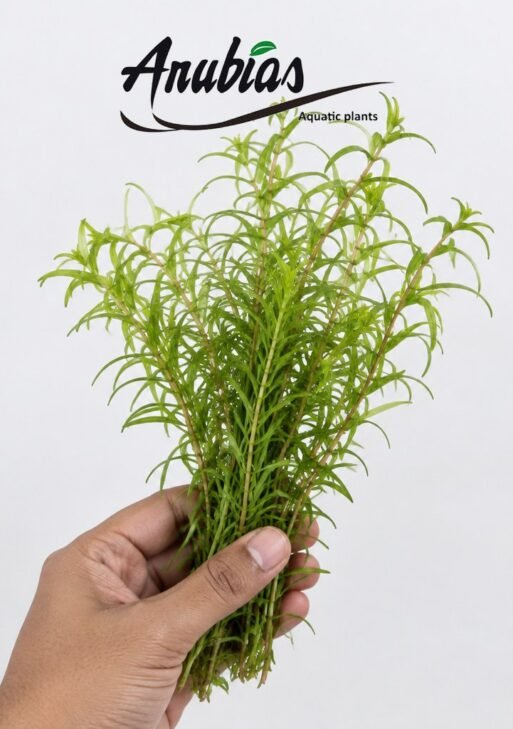
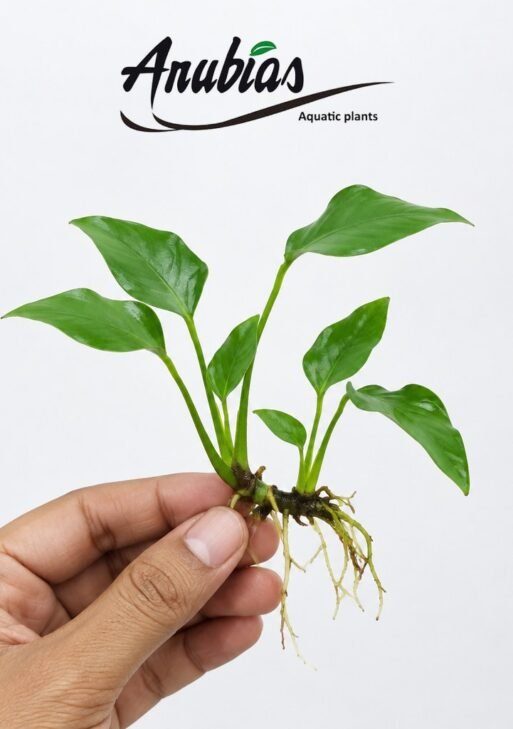
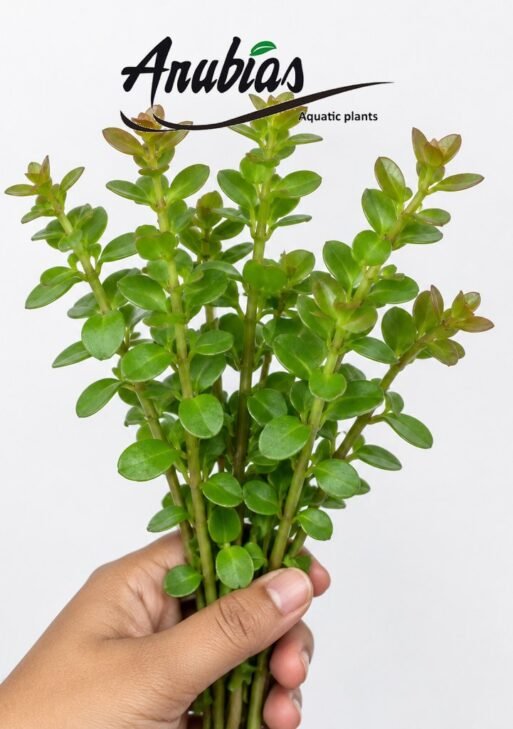
You receive one healthy portion of Ludwigia senegalensis in the size you select (Small or Standard), similar to the photo. It is checked before packing, wrapped moist and shipped across India from Surat. Live-arrival guarantee: record one continuous unboxing video within 4 hours of delivery and we refund or replace any plant that arrives damaged.
FAQ
Does Ludwigia senegalensis need CO2?
Yes. It needs steady injected CO2 and high light. Without CO2 it stalls, drops leaves and declines.
Is Ludwigia senegalensis good for beginners?
No. It needs soft acidic water, high light, CO2 and stable conditions. Beginners wanting a red Ludwigia should start with Ludwigia Mini Super Red.
Can Ludwigia senegalensis grow in hard water?
Not well. It needs GH 2–6 and KH 0–3; in hard Indian tap water it stunts and twists. Use RO water and a buffering aquasoil.
How fast does Ludwigia senegalensis grow?
Slowly, about 1–3 cm a week in a well-run high-tech tank.
Ludwigia senegalensis vs Ludwigia Super Red: what is the difference?
Super Red is a plain deep red and easy; senegalensis has rust-copper leaves with dark veining and is far more demanding.
Why are the new leaves of my Ludwigia senegalensis twisted?
Almost always hard water or unstable CO2, sometimes a micronutrient shortage. Soften the water, hold CO2 constant and dose a complete micro fertiliser.
Not sure what fits your tank? Plan it with our free AI tank planner.











There are no reviews yet.