Description
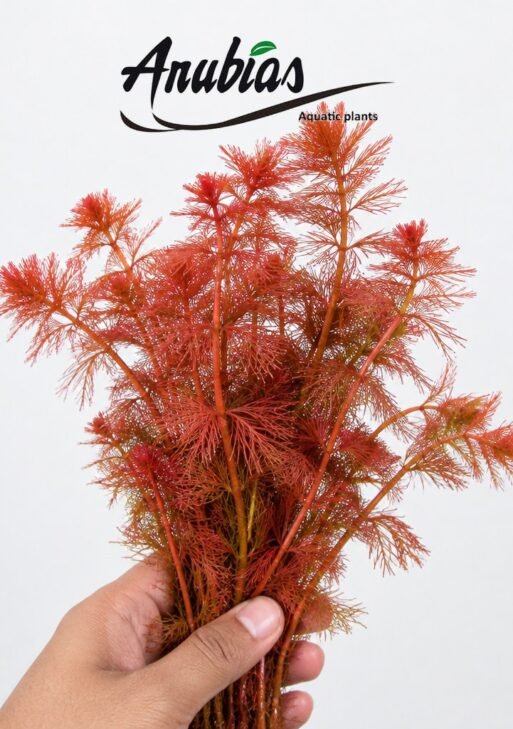
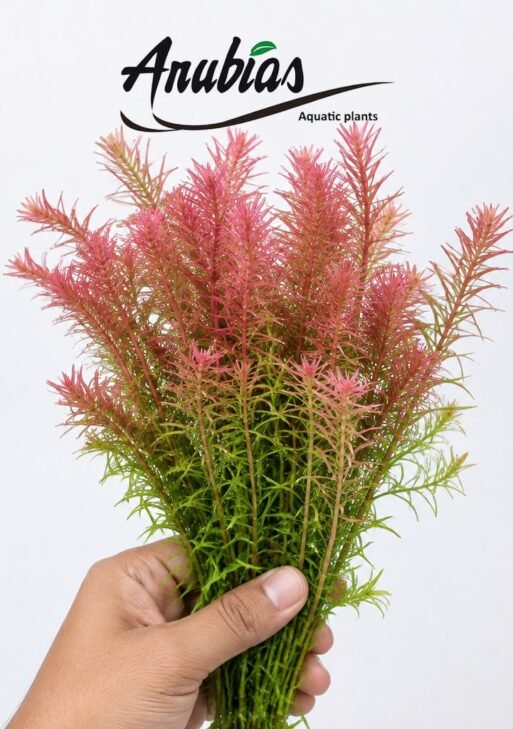
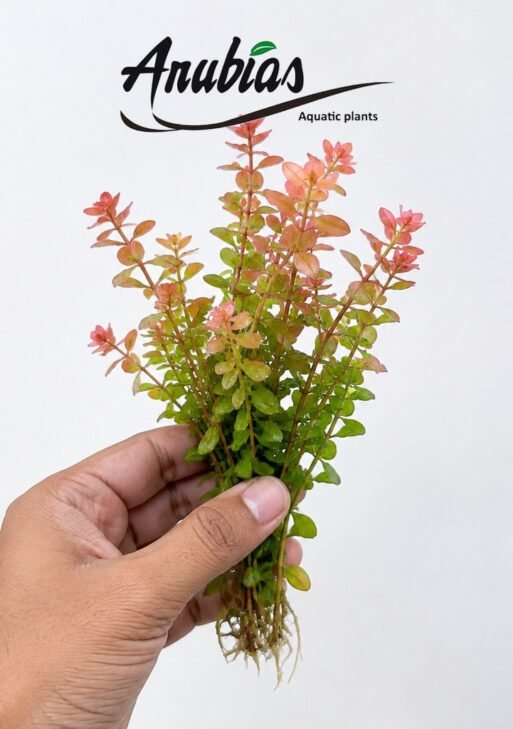
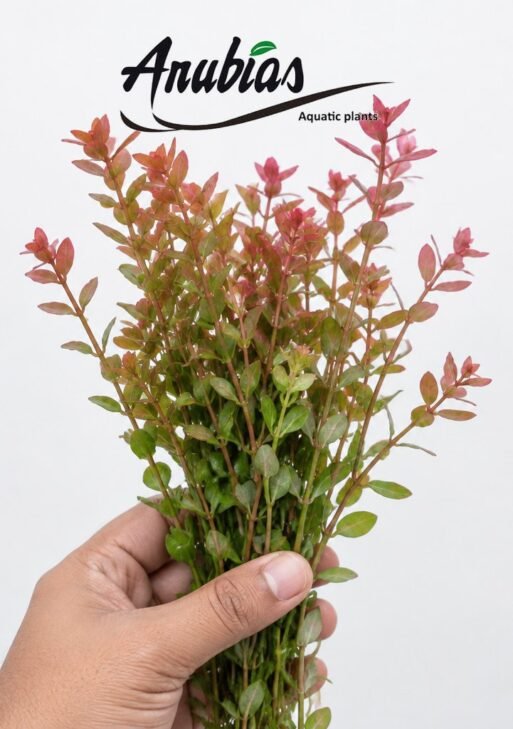
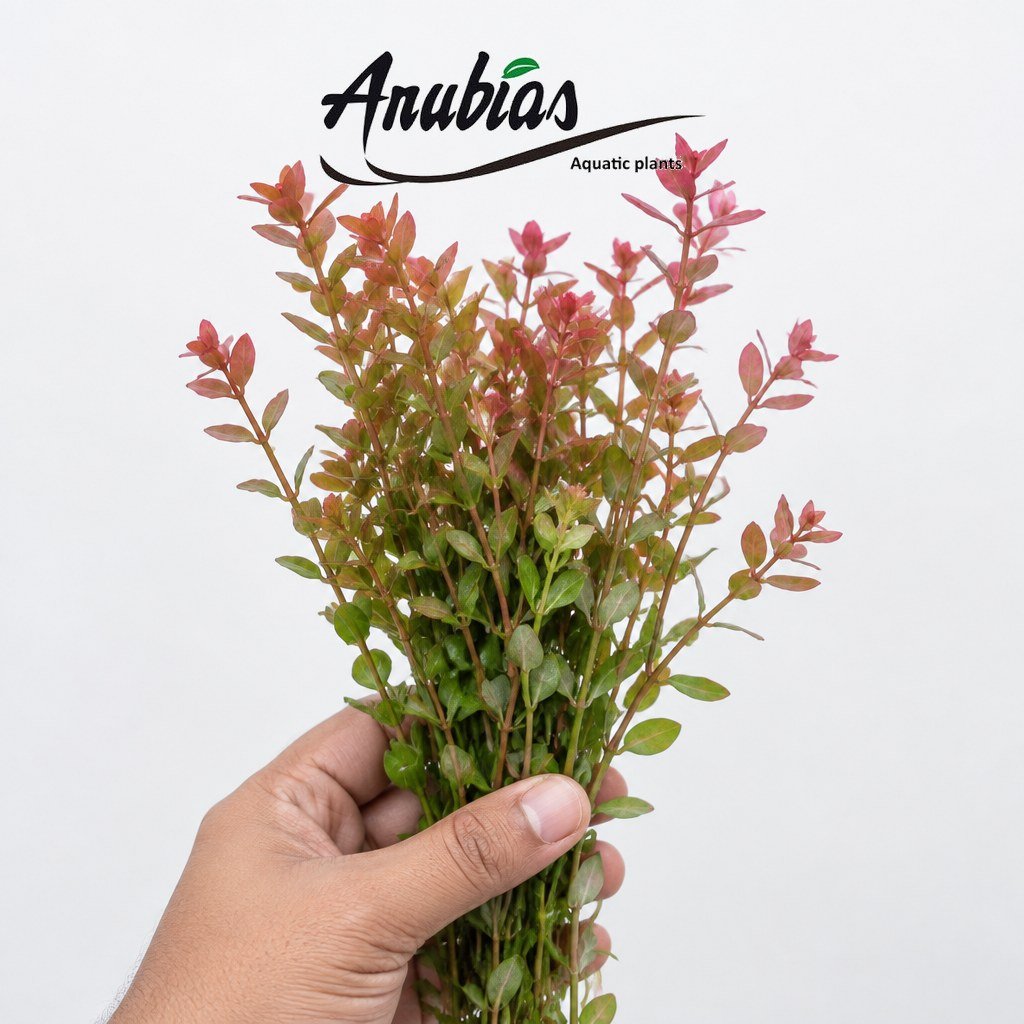
Rotala rotundifolia is one of the best first red plants: a fast, forgiving stem plant from South and South-east Asia whose narrow leaves stay green in lower light and turn pink to orange at the tips under bright light. It roots in substrate, grows with or without CO2, bushes out when trimmed and is the standard background plant in Dutch and nature-style aquascapes. Rotala rotundifolia suits beginners who want colour without the demands of true red stems, and experienced scapers who want a dense, shapeable background.
Rotala rotundifolia at a glance
| Scientific name | Rotala rotundifolia (also sold as Rotala indica in the trade; round-leaf toothcup) |
|---|---|
| Family | Lythraceae |
| Origin | India, Sri Lanka, South-east Asia and southern China; rice paddies and wet margins |
| Difficulty | Easy |
| Light | Medium to high; colour needs high light |
| CO2 | Not required; speeds growth and improves colour |
| Temperature | 22–28 °C |
| pH | 6.0–7.5 |
| Growth rate | Fast |
| Height/size | No fixed height; untrimmed stems pass 30 cm and bend along the surface; leaves 1–2 cm |
| Placement | Midground to background |
| Propagation | Stem cuttings |
How to plant rotala rotundifolia
Rotala is a classic stem plant: each stem is planted individually and the group thickens as you trim and replant the tops.
- Remove any band from the bunch, separate the stems and rinse them in tank-temperature water.
- Strip the leaves from the bottom 3–4 cm of each stem so nothing rots under the substrate.
- Push each stem 3–4 cm into the substrate with tweezers. Aquasoil is ideal; sand and gravel work with root tabs and liquid fertiliser.
- Space the stems 2–3 cm apart. Rotala is thin, so close spacing gives a full look from the start while still letting light reach the lower leaves.
- Plant the group in a rough triangle or wedge against the back or side glass, taller at the back.
Fresh stems root within a week. Some may float up in the first days; push them back in or weigh them with a small stone.
Rotala rotundifolia care: light, CO2, fertiliser and water
Light. Medium light gives healthy green growth with slightly pink tips. High light turns the top third of each stem pink to orange, and the stems grow more compact with leaves closer together. Under low light the stems stretch, go plain green and shed lower leaves. A photoperiod of 7–8 hours is enough; colour comes from intensity, not duration.
CO2. Optional. Rotala rotundifolia grows well without CO2 in medium light, which is why it is a beginner favourite. With CO2 it grows two to three times faster, colours more strongly and forms the dense bushes seen in competition scapes.
Fertiliser. A weekly complete liquid fertiliser with iron is the key to colour. Iron and slightly limited nitrate bring out the pinks and oranges; plenty of nitrate keeps the plant greener. Root tabs help in inert gravel. Pale new tips mean more iron; pinholes in old leaves mean more potassium.
Water. Hard Indian tap water is fine. The comfortable range is 22–28 °C; it comes from Indian paddies and tolerates summer spikes to 30 °C better than most stems, though growth slows and lower leaves drop if the heat continues for weeks. Shade the tank and add surface agitation in May and June. Monsoon power cuts of a day do no harm. Weekly 30% water changes keep nutrients balanced.
Growth, trimming and propagation
Rotala rotundifolia grows fast: several centimetres a week in good conditions, more with CO2. Left alone the stems reach the surface, bend along it and keep going, shading everything below. Trim when the tops come within a few centimetres of the surface, cutting the upper 8–10 cm.
Each cut stem branches into two or three new shoots just below the cut, so repeated trimming turns a thin row into a dense bush. Shape the group by cutting the back stems taller and the front stems shorter. Every two or three months, when the lower stems get bare and woody, pull the whole group, discard the old bases and replant the fresh tops.
Propagation is simply replanting the trimmed tops. Any cutting with four or five pairs of leaves roots within a week.
Where to use it in an aquascape
Rotala rotundifolia is the background workhorse. In 2 ft tanks (60–90 litres) a bunch planted along the back corner gives a soft pink-tipped wall within a month. In 3 ft tanks (120–200 litres) it forms the main background mass in Dutch-style street layouts and nature-style scapes, trimmed into a rounded hill behind the hardscape. In nano tanks of 1 ft (15–20 litres) it still works as a background if trimmed every week to keep it in scale.
Combine it with other stem plants of different leaf shapes for contrast, with Anubias nana and Java fern on hardscape in the midground, and with a low carpet from our carpeting plants in front. Floating plants overhead will cost it colour, so keep the surface open above the rotala.
It is safe with shrimp and most community fish: tetras, rasboras, bettas, gouramis, corydoras and dwarf cichlids. Goldfish and large cichlids eat or uproot it.
Common problems and fixes
- Stems green with no pink. Cause: not enough light intensity or iron. Fix: stronger light directly over the group and weekly iron dosing.
- Lower leaves dropping, bare stems. Cause: the group is too dense or the light too weak to reach the base. Fix: trim, thin the group and replant the tops.
- Stems stretching tall and thin. Cause: low light. Fix: increase intensity; trim and replant.
- Melt after planting. Cause: emersed-grown leaves adjusting to submersion. Fix: trim melted parts; new growth appears within a week or two.
- Stems floating up. Cause: shallow planting or fish. Fix: replant deeper, weigh down with a stone.
- Hair or thread algae on the tops. Cause: high light with inconsistent CO2 or nutrients. Fix: balance CO2 and fertiliser, shorten the photoperiod, add Amano shrimp.
What you receive
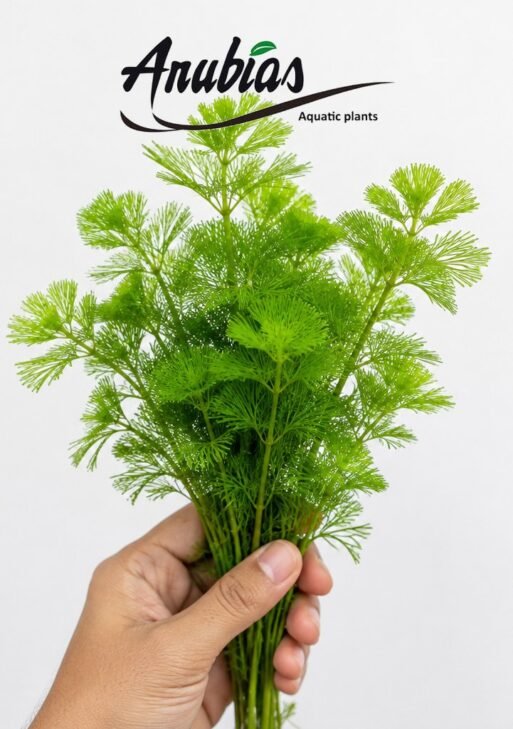
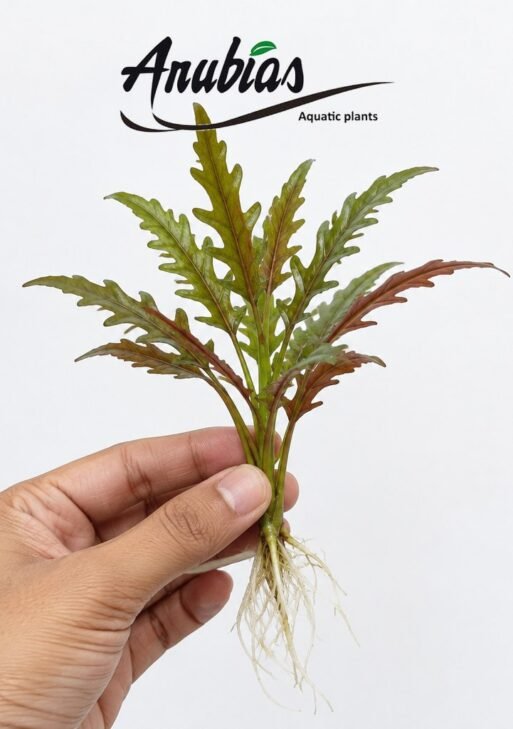
One healthy rotala rotundifolia bunch of the size you select (Small or Standard), similar to the photo. Each plant is checked before packing, packed moist and shipped across India from Surat. ₹99 shipping, free on orders of ₹999 or more.
Live-arrival guarantee: record one continuous unboxing video within 4 hours of delivery and we will refund or replace a plant that arrived damaged.
FAQ
Does rotala rotundifolia need CO2?
No. It grows well in medium light without CO2. CO2 makes it faster, denser and more colourful.
Is rotala rotundifolia good for beginners?
Yes. It is one of the most forgiving stem plants and the easiest way to add pink and orange to a tank.
How do I make rotala rotundifolia turn red?
High light intensity directly over the plant, weekly iron dosing and CO2 if possible. The tops turn pink to orange; it never goes deep red like rotala blood red.
How fast does rotala rotundifolia grow?
Several centimetres a week in good light, more with CO2. Trim when the tops near the surface.
Can rotala rotundifolia grow in sand or gravel?
Yes, with root tabs and weekly liquid fertiliser. Aquasoil gives faster, denser growth.
Rotala rotundifolia vs rotala indica: are they the same?
Most plants sold as rotala indica in the trade are actually rotala rotundifolia. True Rotala indica (Ammannia sp. ‘Bonsai’) is a different, slower, upright plant.
Why are the lower leaves of my rotala falling off?
The group is too dense or the light does not reach the base. Trim, thin the stems and replant the healthy tops.
Not sure what fits your tank? Plan it with our free AI tank planner.