
Description
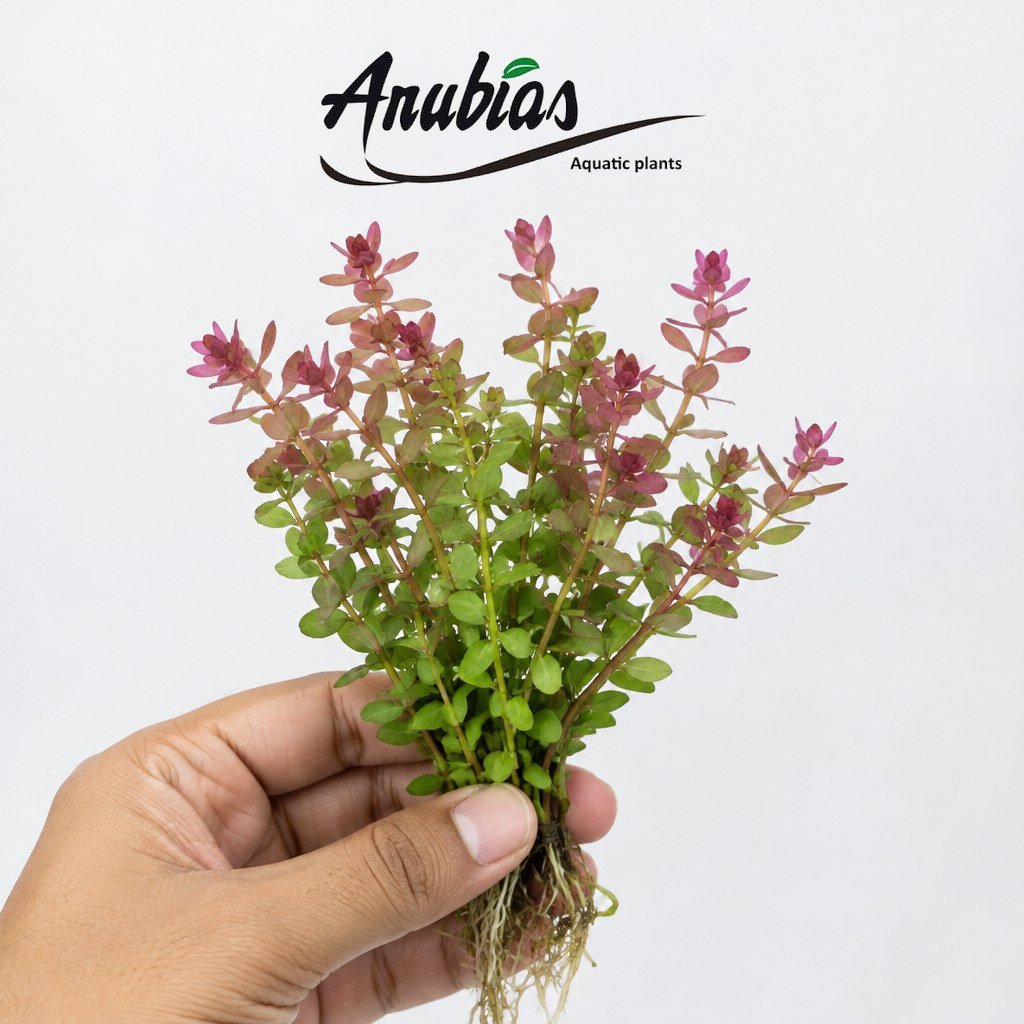
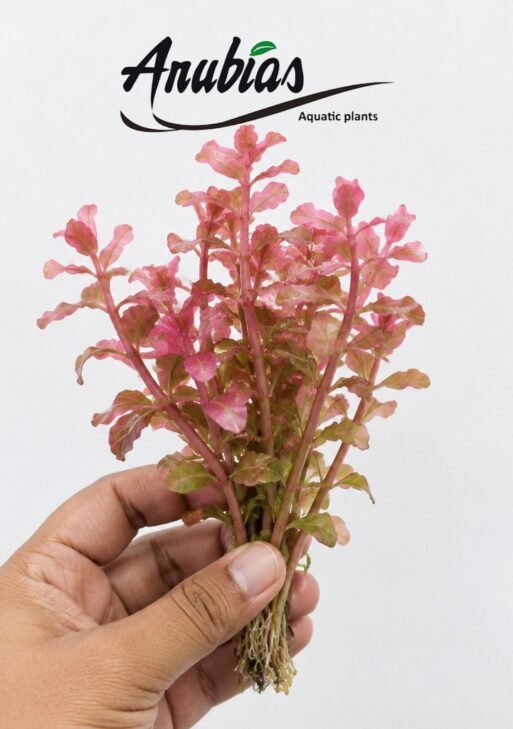
Rotala rotundifolia Twilight (Rotala rotundifolia ‘Twilight’) is a cultivated form of the common Rotala rotundifolia whose narrow leaves take on dusky pink, mauve and purplish-red tones under strong light, instead of the plain orange of the common form. Like every rotundifolia it is tough, fast and forgiving of Indian tap water, so it suits beginners who want something a little different, as well as aquascapers building a mid or background stand with an unusual colour.
Rotala rotundifolia ‘Twilight’ at a glance
| Scientific name | Rotala rotundifolia ‘Twilight’ |
|---|---|
| Family | Lythraceae |
| Origin | Cultivated form; species native to India, Sri Lanka and Southeast Asia |
| Difficulty | Easy to medium |
| Light | Medium to high; high for purple-pink colour |
| CO2 | Optional; recommended for colour and compact growth |
| Temperature | 20–28 °C |
| pH | 5.5–7.5 |
| Growth rate | Fast |
| Height/size | 15–40 cm tall |
| Placement | Midground to background |
| Propagation | Stem cuttings |
How to plant Rotala rotundifolia ‘Twilight’
- Rinse the portion in dechlorinated water and cut off any soft or browned stem ends.
- Strip leaves from the bottom 2–3 cm of each stem.
- Plant each stem individually with tweezers, 3–4 cm deep and 2–3 cm apart. Individual planting lets light reach every stem and stops rot in the middle of a bunch.
- Place the group where it gets the strongest light in the tank, usually directly under the fixture rather than at the far edges.
- Keep flow moderate for the first week until roots take hold.
Any substrate works. Aquasoil gives the quickest establishment; sand or gravel needs liquid fertiliser from day one.
Rotala rotundifolia ‘Twilight’ care: light, CO2, fertiliser and water
Light controls everything about this plant’s appearance. In low light it looks like ordinary green rotundifolia. In medium light the tips pick up pink. Only under high light (roughly 60 PAR or more at the plant) with CO2 do the upper leaves show the dusky purple-pink that gives ‘Twilight’ its name. Be realistic: on a basic low-output LED it will be a healthy green plant, not a purple one.
CO2 is optional for survival but makes a visible difference. Injected CO2 at 20–30 ppm shortens the internodes, narrows the leaves and deepens the colour.
Fertiliser: dose a complete liquid fertiliser with iron and micronutrients. Moderate nitrate (5–10 ppm) with adequate phosphate and iron brings out the best tones; very high nitrate pushes it greener.
Indian conditions: hard tap water up to GH 15 is fine, although the purple tones are strongest in softer water. Summer heat of 28–32 °C slows it and fades the colour; use a surface fan in peak summer. It tolerates monsoon power cuts of several hours. If you run CO2 on a timer with your lights, keep both on the same inverter so light never runs without CO2.
Growth, trimming and propagation
Rotala rotundifolia ‘Twilight’ grows 3–7 cm a week in a CO2 tank. Trim every two to three weeks before the tops reach the surface, cutting just above a node and leaving 8–12 cm in the substrate. The cut base produces two or more shoots, which builds a dense stand.
Replant the trimmed tops, which carry the best colour, at the front of the group. Over three or four trims the group becomes a solid, rounded bush. Propagation is the same process; one portion fills the back corner of a 2 ft tank within two to three months.
Where to use it in an aquascape
Use it as a midground or background accent in tanks from 1.5 ft (about 40 litres) upwards. In 2 ft (60–70 litre) tanks a single group under the light makes a striking colour spot; in 3 ft and 4 ft tanks (120–250 litres) a broad stand of ‘Twilight’ between green and red stem plants gives a three-colour gradient that few other plants can.
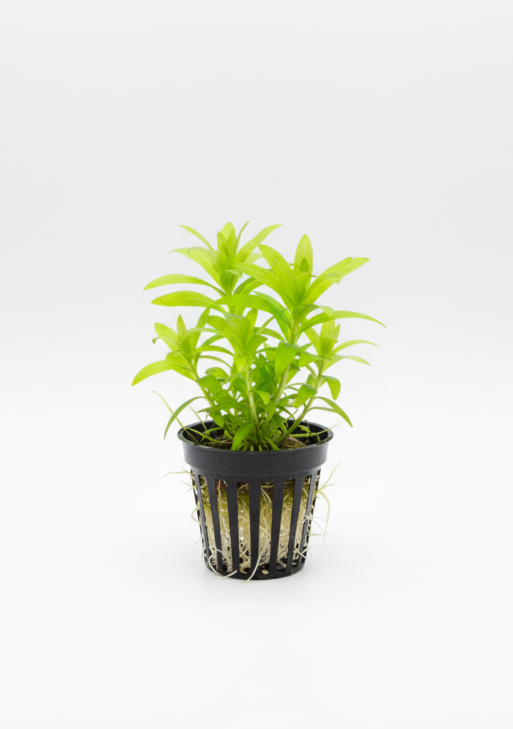
Pair it with green Rotala Ceylon or Hygrophila polysperma behind, Rotala Blood Red beside it, Anubias nana or Java fern on wood in front, and a low carpeting plant at the base.
It is safe with all community fish and shrimp. Avoid goldfish and large cichlids that uproot stems.
Common problems and fixes
- Plant is green, not purple: light is too weak. Increase intensity, add CO2 and give it three weeks; new growth shows the colour first.
- Leggy, thin stems: low light or no CO2. Trim short and replant the tops directly under the fixture.
- Tops stunted or twisted: micronutrient shortage or unstable CO2. Dose a full micro mix and keep CO2 steady.
- Lower leaves drop: canopy shading. Trim and thin more often.
- Algae on leaves: light outrunning CO2 and nutrients. Reduce the photoperiod to 6–7 hours and clean up with a trim.
- Leaf loss after shipping: normal in the first week; fresh tips within 7–10 days mean it has adapted.
What you receive
You receive one healthy portion of Rotala rotundifolia ‘Twilight’ in the size you select (Small or Standard), similar to the photo. Plants are checked before packing, wrapped moist and shipped across India from Surat. Live-arrival guarantee: record one continuous unboxing video within 4 hours of delivery and we refund or replace any plant that arrives damaged.
FAQ
Does Rotala rotundifolia ‘Twilight’ need CO2?
Not to survive, but yes to look its best. Without CO2 it grows green and slightly leggy; with CO2 and strong light it becomes compact and purple-pink.
Is Rotala ‘Twilight’ good for beginners?
Yes, as a plant it is as tough as any Rotala rotundifolia. Getting the purple colour, however, needs high light and CO2, so beginners should expect a green plant with pink tips until they upgrade.
Rotala ‘Twilight’ vs Rotala Blood Red: which is redder?
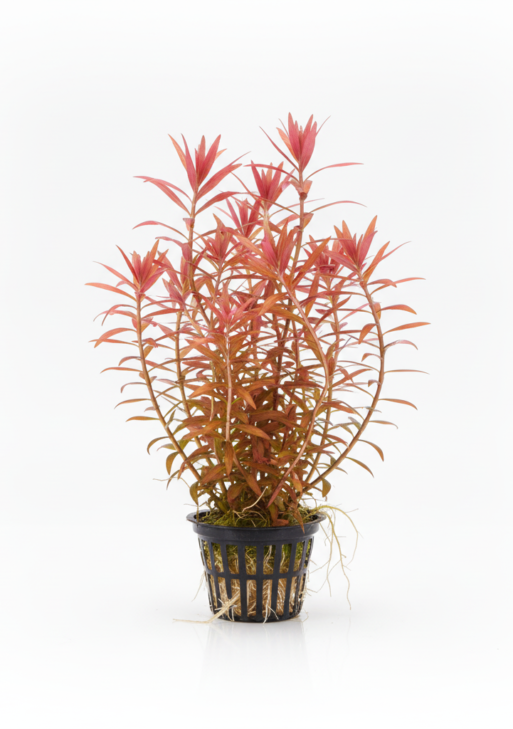
Blood Red is a saturated crimson; ‘Twilight’ leans dusky pink and purple. Blood Red also colours up under slightly less light, so pick it if your lighting is modest.
How fast does Rotala ‘Twilight’ grow?
Fast: 3–7 cm a week in a CO2 tank, slower without. Trim every two to three weeks.
Can Rotala ‘Twilight’ grow in gravel?
Yes. It roots in gravel or sand provided you dose liquid fertiliser; aquasoil simply gives faster growth.
Why are the lower leaves of my Rotala falling off?
The tops are shading them. Trim regularly, keep the group loose enough for light to reach the base, and replant tops instead of letting old stems grow tall.
Not sure what fits your tank? Plan it with our free AI tank planner.











There are no reviews yet.