
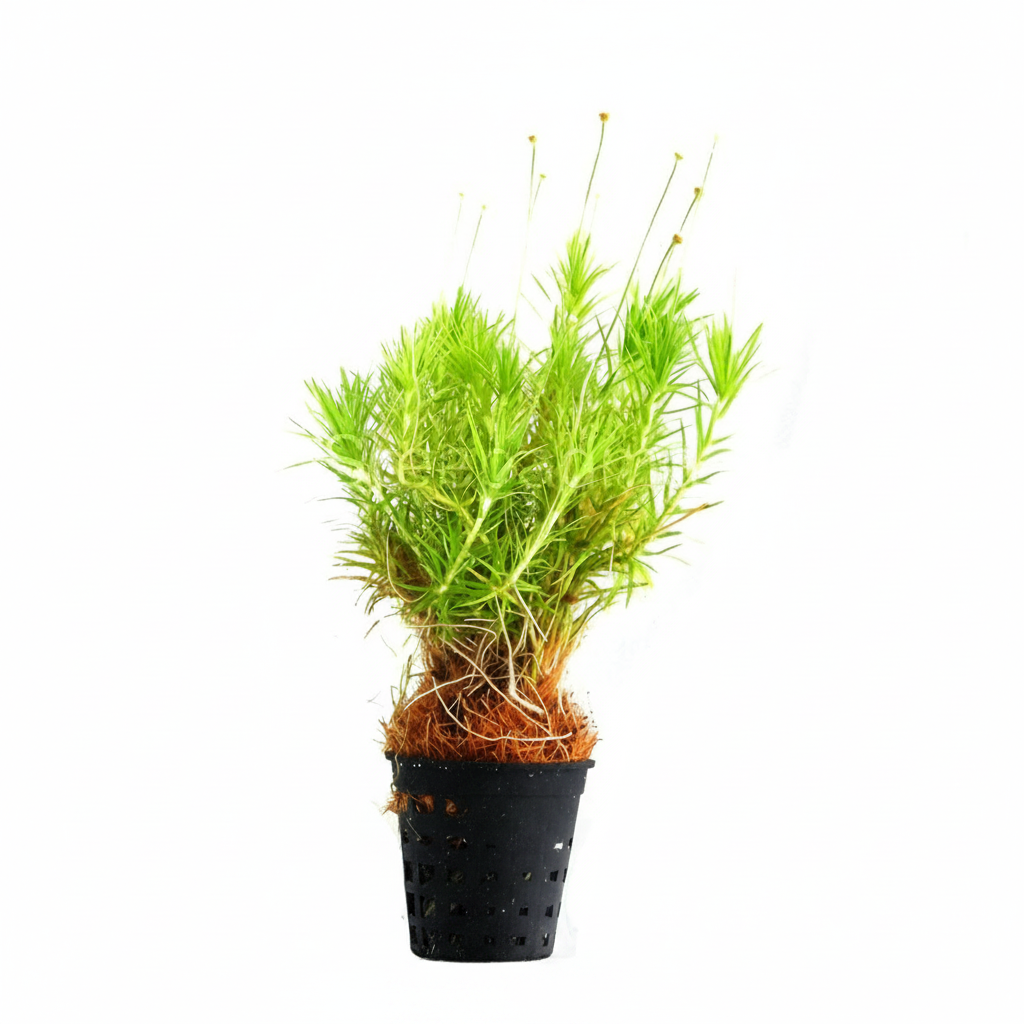
Description
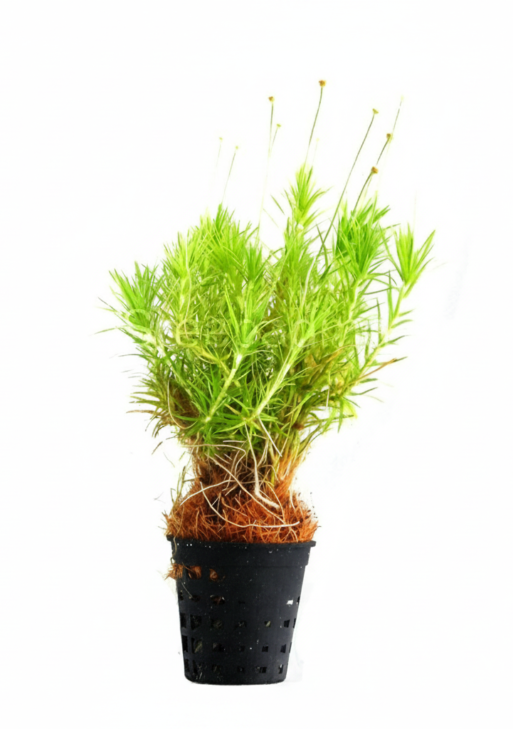
Syngonanthus ‘Lago Grande’ is a soft-water stem plant from the Brazilian Amazon, prized for its whorls of fine, needle-like leaves that form bright green, star-shaped rosettes up the stem – a texture nothing else in the planted tank provides. It is one of the demanding “Eriocaulaceae” plants: soft, acidic water, strong light and CO2 are not optional. This Syngonanthus is for experienced aquascapers with an RO-water high-tech setup who want a midground accent that stands out in competition-style layouts.
Syngonanthus ‘Lago Grande’ at a glance
| Scientific name | Syngonanthus sp. ‘Lago Grande’ (Syngonanthus anomalus group) |
|---|---|
| Family | Eriocaulaceae |
| Origin | Amazon basin, Brazil (Lago Grande region) |
| Difficulty | Difficult |
| Light | High |
| CO2 | Required, 25–30 ppm |
| Temperature | 22–28 °C |
| pH | 5.0–6.5 |
| Growth rate | Slow to moderate |
| Height/size | 10–30 cm; rosettes 3–5 cm across |
| Placement | Midground; accent groups |
| Propagation | Stem cuttings; side shoots |
How to plant Syngonanthus ‘Lago Grande’
- Prepare the water first. Before the plant arrives, have the tank running on RO or rainwater remineralised to GH 2–4, KH 0–2, pH 5.5–6.5, with CO2 stable. Planting Syngonanthus into hard tap water wastes the plant.
- Soft, nutrient-rich substrate. Aquarium soil (ammonia-free type) is required; the fine roots will not take hold in coarse gravel.
- Plant singly. Strip the bottom 2 cm of leaves, push each stem 2–3 cm in with fine tweezers, 2–3 cm apart.
- Brightest spot. Directly under the strongest light, never shaded.
- Leave it alone. Do not replant or move it for the first month; disturbed roots stall for weeks.
Syngonanthus ‘Lago Grande’ care: light, CO2, fertiliser and water
Water chemistry is everything. Indian tap and borewell water is far too hard. Use RO water with a small dose of GH remineraliser and no KH buffer. Many growers add a little peat or catappa leaf to hold pH around 6. Weekly 30–50 per cent water changes with matching water keep it stable.
Light. High – 1 W per litre of LED or more. In weaker light the rosettes open up and the stem stretches.
CO2. 25–30 ppm, continuous and stable during the photoperiod, with good flow across the plant. Fluctuating CO2 is the fastest way to lose it.
Fertiliser. Lean but complete: low nitrate (5–10 ppm), moderate phosphate, generous potassium and daily micronutrients including iron. Heavy nitrogen dosing causes stunting in Eriocaulaceae.
Heat and power cuts. Keep the water at 28 °C or below in summer – a fan over the surface and a lid off help. A monsoon power cut of several hours stops CO2 and flow; the plant tolerates one occasionally, but repeated outages cause stunted tips. A small battery-backed air pump is worth having.
Growth, trimming and propagation
Growth is slow to moderate – roughly 1 cm a week when settled. Once a stem reaches the desired height, cut it in the middle and replant the top; the base sends out two or three side shoots and forms a denser group. Cuttings root in two to three weeks in soil.
The plant also throws side shoots from the lower nodes; these can be separated when they have their own roots. Keep groups of five to nine stems for the best effect, and trim the tallest stems first so the group keeps a rounded outline.
Where to use it in an aquascape
- Nano high-tech (1 ft / 30 cm, 20–30 L): a single group of five stems as the focal point among a fine carpet from our carpeting plants range.
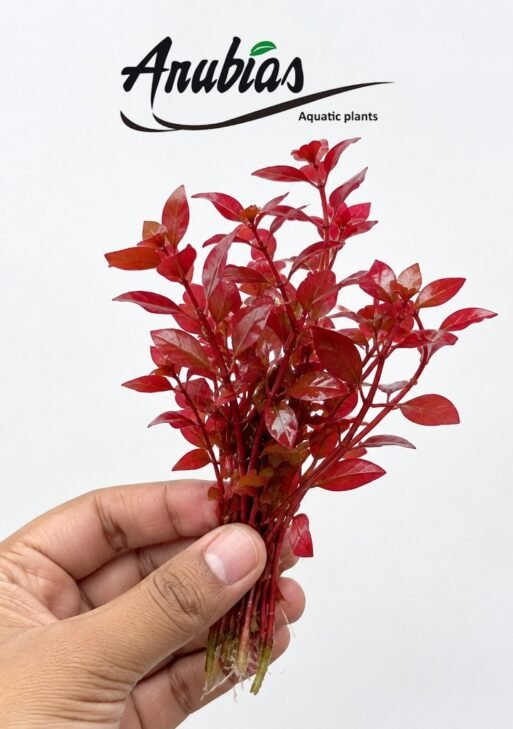
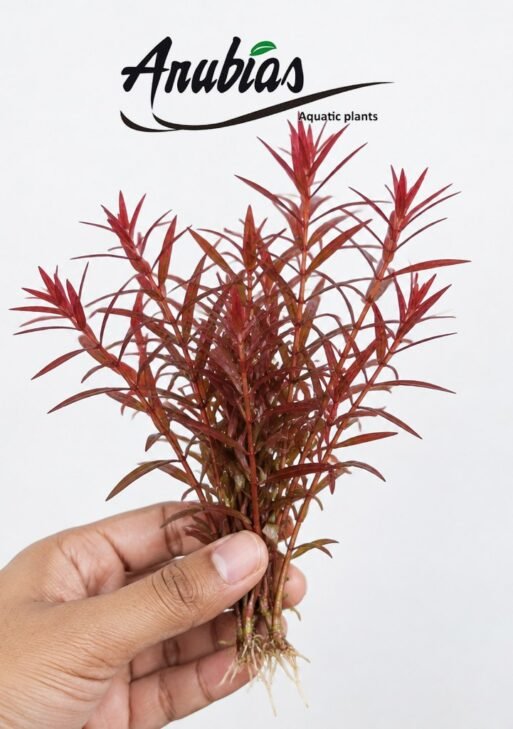
- 2 ft (60 cm, 60–80 L) competition layout: accent groups in the midground, with Rotala or other soft-water stem plants behind and Anubias nana on wood for contrast.
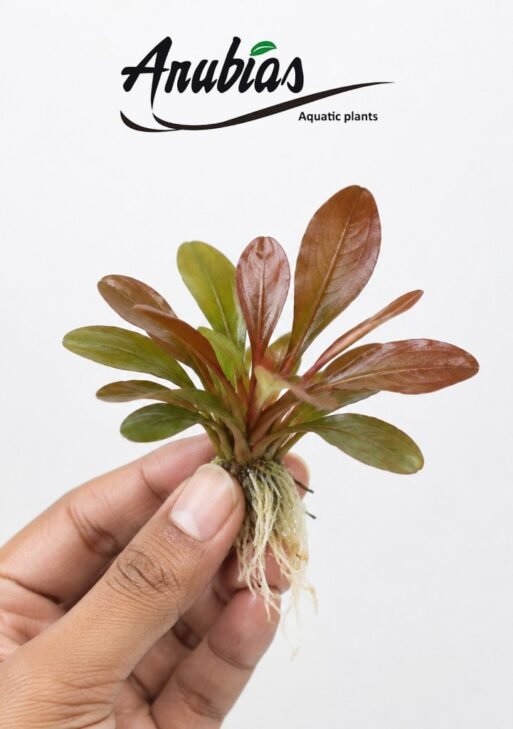
- South American blackwater style: alongside Tonina and soft-water Echinodorus.
Fish: small tetras, Apistogramma, otocinclus and Caridina shrimp that share its soft-water needs. Not suitable for livebearers or hard-water fish.
Common problems and fixes
- Stunted, twisted tips. Water too hard, CO2 unstable or excess nitrogen. Check GH, steady the CO2 and reduce nitrate.
- Stem rots from the base. Substrate too coarse or lower leaves buried; replant cleanly in soil.
- Rosettes opening, stem stretching. Not enough light; raise intensity or move the plant.
- White or pale new growth. Iron or micronutrient shortage; dose daily.
- Melting after arrival. Water-chemistry shock. Match parameters before planting; recovery takes a month.
- Green spot algae on leaves. Low phosphate under high light; raise phosphate slightly.
What you receive
One healthy portion of Syngonanthus ‘Lago Grande’ in the size you select – Small or Standard – similar to the plant in the photo. Checked before packing, packed moist and shipped across India from Surat. Live-arrival guarantee: record one continuous unboxing video within 4 hours of delivery and, if the plant arrived damaged, we refund or replace it.
FAQ
Is Syngonanthus suitable for beginners?
No. It needs RO water, high light, stable CO2 and careful fertilising. It is a plant for experienced high-tech aquascapers.
Can Syngonanthus grow in Indian tap water?
Not in most cities. Tap and borewell water is too hard; use RO or rainwater remineralised to GH 2–4.
Does it need CO2?
Yes, 25–30 ppm and stable. Without CO2 it stunts and dies back.
How fast does it grow?
Slowly – about 1 cm a week once established, so trimming is needed only every few weeks.
Why are the new tips stunted?
Usually hard water or fluctuating CO2; sometimes too much nitrogen. Fix the water first.
Syngonanthus vs Tonina fluviatilis?
Both are soft-water Eriocaulaceae. Syngonanthus ‘Lago Grande’ has finer, needle-like whorls and stays shorter; Tonina has broader leaves and grows taller. Care is identical.
Not sure what fits your tank? Plan it with our free AI tank planner.












There are no reviews yet.