

Description
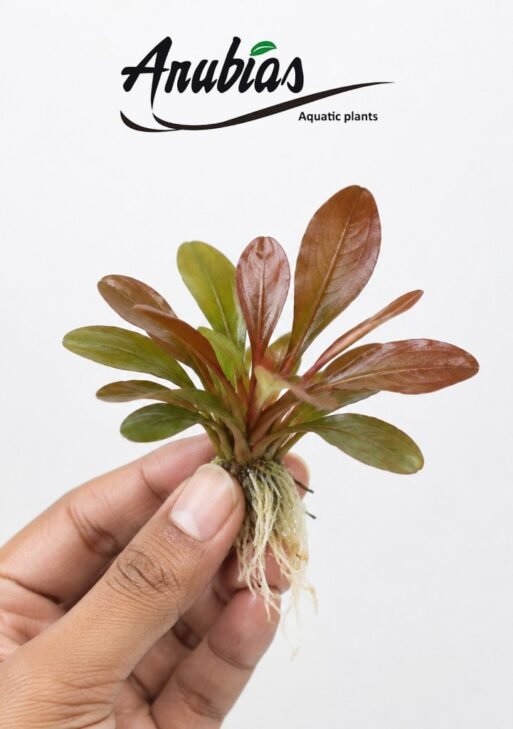
Samolus parviflorus ‘Red’ is a small rosette plant – the water pimpernel – whose spoon-shaped leaves take on a reddish-bronze flush under strong light, making it a rare red option for the foreground and midground. It is a slow, compact plant rather than a true stem plant, growing as a low crown of leaves 5–12 cm across. It suits aquarists who want a tidy, lettuce-like rosette in the front of the tank and are prepared to give it good light and patience.
Samolus parviflorus ‘Red’ at a glance
| Scientific name | Samolus parviflorus ‘Red’ (Samolus valerandi subsp. parviflorus) |
|---|---|
| Family | Primulaceae |
| Origin | The Americas; the species is widespread in wet, often brackish places |
| Difficulty | Medium |
| Light | Medium to high (high for red colour) |
| CO2 | Recommended; grows slowly without |
| Temperature | 18–28 °C |
| pH | 6.5–8.0; tolerates hard water |
| Growth rate | Slow |
| Height/size | 5–10 cm tall; rosette 5–12 cm across |
| Placement | Foreground or midground |
| Propagation | Side rosettes; seed when grown emersed |
How to plant Samolus parviflorus ‘Red’
- Crown at the surface. Push the roots into the substrate so the base of the rosette sits level with it. A buried crown rots.
- Nutrient substrate. Aquarium soil or gravel with a root tab beneath each rosette; Samolus feeds mainly through its roots.
- Spacing. 6–8 cm between rosettes so each has room to spread and light reaches the outer leaves.
- Bright, open position. Place it in the front where nothing shades it; the red tint needs direct light.
- Expect a transition. Emersed-grown rosettes may lose some outer leaves in the first weeks; new submerged leaves follow from the centre.
Samolus parviflorus ‘Red’ care: light, CO2, fertiliser and water
Light. Medium light keeps the plant alive and green; high light (0.8–1 W per litre LED) at the front of the tank brings out the red-bronze flush. Under weak light the leaves stay green and the rosette loosens.
CO2. Strongly recommended. Without CO2 the rosette grows a leaf every couple of weeks and stays small; with CO2 it fills out and colours up far better.
Fertiliser. A root tab every two months plus a weekly complete liquid fertiliser. Iron supports the red colour; nitrate at 10–20 ppm keeps older leaves from yellowing.
Water. Samolus is unusual in liking hard water – the species grows in brackish marshes – so Indian tap and borewell water suit it. The limitation is heat: it prefers cooler water and slows above 28 °C. In May and June keep the tank as cool as you can; it recovers in the monsoon. Power cuts are tolerated well because the plant is slow and stores reserves in its crown.
Growth, trimming and propagation
Growth is slow – a new leaf every one to two weeks – so there is little trimming. Remove the oldest outer leaves at the base when they yellow or collect algae; this keeps the rosette compact.
A mature rosette produces small side rosettes at its base. Separate these with a clean blade once they have a few leaves and roots of their own, and plant them 6–8 cm away. Grown emersed in a wet paludarium, Samolus flowers freely and sets seed, but under water propagation is by division only.
Where to use it in an aquascape
- Nano and 1.5 ft (45 cm, 30–40 L) tanks: three to five rosettes along the front edge as a red-tinted foreground, with Anubias nana on stone behind.
- 2 ft (60 cm, 60–80 L) tanks: a cluster in the front-midground between a carpet from our carpeting plants range and Cryptocoryne.
- Hard-water tanks: one of the few red-tinged foreground plants that tolerates livebearer and rainbowfish water.
Fish: small tetras, rasboras, guppies, endlers, otocinclus and shrimp. Avoid goldfish and plant-eating cichlids.
Common problems and fixes
- Stays green, no red. Light too weak or iron short. Move it to the brightest front position and dose iron.
- Crown rots. Planted too deep or soil too fine and anaerobic; replant at surface level.
- Outer leaves melt after arrival. Normal emersed-to-submerged change; the centre regrows in two to three weeks.
- Slow or no growth. No CO2 or water above 28 °C. Add CO2 and cool the tank.
- Algae on leaves. Slow growers collect algae under high light; shorten the photoperiod to seven hours and add shrimp.
- Yellow old leaves. Nitrogen shortage; raise nitrate.
What you receive
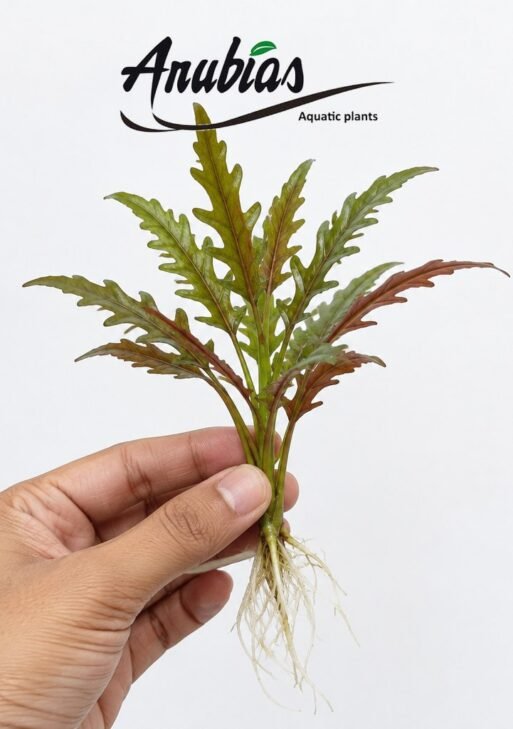
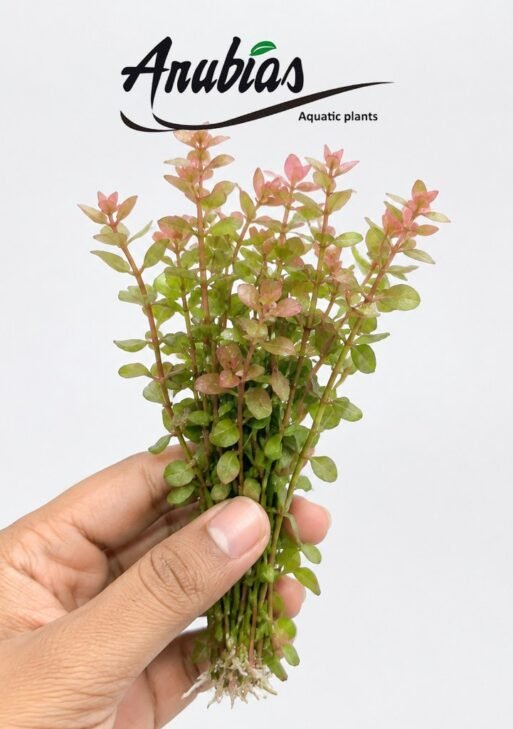
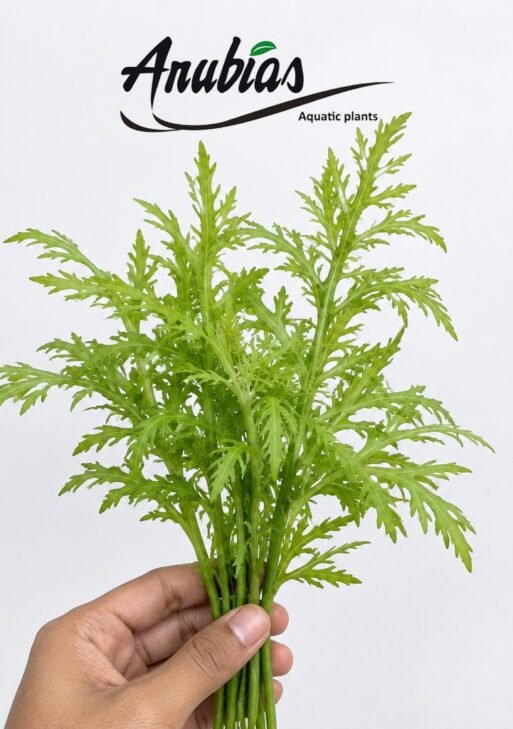
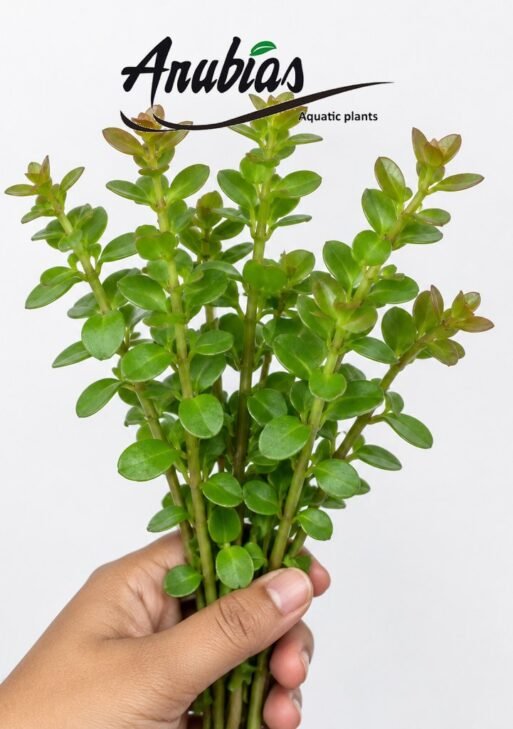
One healthy Samolus parviflorus ‘Red’ plant in the size you select – Small or Standard – similar to the plant in the photo. Checked before packing, packed moist and shipped across India from Surat. Live-arrival guarantee: record one continuous unboxing video within 4 hours of delivery and, if the plant arrived damaged, we refund or replace it.
FAQ
Does Samolus parviflorus need CO2?
It survives without CO2 but grows very slowly and stays green. CO2 is recommended for a full, red-tinted rosette.
Is Samolus good for beginners?
Medium difficulty. It is tolerant of hard water but needs good light, CO2 and cooler water to look its best.
Can it grow in hard tap water?
Yes – it is one of the most hard-water-tolerant plants we sell, as the species grows in brackish marshes.
How fast does it grow?
Slowly – a new leaf every one to two weeks – which keeps it compact and low-maintenance.
Why is it not turning red?
It needs strong direct light and iron. In medium light it stays green.
Samolus ‘Red’ vs Alternanthera reineckii ‘Mini’?
Both are red foreground options. Samolus is a slow rosette that tolerates hard water; Alternanthera ‘Mini’ is a redder, faster stem plant that prefers softer water and more CO2.
Not sure what fits your tank? Plan it with our free AI tank planner.










There are no reviews yet.