
Description
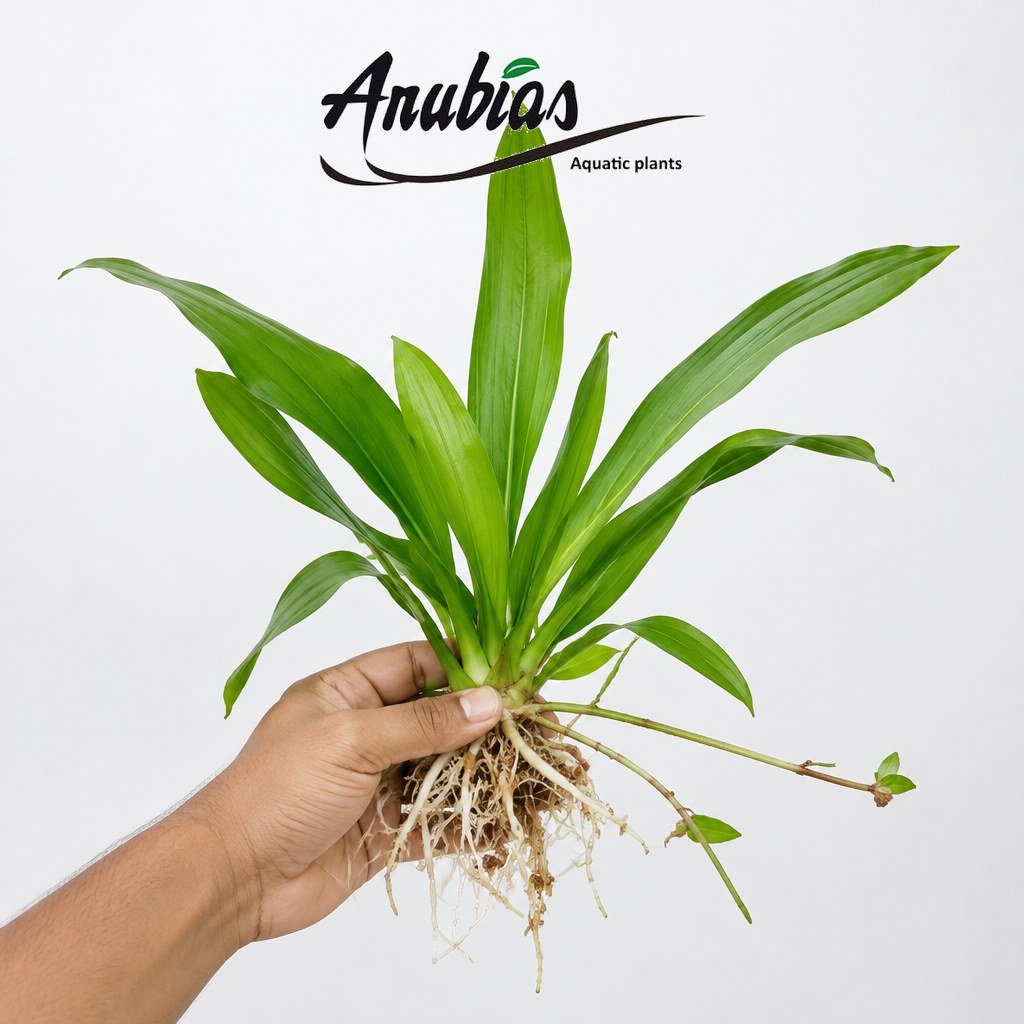
Giant Sagittaria is a tall, grass-like aquarium plant from the Americas, sold as Sagittaria sp. and usually a large form of Sagittaria subulata or the closely related Sagittaria platyphylla. It grows strap-shaped green leaves 20–40 cm long from a rosette and spreads by runners into a dense stand that sways in the current. Tough, fast and tolerant of hard water, giant sagittaria is one of the easiest background grasses for Indian aquarists, and it suits beginners, low-tech tanks and large community aquariums.
Giant Sagittaria at a glance
| Scientific name | Sagittaria sp. (large form of Sagittaria subulata / Sagittaria platyphylla) |
|---|---|
| Family | Alismataceae |
| Origin | North and South America |
| Difficulty | Easy |
| Light | Low to medium |
| CO2 | Optional |
| Temperature | 20–28 °C |
| pH | 6.5–8.0 |
| Growth rate | Fast |
| Height/size | 20–40 cm tall, leaves 5–10 mm wide |
| Placement | Background; midground in large tanks |
| Propagation | Runners |
How to plant Giant Sagittaria
- Rinse the portion and separate it into individual rosettes, each with roots. Remove any yellow or broken leaves.
- Trim the roots to 2–3 cm.
- Push each rosette into the substrate with tweezers, roots buried and crown at the surface.
- Space plants 5–7 cm apart along the back or side of the tank. Runners fill the gaps within weeks.
- Add root tabs in sand or gravel. Sagittaria is a root feeder and grows poorly in bare substrate without them.
Giant Sagittaria care: light, CO2, fertiliser and water
Light. Low to medium light is enough. Under low light the leaves grow longer and darker; under medium light the stand is denser and shorter. Strong light is unnecessary and encourages algae on the leaves.
CO2. Not needed. Giant sagittaria is a reliable low-tech plant. With CO2 it grows even faster and may need thinning every few weeks.
Fertiliser. Root tabs every three months or aquasoil, plus a weekly liquid fertiliser. Because it spreads quickly it uses nutrients quickly; yellowing older leaves usually mean nitrogen or potassium shortage, and pale new leaves mean iron.
Water. Very tolerant of hard, alkaline Indian tap water; it does particularly well at pH 7–8 and in water with good calcium levels. Regular 25–30% water changes keep it healthy.
Indian conditions. Happy at 28 °C; above 30 °C growth slows but the plant copes, especially with surface movement. Monsoon power cuts of a few hours do not harm it. It also grows well in outdoor tubs and ponds in most of India.
Growth, trimming and propagation
Expect runners within two to three weeks of planting and a new rosette every week or so along each runner. A sparse row becomes a dense stand within two to three months.
Trimming means thinning, not cutting. Pull out excess rosettes to keep the stand open so light reaches the lower leaves, and remove old leaves at the base. Avoid cutting leaves short, as the cut ends die back. Runners that wander into the foreground can be cut and pulled.
Propagation is automatic. Lift daughter rosettes with three or four leaves, cut the runner and replant elsewhere.
Where to use it in an aquascape
Giant sagittaria is a background plant for 2 ft (60–80 litre) tanks and above and a midground grass in 4 ft (300 litre) tanks. A stand along the back glass gives a natural, reedy look that suits biotope and jungle layouts, and it hides filters and heaters. It also works in cold-water and unheated tanks and in outdoor tubs.
In front of it use crypts from our Cryptocoryne collection, Anubias nana and Java fern on hardscape, and a carpeting plant at the front. Broad-leaved stem plants or swords beside it provide contrast.
It suits all community fish and shrimp, and the tough leaves tolerate goldfish better than most plants, though goldfish may still uproot young rosettes. Fry and shrimp hide among the leaves.
Common problems and fixes
- Yellowing older leaves after planting. Emersed leaves being replaced by submerged ones. Remove them; new growth follows within two weeks.
- Rosettes floating up. Roots too short or substrate too coarse. Replant deeper and hold with a pebble until runners anchor the plant.
- Pale new leaves. Iron deficiency. Dose chelated iron and add root tabs.
- Yellow older leaves across the stand. Nitrogen or potassium shortage from fast growth. Increase fertiliser dosing.
- Hair algae on leaves. Light too strong or flow too weak. Reduce the photoperiod, improve circulation and add Amano shrimp.
- Taking over the tank. Normal for a fast runner plant. Thin the stand monthly and cut runners at the edge.
What you receive
You receive one healthy portion of Giant Sagittaria in the size you select (Small or Standard), similar to the one in the photo. It is checked before packing, wrapped moist and shipped across India from Surat. Live-arrival guarantee: record one continuous unboxing video within 4 hours of delivery and we refund or replace any plant that arrives damaged.
FAQ
Does Giant Sagittaria need CO2?
No. It grows fast without CO2 in low to medium light with root tabs.
Is Giant Sagittaria good for beginners?
Yes. It is one of the easiest background plants: hard-water tolerant, fast, undemanding of light and quick to recover from mistakes.
Can Giant Sagittaria grow in gravel?
Yes, with root tabs every three months. In aquasoil it needs nothing extra for the first year.
How tall does Giant Sagittaria grow?
Usually 20–40 cm, taller under low light and shorter under medium light. It suits tanks 35 cm or higher.
How fast does Giant Sagittaria spread?
Runners appear within two to three weeks and a sparse row fills into a dense stand in two to three months.
Giant Sagittaria vs Vallisneria: what is the difference?
Both are grassy runner plants with similar care. Vallisneria grows much taller (50 cm and more) with thinner ribbon leaves; giant sagittaria stays 20–40 cm with slightly stiffer, wider leaves, so it fits smaller tanks.
Not sure what fits your tank? Plan it with our free AI tank planner.













There are no reviews yet.