

Description
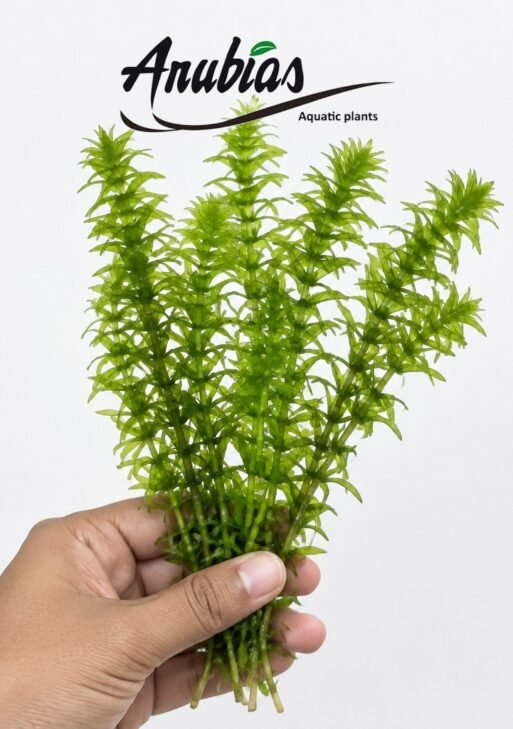
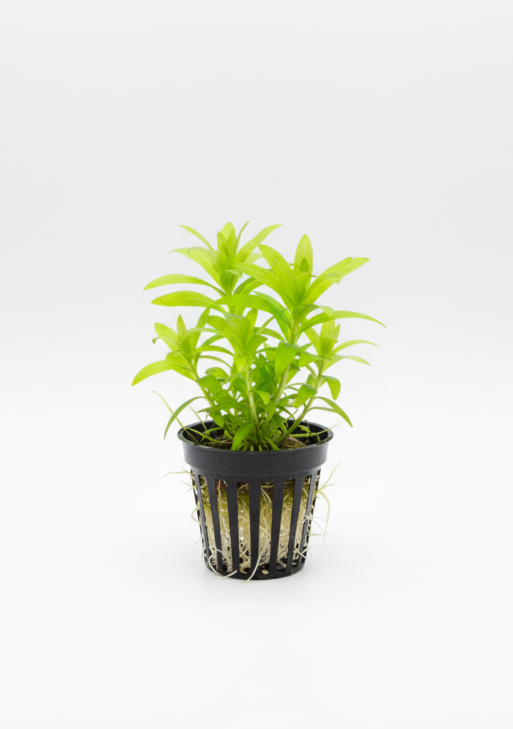
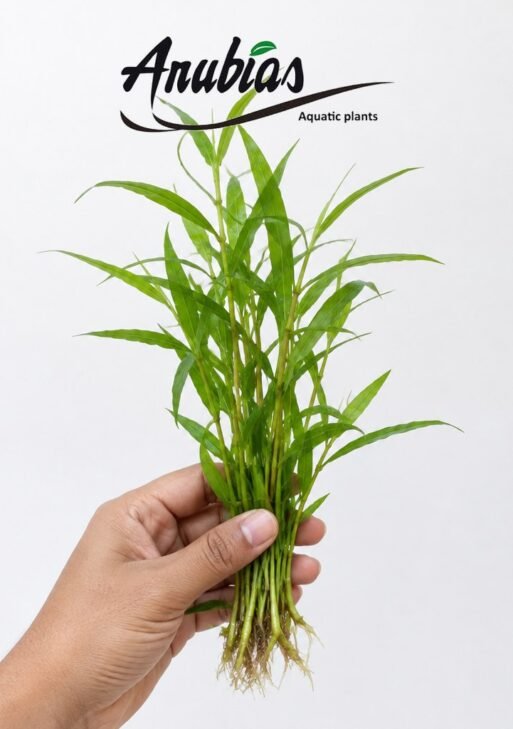
Heteranthera zosteraefolia, known as stargrass, is a South American stem plant with narrow, bright-green, grass-like leaves on branching stems that form a dense, bushy mound. It is one of the easiest fine-textured plants: medium light and regular fertiliser are enough, CO2 is optional, and it grows fast enough to fill a midground or background in weeks. It suits beginners who want a soft, grassy look and aquascapers who need a quick-growing bush to shape between stones or wood.
Heteranthera zosteraefolia at a glance
| Scientific name | Heteranthera zosterifolia (commonly spelt zosteraefolia) |
|---|---|
| Family | Pontederiaceae |
| Origin | South America (Brazil, Bolivia, Paraguay, Argentina) |
| Difficulty | Easy |
| Light | Medium to high |
| CO2 | Optional; recommended for dense growth |
| Temperature | 20–28 °C |
| pH | 6.0–7.5 |
| Growth rate | Fast |
| Height/size | 20–50 cm tall; stems 5–8 cm wide, branching |
| Placement | Midground to background |
| Propagation | Stem cuttings; side shoots |
How to plant Heteranthera zosteraefolia
- Rinse the portion in dechlorinated water. The stems are soft and snap easily, so handle them by the base.
- Strip the leaves from the lowest 2–3 cm of each stem.
- Plant each stem 3 cm deep with tweezers, 3–4 cm apart. Stargrass branches freely, so a few stems become a bush quickly.
- Place it in the midground or background in a well-lit spot.
- Keep flow gentle for the first week; the stems root fast and also produce roots at the nodes.
Any substrate works. In sand or gravel, dose liquid fertiliser; stargrass feeds mainly from the water column.
Heteranthera zosteraefolia care: light, CO2, fertiliser and water
Light: medium light gives healthy, slightly loose growth. Medium-high to high light produces the dense, compact mound with closely spaced leaves that stargrass is known for. In low light the stems stretch and lean towards the surface.
CO2 is optional. It grows well in low-tech tanks, more slowly and a little looser. With CO2 at 20–30 ppm it grows very fast and needs frequent trimming.
Fertiliser: a complete liquid fertiliser two or three times a week. Stargrass is a fast grower that shows nutrient gaps quickly: pale new leaves mean iron is short, and yellowing older leaves mean nitrogen is short. Keep nitrate at 10–20 ppm and iron steady.
Indian conditions: moderately hard tap water (GH 6–14) is fine. It is comfortable up to 28 °C and tolerates short spells to 30 °C; in peak summer a surface fan keeps it dense. It handles monsoon power cuts of several hours without damage.
Growth, trimming and propagation
Heteranthera zosteraefolia grows 5–10 cm a week and branches from almost every node, so a group quickly becomes a mound. Trim every two weeks, cutting just above a node and leaving 8–12 cm in the substrate. Trimming the tops encourages even more branching, which is how the bushy, rounded shape is built.
Replant the tops to extend the group; they root within days. Thin the mound every month or two so light reaches the base, otherwise the lower stems lose their leaves. One portion becomes a full midground mound in a 2 ft tank within a month or two.
Where to use it in an aquascape
Stargrass works as a midground mound in 2 ft (60–70 litre) tanks and as a background bush in 1.5 ft (40 litre) tanks; in 3 ft and 4 ft tanks (120–250 litres) a trimmed mound between stones or beside wood gives a soft, grassy feature. It is popular in nature-style layouts and in breeding tanks, where its dense growth shelters fry and shrimplets.
Pair it with broad-leaved stem plants such as Hygrophila polysperma for contrast, red plants such as Ludwigia Mini Super Red in front, Anubias nana and Java fern on hardscape, and a carpeting plant at the base.
Safe with all small community fish and shrimp. Avoid plant-eaters and large diggers; the soft stems break easily.
Common problems and fixes
- Stems stretch and lean: low light. Raise intensity and trim; new growth is compact.
- Lower stems bare: the mound is too dense. Thin it so light reaches the base.
- Pale new leaves: iron shortage. Dose iron or a complete micro fertiliser.
- Yellowing older leaves: nitrogen shortage. Dose fertiliser with nitrate.
- Stems break: handling or strong flow. Replant the broken pieces; they root readily.
- Melt after arrival: some leaf loss in the first week is normal; new tips confirm recovery.
What you receive
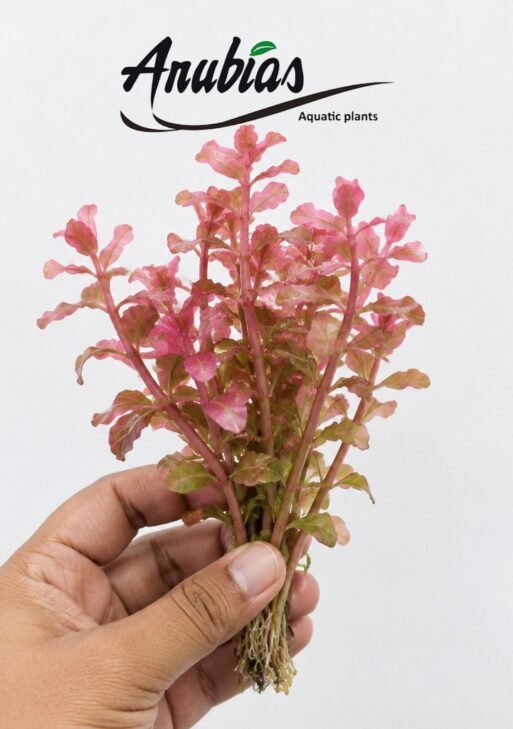
You receive one healthy portion of Heteranthera zosteraefolia in the size you select (Small or Standard), similar to the photo. It is checked before packing, wrapped moist and shipped across India from Surat. Live-arrival guarantee: record one continuous unboxing video within 4 hours of delivery and we refund or replace any plant that arrives damaged.
FAQ
Does Heteranthera zosteraefolia need CO2?
No. Stargrass grows well without CO2 under medium light. CO2 makes it faster and denser.
Is Heteranthera zosteraefolia good for beginners?
Yes. It is an easy, fast plant that tolerates moderately hard Indian water and medium light, and recovers quickly from trimming or breakage.
How fast does stargrass grow?
Fast, 5–10 cm a week, and it branches constantly. Trim every two weeks.
Can Heteranthera zosteraefolia grow in sand?
Yes. It grows in sand, gravel or aquasoil with liquid fertiliser.
Why are the new leaves of my stargrass pale?
Iron shortage. Stargrass is a fast grower that shows iron deficiency quickly; dose iron or a complete micro fertiliser.
Heteranthera zosteraefolia vs Pogostemon Octopus: what is the difference?
Both are easy, fine-leaved plants. Stargrass is bright green, branches into a mound and stays shorter; Pogostemon Octopus grows taller with longer, wavy whorled leaves.
Not sure what fits your tank? Plan it with our free AI tank planner.










There are no reviews yet.