
Most aquarium plants multiply on their own once they are healthy. Knowing the right method for each plant type lets you fill a tank, rescue a struggling plant, or share extras without buying more.
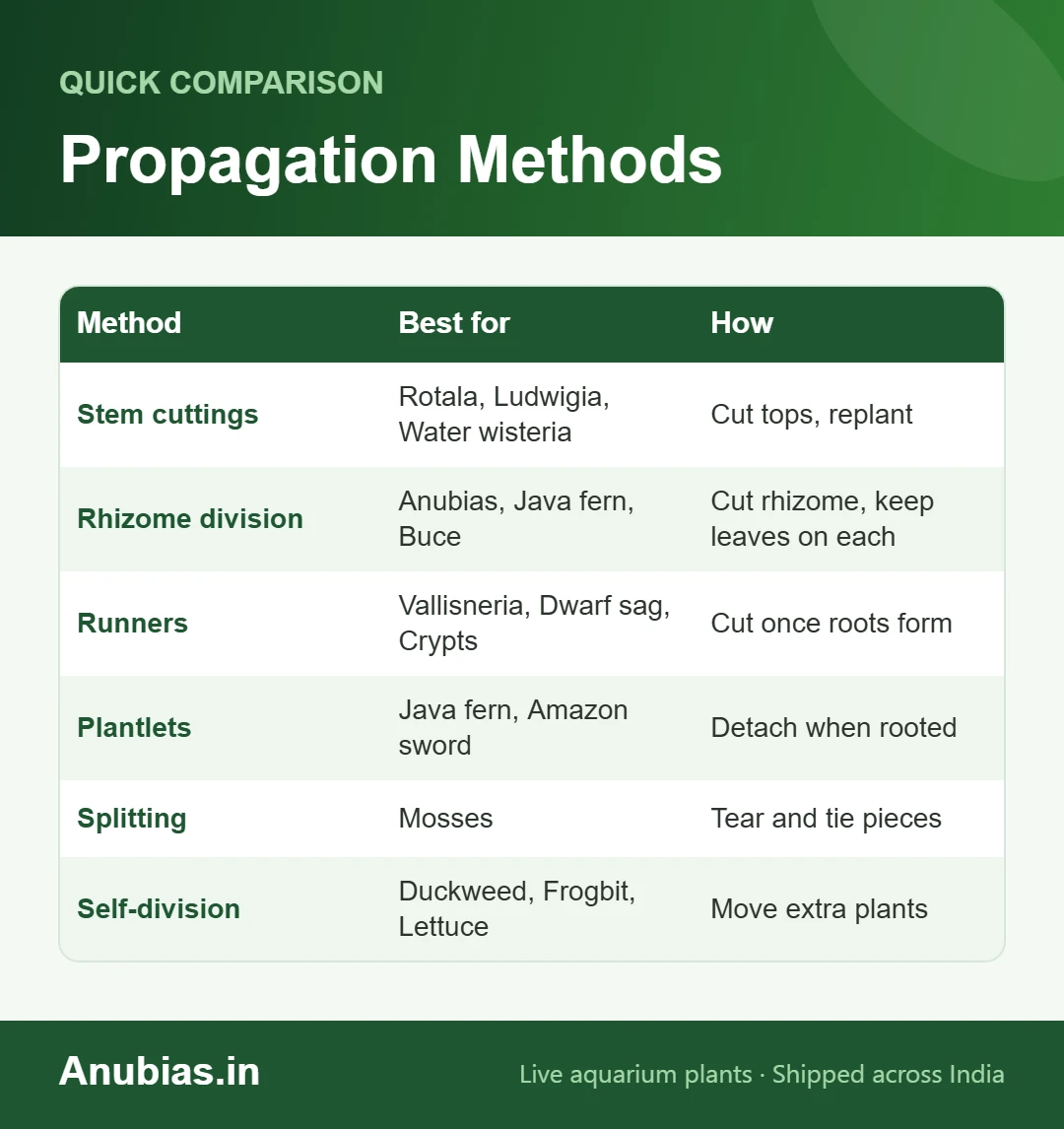
Quick answer: Aquarium plants are propagated in six main ways: replant stem cuttings (Rotala, Ludwigia, Water wisteria), divide the rhizome of Anubias, Java fern and Bucephalandra so each piece keeps a few leaves, cut runners from Vallisneria, Dwarf sagittaria and Crypts once the new plant has roots, detach rooted plantlets from Java fern leaves or Amazon sword stalks, tear mosses into small pieces and tie them down, and let floating plants divide by themselves.
1. Stem cuttings
Cut the top 8–10 cm of a healthy stem with sharp scissors, strip the lowest leaves and replant it. The old stem usually branches below the cut. How to trim aquarium plants.
2. Rhizome division
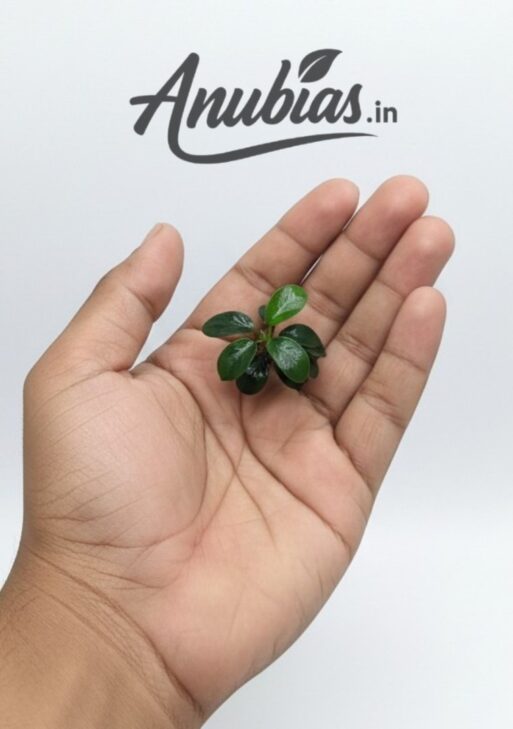
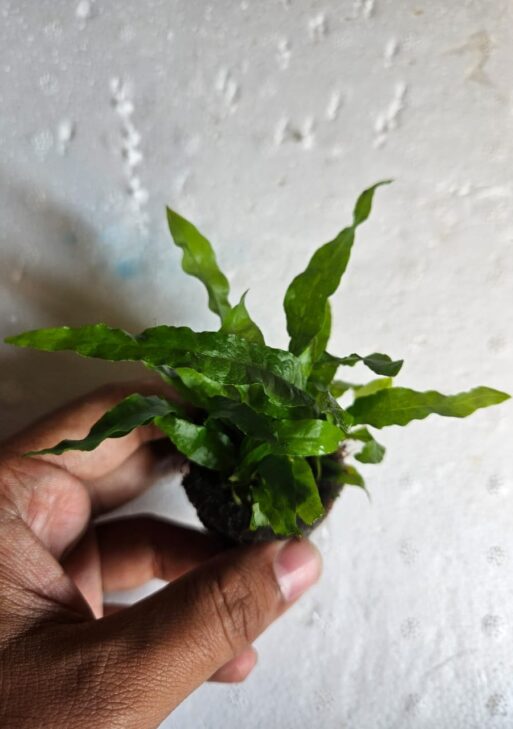
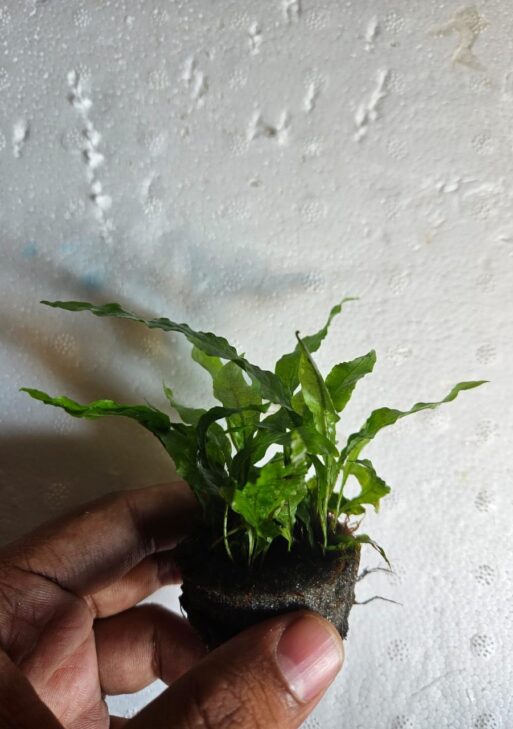
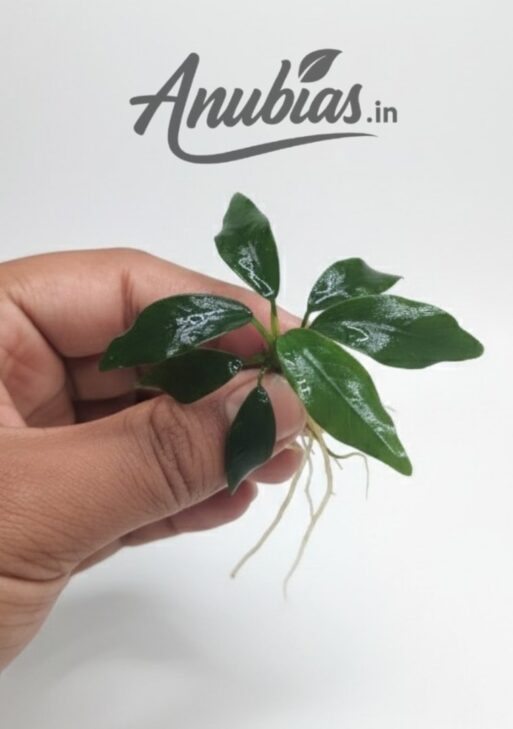
For Anubias, Java fern and Bucephalandra, cut the rhizome with a clean blade so each section keeps several leaves, then tie or glue each piece to wood or rock. Never bury the rhizome. How to propagate Anubias.
3. Runners
Vallisneria, Dwarf sagittaria and Cryptocoryne send out runners with baby plants. Wait until the young plant has its own roots and a few leaves, then cut the runner and replant it where you want it.
4. Plantlets
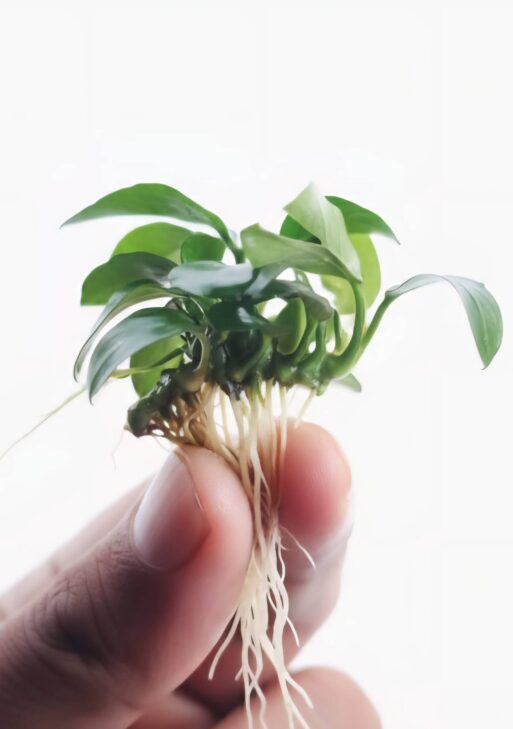
Java fern grows tiny plantlets on its leaves; Amazon swords can form young plants on flower stalks. Detach them once they have roots. Java fern plantlets guide.
5. Splitting mosses
Tear Java moss, Christmas moss or Flame moss into small clumps and tie a thin layer onto new wood, rock or mesh. How to attach moss.
6. Floating plants
Duckweed, Amazon frogbit and Water lettuce multiply by themselves. Simply move extra plants to another tank or tub, or remove them to keep surface cover in check.
Tips for successful propagation
- Only propagate healthy, actively growing plants.
- Use sharp, clean scissors to avoid crushing stems.
- Give new cuttings stable light and a liquid fertiliser while they root.
- Expect slow growers like Anubias and Bucephalandra to take weeks to show new leaves.
When to propagate and when to wait
Timing is what separates propagation that works from propagation that sets a plant back. The general rule is to take from strength, never from struggle.
Good times to propagate:
- The parent plant has visibly outgrown its space and is shading neighbours.
- New growth has been steady for at least a month.
- Water temperature is in the plant’s comfortable range, not a summer peak.
- You already know where the new plant is going, so it is not left floating for days.
Times to wait:
- The plant arrived recently and is still settling in or melting.
- Tank water is sitting above 30°C, when recovery from any cut is slowest.
- You have just changed lighting, substrate or CO2 and conditions are not yet stable.
- The plant is already fighting algae on its leaves.
Across much of India this makes the post-monsoon and winter months the easiest propagation window, when tank temperatures sit comfortably and plants are actively growing.
What to do with the plants you end up with
Successful propagation produces a surplus surprisingly fast, and having a plan avoids a bucket of dying cuttings on the balcony.
The most useful option is to keep a small holding container running: a plastic tub or spare tank with a sponge filter and window light. Cuttings hold there indefinitely and give you replacements when something in the display tank fails.
Trading locally is the next best route. Hobbyist groups in most Indian cities swap plants readily, and hand-to-hand exchange avoids courier delays altogether.
If you post plants, wrap them in damp tissue inside a sealed bag rather than sending them in water, and avoid dispatching during heavy monsoon weeks when parcels sit longest in transit.
What you must not do is dump surplus plants in a local lake, pond or drain. Several fast-spreading aquarium species become serious weeds in Indian waterways. Compost them, bin them, or give them away instead.
Plants in this guide

Frequently asked questions
Which aquarium plants are easiest to propagate?
Stem plants like Water wisteria and Ludwigia, and floating plants like Duckweed, are the easiest because they multiply quickly.
Can I propagate Anubias from a single leaf?
No. Anubias grows from its rhizome, so each new piece needs a section of rhizome with leaves.
How long do cuttings take to root?
Fast stem plants often root within a couple of weeks; rhizome plants take longer to settle.
Shop the plants in this guide: Dwarf Sagittaria, Flame Moss, Amazon Sword, Duckweed, Water Lettuce, Amazon Frogbit.
Start your collection on Anubias.in.
Does propagating slow down the parent plant?
Briefly, yes, because the plant redirects energy into healing and new shoots rather than adding size. Stem plants usually recover within a fortnight and often come back bushier, while slow growers like Anubias and Bucephalandra can take a couple of months to resume normal growth. Only divide slow growers when they are large and clearly healthy.
Is the monsoon a bad time to post cuttings to other hobbyists?
It is the riskiest window, mainly because transit delays are longer and parcels sit in humid heat. If you must send plants then, pick the hardiest species, pack them damp rather than submerged, and warn the recipient to unbox immediately. Hand delivery within your own city is far safer during those months.
Do I need to sterilise my scissors between plants?
Sterilising is not necessary for ordinary home aquariums, since aquatic plant diseases rarely pass on tools the way garden pathogens do. What does matter is sharpness: a clean, sharp cut heals far faster than a crushed stem from blunt blades. Rinse and dry your scissors after use so they stay sharp.