
Two hobbyists can set up identical tanks — same glass, same light, same filter — and end up with completely different aquariums, because the biggest decision in aquascaping isn’t equipment, it’s which of two old design philosophies you’re following. Spend any time in Indian aquarium groups and this argument resurfaces constantly: go Dutch, or go Nature style? Neither is “better.” They ask very different things of your time, CO2 setup and patience for weekly maintenance — pick wrong, and a promising tank often gets abandoned within months.
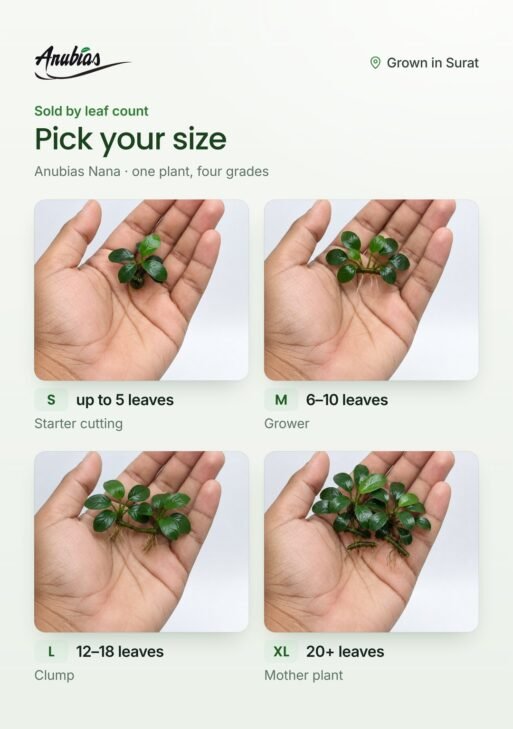
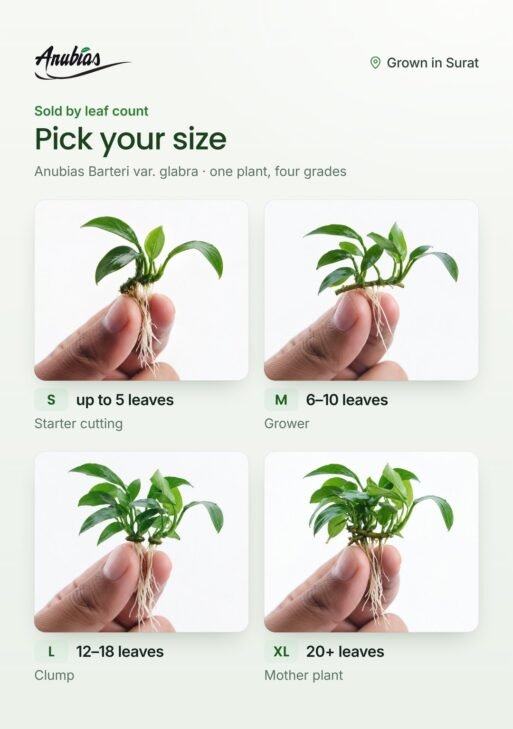
Quick answer: Dutch style builds the whole layout from plants alone — rows or “streets” of fast-growing stems that need high light, CO2 injection (a pressurised system runs roughly ₹6,000–₹20,000 or more in India) and trimming every week, sometimes twice. Nature style builds around driftwood and stone first, with slow epiphytes like Anubias, Bucephalandra and Java fern tied on, and can run low-tech with no CO2 at all. For most beginners in India, a loose Nature-style hardscape build is the cheaper, more forgiving choice.
What Is Dutch Style Aquascaping?
Dutch style predates the modern aquascaping movement by decades — it grew out of Dutch aquarium clubs in the mid-20th century, long before Takashi Amano popularized the hardscape-driven look most people now associate with aquascaping. A proper Dutch tank uses little to no driftwood or stone at all. The entire composition is built from plants alone: rows and groupings arranged by leaf shape, colour and texture, terraced short at the front to tall at the back like a garden bed.
The “street” and the discipline it demands
The core unit of a Dutch layout is the “street” — a row of a single stem plant species running front-to-back or side-to-side, deliberately contrasted against the streets next to it, say a fine, feathery green beside a broad-leafed red. Smaller “supplementary plants” fill gaps and soften transitions. It reads as intentional and almost horticultural, but that look only survives with constant upkeep: most Dutch tanks are trimmed weekly, sometimes twice a week, and every trim means replanting fresh cuttings to keep the streets dense from top to bottom. Because the whole point is lush, uninterrupted growth, Dutch scapes are almost always high-light and CO2-injected, with fertilizer dosing tuned to keep a dozen species happy at once. It’s rewarding if you like that weekly ritual, a chore if you don’t.
What Is Nature Style Aquascaping?
Nature style comes from Takashi Amano’s work in Japan from the 1990s onward, drawing on wabi-sabi — the aesthetic of imperfect, weathered natural beauty — and on miniature landscape design. Where Dutch style largely ignores hardscape, Nature style is built around it: driftwood and stone form the skeleton of the composition first, and plants play a supporting role, usually moss or epiphytes tied onto the wood rather than rows of stems in soil. Negative space is used deliberately, with an asymmetric, off-centre layout instead of a busy, filled frame.
Iwagumi — the minimalist extreme
Iwagumi is the purest, rock-only subset of Nature style: an odd number of stones (a large “main” stone plus smaller secondary and accent stones), usually one species of carpeting plant, and almost nothing else. It looks simple, which is exactly why it’s deceptively hard to keep. With so little in the scene, any patchy growth or algae spot is glaringly obvious, and the carpeting plants typically used, like dwarf hairgrass or Monte Carlo, need strong light and pressurized CO2 to fill in evenly. Iwagumi rewards experience far more than it looks like it should.
Which Style Is More Beginner-Friendly?
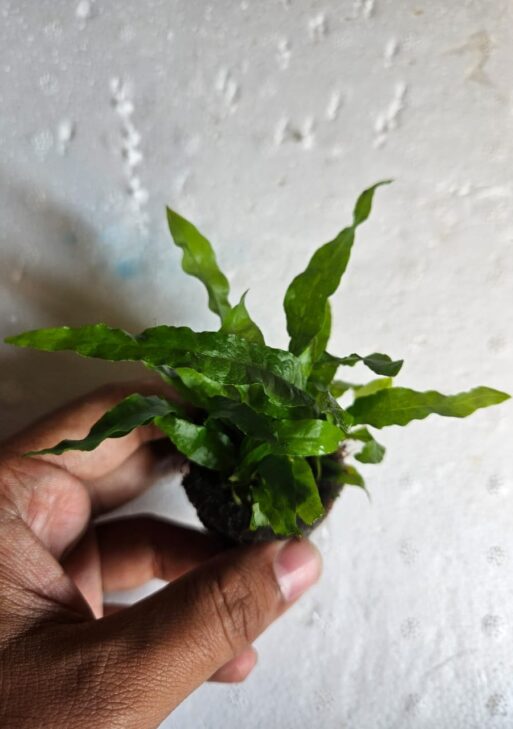
Neither full Dutch nor full Iwagumi is genuinely easy. Dutch demands a trimming discipline most beginners underestimate, and any lapse shows up as leggy, algae-streaked stems. Iwagumi’s minimalism is unforgiving of exactly the instability — inconsistent CO2, uneven flow — beginners are most likely to have. The style that actually works for beginners is a looser take on Nature style: a single piece of driftwood or a modest stone arrangement with Anubias, Bucephalandra and Java fern tied on as epiphytes, maybe a patch of Cryptocoryne in the foreground. None of it needs to be planted in substrate or fussed over daily, and it tolerates the inconsistent CO2 and lighting that trip up more demanding layouts. It’s not competition-grade Nature style, but it’s the version that survives an actual week in an Indian household.
Plant Choices for Each Style
A Dutch street is built from fast, upright stem plants — Rotala rotundifolia, Ludwigia repens, Alternanthera reineckii, Limnophila, Bacopa, Hygrophila — chosen because they grow fast enough to need constant replanting while holding colour contrast under high light. You’ll go through a lot of stems keeping a proper street dense.
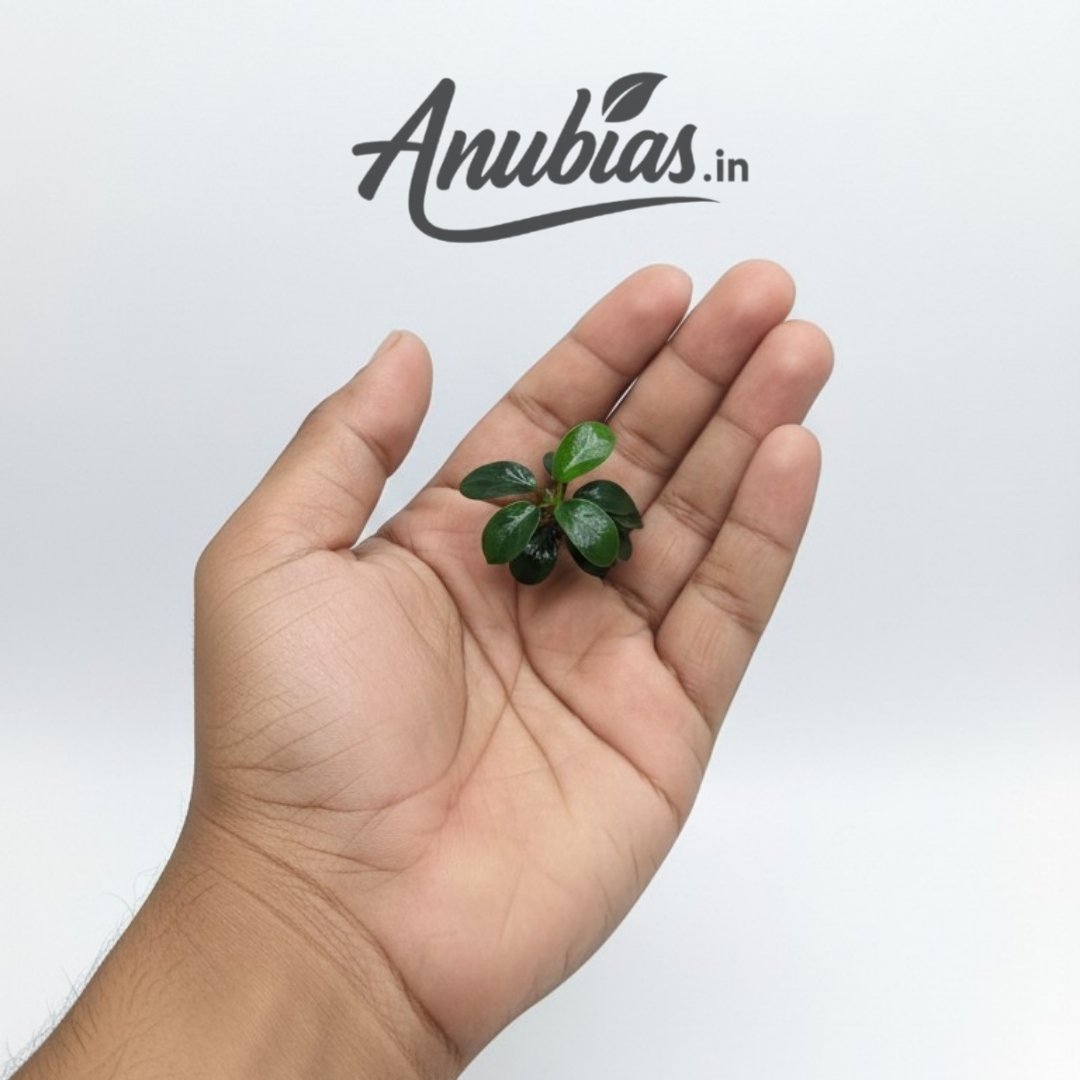
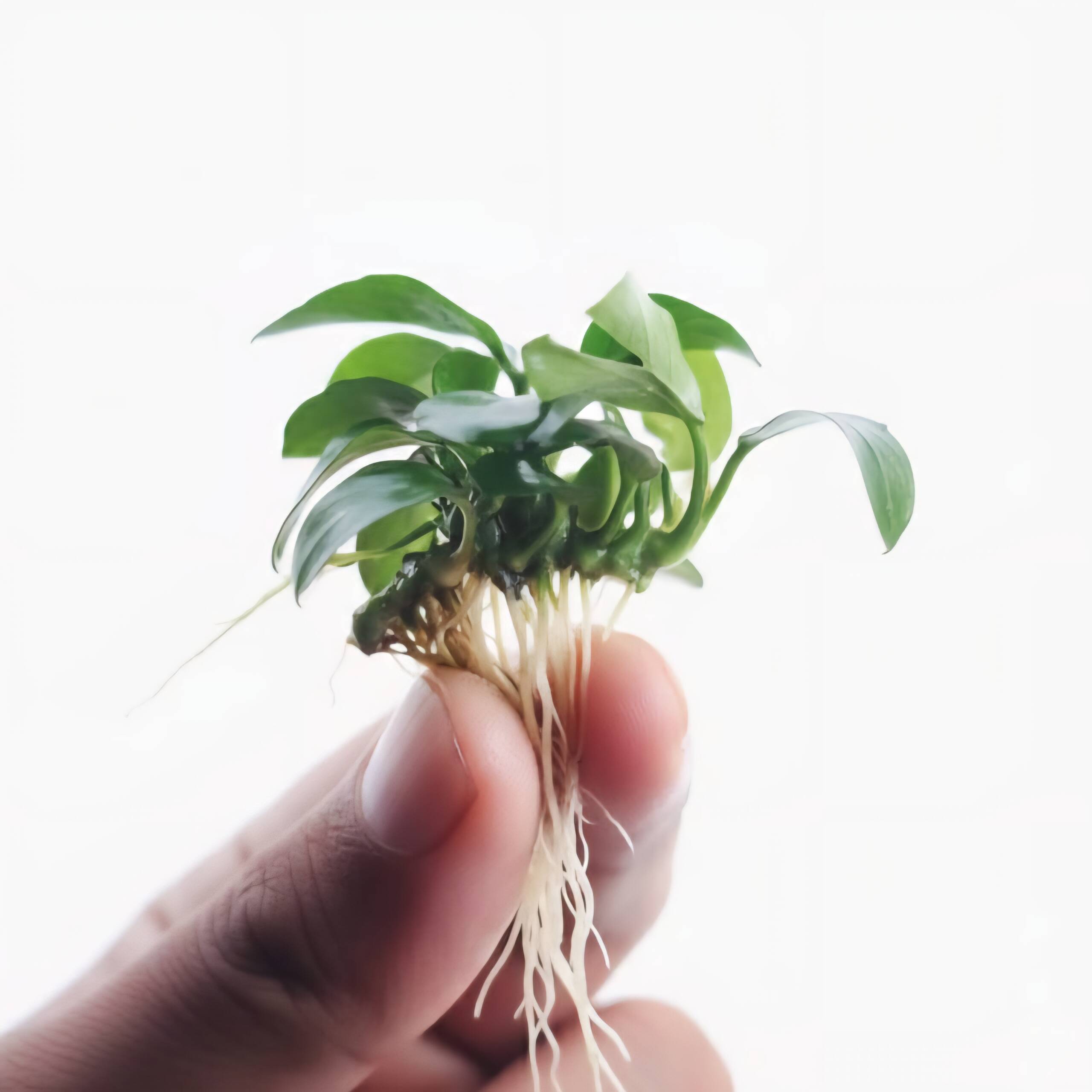
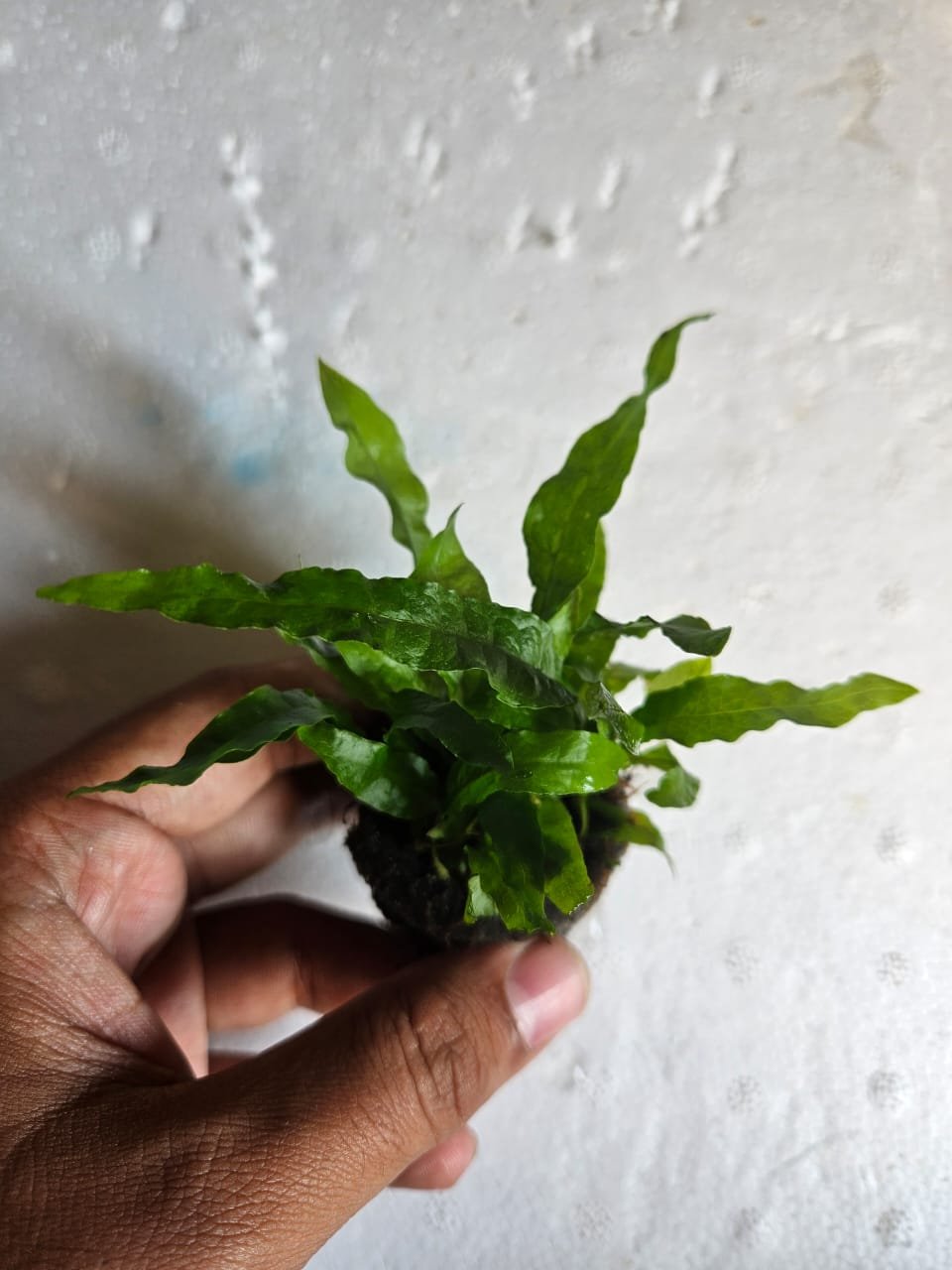
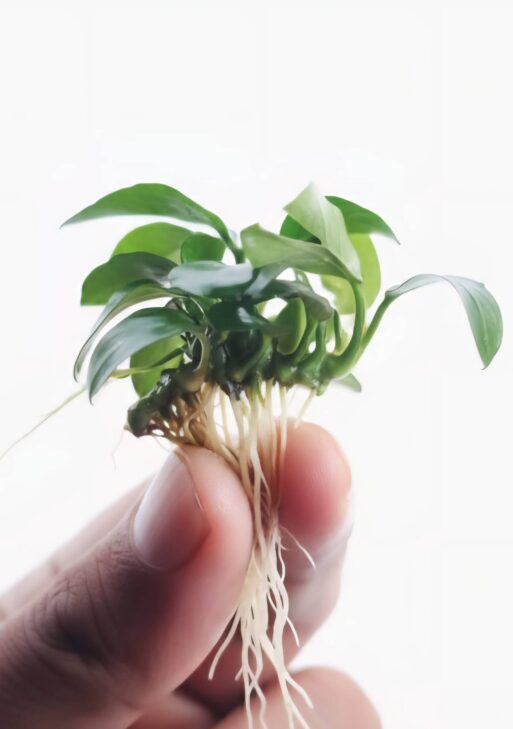
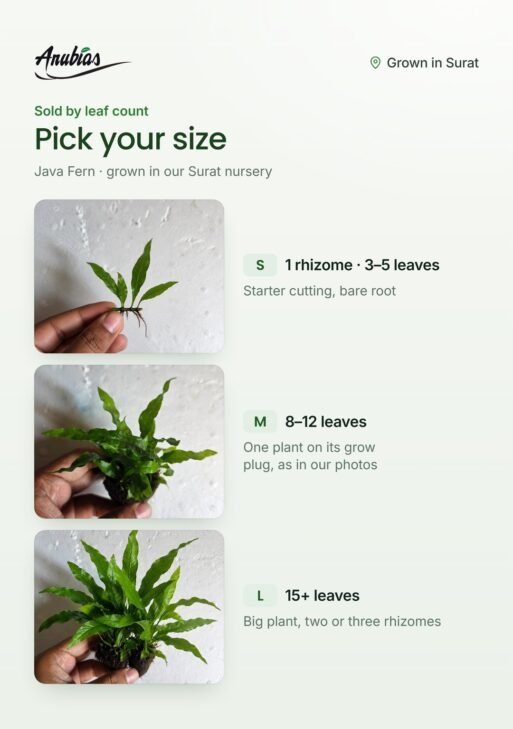
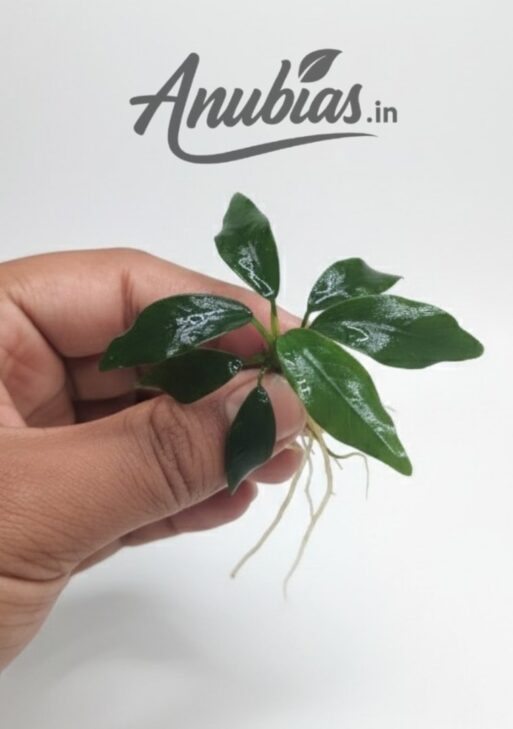
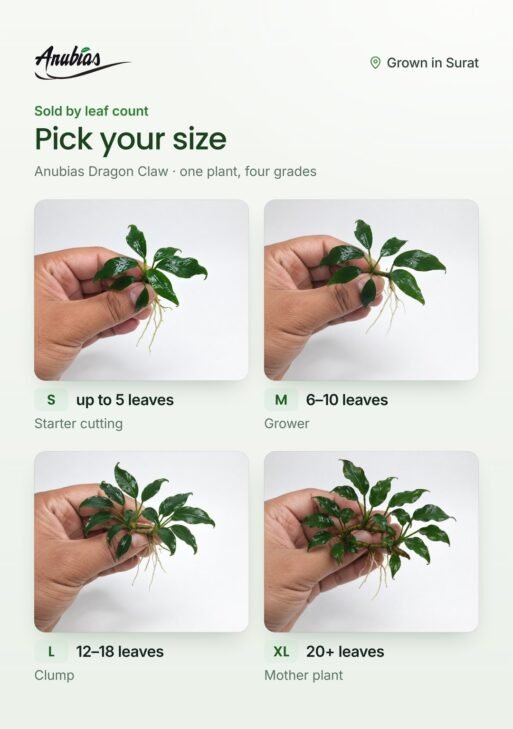
Nature style leans on epiphytes instead: Anubias and Bucephalandra rhizomes tied or glued to wood and stone rather than buried, plus Java fern and Java moss draped over hardscape for texture. These plants grow slowly by design, which is exactly why they suit a hardscape-first composition — they hold their shape for months instead of needing weekly reshaping, and thrive in the dappled light across driftwood rather than the even, high-intensity light a Dutch street needs. Cryptocoryne fills a similar low-maintenance role in the foreground of a low-tech Nature build.
India-Specific Practicalities
Power cuts hit Dutch tanks harder than Nature ones. A CO2-injected, high-light Dutch street depends on a fairly consistent daily CO2 and light window; a few missed hours during an outage is a minor stumble for a low-tech Anubias-and-driftwood tank but can visibly stunt or algae-out a stem-heavy Dutch layout depending on it. Going Dutch, put your CO2 solenoid timer on the same inverter or UPS backup as your router.
Water hardness matters too, especially for Iwagumi-leaning Nature builds. Seiryu stone, the classic choice for rock scapes, leaches carbonate and steadily raises KH and pH — a non-issue if you’re already in a hard-water belt like Gujarat, Delhi or Chennai’s borewell-fed areas, but a constant fight if you’re in a naturally soft-water region like Kerala or the Northeast, where you’ll be fighting it indefinitely. Dutch tanks sidestep this entirely since there’s no stone involved.
Cost splits the two styles further apart than people assume. A pressurised CO2 system (cylinder, regulator, solenoid and diffuser) runs roughly ₹6,000–₹20,000 or more in India, and both a serious Dutch street and a carpeted Iwagumi need one. A hardscape-driven Nature tank built around Anubias and Bucephalandra tied to driftwood can run low-tech instead, skipping the CO2 rig and relying on modest lighting plus regular fertilizer dosing to stay healthy.
So Which Should You Choose?
If you enjoy a weekly gardening routine, chasing colour contrast between species, and don’t mind the tank changing shape every few weeks, Dutch style will hold your interest. If you want something that looks deliberate and complete with far less week-to-week fuss, start with a Nature-style layout built around hardscape and epiphytes, and grow into carpeting or Iwagumi once your CO2 and flow are dialed in. For most people starting out in India, that second path is the one still in the living room a year later.
Shop the plants in this guide: browse our Anubias varieties, Bucephalandra and Java Fern for a hardscape-mounted Nature style build, our Cryptocoryne for a low-tech foreground, or our stem and carpet plants collection for a Dutch street. Both styles need consistent feeding — see our Green Plus Trace fertilizer.
Just getting started? See our aquascaping ideas for beginners for simple layouts to try first.
Frequently asked questions
What is the difference between Dutch and Nature style aquascaping?
Dutch style builds the layout from plants alone, using rows or streets of fast-growing stem plants with little or no driftwood or stone. Nature style is built around driftwood and stone first, with moss or epiphytes playing a supporting role, and uses deliberate negative space and asymmetric layouts.
Which aquascaping style is best for beginners?
A looser take on Nature style works best: a single piece of driftwood or a modest stone arrangement with Anubias, Bucephalandra and Java fern tied on, and perhaps Cryptocoryne in the foreground. It tolerates inconsistent CO2 and lighting and can run low-tech without a CO2 rig.
Does Seiryu stone affect water hardness?
Yes. Seiryu stone leaches carbonate and steadily raises KH and pH. That is a non-issue in hard-water areas like Gujarat, Delhi or Chennai’s borewell-fed areas, but a constant fight in naturally soft-water regions like Kerala or the Northeast. Dutch tanks avoid this because they use no stone.
Grown in Surat (pre-order plants imported to order) · live-arrival guarantee with a 4-hour unboxing video · ₹99 shipping, free from ₹999