

What Actually Makes a Plant a “Carpet”?
A carpeting plant grows low and spreads sideways instead of up, eventually knitting into a dense mat across the substrate. That’s the whole definition — growth habit, not a specific genus.
Quick answer: A carpet is a growth habit, not a genus: Dwarf Hairgrass, Staurogyne repens and Hydrocotyle tripartita Japan are three realistic carpeting options at three difficulty levels, and all need decent light actually reaching the substrate. Plant small portions spread thin rather than a few thick clumps. The flawless moss-like carpets from Monte Carlo or HC Cuba genuinely require strong light and pressurised CO2 — they are not low-tech plants.
Most carpet plants spread through runners (horizontal stems that travel along or just under the substrate) or short side shoots at the base of each plant. As runners extend, they root down and throw up new growth points, and within a few weeks those points fill the gaps between plants until you’re looking at solid ground cover instead of individual specimens.
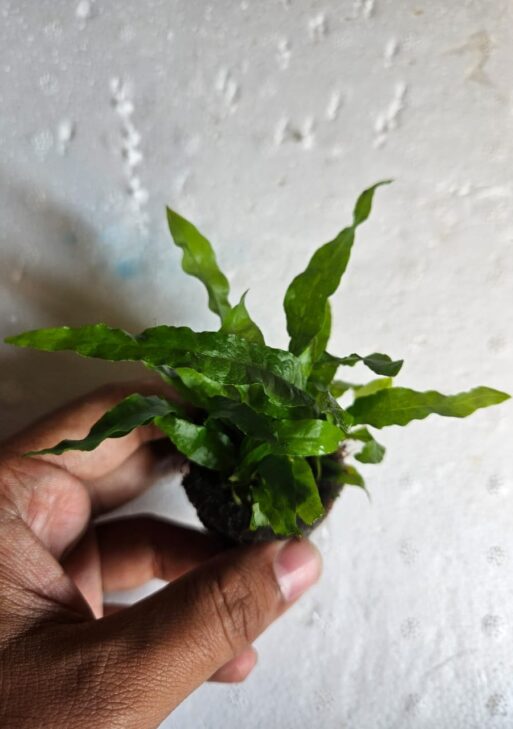
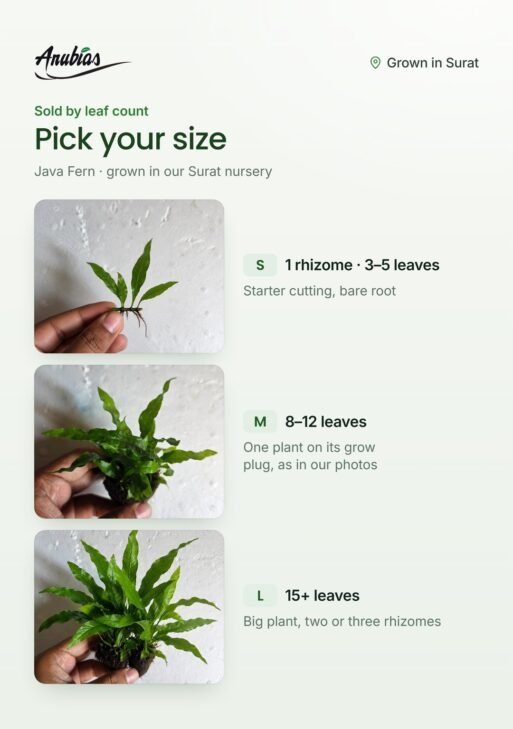
This is different from what most beginners start with. Anubias and Java Fern are rhizome plants — a thick central stem that grows slowly and stays where you tied it, leaves radiating from that one point, never really spreading. Stem plants like Rotala do the opposite, growing tall toward the light as a background group rather than a floor covering. Carpeting plants are their own category because the growth is horizontal-first, which is exactly why they ask more of you than Anubias does.
Why Carpets Are a Step Up From Anubias or Java Fern
Anubias and Java Fern are close to indestructible — low light, no CO2, minimal care, and they still grow. Carpeting plants don’t give you that same margin.
To grow flat and dense instead of tall and thin, most carpet species need more light reaching the substrate than a typical low-tech tank provides, and many also want supplemental CO2 to sustain the growth rate needed to fill in before algae claims the open substrate. Without enough light, a plant that’s supposed to carpet stretches upward instead, giving scattered vertical growth rather than a mat.
Be honest with yourself before committing. Species like Monte Carlo or HC Cuba, which give those flawless, moss-like carpets in aquascaping photos, genuinely need strong light and pressurized CO2 — they’re not low-tech plants, whatever the marketing says. That said, “carpeting plant” doesn’t automatically mean “high-tech only.” A few species carpet reasonably well, or at least give attractive low ground cover, without CO2. The three below span that range, from moderate effort to genuinely easy.
Three Carpeting Options, Three Difficulty Levels
Dwarf Hairgrass (Eleocharis)
Dwarf Hairgrass looks like fine grass blades pushing up from the substrate, spreading via runners that creep underground and send up new blades near the parent plant. Given decent light, it fills into a lawn-like carpet over a couple of months.
It sits at moderate difficulty. You can grow it low-tech, but be patient — without CO2 it spreads slower and the blades grow longer before the mat thickens, looking like an unmown lawn for a while rather than a tight carpet. It also commonly melts back in the first couple of weeks after planting, which catches new growers off guard even though it’s normal. For step-by-step planting and trimming advice, see our Dwarf Hairgrass care guide.
Staurogyne repens
Staurogyne repens is probably the most forgiving plant regularly sold as a carpet, and it’s worth being upfront about why: it doesn’t really run the way Hydrocotyle or true carpet species do. It grows as small, compact rosettes with rounded leaves, and each rosette slowly pushes out short side shoots, thickening into a low, bushy ground cover rather than a true interlocking mat.
That makes it more of a dense foreground filler than a classic carpet, but it earns its place here because it tolerates moderate to low light and doesn’t collapse without CO2 the way dedicated carpet species do. Trim the tops occasionally and it bushes out instead of climbing.
Hydrocotyle Tripartita ‘Japan’
Hydrocotyle Tripartita ‘Japan’ — small, three-lobed leaves that look like tiny clover — is a creeping stem plant that roots at each node as it spreads. Give it reasonable light and it runs across open substrate faster than almost anything else here.
That speed makes it easy to work with. Kept trimmed low, it stays flat and dense and behaves like a genuine carpet. Left alone, the stems reach upward and it becomes an attractive mid-ground plant instead — flexibility depending on how much maintenance time you want to put in. It handles low-tech conditions better than Dwarf Hairgrass and adapts to a wider light range than most true carpet species, making it a sensible starting point for a first carpeting plant. We stock Hydrocotyle Tripartita ‘Japan’ in the Carpeting Plants category for exactly this reason.
Comparison Table
| Plant | Light Needs | CO2 for a True Carpet? | Difficulty | Growth Pattern |
|---|---|---|---|---|
| Dwarf Hairgrass (Eleocharis) | Medium–High | Recommended; possible without, but slower and less dense | Moderate | Upright grass blades from underground runners |
| Staurogyne repens | Low–Medium | Helpful, not essential | Easy–Moderate | Compact rosettes, slow spread via short side shoots |
| Hydrocotyle Tripartita ‘Japan’ | Medium, tolerates lower | Not essential | Easy | Creeping stems rooting at nodes, fast horizontal spread |
Planting Technique: Spread It Thin, Not Thick
The biggest technique mistake with carpeting plants is planting them like a stem plant — in one dense clump. Carpets need to spread, and a plant’s energy goes either into growing where it already is or pushing into new space. A crowded clump has nowhere to push out to, so it just grows in place.
Instead, break portions into small pieces — individual rosettes for Staurogyne, small tufts for Dwarf Hairgrass, single or paired stems for Hydrocotyle — and space them out across the area you want covered, with visible substrate between each piece. It looks sparse on day one. That’s correct. Use tweezers to push each portion in rather than pressing down from above, which tends to uproot neighboring pieces.
For runner-type plants that aren’t rooted deeply, especially Hydrocotyle cuttings or loose Dwarf Hairgrass tufts, anchor them down for the first week or two — small plant weights, a fine mesh, or a few well-placed pebbles will stop them floating up before the roots take hold.
Trimming: The Difference Between a Carpet and an Overgrown Patch
Once established, what you do with scissors matters as much as light and CO2. Left untrimmed, most of these species prioritize height over density — new growth reaches upward for light rather than filling gaps sideways, and older sections thin out underneath.
Regular trimming resets that. Cutting back the top growth removes the parts racing for light and forces the plant to push new shoots from lower down and the sides — exactly the horizontal growth you want. For Dwarf Hairgrass, trim the blades every few weeks once established. For Staurogyne and Hydrocotyle, pinching the growing tips does the same job and keeps the mat thick instead of open. Want it looser instead? Hydrocotyle works fine as a mid-ground plant — trim less and let it climb.
Common Mistakes That Ruin a Carpet
Not enough light. This is the number one reason carpeting attempts fail. A plant that’s wired to carpet under strong light will grow tall and sparse under weak light, chasing the light source instead of spreading sideways. If your carpet is growing up instead of out, light is almost always the first thing to check.
Algae during the establishment phase. The first few weeks after planting are the vulnerable window — the carpet hasn’t filled in enough to use up available nutrients and light on its own, so algae gets a chance to move into that gap. Once the plants fill in and start competing for the same resources, algae pressure usually drops on its own. Watch nutrient dosing and photoperiod during this stretch rather than easing off too early.
Uneven substrate. Carpets follow the substrate surface, so dips and humps show up as patchy coverage once the plants fill in — thin in the low spots, fine on the high ones. Level the substrate properly before planting, with a gentle slope front to back if that’s the look you want, rather than trying to fix unevenness with the plants themselves.
Shop the plants in this guide: Hydrocotyle Tripartita ‘Japan’ and other foreground species are available in the Carpeting Plants category on anubias.in, a good place to start if you’re building your first low, spreading foreground.
Pair your carpet with some background height — see our best stem plants for beginners guide.
Going deeper on one plant? Read our Monte Carlo care guide and Staurogyne Repens care guide.
Frequently asked questions
Which carpeting plant is easiest to grow without CO2?
Hydrocotyle Tripartita ‘Japan’ is rated easy and handles low-tech conditions better than Dwarf Hairgrass, making it a sensible first carpet. Staurogyne repens also tolerates moderate to low light without CO2, though it forms a bushy ground cover rather than a true interlocking mat.
Do Monte Carlo and HC Cuba need CO2?
Yes. Monte Carlo and HC Cuba, which produce the flawless moss-like carpets seen in aquascaping photos, genuinely need strong light and pressurised CO2. They are not low-tech plants, whatever the marketing says.
How should carpeting plants be planted?
Break portions into small pieces, such as individual Staurogyne rosettes, small Dwarf Hairgrass tufts or single Hydrocotyle stems, and space them out with visible substrate between each. Push each piece in with tweezers, and anchor loose runner-type plants for the first week or two until roots take hold.
Why is my carpet growing upwards instead of spreading?
Not enough light is the number one reason carpeting attempts fail. A plant wired to carpet under strong light grows tall and sparse under weak light, chasing the light source instead of spreading sideways, so light is almost always the first thing to check.
Grown in Surat (pre-order plants imported to order) · live-arrival guarantee with a 4-hour unboxing video · ₹99 shipping, free from ₹999

More carpet plant guides: