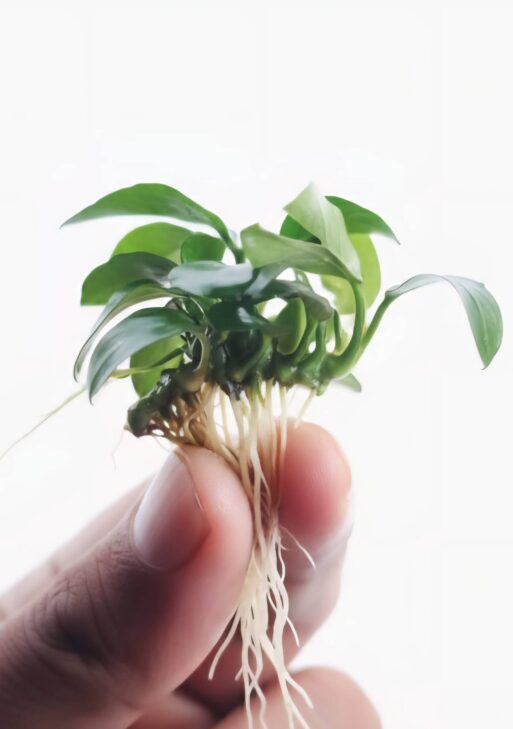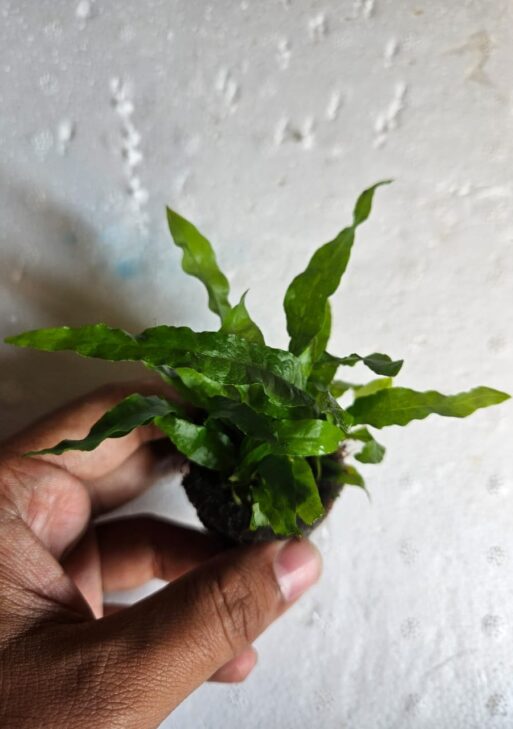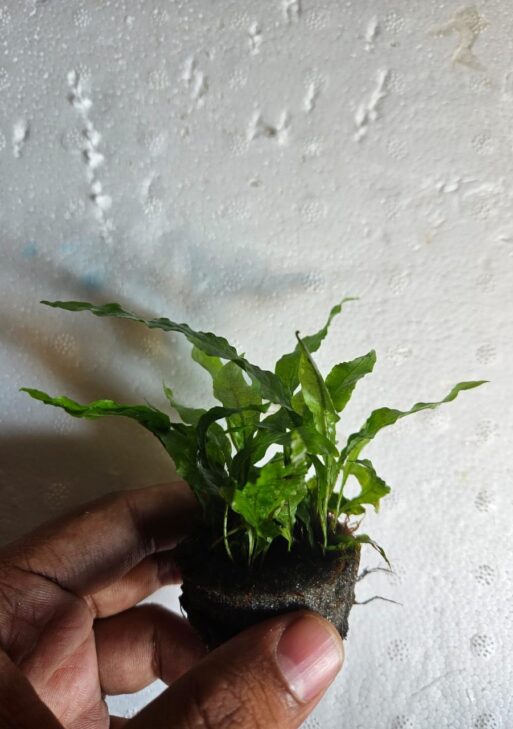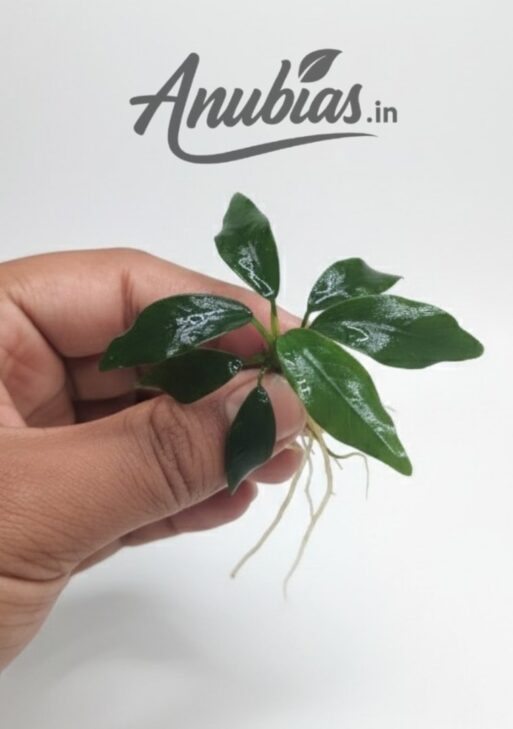

Aquarium plants are easier to understand once you know which group they belong to. Each group is planted and cared for differently, so the group matters more than the individual name when you are starting out.
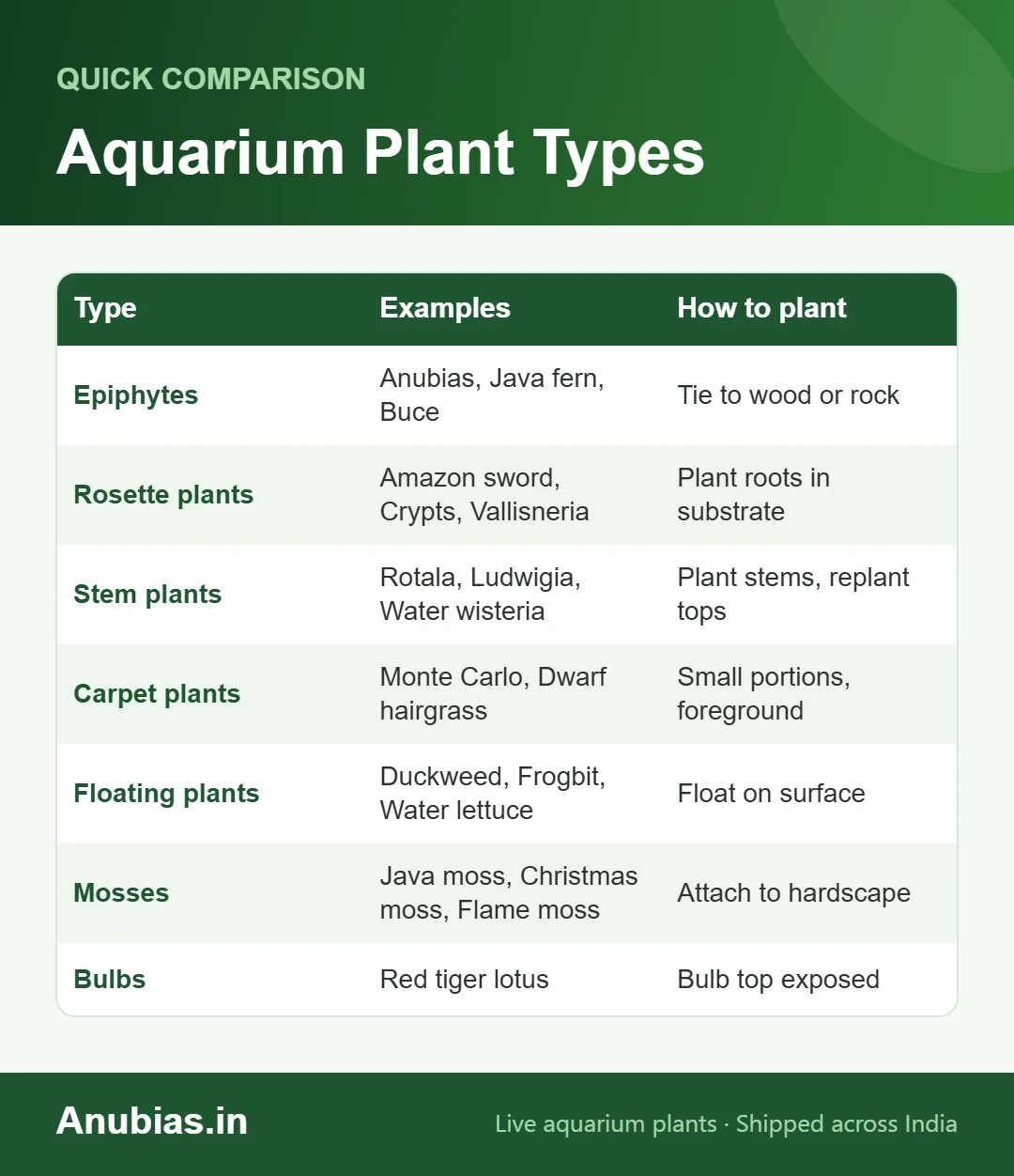
Quick answer: The main types of aquarium plants are epiphytes (Anubias, Java fern, Bucephalandra), rosette plants (Amazon sword, Cryptocoryne, Vallisneria), stem plants (Rotala, Ludwigia, Water wisteria), carpet plants (Monte Carlo, Dwarf hairgrass, Dwarf sagittaria), floating plants (Duckweed, Amazon frogbit, Water lettuce), mosses (Java moss, Christmas moss, Flame moss) and bulb plants (Red tiger lotus). Epiphytes and mosses attach to wood or rock, rooted types go in substrate, and floating plants sit on the surface.
1. Epiphytes
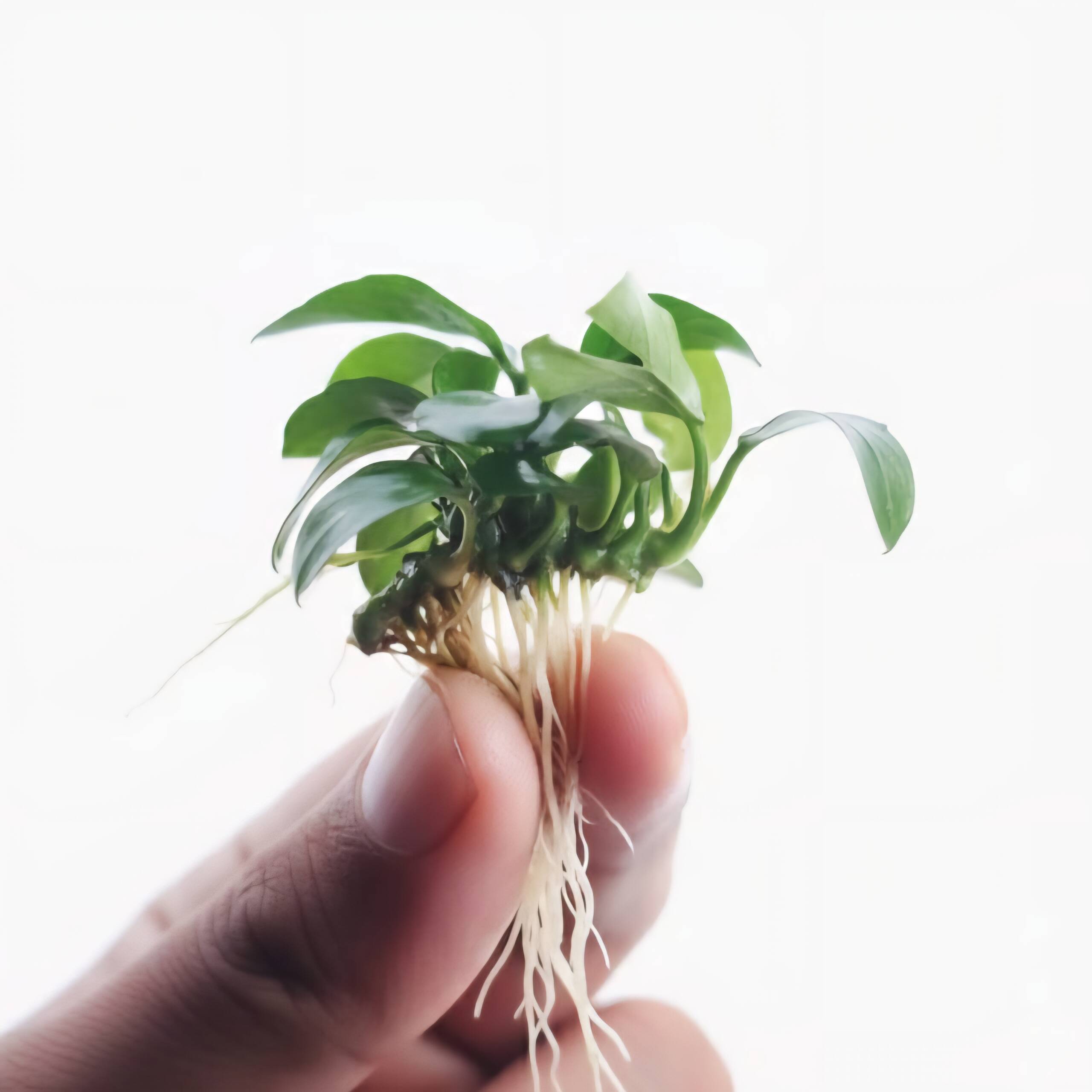
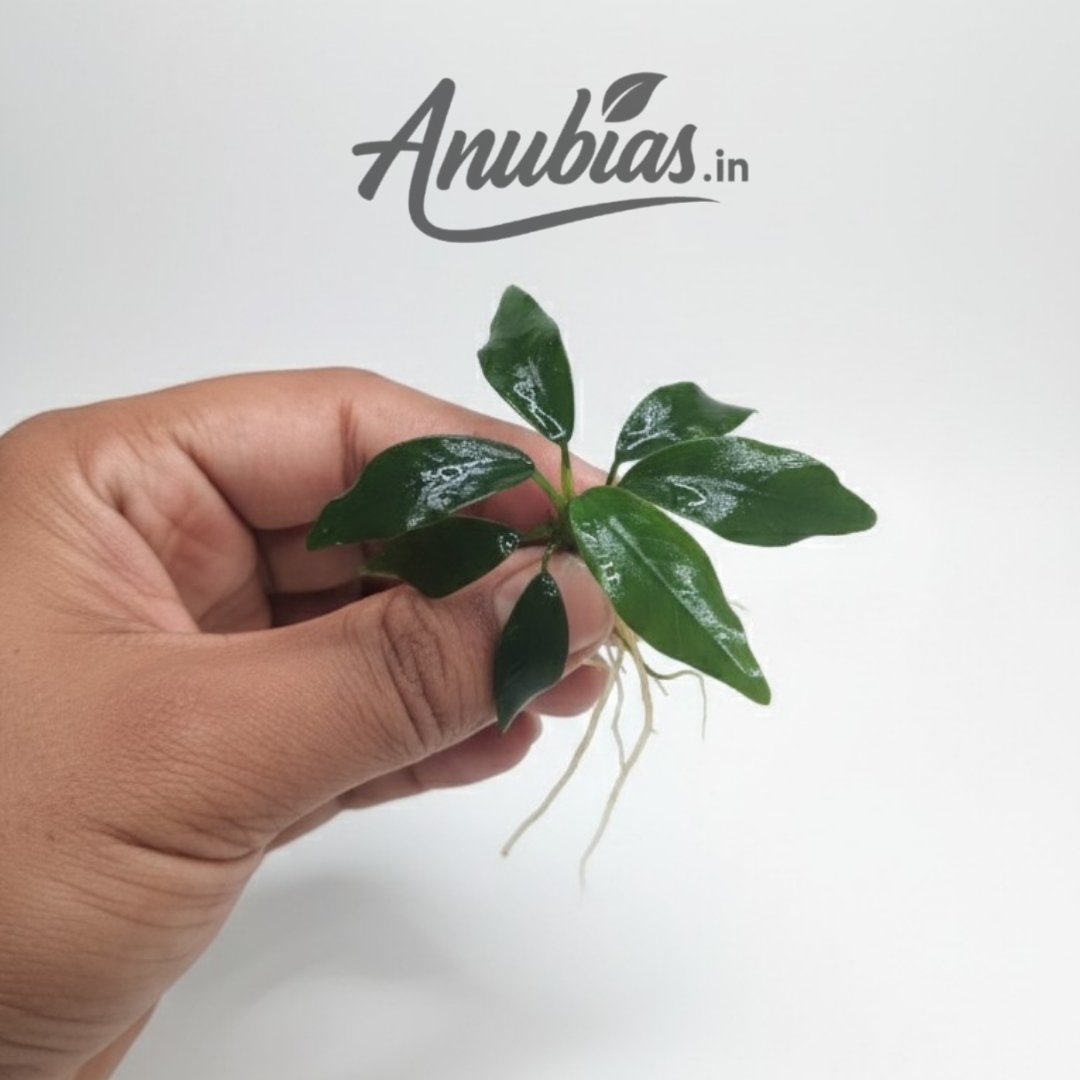
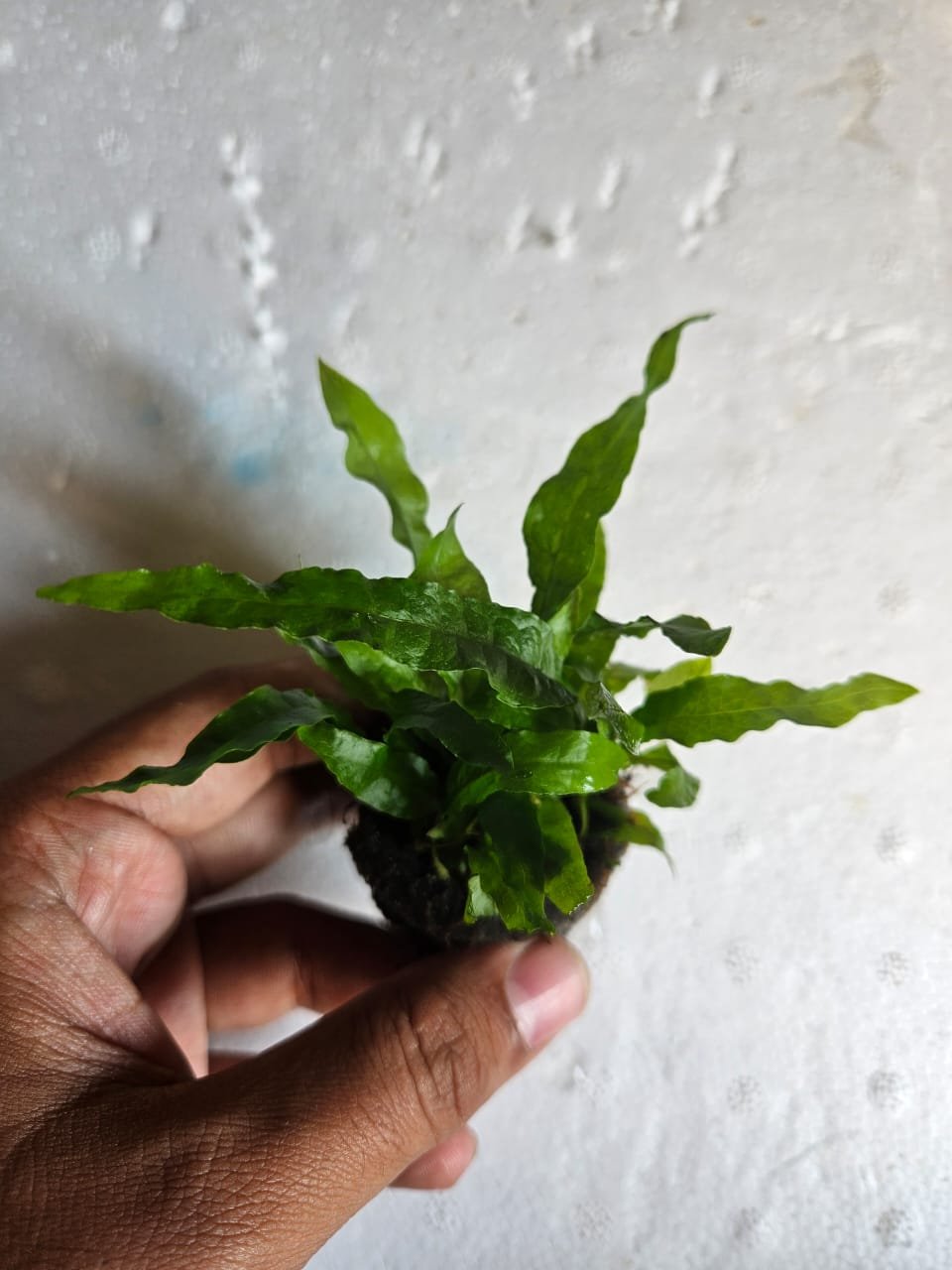
Plants with a rhizome that grow on wood or rock instead of in soil. Never bury the rhizome. Examples: Anubias, Java fern, Bucephalandra.
2. Rosette plants
Leaves grow from a central crown with roots in the substrate; they feed well from root tabs. Examples: Amazon sword, Cryptocoryne, Vallisneria.
3. Stem plants
Grow upward along a stem; trim and replant tops to make them bushier. Examples: Rotala rotundifolia, Ludwigia repens, Water wisteria. See background plants.
4. Carpet plants
Short plants that spread across the foreground. Examples: Monte Carlo, Dwarf hairgrass, Dwarf sagittaria. See foreground plants.
5. Floating plants
Live at the surface, absorb nutrients fast and shade algae. Examples: Duckweed, Amazon frogbit, Water lettuce.
6. Mosses
Soft plants that cling to hardscape, great for shrimp and moss walls. Examples: Java moss, Christmas moss, Flame moss.
7. Bulb plants
Grow from a bulb planted with the top exposed. Example: Red tiger lotus.
Building a layout from several groups at once
Knowing the groups is useful, but the practical question is how they sit together in one tank. A workable starting combination is three groups, not seven.
Epiphytes give you structure that never needs replanting, so they go on wood and rock and effectively stay put for years. Rosette plants fill the midground and are the part of the layout that slowly spreads on its own. Stem plants close off the background and are the part you trim.
Once that framework works, add specialists. Carpet plants suit the front of a tank with strong light, mosses soften the transition where hardscape meets substrate, and floating plants shade a tank that is fighting algae. Bulb plants are best treated as a single feature rather than a group.
The common error is spreading one or two plants from every group across the tank. Each group has a visual job, and using them in blocks rather than sprinkling them makes the layout read clearly.
Typical mistakes with each group
- Epiphytes. Burying the rhizome in substrate, which causes rot. Attach instead.
- Rosette plants. Planting the crown too deep so the centre of the plant sits under gravel and rots away.
- Stem plants. Replanting the bald lower half after a trim instead of the healthy top.
- Carpet plants. Planting large clumps rather than splitting them, which leaves the middle shaded and melting.
- Floating plants. Letting them cover the entire surface until everything below is starved of light.
- Mosses. Tying on a thick wad, so the inner layer dies off and detaches in one mat.
- Bulb plants. Burying the whole bulb rather than leaving the top exposed.
Across all groups, Indian summer heat above 30°C slows growth and increases melting risk. Epiphytes and mosses handle it best; carpet plants and delicate stems suffer most, which is worth remembering when choosing what to buy in May rather than December.
Plants in this guide
Grown in Surat · graded by leaf count and photographed before dispatch · live-arrival guarantee on every order · ₹99 shipping, free from ₹2,000
Frequently asked questions
Which type of aquarium plant is easiest?
Epiphytes such as Anubias and Java fern are the easiest because they need no substrate or CO2 and grow in low light.
What is the difference between stem and rosette plants?
Stem plants grow leaves along a stem and are propagated by cuttings; rosette plants grow leaves from a central crown and spread by runners or new plantlets.
Are mosses and epiphytes the same?
Both attach to hardscape, but mosses are fine, soft plants without a rhizome, while epiphytes like Anubias have a thick rhizome.
Shop the plants in this guide: Dwarf Sagittaria, Flame Moss, Amazon Sword, Red Tiger Lotus / Red Water Lily, Duckweed, Water Lettuce.
Can I keep only one type of aquarium plant in a tank?
Yes, and an all-epiphyte tank is one of the easiest setups you can run. Single-group tanks are simpler to care for because every plant wants the same treatment and the same fertiliser routine. The trade-off is visual, since mixed heights and leaf shapes are what give a layout depth.
Which plant groups do shrimp prefer?
Mosses are the clear favourite, because the fine structure traps food particles and gives shrimplets somewhere to hide. Epiphytes come a close second, as the broad leaves grow biofilm that shrimp graze constantly. Carpet plants also work well once established, giving cover across the open foreground.
Do all these groups need the same fertiliser?
Broadly they need the same nutrients, but they take them in differently. Epiphytes, mosses, stem plants and floaters feed mainly from the water column, so liquid fertiliser suits them. Rosette and bulb plants are heavy root feeders and respond much better to root tabs placed in the substrate near them.
Comparing species? The aquarium plant care chart lists light, CO2, growth rate and price for all 55 plants we stock.