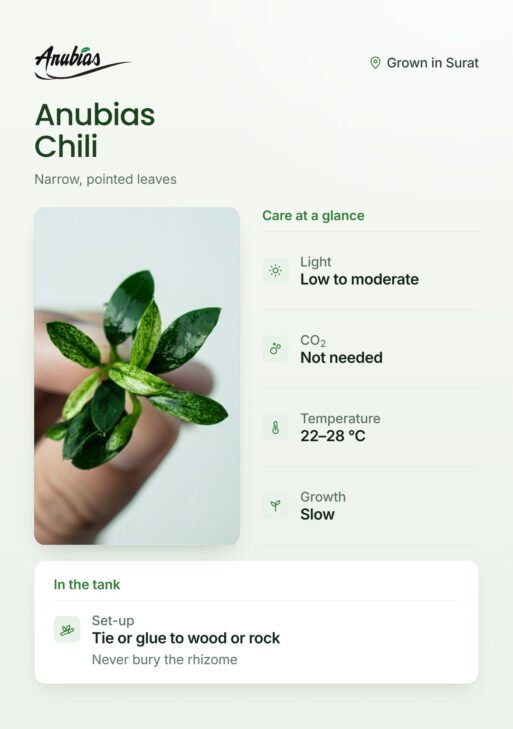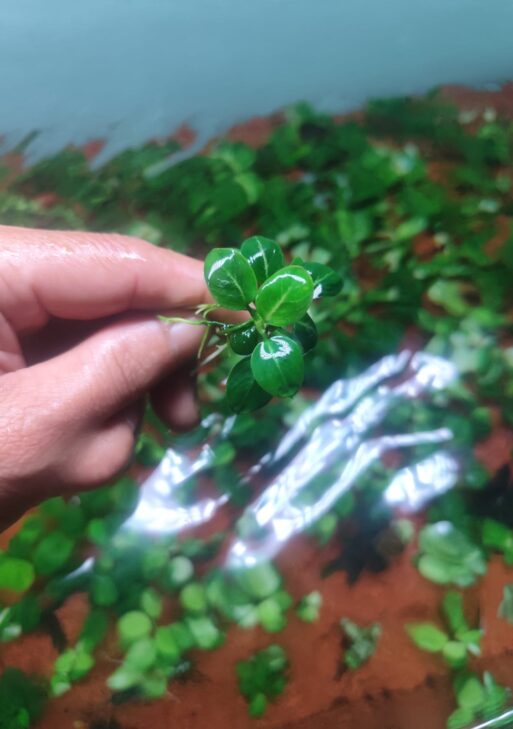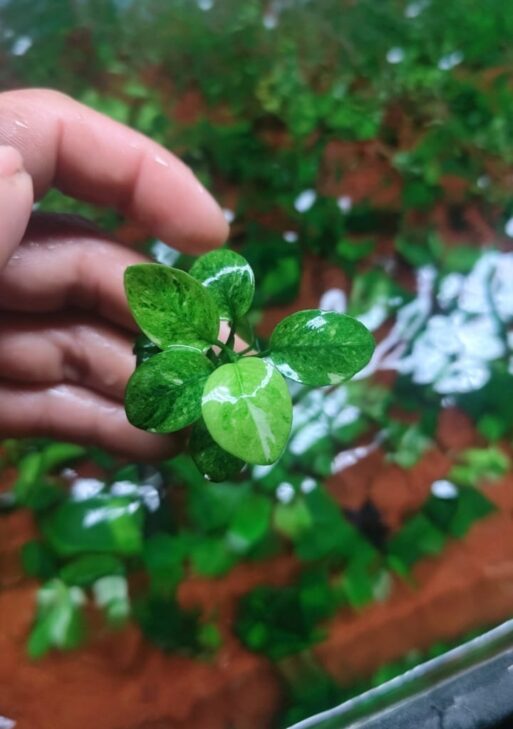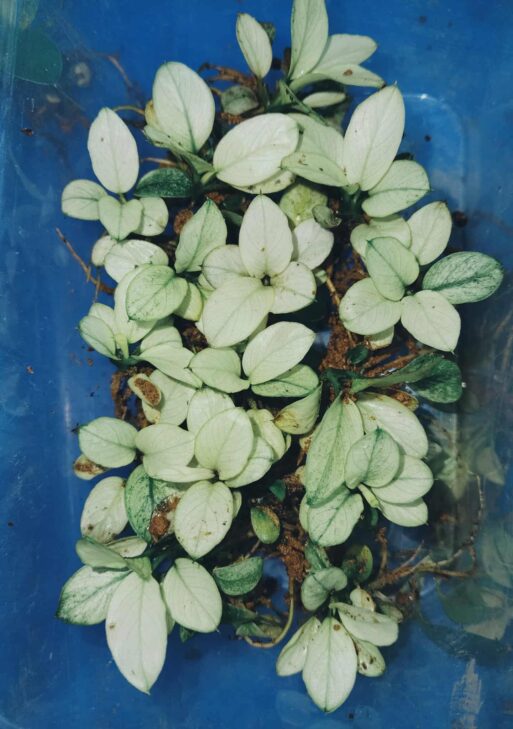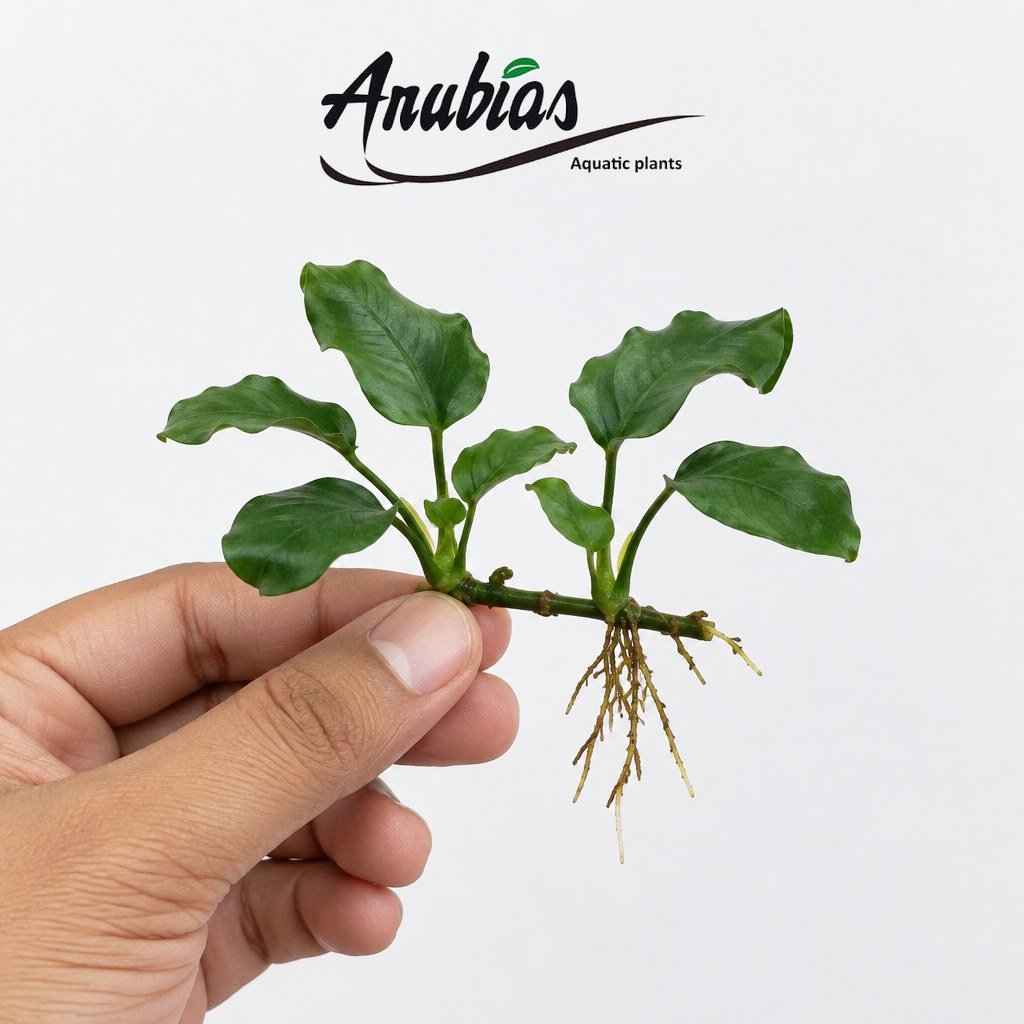
Description
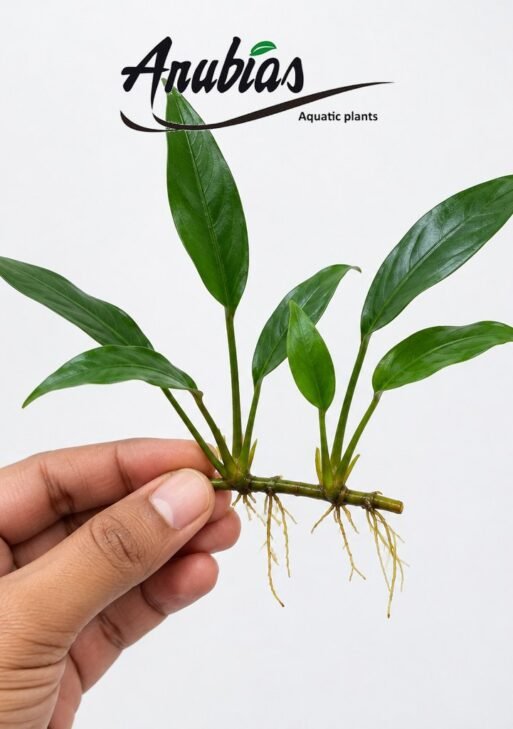
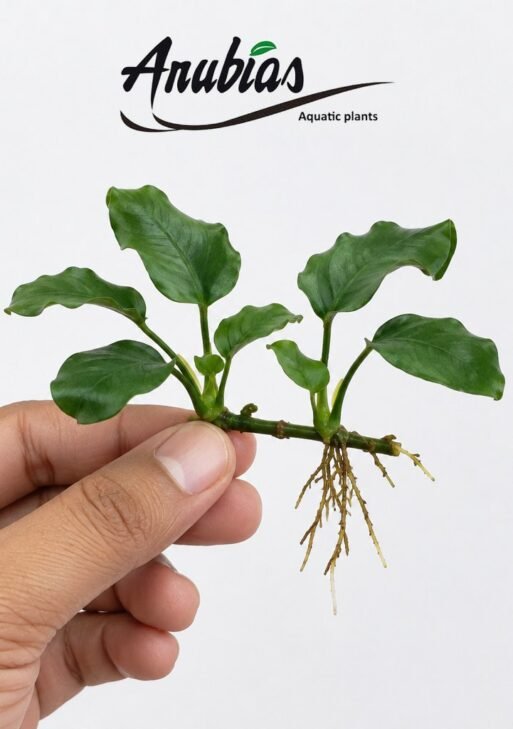
Anubias butterfly (Anubias barteri ‘Butterfly’) is a green anubias cultivar with broad, glossy leaves shaped like a pair of butterfly wings, wider than they are long and rounded at the tips. It is not variegated, so the leaves stay a solid deep green, which makes it one of the lowest-fuss anubias available. Like all anubias it grows from a rhizome, needs no CO2, lives in low light and shrugs off hard water. Anubias butterfly suits beginners, betta keepers, shrimp tanks and any aquascaper who wants a bold, clean leaf shape on wood or rock.
Anubias butterfly at a glance
| Scientific name | Anubias barteri ‘Butterfly’ (cultivar / trade name) |
|---|---|
| Family | Araceae |
| Origin | Cultivated form; the species is native to West and Central Africa |
| Difficulty | Easy |
| Light | Low to moderate |
| CO2 | Not required |
| Temperature | 22–28 °C |
| pH | 6.0–8.0 |
| Growth rate | Slow; roughly one new leaf every two to three weeks |
| Height/size | 10–20 cm tall; leaves 5–10 cm wide |
| Placement | Midground, epiphyte on wood or rock |
| Propagation | Rhizome division |
How to plant Anubias butterfly
Anubias butterfly is an epiphyte. The thick green rhizome must stay above the substrate, where water flows around it; buried rhizomes rot.
- Rinse the plant gently and check that the rhizome is firm.
- Pick a textured mount: driftwood, lava rock, dragon stone or seiryu. Smooth pebbles give the roots nothing to grip.
- Tie the rhizome on with cotton thread, or glue it with a small drop of cyanoacrylate gel applied to the rhizome and roots only, never the leaves.
- Set it at midground height where its wide leaves can be seen from the front of the tank.
- If you have no hardscape, sit the rhizome on top of the substrate and push only the roots in, or wedge it between two stones.
Choose the lava rock option and the plant arrives already tied to a natural lava rock, ready to place. It can survive floating for a while, but attaching it keeps the tank tidy and the leaves upright. Roots grip within a few weeks.
Anubias butterfly care: light, CO2, fertiliser and water
Light. Low to moderate light for 6–8 hours a day. The wide leaves are very efficient at catching light, so the plant grows fine in the shade of other plants. Under strong direct light the leaves last so long that algae eventually settles on them; shade it or shorten the photoperiod.
CO2. Not required. Anubias butterfly grows at the same slow pace in low-tech tanks. CO2 gives slightly larger leaves and a marginally faster rate, but it is a waste to add it for this plant alone.
Fertiliser. Light feeding. A weekly dose of a complete liquid fertiliser keeps new leaves large and dark green, especially in tanks with few fish. It takes nutrients from the water through leaves and roots, so root tabs are not needed. Potassium shortage shows as pinholes in old leaves.
Water. Completely unfussy. Hard Indian tap water, pH 6–8, and temperatures of 22–28 °C all suit it. Summer peaks of 30–32 °C slow it down but rarely harm it if flow is good. It is one of the plants least affected by monsoon power cuts, going days without light or filtration. Weekly 25–30% water changes are enough.
Growth, trimming and propagation
Expect a new leaf every two to three weeks in a settled tank. The rhizome creeps forward and branches, so over a year a single plant becomes a wide clump of overlapping wing-shaped leaves 10–20 cm across.
Trim only to remove old, yellow or algae-covered leaves: cut the stalk close to the rhizome. The leaves last for a year or more, so losses are slow. Wipe algae off the leaf surface gently during water changes rather than cutting the leaf.
To propagate, cut the rhizome with a sharp blade when it carries six or more leaves, leaving at least three leaves and some roots on each piece. Tie each piece to its own mount. The cut heals within days and both sections continue growing. A mature plant may push up a white, hooded flower (a spathe) under water; it is harmless and can be left or cut off.
Where to use it in an aquascape
Anubias butterfly is a midground plant with a strong, simple leaf shape. In a 1.5–2 ft tank (around 40–75 litres) one plant on a central piece of driftwood becomes the focal point. In 3 ft tanks (120 litres and up) group two or three on a large root, or scatter single plants along a line of rock to lead the eye through the layout.
Its broad leaves contrast with the small round leaves of Anubias nana mounted lower down, and with the long crinkled fronds of Java fern behind it. Add Cryptocoryne at the base and a soft background of stem plants, with a few floating plants to soften the light.
It is a classic betta plant: bettas rest on the broad leaves near the surface, and the plant tolerates the 24–28 °C bettas need. It is safe with all shrimp and snails, and its tough leaves survive goldfish, cichlids and plecos that destroy softer plants.
Common problems and fixes
- Rhizome rot. Soft, brown, smelly rhizome. Cause: rhizome buried or kept in stagnant, hot water. Fix: cut back to firm green tissue and remount in flow above the substrate.
- Green spot algae on leaves. Cause: strong light and long photoperiod on slow leaves. Fix: shade the plant, cut the photoperiod to 6–7 hours, add nerite snails.
- Black beard algae on leaf edges. Cause: poor flow and unstable conditions. Fix: improve circulation, spot-treat with diluted hydrogen peroxide or liquid carbon, add Amano shrimp.
- Yellowing or pinholed old leaves. Nutrient shortage, usually potassium. Fix: dose a complete fertiliser weekly.
- A leaf or two melting after arrival. Normal adjustment. Fix: remove the leaf; the rhizome carries on.
- Plant floating free. Cause: tie came loose before roots gripped. Fix: retie or glue it.
Note: anubias leaves contain calcium oxalate. Keep trimmed leaves away from cats, dogs and other pets that might chew them.
What you receive
One healthy Anubias butterfly plant of the size you select (Small or Standard), similar to the photo. Each plant is checked before packing, packed moist and shipped across India from Surat. ₹99 shipping, free on orders of ₹999 or more. Choose the lava rock option if you want it to arrive already attached.
Live-arrival guarantee: record one continuous unboxing video within 4 hours of delivery and we will refund or replace a plant that arrived damaged.
FAQ
Does Anubias butterfly need CO2?
No. It grows well in low-tech tanks without CO2. CO2 makes only a small difference to leaf size.
Is Anubias butterfly good for beginners?
Yes. It is one of the easiest aquarium plants. Keep the rhizome above the substrate and out of harsh light.
How fast does Anubias butterfly grow?
Slowly, about one new leaf every two to three weeks. The plant lasts for years and rarely needs trimming.
Can Anubias butterfly grow in sand or gravel?
Yes, if only the roots go into the substrate and the rhizome stays exposed. Tying it to wood or rock is safer.
Anubias butterfly vs Anubias nana: what is the difference?
Butterfly has larger, wider, wing-shaped leaves and grows a little taller; nana has small rounded leaves and stays compact. Both need the same easy care.
Is Anubias butterfly safe for bettas and shrimp?
Yes. Bettas rest on its broad leaves and shrimp graze it without harm.
Not sure what fits your tank? Plan it with our free AI tank planner.