Description
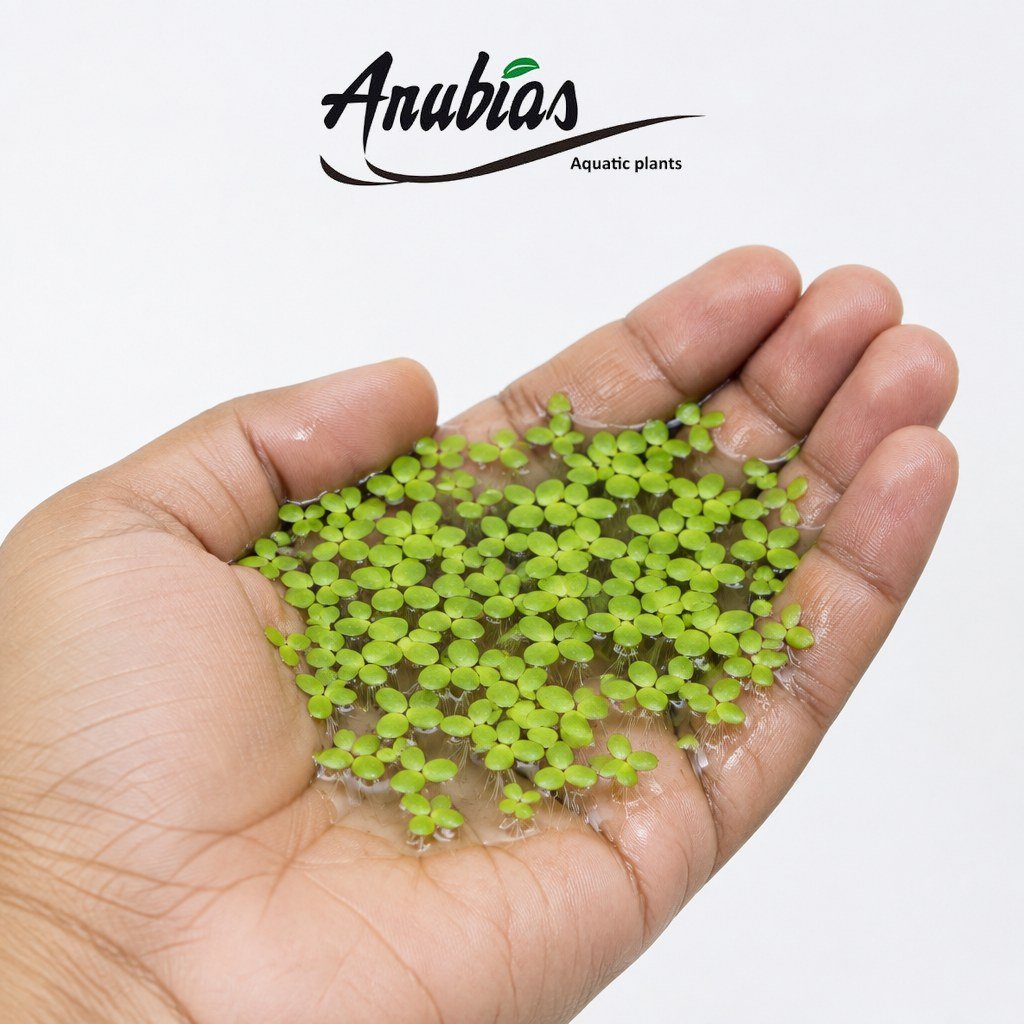
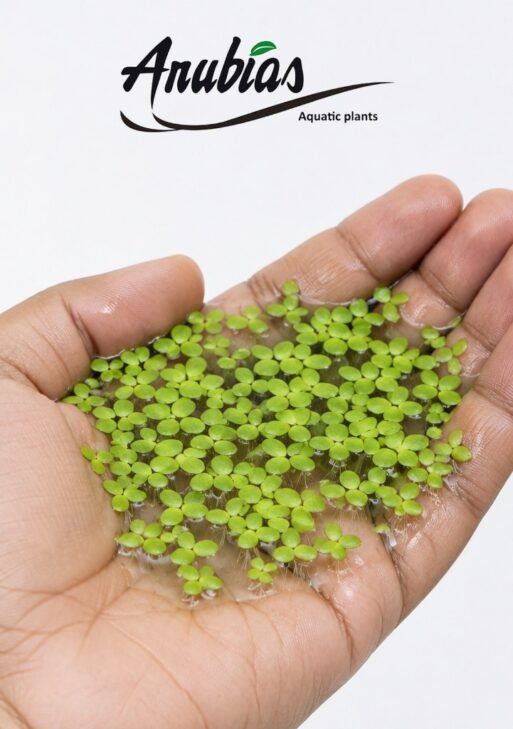
Duckweed (Lemna minor) is made up of tiny round leaves just a few millimetres wide that multiply rapidly across the water’s surface, forming a dense green carpet. It’s one of the most effective natural nutrient absorbers in the hobby — pulling nitrates and ammonia straight out of the water column — and doubles as a green snack for goldfish and mollies and shady cover for fry and shrimp. No substrate, CO2, or special lighting required; moderate light is enough to keep it multiplying. Easy to thin out with a net; do it before it covers more than half the surface.
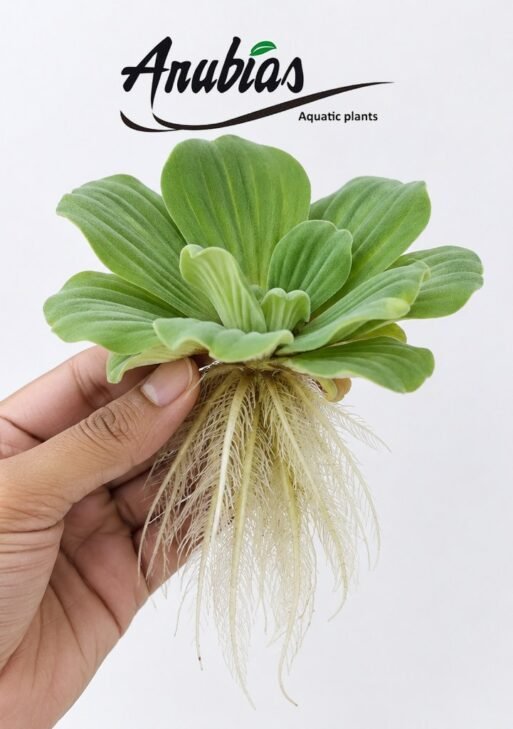
What you get: one palm-sized portion of about 150–250 fronds (tiny leaves), similar to the photo.
For growing, uses and control tips, see our Duckweed care guide.
Care at a glance
- Placement: Water surface
- Light: Low to high
- CO₂: Not needed
- Temperature: 18–30 °C
- Growth: Very fast
- Difficulty: Very easy
Duckweed doubles quickly and is hard to remove completely, so it suits ponds, tubs and feeder cultures more than display tanks. Read the full duckweed care guide for setup, thinning and troubleshooting tips.
Compare light, CO2, growth rate and difficulty for every plant we stock in the aquarium plant care chart.
Frequently Asked Questions
Is it good to have duckweed in an aquarium?
Yes, in the right tank. Duckweed soaks up ammonia and nitrate, helps slow algae and gives fry and shrimp cover. Goldfish and mollies graze on it. The catch is that it doubles in a few days and is very hard to remove completely, so it suits breeding tanks, tubs and ponds best. Compare it with other floaters in our Frogbit vs Water Lettuce vs Duckweed guide.
Does duckweed oxygenate water?
Not much. Duckweed makes oxygen in light, but because it floats, much of it escapes into the air, not the water. A thick mat also blocks surface gas exchange, shades plants below and uses oxygen at night. Keep at least half the surface open and run a filter or air stone. See which plants help most in our guide to oxygen plants for aquariums.
How can I remove duckweed from my aquarium?
Scoop it out with a fine net and repeat every few days. Switch off the filter for a few minutes so the leaves stop moving, and check the filter, heater and plant leaves, where fronds hide. A single frond can regrow the whole mat, so keep netting for two to three weeks after it looks gone. Check and rinse new plants before adding them.
Is duckweed harmful?
No. Duckweed is not toxic to fish, shrimp or snails, and goldfish and mollies can safely eat it. Problems come only from overgrowth. A full mat blocks light for plants below, can clog filter intakes and cuts surface gas exchange. Net out the extra every week and keep it to half the surface. Put the extra in compost, not in drains or lakes.
How is duckweed shipped across India?
It is hand-packed and sent by courier anywhere in India for a flat ₹99, free on orders of ₹999 or more. If it arrives dead, send one continuous unboxing video within 4 hours of delivery on WhatsApp (+91 81416 96983) or email (buyanubias@gmail.com) and we refund or replace it.
Why buy from Anubias.in: grown in Surat; ₹99 shipping anywhere in India, free on orders of ₹999 or more; prepaid via UPI, cards or netbanking. Any claim (dead, damaged, wrong plant) needs one continuous unboxing video sent within 4 hours of delivery on WhatsApp (+91 81416 96983) or email (buyanubias@gmail.com); photos alone are not accepted. More about buying from Anubias.in.


There are no reviews yet.