Description
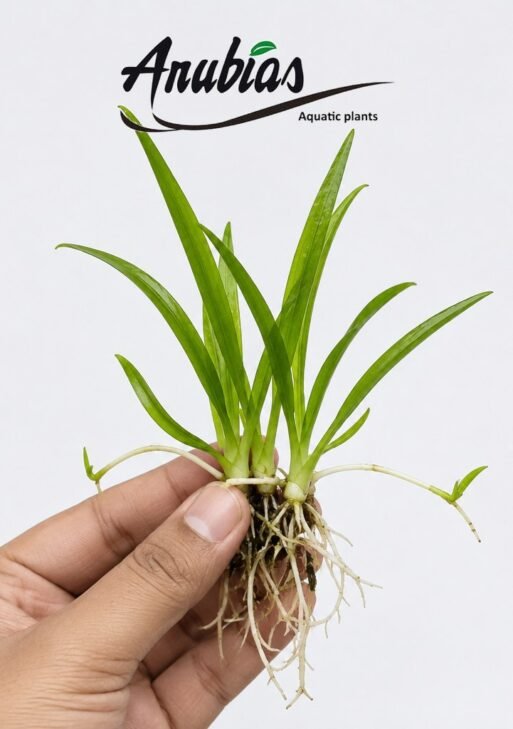
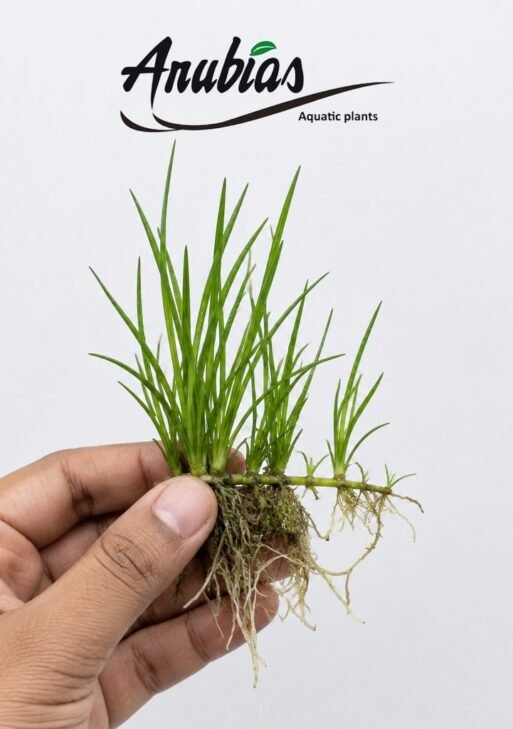
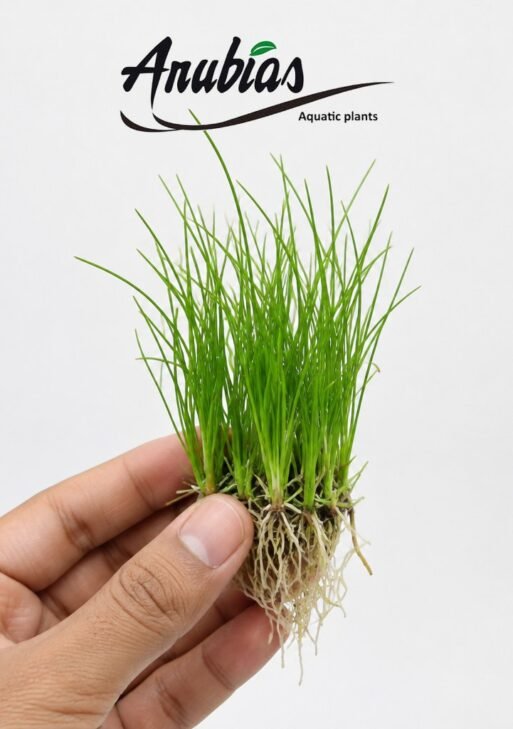
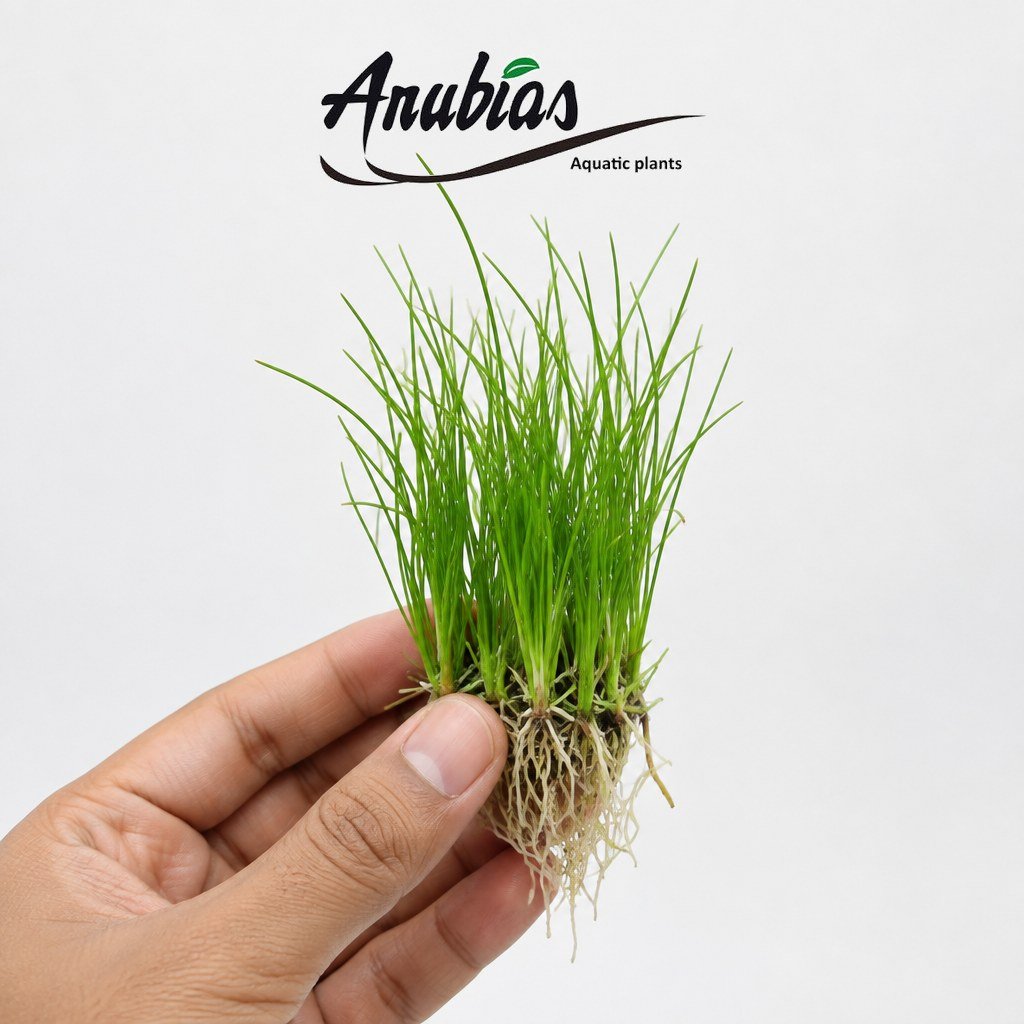
Dwarf hairgrass (Eleocharis parvula, often sold as Eleocharis sp. or dwarf hair grass) is the classic grassy carpet plant: fine, bright green blades that grow in small clumps and spread by runners until they knit into a lawn across the foreground. It is a rooted plant for substrate, happiest in medium to high light, and it carpets fastest with CO2 but will fill in slowly without it. Dwarf hairgrass suits aquascapers building Iwagumi and nature-style layouts, and anyone who wants the look of a meadow in front of their hardscape.
Dwarf hairgrass at a glance
| Scientific name | Eleocharis parvula (trade names include Eleocharis sp. ‘mini’, Eleocharis acicularis for the taller form) |
|---|---|
| Family | Cyperaceae (sedges) |
| Origin | Near-cosmopolitan; shallow margins of lakes and brackish marshes in the Americas, Europe and Asia |
| Difficulty | Easy to moderate; carpeting takes patience |
| Light | Medium to high |
| CO2 | Not required; strongly recommended for a dense, low carpet |
| Temperature | 15–26 °C; tolerates up to 28 °C |
| pH | 6.0–7.5 |
| Growth rate | Moderate; fast with CO2 |
| Height/size | 3–8 cm when trimmed; taller in low light |
| Placement | Foreground carpet |
| Propagation | Runners; split clumps |
How to plant dwarf hairgrass
Hairgrass carpets by sending runners sideways through the substrate, so the planting method is many small clumps rather than one big one.
- Prepare a fine, nutrient-rich substrate at least 4–5 cm deep. Aquasoil gives the fastest carpet; fine sand or gravel works with root tabs.
- Rinse the clump and remove any old brown blades. Split it into small plugs of a few blades each with roots attached.
- Trim the blades to 2–3 cm before planting. Short blades put energy into roots and runners instead of height.
- Plant the plugs 2–3 cm apart in a grid across the foreground with tweezers, pushing the roots in so the base sits just below the surface.
- Fill the tank slowly over a plastic sheet so the plugs are not washed out, and run the light at full strength from the first day.
Dwarf hairgrass care: light, CO2, fertiliser and water
Light. Medium to high light is the key to a carpet. Under strong light the blades stay short and the runners spread quickly. In low light the plant stretches tall and sparse and never fills in, so if your lamp is weak, put the hairgrass closest to it. A photoperiod of 7–8 hours is enough.
CO2. Optional but transforming. With CO2, good light and fertiliser a carpet fills in within one to two months. Without CO2 it fills in slowly over several months and stays a little taller. Liquid carbon helps in a low-tech tank.
Fertiliser. Hairgrass feeds through both roots and leaves. Use root tabs under the carpet every one to two months in sand or gravel, plus a weekly complete liquid fertiliser with iron and potassium. Yellowing blade tips usually mean low iron or nitrogen.
Water. Hard Indian tap water is fine. Hairgrass prefers cooler water than most tropical plants and is at its best at 15–26 °C; in summers above 28 °C growth slows and older blades brown, so shade the tank, add surface agitation and keep the room ventilated. Monsoon power cuts of a day do no harm. Weekly 30% water changes keep the carpet clean of debris that settles between the blades.
Growth, trimming and propagation
Once rooted, dwarf hairgrass sends runners sideways and new blades appear a few centimetres from the parent. Plugs spaced 2–3 cm apart merge into a lawn, and a fully knitted carpet behaves like turf, holding the substrate together.
Trim regularly with curved scissors to keep it at 3–8 cm. The first trim once the carpet has filled in is the most important: cutting hard encourages dense side growth. Net out the cut blades, which float, before they decay. In a mature tank the carpet can be mown every two to three weeks under CO2 or every month or two without.
Propagate by lifting a section of carpet, splitting it into plugs and replanting them elsewhere. The plant rarely flowers underwater, so division is the only method you need.
Where to use it in an aquascape
Dwarf hairgrass is the foreground of choice for Iwagumi layouts, where a flat green meadow sets off three or five stones. It is equally good as a transition plant around the base of driftwood and as a lawn in nature-style tanks.
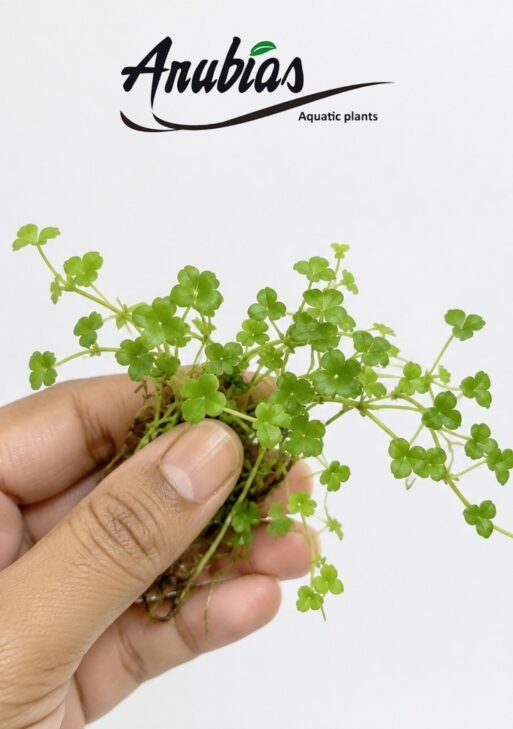
In nano tanks of 1 ft (15–20 litres) a single clump split into plugs carpets the whole foreground. In 2 ft tanks (60–90 litres) plan on two or three clumps; in 3 ft tanks (120–200 litres) four to six. Pair it with other carpeting plants such as Monte Carlo for texture contrast, with Anubias nana on the hardscape, and with stem plants or cryptocoryne behind.
It is safe with shrimp, which pick through the blades, and with small fish such as rasboras, tetras, otocinclus and corydoras. Avoid goldfish and large cichlids that dig, which pull plugs out before they root.
Common problems and fixes
- Tall, thin blades and no spread. Cause: not enough light. Fix: increase light intensity or move the plant directly under the lamp; add CO2 if possible.
- Plugs floating up. Cause: planted too shallow or disturbed by fish. Fix: replant deeper with tweezers and hold them down with small stones until rooted.
- Brown, melting blades after planting. Cause: adjustment from emersed to submerged growth. Fix: trim the brown blades and wait; new submerged growth follows within weeks.
- Hair algae tangled in the carpet. Cause: high light with low CO2 or nutrients. Fix: balance CO2 and fertiliser, shorten the photoperiod, add Amano shrimp and remove algae by twirling a toothbrush through it.
- Yellow tips. Cause: iron or nitrogen shortage. Fix: dose liquid fertiliser weekly and add root tabs.
What you receive
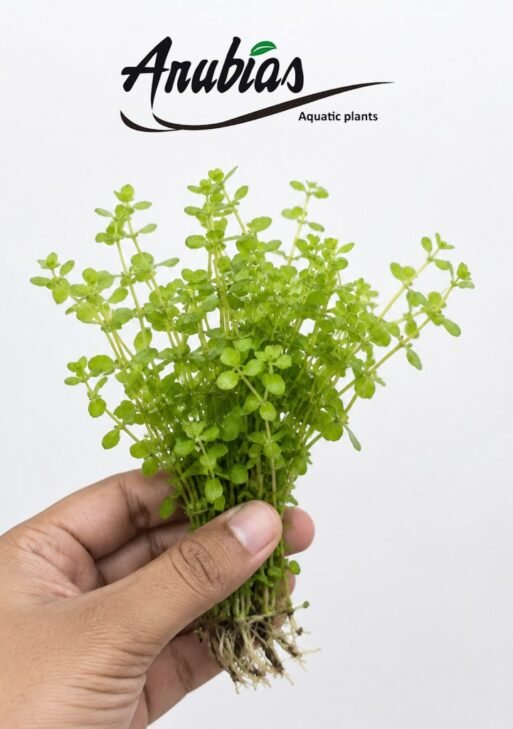
One healthy dwarf hairgrass clump of the size you select (Small or Standard), ready to split into plugs, similar to the photo. Each plant is checked before packing, packed moist and shipped across India from Surat. ₹99 shipping, free on orders of ₹999 or more.
Live-arrival guarantee: record one continuous unboxing video within 4 hours of delivery and we will refund or replace a plant that arrived damaged.
FAQ
Does dwarf hairgrass need CO2?
No, but it carpets much faster and lower with CO2. Without it, expect a thinner carpet that takes several months to fill in.
Is dwarf hairgrass good for beginners?
Yes, if you have medium to high light and some patience. The planting is simple; the challenge is waiting for the runners to knit.
Can dwarf hairgrass grow in sand?
Yes, in fine sand at least 4–5 cm deep with root tabs every one to two months. It spreads more slowly and forms a thinner carpet than in aquasoil.
How fast does dwarf hairgrass grow?
With good light, CO2 and fertiliser a carpet usually fills in within one to two months. Without CO2 it can take three to six months.
Dwarf hairgrass vs Monte Carlo: which is easier?
Both need good light. Hairgrass tolerates cooler water and gives a grassy look; Monte Carlo is a little more forgiving in low-tech tanks and gives a leafy carpet. Many scapes use both.
How short should I trim dwarf hairgrass?
Keep it at 3–8 cm. Trim hard the first time the carpet fills in, then mow every few weeks to keep it dense.
Not sure what fits your tank? Plan it with our free AI tank planner.