Description
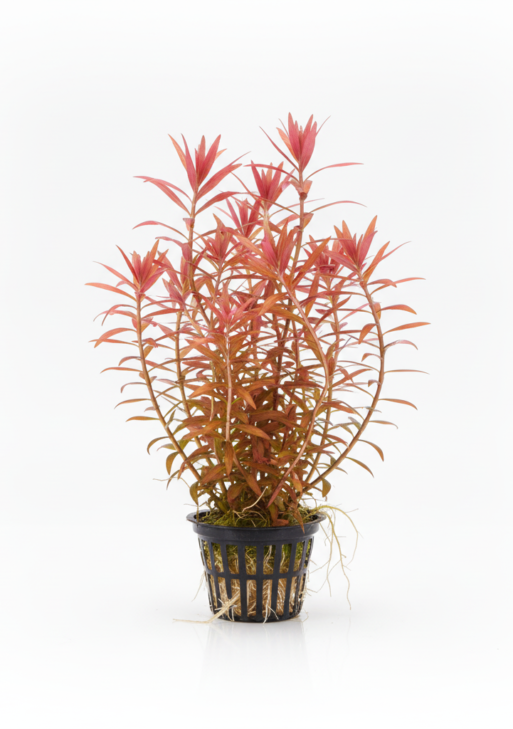
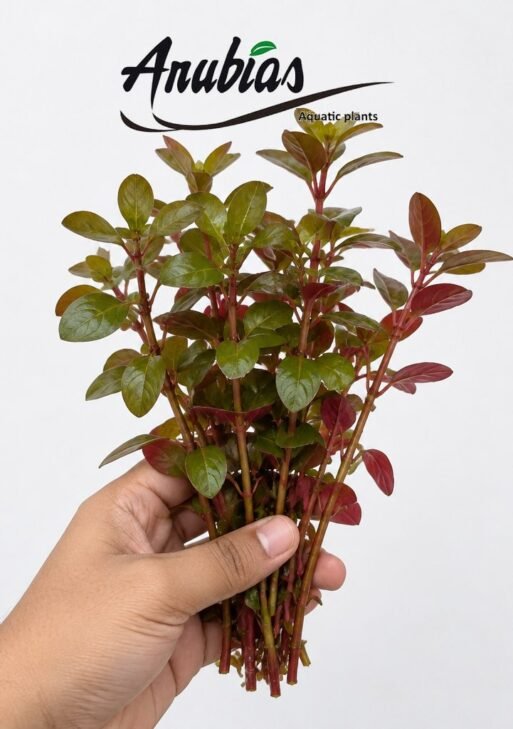
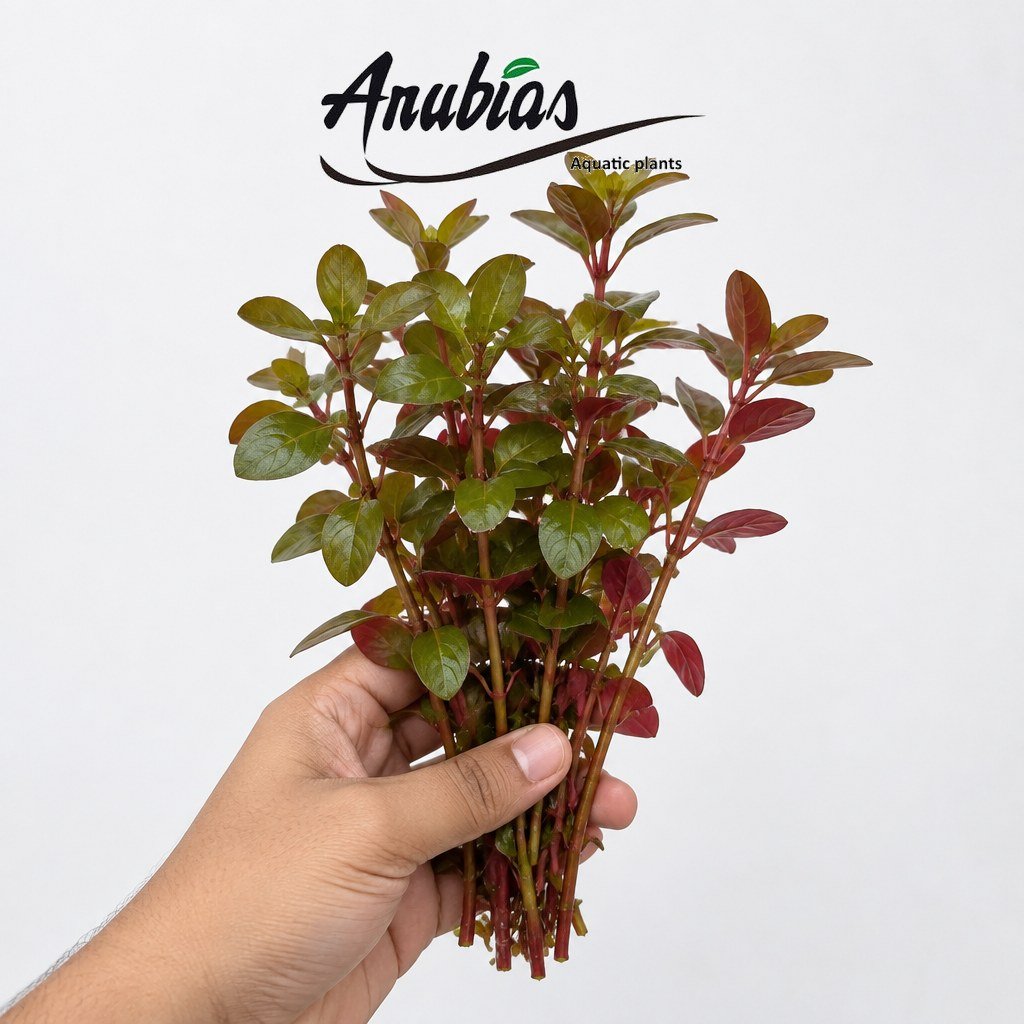
Ludwigia repens is the hardy red stem plant that brings instant colour contrast to a green tank. Its oval leaves are green to olive on top with deep red undersides in ordinary light, and under stronger light with a little extra iron the whole plant turns ruby-red. Unlike most red plants, Ludwigia repens does not need CO2 or expensive equipment: it grows in low-tech tanks, tolerates hard Indian tap water and roots in plain gravel. It suits beginners wanting their first red plant and experienced scapers who need a reliable midground-to-background accent.
Ludwigia repens at a glance
| Scientific name | Ludwigia repens (trade plants are often the hybrid Ludwigia repens × arcuata or ‘Rubin’ forms) |
|---|---|
| Family | Onagraceae |
| Origin | Southern USA, Mexico and Central America, in shallow streams and ponds |
| Difficulty | Easy |
| Light | Low to high; medium or more for red colour |
| CO2 | Not required; speeds growth and deepens colour |
| Temperature | 20–28 °C |
| pH | 6.0–8.0 |
| Growth rate | Moderate to fast |
| Height/size | 20–50 cm; leaves 2–4 cm long |
| Placement | Midground to background, rooted in substrate |
| Propagation | Stem cuttings |
How to plant ludwigia repens
Ludwigia is a straightforward stem plant and roots in almost any substrate.
- Rinse the bunch and remove any ties or weights. Cut each stem cleanly just below a node.
- Strip the lowest two or three pairs of leaves so 3–4 cm of bare stem can be buried.
- Push each stem into the substrate with tweezers, 2–3 cm apart. Individual planting gives each stem light and prevents rot at the base.
- Place the group in the midground or background where it receives the strongest light, since colour depends on it.
- In inert gravel or sand, push a root tab into the middle of the group.
Roots form at the buried nodes within a week, and new red-tinged leaves appear at the tips soon after.
Ludwigia repens care: light, CO2, fertiliser and water
Light. Ludwigia repens survives in low light, but it only turns red in medium to high light. Under a weak light the leaves stay green-brown with red only underneath and the stems grow leggy; under a decent LED for 6–8 hours a day the tops glow red and the plant stays compact. Place it where nothing shades it.
CO2. Optional. The plant grows well without CO2 and is one of the best red plants for low-tech tanks. With CO2 it grows two or three times faster and the red deepens, but you will be trimming far more often.
Fertiliser. Iron is the key to colour. Dose a complete liquid fertiliser containing iron once or twice a week, along with potassium and trace elements. Nitrate kept moderate rather than high tends to push the colour towards red. Root tabs help in inert substrates.
Water. Ludwigia repens tolerates the hard, alkaline tap water found in most Indian cities and grows from 20 to 28 °C. It handles short summer spells of 30 °C, though the lower leaves may drop; a surface fan helps. Monsoon power cuts of a few hours cause no harm. Weekly 25–30% water changes keep nutrient levels steady.
Growth, trimming and propagation
Growth is moderate without CO2 and fast with it. When stems reach the surface, cut them back by a third to a half, just above a leaf node. The lower stem branches into two new shoots and the group fills out.
Replant the cut tops in front of or among the old stems to thicken the group. Cuttings root in a week. Because the tops are the reddest part of the plant, regular trimming and replanting also keeps the display at its most colourful. Discard old, bare lower stems once they have been replaced by new growth.
Where to use it in an aquascape
Ludwigia repens is a midground-to-background colour accent. In a 2 ft tank (60–90 litres) a group of 6–10 stems to one side of centre draws the eye; in 3–4 ft tanks (120–250 litres) it works as a red block along the back or as a Dutch-style street running diagonally. In a 1 ft nano (15–25 litres) a few stems trimmed short make a red highlight behind hardscape.
Its red leaves show best against bright green stem plants such as water wisteria, with Anubias nana and Java fern on wood in front, and a low carpet from our carpeting plants at the foreground. It is also a classic partner for bronze cryptocoryne.
It is safe with shrimp and all community fish. Goldfish, large cichlids and silver dollars eat it; most other fish ignore it.
Common problems and fixes
- Leaves stay green, not red. Cause: light too low or no iron. Fix: increase light to medium or high for 6–8 hours and dose an iron-containing fertiliser; new growth colours up within two weeks.
- Leggy stems with wide gaps between leaves. Cause: insufficient light. Fix: more light, then trim and replant the compact tops.
- Lower leaves dropping. Cause: stems shading each other or planted in a bundle. Fix: plant stems individually 2–3 cm apart and trim regularly.
- Melt after planting. Cause: adjusting from emersed to submerged growth. Fix: leave stems in place; new leaves appear from the nodes within two weeks.
- Pinholes in older leaves. Cause: potassium deficiency. Fix: dose potassium.
- Black beard algae on the leaf edges. Cause: fluctuating CO2 or poor flow. Fix: stabilise CO2 or switch it off entirely, improve flow, spot-treat with liquid carbon.
What you receive
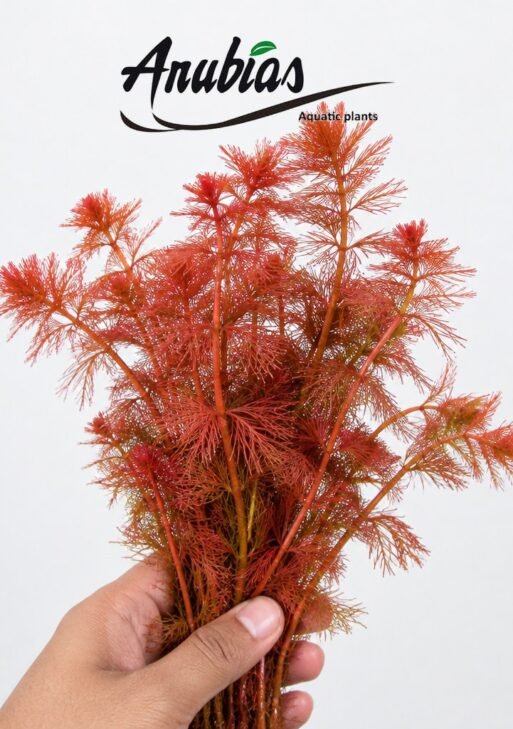
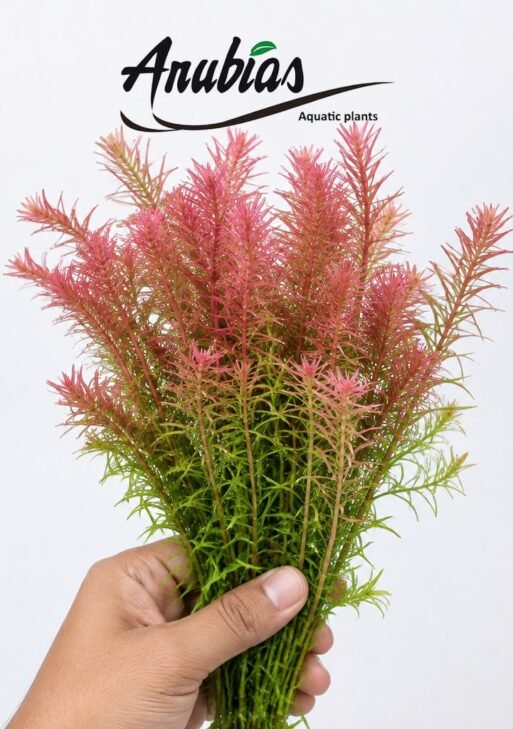
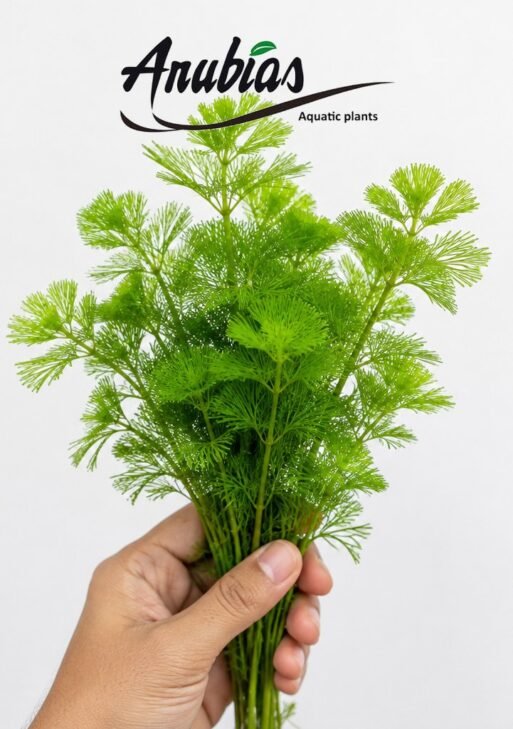
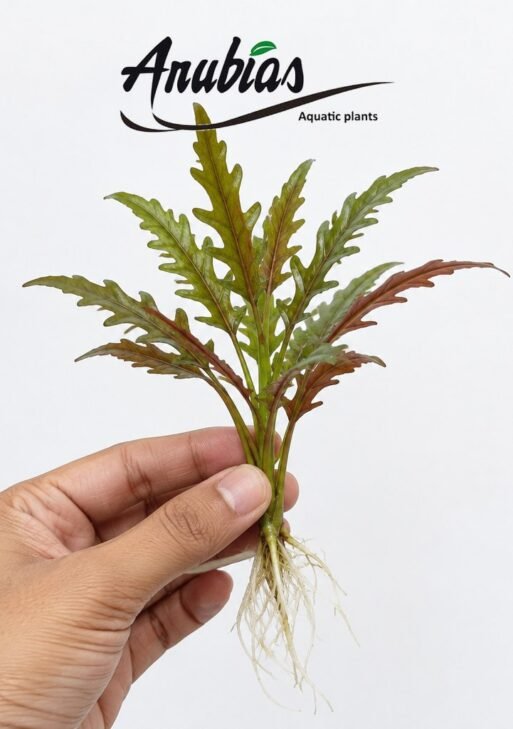
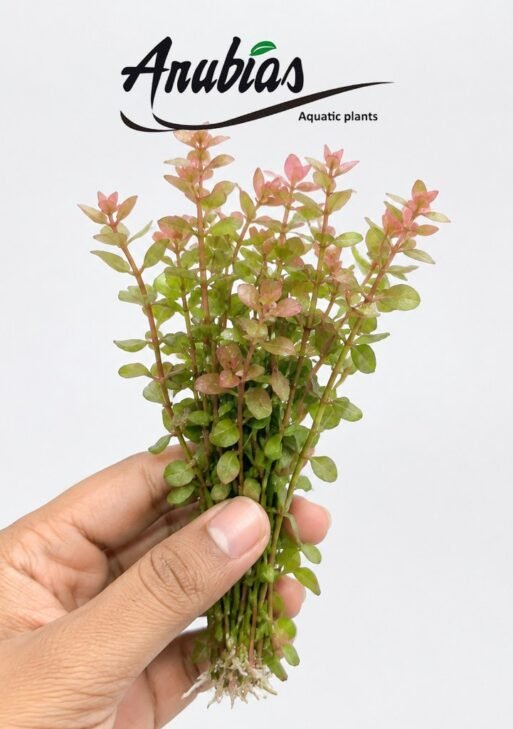
One healthy bunch of Ludwigia repens in the size you select (Small or Standard), similar to the photo. Each bunch is checked before packing, packed moist and shipped across India from Surat. ₹99 shipping, free on orders of ₹999 or more.
Live-arrival guarantee: record one continuous unboxing video within 4 hours of delivery and we will refund or replace a plant that arrived damaged.
FAQ
Does ludwigia repens need CO2?
No. It grows and colours up without CO2 as long as the light is medium or better. CO2 speeds growth and deepens the red.
Is ludwigia repens good for beginners?
Yes. It is the easiest red stem plant: tolerant of hard water, low-tech tanks and irregular dosing.
Why is my ludwigia repens not red?
Not enough light or iron. Red needs medium-to-high light for 6–8 hours a day and a fertiliser with iron. In low light the leaves stay green with red undersides only.
Can ludwigia repens grow in gravel?
Yes. It roots well in gravel or sand; add a root tab for the best growth.
How fast does ludwigia repens grow?
Moderately without CO2 (trim every three to four weeks) and fast with it (trim weekly or fortnightly).
Ludwigia repens vs rotala rotundifolia: which is redder?
Ludwigia repens gives larger, deeper red leaves under modest light; Rotala rotundifolia has finer pink-red leaves and needs more light to colour. For low-tech tanks, Ludwigia is the easier red.
Not sure what fits your tank? Plan it with our free AI tank planner.