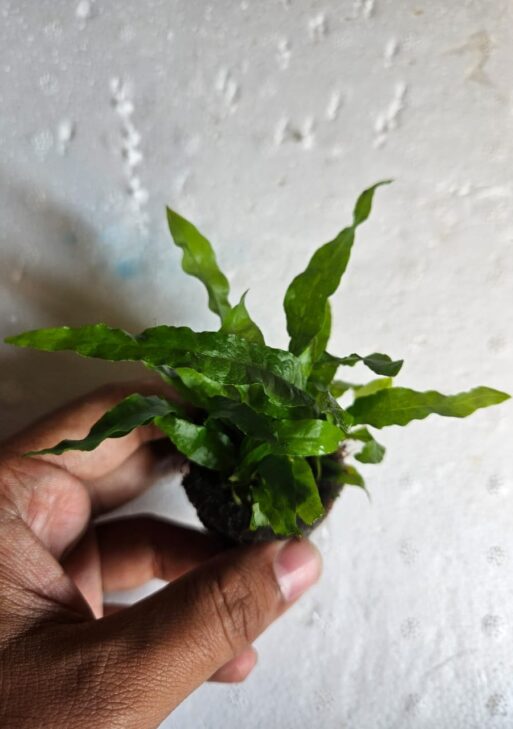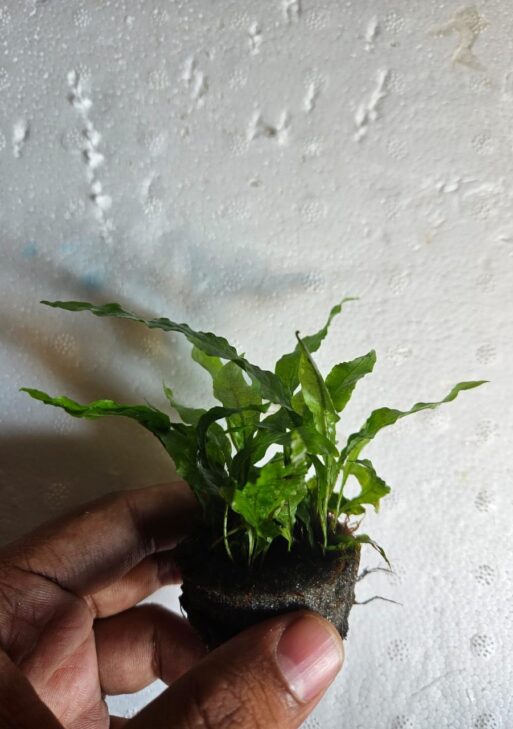


You bought Ludwigia repens or Red Myrio for their colour, but they are growing green or brownish. Red colour in stem plants is not guaranteed; it depends mostly on light, plus nutrients and CO2. Here is what controls red colour and how to bring it out.
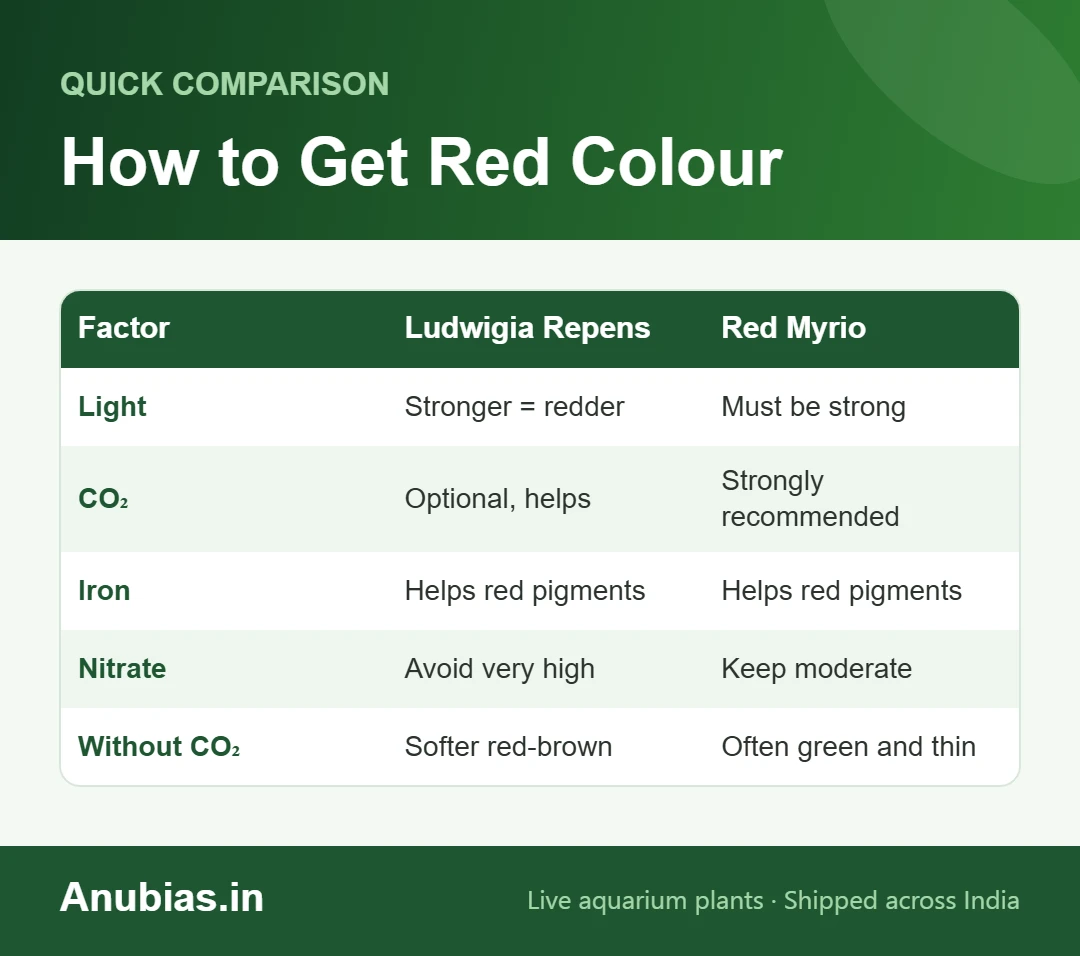
Quick answer: Red stem plants stay green mainly because the light is not strong enough. Ludwigia repens colours up under stronger light and can turn copper-red without CO2, while Red Myrio needs strong light and ideally CO2 to stay orange-red. Iron-containing fertiliser helps red pigments, and very high nitrate keeps plants greener. Place red plants closest to the light and avoid shading them with floating plants.
Light: the main factor
Red pigments develop as protection against strong light. Under a basic LED, plants stay green because they do not need that protection. Move red plants to the brightest spot, raise light intensity with a planted-tank LED, and keep floating plants away from above them.
Nutrients and CO2
- Iron: a complete fertiliser with iron and trace elements supports red colour.
- Nitrate: very high nitrate keeps plants greener; regular water changes help.
- CO2: optional for Ludwigia repens but strongly recommended for Red Myrio.
Ludwigia repens without CO2
Ludwigia repens is the easier red plant for low-tech tanks. With decent light and iron-rich fertiliser, its tops and leaf undersides turn copper to red even without CO2. See the Ludwigia repens care guide.
Red Myrio needs more
Red Myrio is demanding: strong light, regular fertiliser with iron and ideally CO2. In low light it turns green, thin and may melt. See the Red Myrio care guide.
More stem plant guides:
A step by step plan to push colour
Change one thing at a time and give each change a month, because only new growth responds. Working through this order avoids trading green plants for an algae problem.
- Move the plant, do not change the light yet. Put the stems directly under the brightest point of your fixture, near the front where nothing shades them.
- Clear anything floating above them. A patch of frogbit or salvinia directly overhead can halve the light reaching a stem.
- Add an iron-rich trace fertiliser on a fixed weekly schedule, and keep it consistent for four weeks before judging it.
- Bring nitrate down with a slightly larger or more frequent water change. Well fed plants grow lush green; slightly leaner ones colour up.
- Only now, if the tops are still green, raise the light intensity or lower the fixture, in small steps with a fortnight between each.
If the stems are still green after two months of all five, the plant is telling you it needs injected carbon dioxide, and no amount of fertiliser will substitute.
Trimming and replanting to keep the red tops
Red stems get greener as they grow, because the lower leaves sit further from the light and are older. This is why an untrimmed bunch looks red at purchase and green three months later, and it is a pruning problem rather than a nutrient one.
The technique is simple. Cut the top 8 to 10 centimetres of each stem, discard or compost the lower portion, and replant the cut tops into the substrate. Those tops are the best coloured, best lit part of the plant, and they root within a week or two.
Do this every four to six weeks once the plant is growing. Over a few rounds you replace the whole bunch with young, well-lit tops and the group stays red from the substrate up.
Two practical points for Indian tanks. Replanted tops are vulnerable in the first week, so plant them deeper than feels necessary and keep them away from strong filter flow. And in peak summer, when water sits above 30 degrees, cut less at a time; a heavy trim on a heat-stressed stem plant often triggers melting.
Plants in this guide


₹ 140
Frequently asked questions
How long until red plants change colour?
New growth shows colour changes within a few weeks of improving light; old leaves may not change.
Will more light cause algae?
It can. Increase light gradually, keep fertiliser consistent and do regular water changes.
Which red plant is easiest without CO2?
Ludwigia repens is the easiest; Crypt wendtii Red also adds warm colour in low light.
Buy Ludwigia Repens or Red Myrio on Anubias.in.
Growing Rotala? Read the Rotala rotundifolia care guide.
Want more colour? See the best red aquarium plants.
Does liquid carbon help red plants colour up?
It helps growth rate more than colour, and it is not a substitute for injected carbon dioxide. Some aquarists see modestly better growth in Ludwigia with it, which indirectly means better colour on healthy new tops. Dose conservatively in warm water, because liquid carbon is harder on plants and livestock at high temperatures.
Why are only the top leaves red while the lower ones stay green?
Because red pigment is a response to light intensity, and the lower leaves are shaded by the ones above them. Older leaves also do not change colour retrospectively once they have hardened off. Regular trimming and replanting of the tops is the standard fix, along with thinning the bunch so light reaches further down.
Will red plants colour up in hard Indian tap water?
Yes, water hardness has very little to do with red colour. Ludwigia repens in particular grows well in hard water across most of India. Light is the deciding factor, followed by iron and carbon dioxide, so do not spend money softening water in the hope of better colour.