
Description
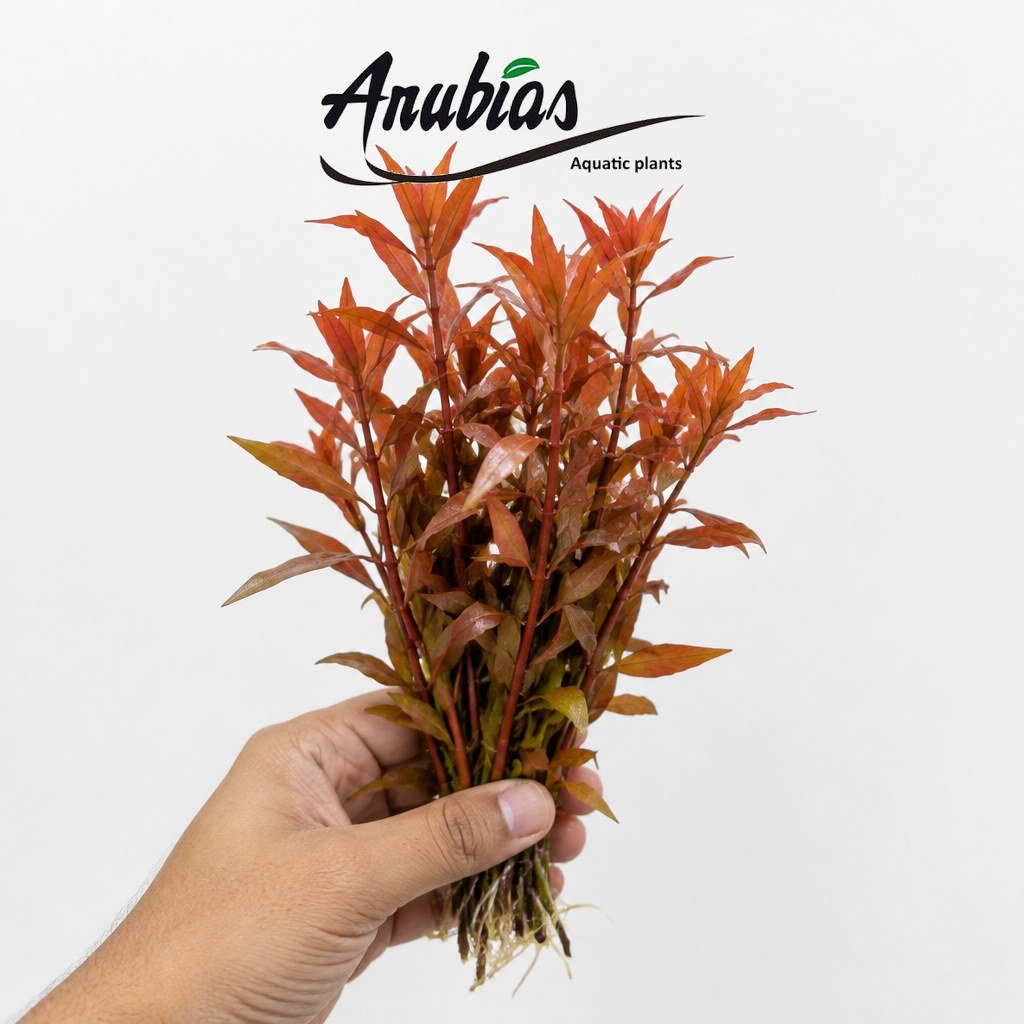
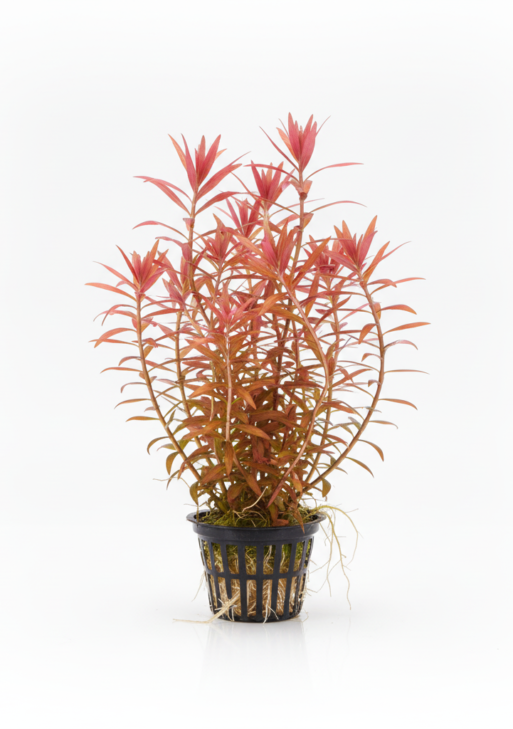
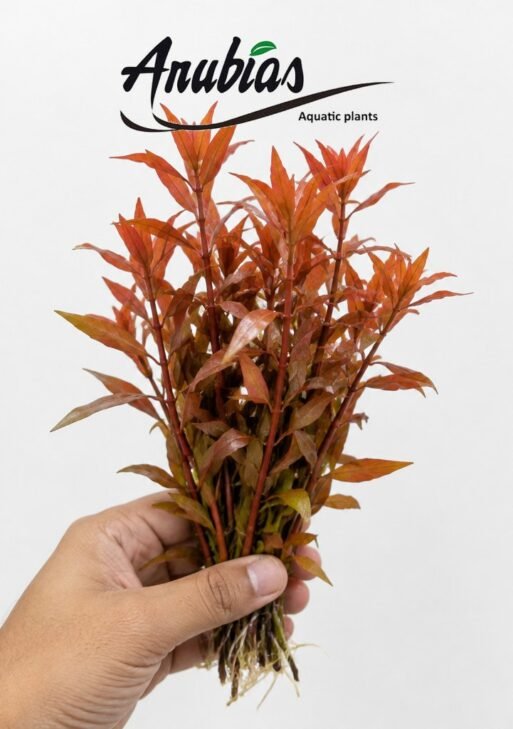
Ludwigia Atlantis Dark Orange (Ludwigia sp. ‘Atlantis’) is a cultivated Ludwigia with oval leaves that shift from olive-bronze to a rich dark orange and copper-red under strong light. Its parentage is not formally recorded, but it grows like a robust Ludwigia palustris relative: moderately fast, broad-stemmed and more forgiving than the fine-leaved species. It suits hobbyists with medium-high light who want an orange tone between the greens and the reds in a midground or background group.
Ludwigia Atlantis Dark Orange at a glance
| Scientific name | Ludwigia sp. ‘Atlantis’ |
|---|---|
| Family | Onagraceae |
| Origin | Cultivated form of uncertain parentage; genus native to the Americas, Africa and Asia |
| Difficulty | Easy to medium |
| Light | Medium to high; high for dark orange |
| CO2 | Optional; recommended for colour and density |
| Temperature | 20–28 °C |
| pH | 5.5–7.5 |
| Growth rate | Medium |
| Height/size | 15–40 cm tall; stems 3–5 cm wide |
| Placement | Midground to background |
| Propagation | Stem cuttings and side shoots |
How to plant Ludwigia Atlantis Dark Orange
- Rinse the portion in dechlorinated water and trim any soft stem ends.
- Remove the leaves from the lowest 2–3 cm of each stem.
- Plant stems individually with tweezers, 3 cm deep and 3 cm apart. The leaves are broad, so give each stem room or the inner ones shade each other.
- Place the group in a well-lit spot; the orange shows only on leaves that receive direct light.
- Keep flow moderate for the first week. Ludwigias root fast and also form roots along the stem.
It grows in any substrate. Aquasoil or a root tab under the group gives the fullest leaves; sand or gravel is fine with liquid fertiliser.
Ludwigia Atlantis Dark Orange care: light, CO2, fertiliser and water
Light: under medium light Ludwigia Atlantis is olive-green with bronze tips. Medium-high light brings out orange; high light (around 60 PAR or more at the plant) turns the top leaves a deep copper-orange with red edges. Expect the colour to appear first on new growth, two to three weeks after conditions improve.
CO2 is optional. It grows acceptably in low-tech tanks, with slower growth and more muted colour. With CO2 at 20–30 ppm it grows dense, trims cleanly and holds orange all the way down the stem.
Fertiliser: dose a complete liquid fertiliser two or three times a week. Iron and a moderate nitrate level (5–10 ppm) intensify the orange; very high nitrate pushes it green. Potassium prevents pinholes in older leaves.
Indian conditions: hard tap water up to GH 15 is fine. In summer, water of 28–32 °C slows it and dulls the colour, though it is tougher in heat than Ludwigia arcuata. A surface fan helps in May–June. It handles monsoon power cuts of a few hours without damage.
Growth, trimming and propagation
Ludwigia Atlantis grows 2–5 cm a week depending on CO2. Trim every three weeks or so, cutting just above a node and leaving 8–12 cm in the substrate. Cut bases branch readily, so the stand becomes bushy after two or three trims. Replant the tops, which carry the best colour, at the front of the group for a graded effect.
Replace old bases with fresh tops every few months to keep the group compact. Propagation is this trim-and-replant cycle; one portion fills a midground group in a 2 ft tank within two to three months.
Where to use it in an aquascape
Use Ludwigia Atlantis Dark Orange as a midground plant in 2 ft (60–70 litre) tanks and a mid-to-background plant in 3 ft and 4 ft tanks (120–250 litres). Its orange sits naturally between green and red groups, so it is a good bridging plant in Dutch-style layouts.
Pair it with green Hygrophila polysperma or Rotala Ceylon behind, Rotala Blood Red or Ludwigia Mini Super Red beside it for a deeper red, Anubias nana or Java fern on wood in front, and a carpeting plant at the base. Browse our other stem plants for more colour options.
Safe with all community fish and shrimp. Avoid goldfish and large cichlids that uproot or eat stems.
Common problems and fixes
- Plant is green, not orange: light too low or nitrate too high. Raise light, let nitrate settle at 5–10 ppm and wait for new growth.
- Lower leaves drop: shaded by the broad upper leaves. Trim and space stems more widely.
- Pinholes in older leaves: potassium deficiency. Dose potassium.
- Leggy stems: low light. Trim short and replant tops under the light.
- Algae on leaves: photoperiod too long for the available CO2. Reduce to 6–7 hours.
- Melt after arrival: a few leaves may drop in week one; new tips confirm the plant has settled.
What you receive
You receive one healthy portion of Ludwigia Atlantis Dark Orange in the size you select (Small or Standard), similar to the photo. It is checked before packing, wrapped moist and shipped across India from Surat. Live-arrival guarantee: record one continuous unboxing video within 4 hours of delivery and we refund or replace any plant that arrives damaged.
FAQ
Does Ludwigia Atlantis need CO2?
No, it survives and grows without CO2, but the dark orange colour and compact growth come with CO2 and strong light.
Is Ludwigia Atlantis good for beginners?
Yes, it is one of the more forgiving coloured Ludwigias. It tolerates hard Indian water and medium light; just expect greener growth without high light.
Ludwigia Atlantis vs Ludwigia Super Red: which should I pick?
Super Red is a deeper red and colours under lower light. Atlantis gives a copper-orange tone that fills the gap between green and red plants.
How much light does Ludwigia Atlantis need?
Medium light for healthy green-bronze growth; medium-high to high light for dark orange tops.
Can Ludwigia Atlantis grow in gravel?
Yes. It roots in gravel or sand with liquid fertiliser; a root tab under the group improves leaf size.
How fast does Ludwigia Atlantis grow?
Medium, 2–5 cm a week. Trim every three weeks or so.
Not sure what fits your tank? Plan it with our free AI tank planner.










There are no reviews yet.