
Description
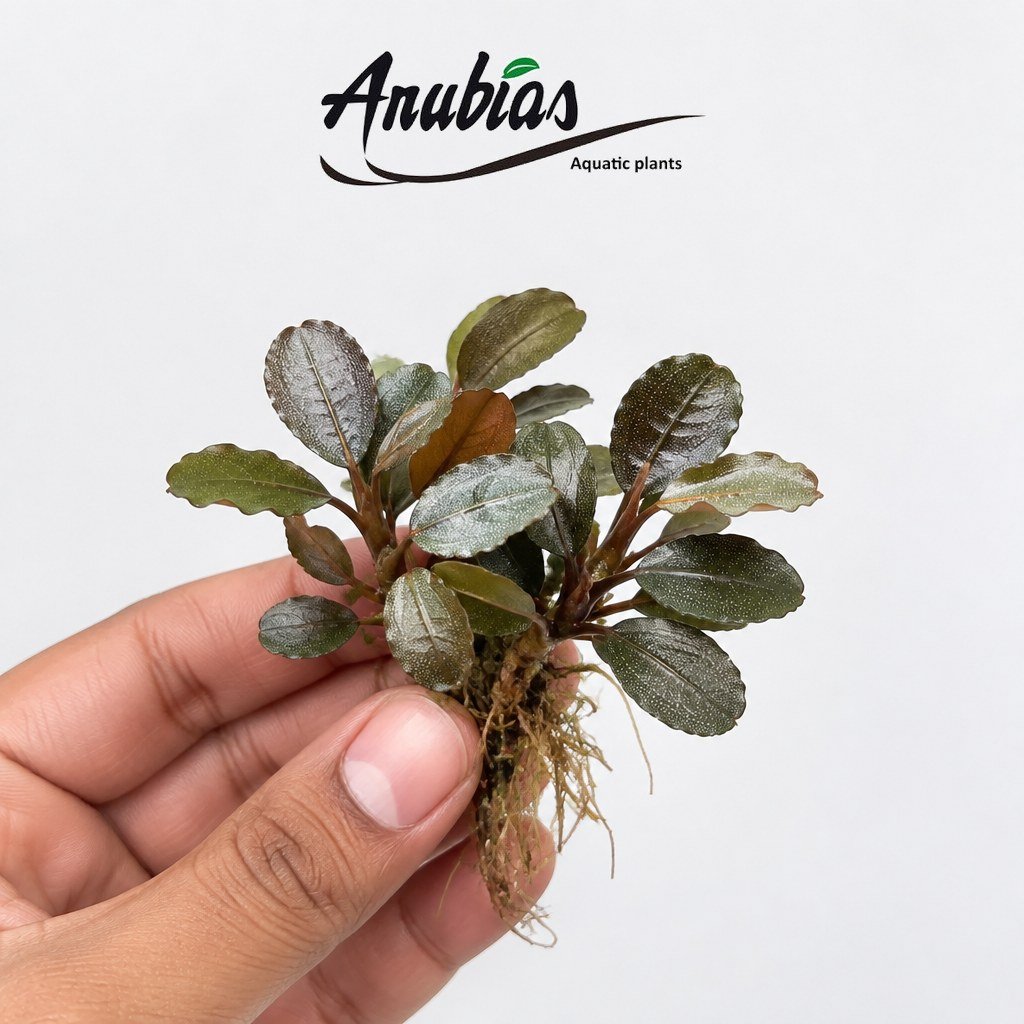
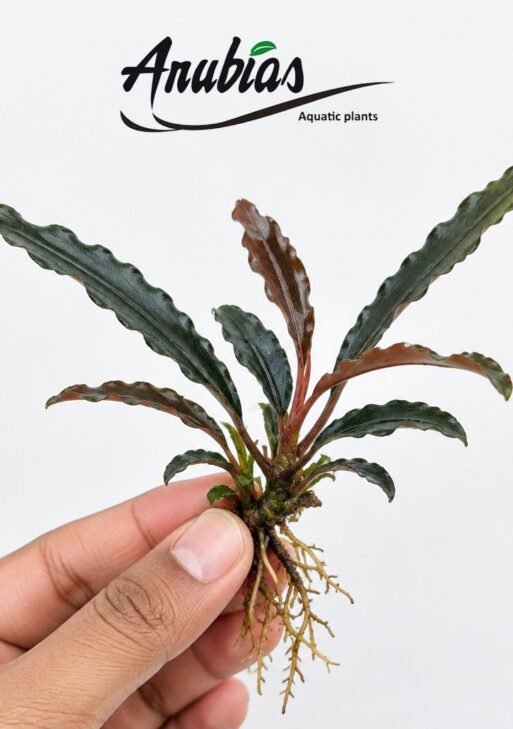
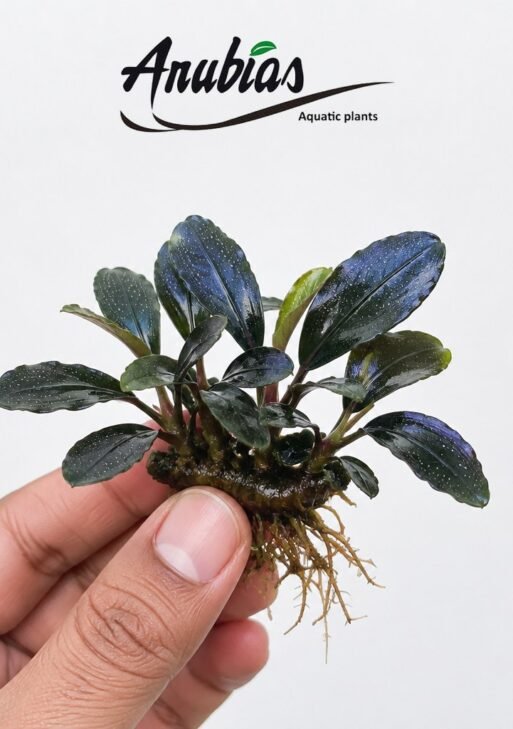
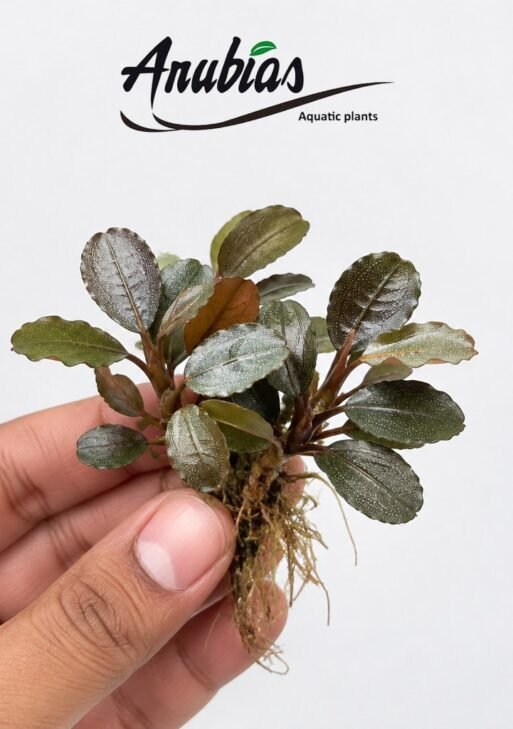
Bucephalandra brownie ghost (Bucephalandra sp. ‘Brownie Ghost’) is one of the most sought-after bucephalandra varieties, a compact Bornean epiphyte with dark, rounded leaves that carry a faint blue-white sheen and fine silver speckles under good light. Like every “buce”, it is a slow, long-lived rhizome plant that attaches to wood and rock, needs no CO2 and stays small enough for the tiniest nano tank. It suits aquascapers who want a dark, jewel-like detail plant and shrimp keepers who want tough, grazeable foliage.
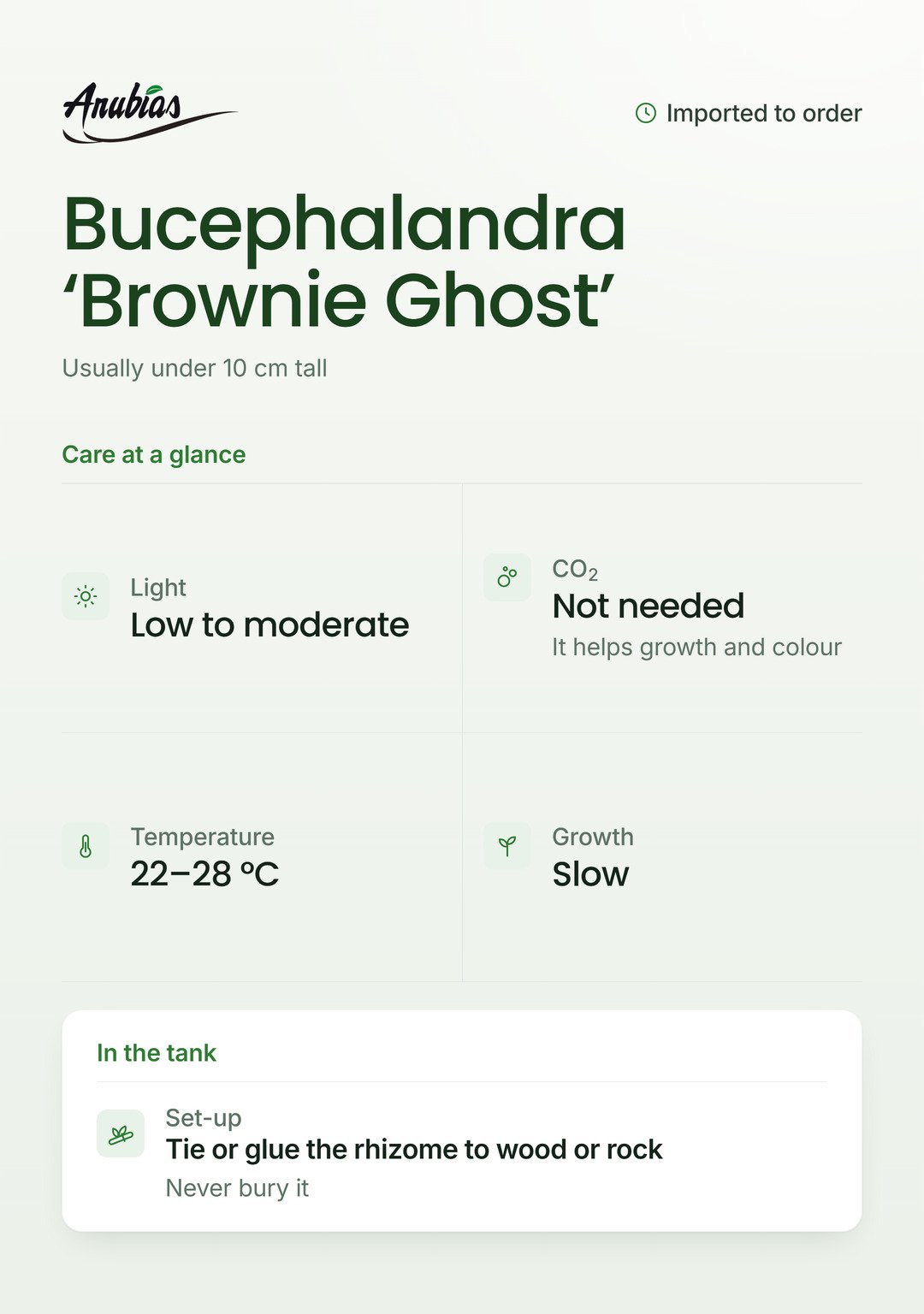
Bucephalandra brownie ghost at a glance
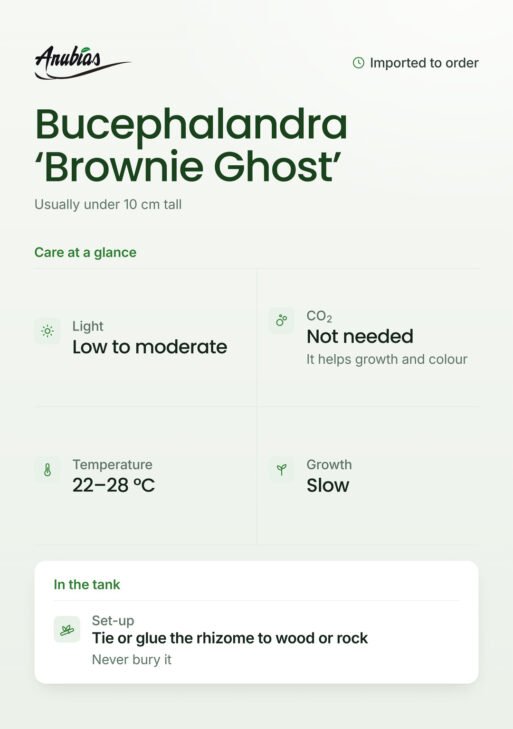
| Scientific name | Bucephalandra sp. ‘Brownie Ghost’ (trade name for a Bornean form) |
|---|---|
| Family | Araceae |
| Origin | Borneo (Kalimantan, Indonesia, and Sarawak, Malaysia), on rocks beside and inside fast forest streams |
| Difficulty | Easy to moderate; needs stable water |
| Light | Low to medium |
| CO2 | Not required; improves colour and growth speed |
| Temperature | 22–28 °C |
| pH | 6.0–7.5 |
| Growth rate | Very slow |
| Height/size | Usually under 10 cm; leaves 2–4 cm long |
| Placement | Foreground to midground, epiphyte on wood or rock |
| Propagation | Rhizome division, side shoots |
How to plant bucephalandra brownie ghost
Bucephalandra is a rheophyte: in the wild it grips rocks in flowing streams. Treat it exactly like anubias and never bury the rhizome, or it rots.
- Rinse the plant gently. Roots may look sparse on arrival; that is normal for buce and they regrow once attached.
- Pick a rough surface: lava rock, dragon stone, seiryu or driftwood. Smooth pebbles give the roots nothing to grip.
- Fix the rhizome with a small dab of cyanoacrylate gel or tie it on with cotton thread. Glue only the rhizome and roots, never the leaves. If you choose the lava-rock option at checkout, the plant arrives already attached.
- Position it in the path of the filter outflow. Flow is the biggest single factor in keeping buce clean and healthy.
- Keep it low in the layout, in crevices or at the base of hardscape, where the small leaves can be seen up close.
New roots grip within six to ten weeks. Avoid moving the plant once it has settled; bucephalandra sulks when disturbed.
Bucephalandra brownie ghost care: light, CO2, fertiliser and water
Light. Low to medium. In moderate light the new leaves show the “ghost” sheen that gives the variety its name and the silver speckles stand out. Strong light does not speed growth much but invites algae on the slow-growing leaves, so keep the photoperiod at 6–8 hours and give some shade from taller plants or hardscape.
CO2. Optional. Brownie ghost grows slowly but steadily without CO2 in a stable low-tech tank. With CO2 the leaves come in larger, darker and more often, and the plant outpaces algae instead of being colonised by it.
Fertiliser. Buce feeds through its leaves, so a weekly dose of a complete liquid fertiliser with potassium, iron and trace elements is all it needs. Root tabs do nothing for it. Keep dosing consistent; sudden changes are a common trigger for melt.
Water. Stable beats perfect. Hard Indian tap water is fine as long as it does not swing from week to week. The comfortable range is 22–28 °C; in summers above 30 °C the plant may stall or drop a leaf, so shade the tank, add surface agitation and keep the lights short. During monsoon power cuts buce copes for a day or two without flow; restart the filter promptly. Weekly 25–30% water changes with temperature-matched water keep it happy.
Growth, trimming and propagation
Bucephalandra brownie ghost is among the slower buce varieties, producing a new leaf roughly every four to eight weeks once settled. Growth comes from the tip of the rhizome, which creeps along the hardscape, and from occasional side shoots. A spreading cushion takes a year or more.
Trimming is rarely needed. Cut damaged or algae-coated leaves at the base of the stalk. Small white or pinkish underwater flowers appear now and then and last a few days; cut the spent stalk at the base.
To propagate, cut a rhizome with six or more leaves so each piece keeps three leaves and some roots, and glue each piece to its own stone.
Where to use it in an aquascape
Brownie ghost is a detail plant. Its dark leaves read almost black from a distance, perfect for the shadows of a rock gap in an Iwagumi, the lower branches of driftwood in a nature-style tank, or the base of a hardscape island.
In nano tanks of 1 ft (around 15–20 litres) a single rhizome can be the main plant, fronted by a thin carpet from our carpeting plants. In a 2 ft tank (60–90 litres) group three or four rhizomes on one stone for a cushion effect, with Anubias nana for contrast in leaf size and Java fern behind it for height. In 3 ft tanks (120–200 litres) run it along the front edge of the hardscape where the speckles catch the light.
It is safe with all shrimp, including crystal and bee shrimp, and with small fish such as rasboras, tetras, otocinclus and bettas. Avoid large diggers like oscars and flowerhorns. Like all aroids the leaves contain calcium oxalate, so keep trimmings away from pets that chew plants.
Common problems and fixes
- Melt after planting. Leaves turn translucent and drop in the first few weeks as the plant adjusts, often from emersed to submerged growth. Fix: leave the rhizome where it is, keep the flow steady and wait; new leaves usually appear within four to eight weeks.
- Rhizome rot. Soft, dark rhizome. Cause: buried or in a dead spot with no flow. Fix: cut back to firm tissue and remount above the substrate in moving water.
- Green spot or black beard algae. Cause: too much light, poor flow, unstable CO2. Fix: shorten the photoperiod, improve circulation, spot-treat with diluted hydrogen peroxide or liquid carbon, add nerite snails and Amano shrimp.
- Pale new leaves. Iron or trace deficiency; dose micronutrients weekly.
What you receive
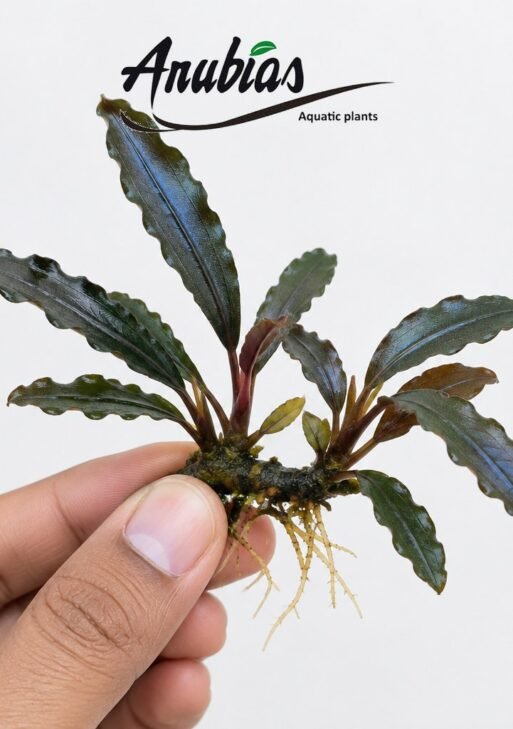
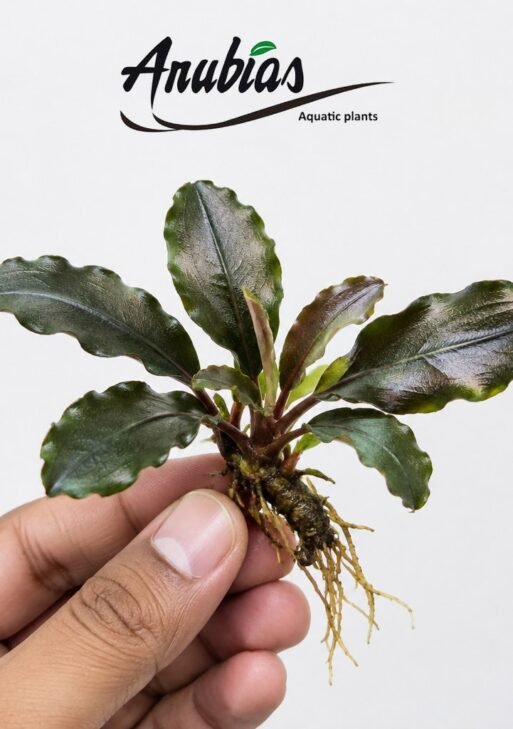
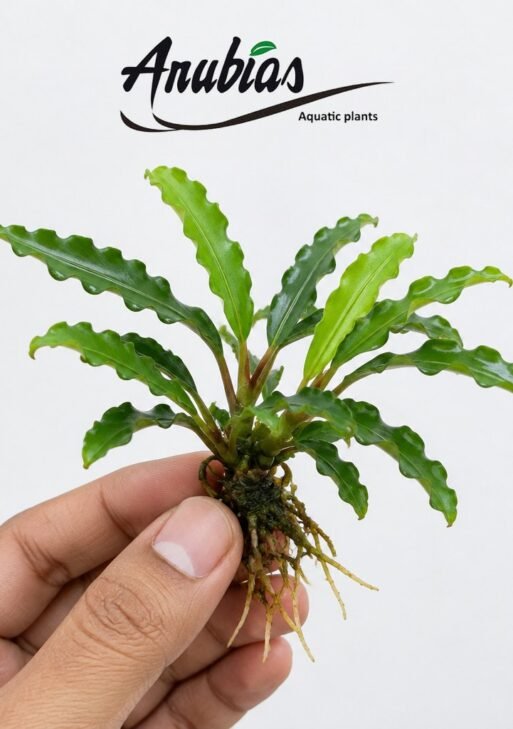
One healthy bucephalandra brownie ghost rhizome portion of the size you select (Small or Standard), similar to the photo. Each plant is checked before packing, packed moist and shipped across India from Surat. ₹99 shipping, free on orders of ₹999 or more.
Live-arrival guarantee: record one continuous unboxing video within 4 hours of delivery and we will refund or replace a plant that arrived damaged.
FAQ
Does bucephalandra brownie ghost need CO2?
No. It grows slowly without CO2 in a stable tank. CO2 makes the leaves larger and darker and speeds growth, but it is optional.
Is bucephalandra brownie ghost good for beginners?
Yes, if you follow two rules: never bury the rhizome, and keep it in steady flow. It tolerates low light and hard water but dislikes sudden parameter swings.
Why is my bucephalandra melting?
Buce often sheds its old leaves after a move while it adjusts to new water. Leave the rhizome in place with good flow and it regrows from the rhizome within a month or two.
How fast does bucephalandra brownie ghost grow?
Very slowly, about one new leaf every four to eight weeks. A full cushion takes a year or more.
Bucephalandra brownie ghost vs anubias nana: which should I pick?
Brownie ghost stays smaller with darker, speckled leaves and suits nano tanks and detail work. Anubias nana is larger, tougher and fills space faster. Many scapers use both together.
Can bucephalandra grow in sand or gravel?
Only if the rhizome sits on top of the substrate or is wedged between stones. Gluing it to rock or wood is the safest way to keep it.
Not sure what fits your tank? Plan it with our free AI tank planner.










There are no reviews yet.