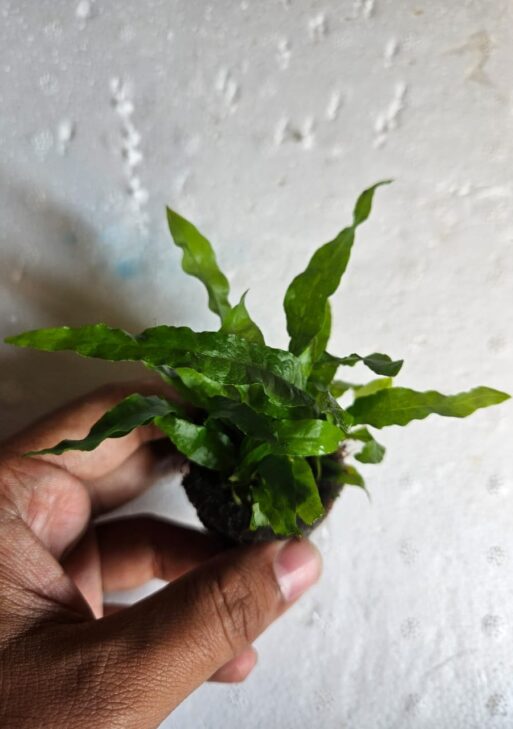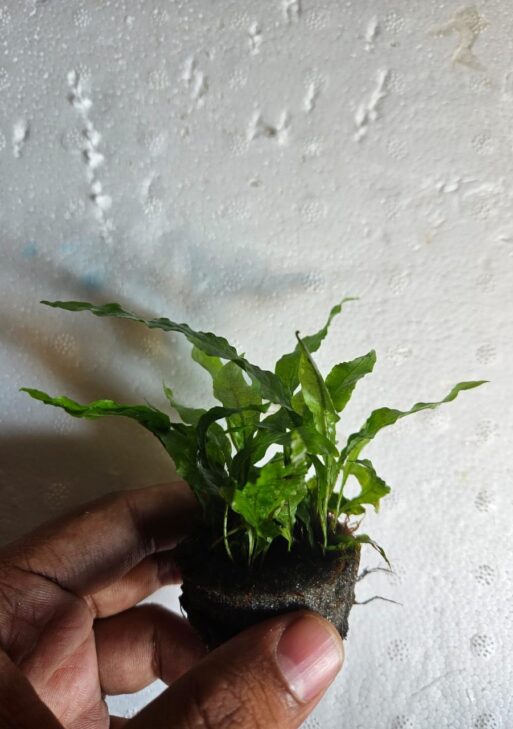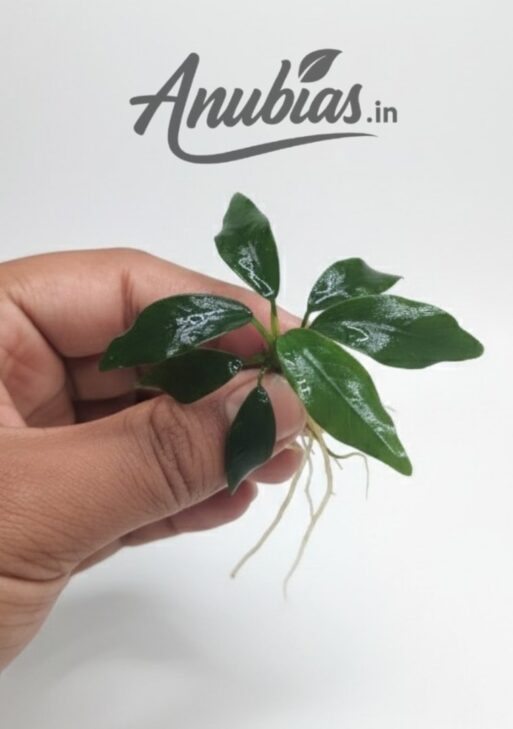

Anubias, Bucephalandra, Java fern and moss grow slowly and take nutrients from the water, so they need gentle, consistent feeding rather than heavy dosing. This simple schedule keeps leaves dark green and prevents pinholes without feeding algae.
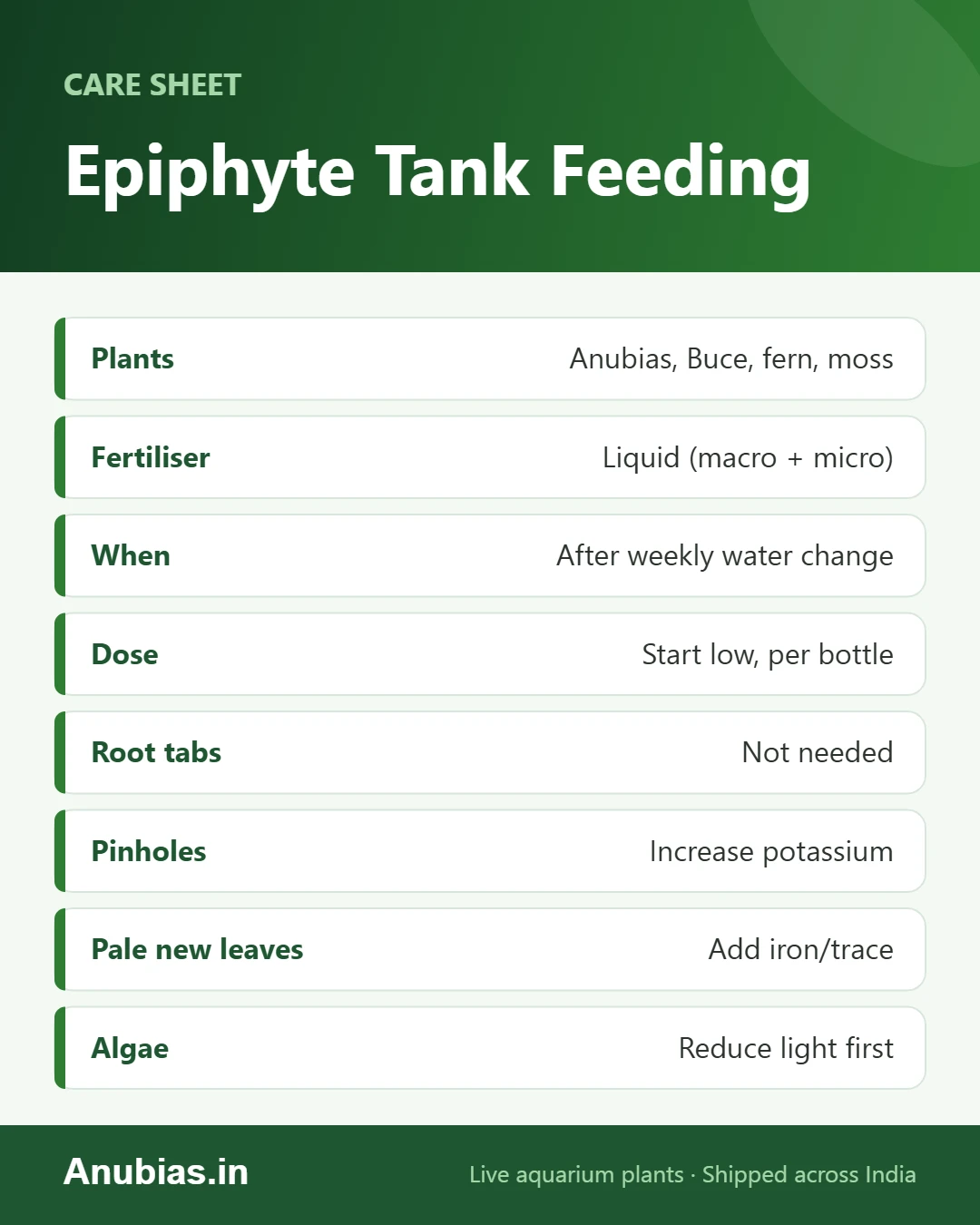
Quick answer: For a low-tech tank of Anubias, Bucephalandra, Java fern and moss, dose a complete liquid fertiliser once a week straight after your water change. With a two-part system like Green Plus + Trace, add both parts together following the bottle directions for your tank volume, starting at the lower end for slow epiphyte-only tanks. Root tabs are not needed for these plants. Increase slightly if leaves develop pinholes or pale new growth; reduce light first if algae appears.
Weekly routine
| Day | Task |
|---|---|
| Water change day | Change 25–30% of the water, then dose both fertiliser parts |
| Mid-week | Check new leaves for colour and holes; wipe algae if needed |
| Monthly | Review: adjust dose up or down based on leaves and algae |
Why epiphytes need gentle feeding
- Slow growth: Anubias and Buce use nutrients slowly, so extra fertiliser mostly feeds algae.
- Water-column feeders: their roots and leaves take nutrients from the water, not the substrate.
- Long-lived leaves: small, consistent doses prevent the deficiencies that show as holes or yellowing over months.
Reading your plants
- Pinholes in older leaves: potassium shortage; ensure the macro part is dosed.
- Pale or yellow new leaves: iron or trace shortage; ensure the trace part is dosed.
- Green spot or black beard algae: shorten light hours before cutting fertiliser.
More diagnosis help: Anubias leaf problem chart.
Starting a dosing routine in a brand new epiphyte tank
A tank that was set up last week does not need the same routine as one that has been running for a year. New tanks have plenty of nutrients in the water and very little plant mass to use them, so starting at full dose is the fastest way to grow algae on your new Bucephalandra.
- Weeks one and two: dose nothing. Change water, keep the light short, and let the plants settle after transport.
- Weeks three and four: start at roughly a quarter of the bottle dose, once a week after the water change.
- Weeks five to eight: if new leaves are opening and the glass stays reasonably clean, move to half dose.
- From week nine: hold at half dose unless the plants ask for more, and only then step up.
The point is that you increase because the plants told you to, not because the label said so. Epiphytes push very few new leaves a month, so a change you make today shows up three or four weeks later.
Adjusting for summer heat and time away
Between roughly March and June, when tank water sits at 28 to 32 degrees, Anubias and Bucephalandra slow down rather than speed up. Bucephalandra in particular sulks in warm water and stops pushing new growth. Dosing the same amount into a tank that is using less is how people end up with green spot algae every summer.
Through the hottest weeks, cut the dose by about half and shorten the light before you touch anything else. Increase surface movement with a fan or an air stone, because warm water holds less oxygen and stressed plants melt faster.
If you are travelling, skip the dose entirely rather than adding a double dose before you leave. A slow-growing epiphyte tank will coast for two or three weeks with no fertiliser and no harm done. Resume at your normal dose after the first water change when you are back, not before, so you are not feeding a tank that has had no water change for a fortnight.
Plants in this guide
![Green Plus + Trace Fertilizer [ 100ML + 100ML ]](https://anubias.in/wp-content/uploads/2026/04/1000647632-513x654.jpg)
![Green Plus + Trace Fertilizer [ 100ML + 100ML ]](https://anubias.in/wp-content/uploads/2026/04/1000647617-513x729.jpg)
₹ 250 ₹ 410
₹ 410 ₹ 580
Frequently asked questions
Do Anubias and Buce need root tabs?
No. They are epiphytes that feed from the water, so liquid fertiliser is enough.
Is it safe for shrimp?
Plant fertilisers dosed at recommended rates are generally shrimp-safe; start with lower doses in shrimp tanks.
What if my tank has lots of fish?
Fish waste adds nitrogen and phosphorus, so you may need less; watch the leaves and algae to judge.
Should I dose on the same day as the water change?
Yes, dose straight after the water change is finished and the fresh water is in. Dosing beforehand just means you siphon out most of what you added. If you dose a two part system, add the components a few minutes apart rather than pouring them together into the same spot.
Can I squirt fertiliser directly onto the leaves?
There is no benefit and some risk. Spot dosing a concentrated liquid onto a slow-growing leaf can bleach or burn it, and Anubias leaves live for a year or more so the damage stays visible. Pour into the flow near the filter outlet so it disperses through the tank instead.
Does hard Indian tap water already supply enough nutrients?
It supplies calcium and magnesium, which is genuinely useful, but almost nothing else your plants need. Hard tap water contains no meaningful potassium, iron or trace elements, so you still need a liquid fertiliser. The one thing hard water does change is that you rarely need to add a separate calcium or magnesium supplement.
Mixing your own ferts? See DIY dry fertiliser dosing in India for salts, sources and safe doses.